
One of the most notable recent phenomena is micro-moments: small windows of time throughout the day when users turn to their devices, especially mobile phones, to find quick answers for their immediate needs.
Or simply to take a momentary break from their daily routines.
These moments, though brief, have a significant impact on purchasing decisions and the relationship with brands.
At the same time, contextual marketing has emerged as an essential strategy to capture consumers‘ attention in these fleeting instances.
- 1 Defining Micro-Moments
- 2 The Concept of Contextual Marketing
- 3 Understanding Micro-Moments
- 4 How Contextual Marketing Leverages Micro-Moments
- 5 Strategies to Make the Most of Micro-Moments
- 6 How to Maintain Consumer Trust in a Hyper-Personalized Environment
- 7 Conclusion
Defining Micro-Moments
Micro-moments are brief, spontaneous instances when users turn to their devices to satisfy a specific need.
These moments are impulsive and driven by the intent to get a quick and precise answer.
There are four main types of micro-moments: I-want-to-know, I-want-to-go, I-want-to-do, and I-want-to-buy.
- I-want-to-know: Moments when users are looking for information, whether to learn something new, resolve a doubt, or research a product or service.
- I-want-to-go: Moments when users are looking for a specific location, such as a store, restaurant, or any other place of interest.
- I-want-to-do: Moments when users are looking for instructions on how to perform a specific task, from a DIY project to a cooking recipe.
- I-want-to-buy: Moments when users are ready to make a purchase and are looking for options, prices, or recommendations.
The importance of micro-moments lies in the fact that consumers have adopted a more fragmented approach to interacting with brands.
Instead of dedicating long periods to research or entertainment, they now opt for these quick and highly specific interactions.
Therefore, micro-moments not only influence purchasing decisions but also define how the relationship between consumers and brands is built.

The Concept of Contextual Marketing
Contextual marketing refers to the practice of delivering relevant content, ads, and messages to users based on their specific context at a given moment.
This context can be determined by a variety of factors, such as location, time of day, the device being used, browsing history, and the user’s recent searches.
As today’s digital world is saturated with information, contextual marketing has become crucial for standing out and capturing consumer attention.
Today’s users expect brands to offer personalized solutions that solve their immediate needs without having to actively search.
Contextual marketing allows brands to intervene at the right moment, with the right message.
The relevance of contextual marketing is even greater in micro-moments, where the window of opportunity to capture the user’s attention is extremely short.

Understanding Micro-Moments
Micro-moments are a direct manifestation of the shift in consumer behavior driven by mobile technology.
As people become more dependent on their devices for immediate information and quick decisions, micro-moments have become critical touchpoints between brands and their audiences.
What Are Micro-Moments? Examples and Categories
Micro-moments are instances in which users, driven by the need to get information or complete a task quickly, turn to their devices, primarily mobile phones, to find answers.
These moments are characterized by immediate intent and the expectation of fast, relevant results.
Google has identified four main categories of micro-moments:
· I-want-to-know:
These micro-moments occur when a user seeks quick information on a topic of interest.
For example, a user who, while watching a movie, searches on their phone for details about an actor.
rands that offer educational or informational content have an opportunity to capture the user’s attention in this type of micro-moment.
· I-want-to-go:
In these moments, the user is looking for a specific location or directions to a place.
A classic example is a person searching for the nearest coffee shop while walking through a new city.
Local brands and physical businesses can capitalize on these micro-moments by optimizing their presence on maps and in local search results.
· I-want-to-do:
Here, the user is looking for instructions on how to perform a specific task.
An example could be someone searching for a tutorial on how to repair an appliance.
Brands that offer “how-to” content or step-by-step guides can leverage these micro-moments to position themselves as valuable resources.
· I-want-to-buy:
These are the most conversion-oriented micro-moments, where the user is ready to make a purchase.
For example, someone who, after researching different product options, looks to buy the chosen item.
E-commerce brands and retailers must be prepared to provide a seamless and quick shopping experience in these moments.
Each of these micro-moments represents a unique opportunity for brands to connect with consumers in a relevant and timely manner, offering value at the precise instant it is needed.
The Role of Immediacy and the Need for Information in These Moments
Immediacy is the engine that drives micro-moments.
In a world where information is just a click away, consumers have developed an expectation for quick and accurate answers.
This shift has been largely facilitated by the ubiquity of smartphones, which allow users to access information anytime, anywhere.
Users are not willing to wait or navigate through irrelevant content.
Instead, they seek direct answers and solutions that resolve their specific need in that instant.
Key Statistics on the Impact of Micro-Moments on Consumer Decision-Making
The impact of micro-moments on consumer decision-making is significant and is supported by data that highlights their importance:
- 90% of smartphone users are not certain of the specific brand they want to buy when they begin looking for information online. This suggests that micro-moments are a key opportunity to influence brand choice in real-time.
- 82% of smartphone users consult their phones before making a purchase in a store. This demonstrates how micro-moments are influencing purchasing decisions, even in a physical environment.
- 62% of consumers are more likely to act immediately in a micro-moment if they see personalized and relevant content. This underscores the importance of offering content tailored to the user’s intent in these moments.
These statistics reveal that micro-moments are not only common but have a direct impact on purchasing decisions and brand loyalty.
Brands that are able to anticipate and respond effectively to these moments can gain a significant competitive advantage.

How Contextual Marketing Leverages Micro-Moments
Contextual marketing and micro-moments are intrinsically linked.
As we have seen, micro-moments are instances when users seek immediate and precise answers.
Contextual marketing is the perfect response to this need, as it allows brands to intervene in those critical moments with content and messages that are aligned with the user’s intentions and environment.
For example, if a user searches for “best restaurant nearby” while walking through a city, contextual marketing can trigger an ad or suggestion for a nearby restaurant with specific offers, optimized for their mobile device and based on their location.
This type of interaction is much more likely to result in immediate action, such as a visit to the restaurant or a reservation, compared to a generic ad.
Therefore, contextual marketing not only improves the user experience by offering exactly what they need at the right time but also increases the chances of conversion for brands.
By being present and relevant in micro-moments, brands can influence purchasing decisions and strengthen their relationship with consumers.
Success Stories: Brands That Have Mastered Contextual Marketing in Micro-Moments
Several examples demonstrate how brands have successfully leveraged contextual marketing to capture consumers’ attention in micro-moments:
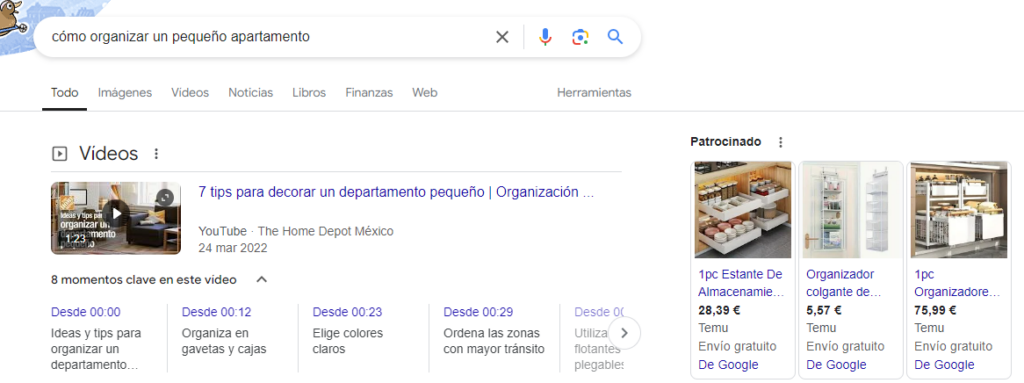
· Temu and the Search for Quick Solutions:
Temu has used contextual marketing to offer specific solutions to users looking for quick decoration ideas or to solve household problems.
For example, if a user searches for “how to organize a small apartment,” Temu might show ads or content related to modular furniture or storage solutions that are perfectly suited for small spaces.
This strategy has resulted in a significant increase in website visits and conversions.
· Starbucks and Real-Time Personalization:
Starbucks has implemented contextual marketing strategies using its mobile app, which offers personalized recommendations based on the user’s location, purchase history, and the time of day.
For instance, if a user is near a Starbucks in the morning, the app might suggest their favorite drink and offer a discount if they make the purchase at that moment.
This approach has increased customer loyalty and sales.
· Nike and Behavior-Based Personalization:
Nike has leveraged contextual marketing in its Nike Training Club app, where it offers personalized workout and product recommendations based on the user’s recent behavior.
If a user has completed a resistance workout, the app might suggest sportswear or specific equipment for that type of activity.
This real-time personalization has helped Nike increase user engagement and sales within its digital ecosystem.

Strategies to Make the Most of Micro-Moments
Some of the strategies you can use to leverage micro-moments include:
Identifying Key Micro-Moments for Your Audience
The first step to leveraging micro-moments is to identify them accurately.
This involves understanding when and in what situations your audience seeks information, makes decisions, or makes purchases.
· User Behavior Analysis:
Use data analytics tools to track and analyze your users’ online behavior.
Look for patterns in searches, social media interactions, and behavior on your website or app.
This will allow you to identify the specific moments when users are looking for solutions your brand can offer.
· Micro-Moment Mapping:
Once you have identified behavioral patterns, you can map out the key micro-moments.
This map should include details about when and how these moments occur, and what type of content or response users are looking for in those instances.
· Using Real-Time Data:
Implement systems that allow you to capture and analyze data in real-time to adjust your marketing strategies on the fly.
This is especially useful for responding to micro-moments that may be unpredictable or seasonal.
Creating Contextualized and Relevant Content
Once you have identified the micro-moments, the next step is to create content that is highly relevant and contextualized for those specific moments.
· Content Personalization:
Use the collected data to personalize content so that it directly answers the needs and questions of users in their micro-moments.
This can range from blog articles and informational videos to product recommendations and special offers.
· Adaptation to the Right Format:
Ensure the content is optimized for the format the user prefers in those moments.
For example, video tutorials may be more effective than text articles in certain “I-want-to-do” micro-moments.
· Clear and Concise Messaging:
In micro-moments, users want quick answers.
Therefore, the content must be clear, direct, and easy to consume, eliminating any unnecessary distractions that might cause the user to lose interest.
Optimizing the Mobile Experience
These aspects are also very important because people are not willing to wait:
· Loading Speed:
Optimize your website and content to load quickly on mobile devices.
Users are impatient during micro-moments, and a delay of just a few seconds can cause them to leave your page in search of answers elsewhere.
· Responsive Design:
Ensure your website and ads are fully optimized for mobile devices.
The design should be adaptable to different screen sizes and easy to navigate with taps and swipes.
· User Experience (UX):
Ease of use is key.
Simplify the search and purchase processes on your mobile site.
Implement large buttons, clear drop-down menus, and streamlined checkout processes so users can complete their actions quickly and without complications.
Programmatic Advertising and Advanced Segmentation
Programmatic advertising, combined with advanced segmentation, allows brands to deliver ultra-relevant ads and messages in micro-moments, significantly increasing the chances of conversion.
· Behavioral Segmentation:
Use behavioral data to segment your audience and show them ads that align with their interests and recent actions.
For example, if a user has been searching for information about home products, show them related ads when they are in an “I-want-to-buy” micro-moment.
· Geographic Segmentation:
Leverage the user’s location to offer local content and promotions.
This is particularly effective in “I-want-to-go” micro-moments, where users are looking for specific places like nearby stores, restaurants, or events.
· Dynamic Creatives:
Use dynamic ad creatives that adjust in real-time to the user’s context.
For example, ads can change depending on the time of day, the weather, or current trends, offering a personalized and relevant advertising experience.
Measurement and Continuous Optimization
Finally, to ensure success in capitalizing on micro-moments, it is essential to continuously measure and optimize your strategies.
· Results Analysis:
Use analytics tools to track the performance of your campaigns in real-time.
Analyze key metrics such as click-through rate (CTR), conversion rate, and return on investment (ROI) for each micro-moment.
· A/B Testing:
Run A/B tests to identify which versions of your content and ads perform best in different micro-moments.
Adjust your approach based on the results to maximize effectiveness.
· Iterative Optimization:
Optimizing micro-moment strategies is an ongoing process.
Based on the data collected, refine your campaigns, improve segmentation, and adjust content to maintain its relevance and effectiveness over time.

How to Maintain Consumer Trust in a Hyper-Personalized Environment
There are some aspects you should consider to avoid “fatiguing” users:
Tangible Value and Respect
Brands must ensure that the value they offer through personalization is tangible to the user and respectful of their privacy.
The goal is to enrich the user experience, not exploit it.
Offering customization options and respecting consumer choices is key to building a relationship based on trust.
· Open Communication:
Brands should foster open and honest communication with their customers about how their data is used.
This not only includes informing them about data collection but also explaining how this information improves their experience and what measures are taken to protect it.
· Avoiding the Digital “Chase”:
One of the things that most annoys consumers is the feeling of being “chased” by ads across multiple platforms after interacting with a brand.
Brands must be careful with the frequency and repetition of their messages, ensuring they don’t cross the line between personalization and invasion of privacy.
Conclusion
In a digital environment where consumer attention is increasingly fleeting, micro-moments have become crucial points of connection between brands and their audiences.
Through contextual marketing, companies can offer relevant and personalized content in these brief instances, driving action and strengthening customer loyalty.
However, to effectively capitalize on these moments, brands must be prepared to adapt quickly to new technologies, maintain an ethical approach to data use, and continue to innovate in their strategies.
Those that succeed will have a significant competitive advantage in a constantly evolving market.