SMS
What it is, how it works and what it's used for
You have a messaging app for everything. Even so, there’s one type of message that reaches any mobile phone in the world without installing anything. Your bank’s code, the notice that your order is on its way or the reminder of your dentist appointment. They almost always arrive by SMS.
What is an SMS?
SMS stands for Short Message Service. It’s the system that lets you send short text messages between mobile phones over the carrier’s network.
Its big advantage is that it’s universal. It works on any mobile phone, from the most basic model to the latest smartphone. And it doesn’t need an internet connection or any additional app.
The first message of this kind was sent in December 1992, in the United Kingdom. It simply said “Merry Christmas”. Since then, the format has survived the arrival of mobile internet and dozens of messaging apps.
How an SMS works
When you send a message, your phone sends it to your carrier’s network. There, a message center receives it, stores it and delivers it to the recipient as soon as their phone is available.
That’s why it isn’t lost if the other phone is switched off. The system stores it and keeps retrying for a while.
What’s more, the message travels over the phone network itself, not over the internet. That explains why it arrives even in areas with poor data coverage, as long as there’s enough signal for calls.
The 160-character limit (and why it’s sometimes 70)
A standard message can hold up to 160 characters. But there’s a detail many people don’t know: that limit only applies if you use the system’s basic alphabet, called GSM-7.
If the text includes characters that alphabet doesn’t cover, such as emojis or some accented vowels (“á”, “í” or “ó”, for example), the message is encoded in Unicode instead. And then the limit drops to 70 characters.
When a text exceeds that maximum, it’s split into several messages that the phone joins back together when it receives them. Each fragment loses a few characters to the information that links the parts. That’s why a long message can use up more credits than it seems. If you send campaigns, checking the length and special characters saves you money.
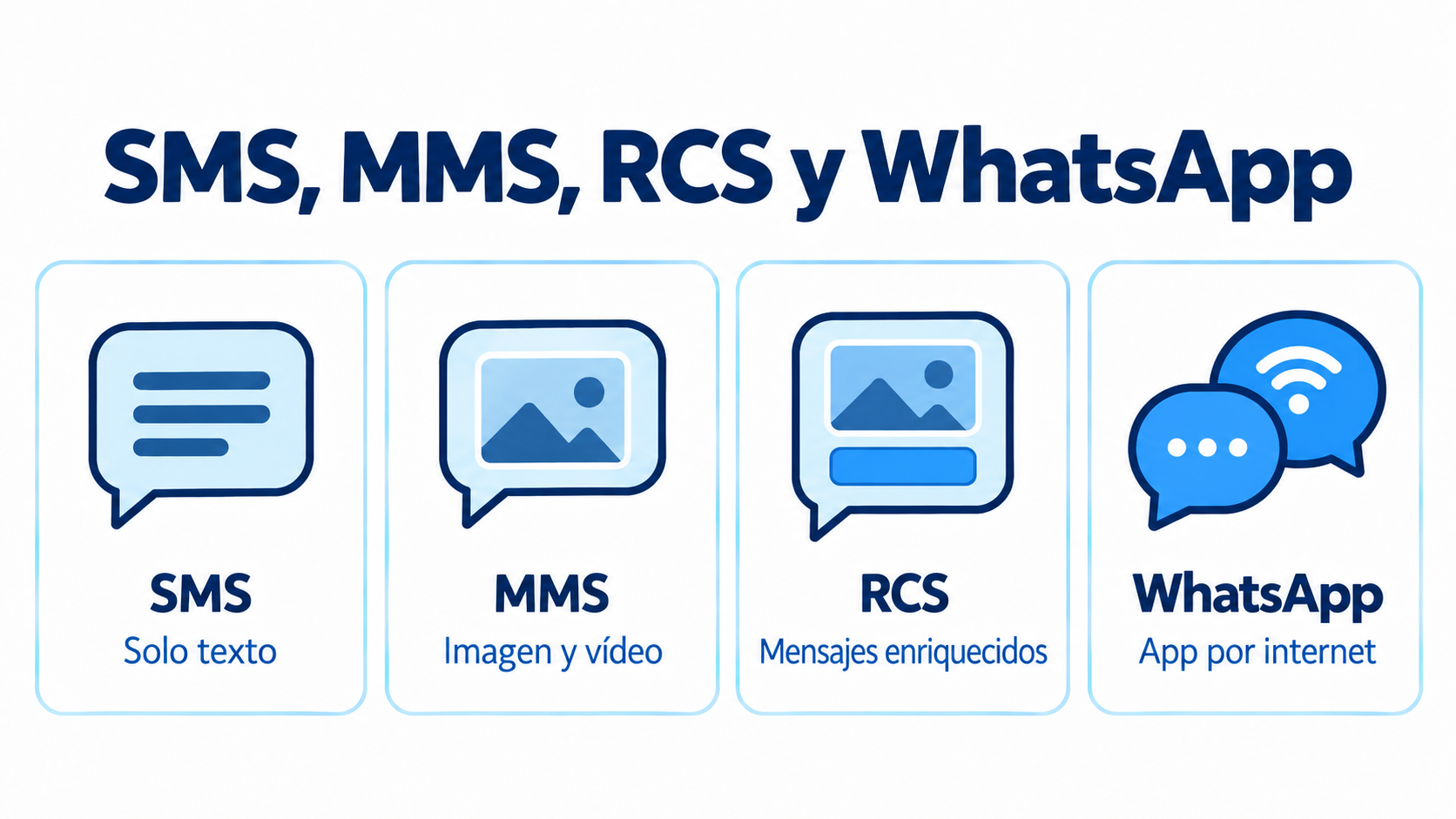
SMS, MMS, RCS and WhatsApp: the differences
Although they’re all used to send messages, each format works in a different way:
- SMS: text only, reaches any mobile phone and doesn’t need internet.
- MMS: allows images, audio or video, but it’s more expensive and rarely used today.
- RCS: the evolution of SMS, with images, buttons and read receipts. It needs a data connection and both phones must support it.
- WhatsApp: an internet messaging app with very complete features, although it only reaches people who have it installed.
The classic text message’s main advantage over the rest is its reach. It doesn’t depend on the app each person uses or on whether they have mobile data turned on.
What SMS is used for today
Far from disappearing, this format has found its place in communications that absolutely have to get through.
The most widespread use is verification messages. One-time codes to log in to your bank or confirm a payment usually arrive this way. The reason is its reliability.
Transactional SMS are also common: order confirmations, delivery notices or appointment reminders. They’re useful messages that the customer expects to receive.
And then there’s SMS marketing. Companies use it to send offers, launches or promotions to customers who have given their permission. When they’re sent to thousands of people at once, they’re called mass sends or bulk SMS. You’ll find how to do it step by step in mass SMS.
Best practices when sending messages to your customers
A text message is almost always read, and that means you have to take care with it. It’s a very direct channel, so an irrelevant message is more annoying than an email.
Only send to people who have given you their consent, as the LOPD requires. And always include an easy way to unsubscribe. Identify yourself from the start: the sender can be your brand name, with a maximum of 11 characters.
Pay attention to the timing too. A message at eleven at night puts people off, no matter how good the offer is.
Less is more.
Finally, don’t use it for everything. Save this channel for what’s urgent or truly valuable, and leave longer content for email.
SMS and email marketing: better together
SMS and email don’t compete, they complement each other. Email lets you say more, include images and links, and costs less per send. The text message, on the other hand, stands out for its immediacy and very high visibility.
An omnichannel strategy makes the most of each one. For example, you send a newsletter with your new collection. A few days later, you send a short message with the link to those who didn’t open it.
How we help you at Mailrelay
At Mailrelay, as well as email marketing, we offer an SMS sending service from the same platform. That way you manage your contacts, campaigns and results in one place.
You can check the SMS pricing and combine it with your free email marketing account. It includes up to 80,000 emails a month and 20,000 contacts. If you want to try it, you can create your Mailrelay account today.
Frequently asked questions about SMS
How many characters does an SMS have? Up to 160 with the basic alphabet, or 70 if it includes emojis or special characters. If the limit is exceeded, the text is split into several messages.
Do you need internet to receive a text message? No. All you need is mobile phone coverage.
What’s the difference between SMS and MMS? The first only supports text, while MMS lets you send images, audio or video.
In conclusion
SMS is more than three decades old. And it’s still the only message that reaches any mobile phone without depending on apps or data. That reliability has made it the preferred channel for alerts, verifications and urgent communications.
Used well, and combined with email, it’s still a very effective tool for staying in touch with your customers.