The product life cycle is one of those marketing concepts that seems like pure theory, and to which we normally pay little attention.
However, just like other marketing concepts, it is important.
Because it helps us to plan the correct marketing actions for each stage of the product’s life, and in this way be more effective in our marketing.
Therefore the product life cycle is important.
What is the product life cycle?
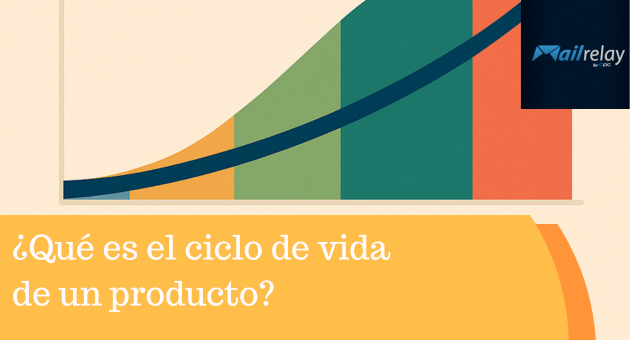
The product life cycle is a metaphor that is used to understand that a product, or service, goes through different stages, just like people.
It tries in this way to explain, or represent, the evolution, or life, of the product over time.
And it can cover more or less stages depending on the type of product.
For example, for certain products there will not be an innovation, creation, or prototyping phase. For others, there might be.
In any case, we will focus on the part of the product’s life after its launch.
Because it is the part most related to marketing actions, more than anything.
Normally we have these four phases:
- Introduction: This is when we launch the product to the market
- Growth: is the phase in which the product gets more sales and establishes itself in the market
- Maturity: sales are stable (ideally) and the product remains in the market
- Decline: a drop in sales, or replacement by other products
Basically these phases.
However, they don’t have to be linear; we can, and often must, with our marketing actions influence the stages of the product’s life.
But they are important, and we must act accordingly.
Let’s see these stages in a little more detail.

Stage 1: Introduction
As we have commented before, this is the stage in which we launch the product to the market.
Consequently, initial sales are usually low.
Not always, of course, especially if we work for a large company.
However, in many cases, it’s normal for sales to be low at the beginning, and we have to work with that in mind.
One of the reasons is the logical one, consumers don’t yet know the product, and, even if we run marketing campaigns (which is essential), well, we will not have gained their trust yet.
They can see that it is a new product or service, and the reality is that, with so many alternatives in the market, well, they have other more proven ones to choose from.
Why does this happen?
Because people want solutions to their problems, needs, and desires.
And they are not always willing to risk their money on a solution that is not clearly or proven to be effective.
Well.
So in this phase we must invest in marketing to:
- Make yourself known
- And gain the trust of customers
Not making much money, or even losing it, is both possible and expected.
· Strategies in the introduction phase
Since what we want is to make our product or service known, so that the first people start buying, we can:
- Launch campaigns on social media, videos, digital press, websites, blogs, etc. Wherever you think your potential customers will be, of course.
- Offer free trials or do demonstrations, a classic tactic to help customers get to know the product.
- Collaborations with people who already have an established audience, such as influencers.
In this stage, email marketing can be very useful.
It will allow you to maintain contact with those first users and customers, with welcome emails, for example.
These welcome emails can help to:
- Thank them for purchasing the product
- Explain its use and frequently asked questions
- Follow up
- Ask about doubts, impressions, etc.
They are therefore a form of direct communication with these first customers.

Stage 2: Growth
This would be the stage of the product life cycle in which, after the launch, the product begins to get a good volume of customers and gain visibility.
Reaching this phase is a very good sign, as it indicates that the product has made it past the launch.
Not all of them do.
Consequently, it indicates that it is a product with the potential to grow and be profitable.
Of course, this doesn’t mean that everything is done.
Your competitors will usually react. Or, if the market is new, for new competitors to start offering similar products.
The good news is that, as there should be profits, you can invest in marketing with more peace of mind, as there is a clearer return on investment.
· Strategies in the growth phase:
As we were saying, if the market responds positively, it is possible to scale the marketing strategies.
Therefore, new options open up, and existing ones are expanded.
For example, investing more in paid SEM campaigns, display ads, lead generation campaigns, etc.
It is even possible to use referral, loyalty, or affiliate programs. So that existing, already satisfied customers can help attract new customers.
Word-of-mouth marketing is very effective, don’t dismiss it for seeming old-fashioned.
¡Important!
You should always look for a way to highlight the key differentiators of the product, against its possible competitors, so that you find a competitive advantage.
In this phase, email marketing continues to be very useful.
Because it allows us multiple key actions:
- Maintain communication and brand recall with customers
- Use up-selling and cross-selling strategies
- Sending newsletters with offers and special promotions
- Etc.
That is, it is a phase in which email marketing campaigns can, and should, be very active.
Even more so today, when SEO, social media, and all sources of free traffic are being eaten by AI.

Stage 3: Maturity
A mature product is a product that has reached its stability.
In this phase, the product must be profitable.
If it reaches maturity without being so, something bad is happening. Maybe we are insisting on a business model that makes no sense, or on a product that only operates at a loss.
However, we can’t compare ourselves with large companies that operate at a loss, hoping to dominate the market niche and then, once all competitors disappear, be profitable.
Because if you are considering that, you are going to need an investment just as epic as your will, and you will surely need investors who support you and trust your idea.
That said, in this phase customers already know the product, trust it, or at least take it into consideration in their decisions.
The investment in marketing needs to remain strong, as competition will be high unless you have achieved a monopoly, in which case, congratulations.
· Strategies in the maturity phase:
In this case, the strategies continue to be varied:
- Those steps for attracting new customers continue, of course
- You need to offer something your competitors can’t.
- Work on customer loyalty and retention
- And on preventing churn
Of course, market studies, analysis of customers and their use of the product, are important.
And always keep an eye on the evolution of the product, the market, the competition.
Does it seem like a lot of work?
It is, but it is worth it because the product in this phase is profitable.
Some strategies you can use in this phase could be:
- Reinforce loyalty strategies
- Improve the product, or create a range of it, based on specific customer needs (based on their feedback)
- Analyze and expand into new markets (geographic, types of buyers, etc.)
In this stage, email marketing continues to be used, of course.
In fact, if you have done the job well, your contact list in this stage of the product life cycle will be large.
This contact list should help you maintain interest in your product.
Use key dates, like Christmas, Black Friday, and others to send promotions.
The best part is that in this stage you will already have a lot of analytical information from all the campaigns you have created.
- Open rates
- Clicks
- Links visited
- Etc.
With all this information, you can know well what interests your customers and contacts the most.
And with that, develop new ideas.
The advantages of email marketing in this stage are very interesting, but they can be summarized as:
- Saving money
- Profitability
- Scalability
And unlike other tools, email marketing can greatly increase its volume and reach without this representing a much higher expense.
Stage 4: Decline
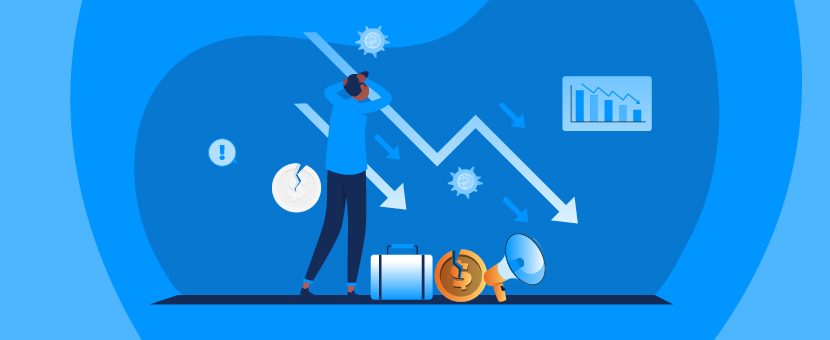
Nothing lasts forever, and of course, products don’t either.
Whether a new better product enters the market, a better solution, or simply a new trend, changes in customer preferences, or whatever, the fact is that products can go into decline.
Normally, unless, for example, there is a legislative change that prevents the commercialization of the product, the decline is progressive.
Market share is gradually lost, and profits are reduced.
At that moment, several options must be considered:
- 1) Accept it and make profits while they last. Perhaps trying to reduce costs as much as possible.
- 2) Try some changes (branding, image, strategy, etc.) to keep the product active for longer.
- 3) Improve the product or add functionalities, if possible.
- 4) Discontinue the product before it starts generating losses.
In short, it is a business decision that must be made taking into account many factors that must be analyzed in each specific case.
Except in cases (2) and (3), the usual thing is that in this phase of the product life cycle, its decline, the investment in marketing is reduced.
Simply because the product no longer justifies the investment.
Email marketing continues to be one of the marketing tools that makes the most sense in this phase, given that it is cost-effective and still reaches a large volume of contacts.
In fact, if any rebranding, image change, or improvement is made, it is the most effective method to ensure all customers are reached, and to inform them of these changes or news.

Mailing, a flexible tool with high sending limit
As we have been seeing, email marketing is a tool that can accompany the marketing of a product or service throughout its entire life cycle.
In the case of Mailrelay, don’t forget that you have a free account with which you can send up to 80,000 free emails per month, to a list of up to 20,000 contacts.
It is a very good way to promote your products, at no cost.
The product life cycle
Although each product is something unique, most generally go through the four stages we have seen.
Adapting your strategy to these stages is necessary, so that your marketing is effective, and your product becomes as profitable as possible.