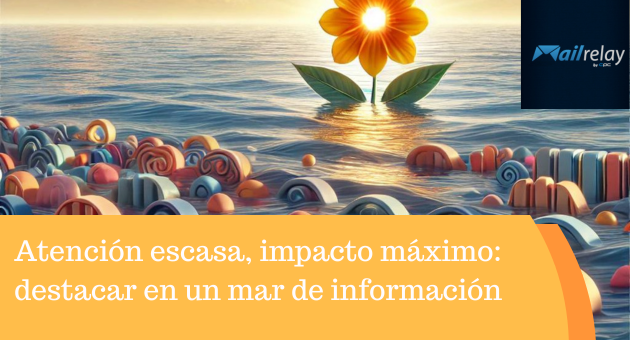
We currently live in a world where the amount of available information grows exponentially every day.
While this could be wonderful, it has had some unpredictable consequences, including fierce competition for attention. Attention has become one of the scarcest and most valuable resources available.
This phenomenon, known as the Attention Economy, redefines how brands and consumers interact in the digital environment.
Instead of simply being a channel for broadcasting messages, marketing must adapt to a new paradigm where capturing and holding consumer attention is fundamental for success.
As a result of the Attention Economy, companies compete not only for consumers’ money but also for their time and attention.
This shift has forced brands to modify their strategies, focusing not just on content creation, but on how that content is presented, distributed, and personalized to keep the audience interested.
Let’s see how.
- 1 Information Saturation and Its Impact on Marketing
- 2 The Attention Economy: Concept and Relevance
- 3 Difficulties in an Information-Saturated Environment
- 4 Strategies to Stand Out in the Attention Economy
- 5 How to Maintain Attention in the Long Term
- 6 Conclusion
Information Saturation and Its Impact on Marketing
Every day, consumers are exposed to thousands of advertising messages, social media posts, emails, and news stories, causing a fragmentation of their attention.
This excess of information not only generates consumer fatigue but also complicates the work of marketing professionals, who must figure out how to stand out amidst a sea of stimuli.
The impact of this saturation on marketing is extensive.
Traditional strategies are no longer sufficient to attract and retain an audience that can easily ignore messages they don’t find attractive or relevant.
In this context, brands must develop tactics that not only capture attention immediately but also maintain it in the long term.
This implies a more creative, personalized, and user-experience-focused approach, where every interaction with the brand must be carefully designed to maximize impact and minimize distraction.

The Attention Economy: Concept and Relevance
As the amount of available information grows, it becomes more complex for people to maintain focus; with too many options available, it is easy to drift from one thing to another without paying full attention.
This phenomenon has given rise to what is known as the Attention Economy, a concept that underscores the importance of capturing and holding attention in a world where it is limited and increasingly fragmented.
The Attention Economy is based on the idea that attention, like time, is a finite resource, and therefore companies must compete to get even a small moment of attention from their target audiences.
In this context, a brand’s success depends not only on its ability to attract attention but also on its ability to consistently maintain consumer interest.
And this, of course, in a market where consumers are constantly exposed to thousands of messages.
This is not an easy feat to achieve.
📌 What is the attention economy?
The Attention Economy describes a scenario where human attention has become a scarce resource due to the abundance of available information.
Instead of focusing on the quantity of content created, this concept focuses on brands’ ability to capture and retain consumer attention.
📌 The evolution of information consumption in the digital age
The way consumers access and process information has changed drastically.
Nowadays, people can access a huge amount of content from multiple devices and platforms.
This has very positive aspects, but it has also resulted in the fragmentation of attention.
This shift has forced brands to be more strategic, using personalization techniques and dynamic content to stand out amidst the digital noise.
Capturing consumer attention is just the first step.
Brands must offer content that is not only attractive and relevant in the moment but also keeps the audience engaged in the long term.
This requires a continuous focus on content quality, communication consistency, and the creation of meaningful experiences that resonate with the consumer’s interests and emotions.

Difficulties in an Information-Saturated Environment
Consumers are exposed to an overwhelming volume of information in their daily activities; that is already a proven fact.
From social media ads to constant notifications on their mobile devices, the amount of stimuli they receive far exceeds their capacity to process them effectively.
This environment of information saturation presents several critical difficulties for companies looking to stand out and capture their audience’s attention.
🎯 Attention fragmentation
One of the main challenges is the fragmentation of attention.
With so many content options and distractions just a click away, consumers tend to divide their attention among multiple sources.
The famous multitasking, which everyone tends to praise.
This makes it harder for brands to ensure their messages are perceived, understood, and remembered.
Furthermore, attention spans have decreased, meaning companies have less time to capture consumer interest before they move on to something else.
🎯 Excessive competition
The competition for attention is fierce in a saturated environment.
Not only do brands compete with each other, but they also compete against a multitude of other content, such as news, entertainment, and social updates.
This forces companies to be more creative and continuously innovate their marketing strategies.
Differentiating oneself in a sea of information requires a unique and authentic approach that resonates significantly with the target audience.
🎯 Cognitive overload
Information overload can also lead to consumer fatigue, a state where the mind is so overwhelmed by the amount of information that it ends up tuning out.
This can result in greater resistance to marketing messages and a decrease in campaign effectiveness.
To counter this effect, companies can simplify their messages and focus on clarity and relevance, removing any superfluous content that might add to the noise.
🎯 Loss of trust
In an environment where information abounds, the proliferation of fake news and unreliable content also grows.
This situation has generated an increase in consumer skepticism and distrust regarding the information they receive, including advertising messages.
Companies and brands must work to build and maintain their audience’s trust by being transparent, authentic, and offering real value.

Strategies to Stand Out in the Attention Economy
Below we will look at some ideas, tactics, and strategies that can be employed in a digital environment where attention is a scarce commodity:
💡 Relevant and personalized content
One of the pillars for standing out in the Attention Economy is the creation of content that is relevant and personalized for the audience.
Consumers are increasingly interested in receiving messages that align with their specific interests and needs.
Brands can achieve this through audience segmentation and using data to personalize their messages.
· Segmentation:
Dividing the audience into smaller segments based on demographics, purchasing behaviors, or common interests allows brands to create more precise and targeted messages.
· Personalization:
Using behavioral data and individual preferences to personalize content, from product recommendations to special offers, can significantly increase relevance and, therefore, the attention the consumer pays to the brand.
💡 Creativity and innovation in formats
Creativity in content format is crucial for capturing attention in an environment full of distractions.
Traditional formats like long texts may not be as effective as before, so brands must explore new, briefer ways of communication.
· Short videos:
With the popularity of platforms like TikTok and Instagram Reels, short videos have proven to be extremely effective at capturing attention quickly.
· Visual storytelling:
Visually appealing infographics, images, and charts can help convey complex information in a clear and memorable way.
· Interactive experiences:
Polls, quizzes, and interactive content not only capture attention but also increase user participation, which strengthens the connection with the brand.
💡 Omnichannel presence and user experience
The user experience must be fluid and consistent across all touchpoints with the company.
In the Attention Economy, where consumers interact with brands on multiple platforms, an omnichannel approach becomes an essential strategy.
· Channel integration:
Ensuring that the message and experience are consistent across all platforms, from social media to the website and emails, is fundamental to maintaining consumer attention.
· Mobile optimization:
Given that a large number of people receive content on mobile devices, it is crucial that all touchpoints are optimized for a seamless and uninterrupted mobile experience.
💡 Influencer marketing and testimonials
Influencer marketing remains a powerful strategy in the Attention Economy.
Consumers tend to trust recommendations from influencers they follow and admire more, which can help brands capture the attention of new audiences.
· Collaboration with influencers:
Working with influencers who have a loyal audience can be an effective way to increase brand visibility and credibility.
· Testimonials and reviews:
Incorporating testimonials and reviews from satisfied customers into marketing content can provide social proof that captures attention and strengthens consumer trust.
💡 The role of email marketing in attention retention
Email marketing remains one of the best tools for capturing and maintaining consumer attention, especially when used strategically.
· Email personalization:
Sending segmented and personalized emails, based on user behavior and preferences, can significantly increase open and conversion rates.
· Automation and follow-up:
Using automation to send emails at key moments in the customer lifecycle, such as abandoned cart reminders or personalized recommendations, helps keep consumers engaged and attentive to the brand.

How to Maintain Attention in the Long Term
Capturing consumer attention is just the first step in a marketing strategy within the Attention Economy.
However, the real challenge lies in maintaining that attention over time, creating a lasting and meaningful relationship with the audience.
Let’s look at some strategies that can help you achieve this:
👉 Generation of consistent and useful content
Consistency and value are fundamental to maintaining consumer interest.
Brands must offer content that is not only relevant but also consistently provides utility. This means:
· Regular posting:
Maintaining a content calendar that lets users know when they can expect new posts. Regularity creates expectations and maintains interest.
· Educational and entertaining content:
Alternating between content that informs and content that entertains helps keep the audience engaged.
An educational approach, such as tutorials or detailed articles, combined with lighter and more entertaining content, can attract different segments of your audience.
👉 Audience retention strategies
Once you have captured users’ attention, it is crucial to implement strategies that foster their loyalty and keep them returning to your content. For instance
· Loyalty programs:
Offering rewards for continued interaction, such as exclusive discounts, early access to products, or premium content, can motivate users to stay connected with your brand.
· Constant interaction:
Maintain an open dialogue with your audience through comments, polls, and social media.
Answering questions and comments shows that you value their participation, which strengthens the relationship.
👉 Building communities around the brand
Creating a community around your brand can be one of the most effective ways to maintain attention in the long term.
Communities offer consumers a sense of belonging and a reason to keep interacting with your brand.
· Forums and exclusive groups:
Creating spaces where your users can interact with each other and with your brand, such as social media groups or forums, encourages ongoing participation and the exchange of ideas.
· Live events and webinars:
Organizing live events, such as webinars or Q&A sessions, not only provides great utility but also creates opportunities for direct interaction, strengthening the relationship with your audience.
👉 Continuous innovation
To maintain consumer attention in the long term, brands must be willing to innovate continuously.
This implies staying on top of market trends and adapting content and communication strategies to keep them fresh and relevant.
· Content updates:
Reviewing and updating old content to ensure it remains relevant and useful can help maintain audience interest.
· Experimentation with new formats:
Don’t be afraid to try new content formats, such as podcasts, interactive videos, or augmented reality experiences, to offer something different to your audience.
👉 Constant measurement and adaptation
Finally, the key to maintaining attention in the long term is the ability to measure and adapt.
Use analytics tools to monitor how your audience interacts with your content and adjust your strategy accordingly.
· Key metrics:
Pay attention to metrics that indicate your audience’s engagement level, such as retention rate, time on page, and social media interactions.
· Continuous adjustment:
Based on this data, make adjustments to your content strategy to ensure it remains relevant and attractive to your audience.
Conclusion
In the Attention Economy, where the competition to capture and retain consumer attention is more intense than ever, brands must adopt creative, personalized, and consistent strategies.
Capturing attention is just the first step.
True success lies in maintaining it in the long term through valuable content, constant interaction, and continuous innovation.