Loyalty messages: types and examples to bring your customers back
The emails and SMS that turn a first purchase into a relationship, with examples to copy and when to send each one
Loyalty messages are the emails, SMS or other messages a brand sends to existing customers so they buy again, feel well looked after and keep trusting it. They aren’t about winning anyone new: they look after the people who already chose you.
A “thanks for your order” with a usage tip, a birthday greeting or a notice that your points are about to expire are all loyalty messages.
What are loyalty messages?
Short answer: they are communications designed for the customer relationship after the sale. They thank customers for their purchase, help them get the most out of what they bought, recognize them as customers and give them reasons to come back.
They aren’t the same as a promotional message, even if they sometimes include an offer:
| Promotional message | Loyalty message | |
|---|---|---|
| Who it goes to | The whole list or potential customers | People who have already bought |
| What it aims for | A specific sale | A lasting relationship |
| Tone | Offer and urgency | Gratitude and help |
| Example | “20% off this weekend only” | “How are you getting on with your coffee maker?” |
The full strategy is covered in customer loyalty. Here we focus on the messages: what types there are, when to send them and how to write them.
Types of loyalty messages
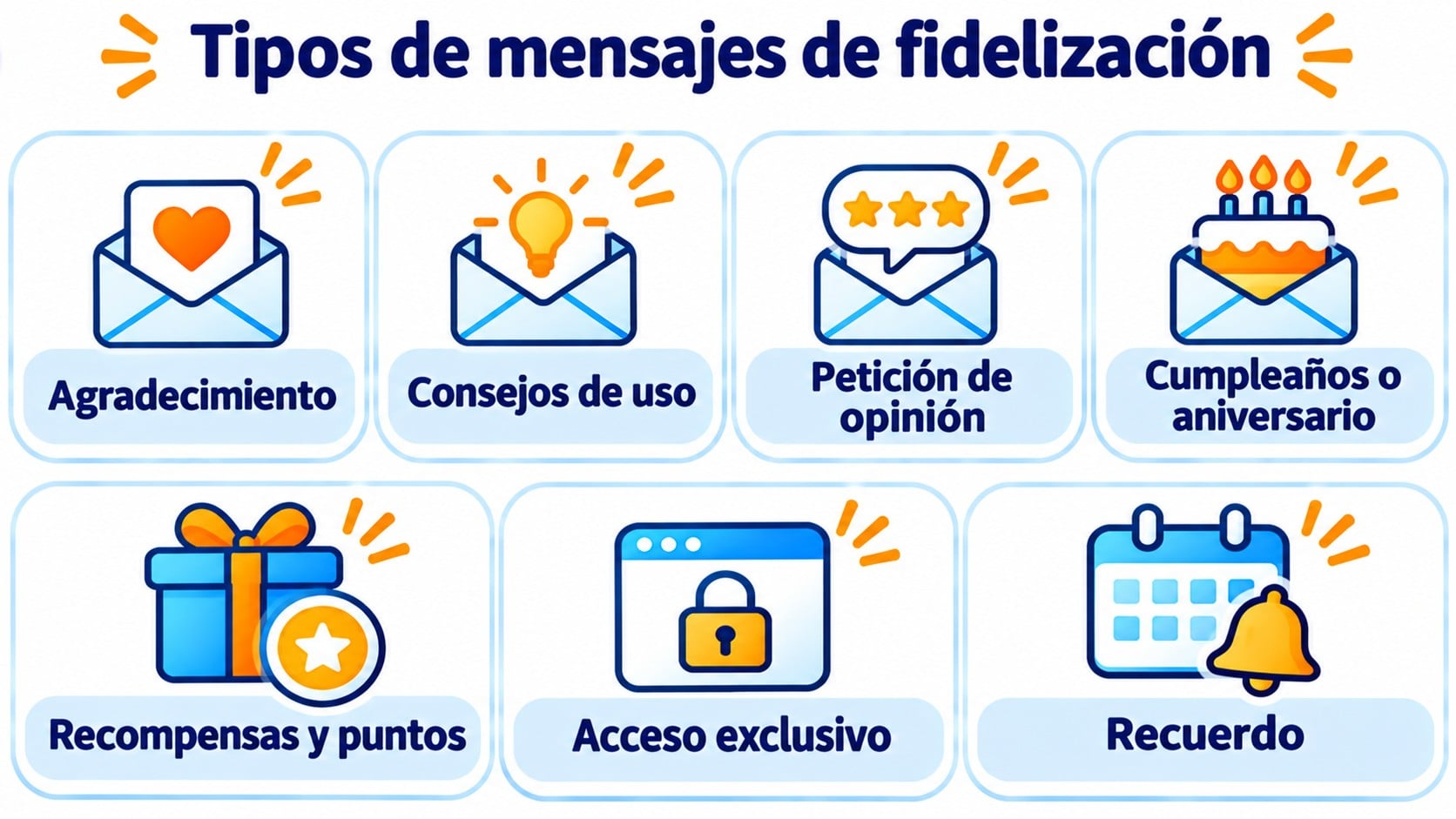
These are the most common ones, in the order they come up in the relationship:
- Post-purchase thank-you. A sincere thank-you, without selling anything else.
- Usage tips. How to get the most out of the product a few days after it arrives.
- Feedback request. A short survey or a review request, once they’ve tried it.
- Birthday or anniversary. A small gift on their birthday or on the anniversary of their first purchase. Find out more in birthday email.
- Rewards and points. Accumulated balance, points about to expire or a new tier in your loyalty program, such as a loyalty card.
- Exclusive access. New products before anyone else, customer-only content or a pre-sale.
- Reminder. For people who haven’t bought in a while, before they leave for good.
Your loyalty messages, on autopilot
Schedule your thank-you, tips and reminder messages with the automations included in Mailrelay’s free account.
Loyalty message examples to copy
Adapt these texts to your business. Replace [Name] with the contact’s field and adjust the tone to your brand.
Thank-you after the first purchase (email)
Hi [Name], your order is on its way. We wanted to thank you for trusting us. If you have any questions when it arrives, just reply to this email and a real person from our team will get back to you.
Usage tips (email, after 7 days)
[Name], how are you getting on with your coffee maker? Here are 3 tips to make better coffee from day one. If you still have any questions, we’re here to help.
Birthday (SMS)
Happy birthday, [Name]! Today you get 15% off your next purchase with the code BDAY15. Valid for 7 days.
Points about to expire (email)
[Name], you have 350 points that expire on December 31. That’s €3.50 off your next purchase. Don’t lose them.
Reminder for customers who don’t come back (email)
We haven’t seen you in a while, [Name]. Is there anything we could do better? Reply to this email and we’ll read it carefully.
For the design, you can start from templates like the birthday offer, the post-purchase review request or the stamp card.
When to send each loyalty message
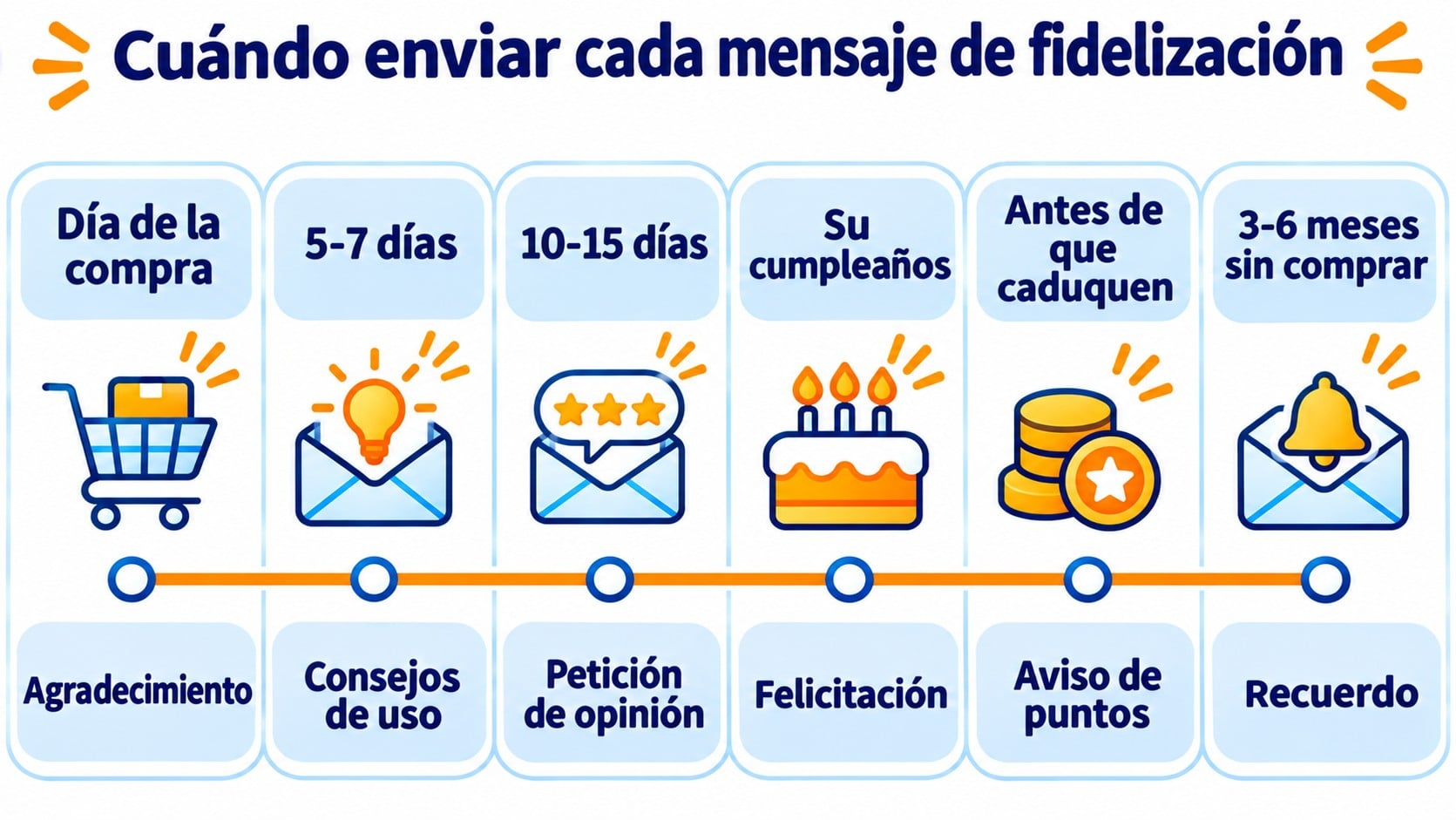
Timing matters as much as the text. Here’s a guideline for an online store:
| When | Message | Channel |
|---|---|---|
| On the day of purchase | Thank-you | |
| 5-7 days after delivery | Usage tips | |
| 10-15 days later | Feedback request | |
| Their birthday | Birthday greeting with a small gift | Email or SMS |
| Before their points expire | Balance notice | Email or SMS |
| 3-6 months without buying | Reminder |
The timing depends on your product. Shampoo gets restocked every month; a sofa, only once every several years.
How to write loyalty messages that work
First, it should be clear that you’re writing to a customer, not to a list. Use their name, mention what they bought and sign as a person, not as “the marketing team”.
Then, give more than you ask for. A useful tip or unconditional recognition builds more trust than yet another discount.
And don’t overdo it. If every loyalty message comes with an offer, customers learn to wait for the next discount before buying.
How Mailrelay helps you
With Mailrelay you schedule your loyalty messages with automations, included in the free account: the thank-you, usage tips or reminder go out on their own at the right time, and the birthday automation greets each customer on their special day. Custom fields let you use the customer’s name or any other customer data in the text.
From the same account you can also send SMS, useful for short notices like a birthday or points that are about to expire. The free account lets you send 80,000 emails a month to 20,000 contacts, with human support on every plan.
Look after your customers after the sale
80,000 free emails a month, automations, custom fields, SMS in the same account and human support on every plan.
Frequently asked questions
Do I need permission to send loyalty messages to my customers?
In Spain, for commercial communications by email, the LSSI allows you to write to customers you already have a relationship with about your company’s products similar to the ones they bought, as long as you give them the option to unsubscribe in every email. Purely informational messages, such as an order confirmation, are not commercial.
Is email or SMS better for customer loyalty?
Email for messages with more content, such as tips or news. SMS for short, time-sensitive notices, such as a birthday or points that are about to expire.
How often should I send loyalty messages?
It depends on your purchase cycle. As a guideline, three or four messages in the first month after a purchase and one or two a month after that.
Key takeaways about loyalty messages
Loyalty messages are the part of the relationship that begins when the sale ends. Thank your customers, help them, remember their special dates and write to them as people, and they’ll have more reasons to come back.