Dropshipping: What it is, how it works, and keys to success for your business
What is Dropshipping?
Dropshipping is a business model based on retail sales directly over the Internet, without keeping those products in stock. To do this, the retailer reaches agreements with online platforms, manufacturers, and/or wholesalers, who ultimately ship the order to the final customer.
In other words, in dropshipping, you sell a wholesaler’s products from your website in exchange for a percentage of sales, with the wholesaler itself being in charge of keeping the stock, preparing the order, and delivering it to your customers (for the final customer, this process is seamless).
It is a business model that allows you to create an online store without investing in any type of stock and requires very little investment.
How does Dropshipping work?
In case you didn’t know, Dropshipping is an Ecommerce variant where your store doesn’t keep the products it sells in stock; instead, you purchase the merchandise from a third party and then it is shipped directly to the customer.
Thanks to this, it is not necessary to invest too much money to start venturing into this type of sales.
However, obviously you won’t become a millionaire overnight, but if you have patience, perseverance, and do enough research, you can have an extra source of income to meet your daily expenses.
Facts and statistics about Dropshipping
Some e-commerce statistics and business figures from WWO are very enlightening:
- 40% of the world’s population (more than a billion people) have shopped online, and the trend is increasing. China, the United States, the United Kingdom, Japan, and Germany lead the list in online shopping revenue.
- Monday is the day people shop the most, followed by Tuesday and Wednesday. The best-selling online products are books, followed by electronics and computers.
- The average online shopping ticket in the USA is 108.73 dollars, and in the UK, 30% of sales are made online.
- Millennials are the group that participates the most in this type of sales, with an average spend per user of approximately $2,000 a year. However, they are also the group most likely to abandon the shopping cart; they are impatient and not very loyal, and if they encounter any inconvenience in the purchasing process, they leave the process unfinished. The average Chinese internet user is 25 years old.
- Regarding the effort of companies towards customer acquisition: 44% of companies focus more on acquisition, 16% focus more on retention, and the remaining 40% focus equally on both.
- The favorite device for browsing and online shopping is mobile phones (accounting for half the traffic), although the computer tops the list primarily for transaction security reasons. Online purchases are distributed as follows: 72% PC, 13% tablets, and 15% smartphones.

Advantages of dropshipping
Compared to creating a conventional online store, where we would have to keep stock and handle logistics, the advantages found by stores doing dropshipping are very diverse; among these advantages are:
- Requires little initial investment. It is, in a way, the cheapest method to create an online store to sell physical products. It is not necessary to stock up on products, have facilities for them, or take on their distribution.
- Logistics disappear. One of the aspects that can cause the most problems when managing an online store disappears; you don’t have to control the distribution logistics of the items you sell.
- Easily scalable. Since it is an online store, you can add as many references as you want and manage your site’s information as you wish.
- Reduced fixed costs. It is common for a single person to be in charge of managing a dropshipping store, which means neither a warehouse (there is no merchandise stock) nor personnel to manage it are necessary.
Disadvantages of dropshipping
As expected, dropshipping carries an implicit series of disadvantages that anyone considering setting up a dropshipping store should know:
- High competition. Just like you, there will be many other stores that also do dropshipping and sell exactly the same products. Therefore, you will have to fight with all of them and make sure your SEO is the best to drive traffic to your store (something that is not easy to achieve).
- Beware of your supplier. When the wholesaler provides you with the online store (sales platform), you will not be able to edit the product sheets, and this means saying goodbye to SEO. If this happens, working on SEO positioning will be very, very complicated.
- Very small sales margin. Profits are earned based on small sales commissions; you have to sell a lot to achieve significant income.
- You don’t control the quality of the products or their shipments. It is your store, and therefore, if the quality of the products is not as expected or their delivery is delayed, you are responsible in the eyes of the customer.
- Stock issues. When you are in charge of storing the items, you can directly know the products and their stock. Since this is delegated to another company, they do not always offer you an updated inventory, and this can cause problems in delivery times.
Buying and selling with Dropshipping
Dropshipping doesn’t just consist of agreeing with a third party on a transaction agreement and waiting for the cash register to ring on its own.
Although it is a very valid option to diversify the product catalog in an ecommerce site or a specialized blog on a specific topic, it has its pros and cons that are important to clarify. The main difficulty of the model is choosing the right market to focus on—which requires an exhaustive preliminary study—in order to achieve your sales goals.
Additionally, depending on the area you choose, it will also be more difficult to find the right supplier since, in many cases, differentiation leads to a shortage in the number of product suppliers.
► Analyze and understand the market well
Therefore, it is a key aspect in a Dropshipping sales initiative.
Keep in mind that on the Internet, there are many options to make money, but there is also fierce competition among sellers from all over the world.
Furthermore, in Dropshipping, profit margins are quite tight, and the ideal is to select a profitable niche with high demand and low competition. Use parameters related to profitability, saturation, web traffic, and search trends.
In this first phase of market analysis and product sales, it would be good to take a look at your competition and see how they work, how they have structured their online store, what types of products they offer, which supplier they operate with, and what their sales margins are like.
Once this field work and preliminary analysis are done, the search and selection phase among different dropshippers to market your products begins.
The precautions in this step have been mentioned previously, but what it’s really about is negotiating favorable agreements with the highest benefits and finding a serious and reliable supplier that helps build customer loyalty.
In addition to numbers and dates, carefully define the delivery structure and protocols that each supplier uses. It is advisable to have more than one so that products reach the final consumer as soon as possible.
► Once all these aspects are formalized, you can create the online store with Dropshipping
In WordPress, WooCommerce, or PrestaShop, for example. If you want to try something simpler, there are providers that allow you to set up a website online on their platform with monthly fees and quite acceptable visibility.
From there, you just have to export the catalog of products you want to market and start selling; remember to optimize product descriptions and categories so they rank top in organic traffic searches.
Once all agreements are closed, the sales process is as follows: the customer requests a product, the supplier provides and ships the merchandise within the agreed timeframe, and the retailer manages the payment and after-sales service, including incidents.
In this commercial cycle, take into account all aspects related to the consumer experience and apply aspects that facilitate good service, repeat purchases, and loyalty.
When the machinery is running smoothly, you can make decisions regarding introducing new collections or creating new business lines.
With the data in hand, it is important to assess strategic aspects derived from online advertising, with paid campaigns, using social media, email marketing campaigns with discounts and promotions, or resorting to digital marketing.
The good thing about the Internet is that you can carry out small actions of specific duration directed at specific audiences.
9 tips to increase your dropshipping sales
Increasing sales in Dropshipping has never been an easy task, but there are several tools and best practices that can help you in this effort.
Because of this, we compiled several tips to increase sales in dropshipping. Use the ones you consider necessary and start seeing changes in your earnings.
► Design a pleasant store
Although the investment is very low in the dropshipping scheme, you need an online store that truly grabs attention.
As in any type of business, potential customers buy with their eyes.
For this reason, you need an online store on Shopify that is attractive and intuitive for making purchases. While you can do Dropshipping on other platforms, Shopify helps you do it in a simple way.
In addition, the aesthetics of Shopify stores encourage learning more about the products you offer and convey security.
Of course, you must accompany them with clear copy and precise information about every detail regarding them. And since these types of online stores have a responsive design, anyone will be able to view a clean site regardless of whether they are connecting via a tablet, smartphone, or desktop computer.
► Use a good customizable checkout
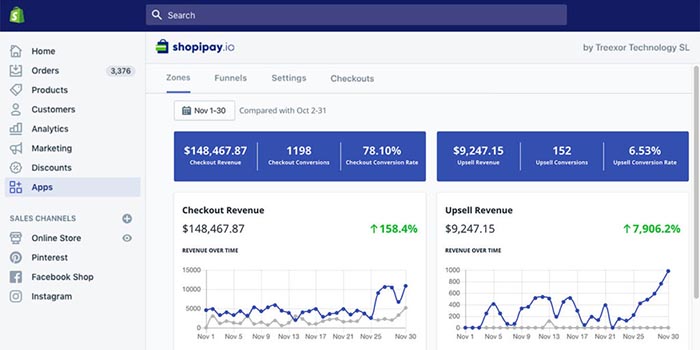
By using a customizable checkout, you will be able to simplify the purchasing process and much more.
But although there are many on the market, not all are sufficient to help you increase your dropshipping sales. For this reason, we introduce Shopipay, a perfect tool for your online store.
Shopipay is a Shopify app that gives you the ability to improve the payment process with a customizable page.
As if that weren’t enough, you can include upsells after every purchase.
This way, your customers will have the opportunity to acquire other products of yours without re-entering their payment information.
With ShopiPay, you will create the perfect shopping experience for your store.
And best of all is that you can use it without paying a cent. Unlike other customizable checkouts, ShopiPay has a completely free plan where you are only charged a small commission per sale.
Without a doubt, it is the best option for anyone looking to level up in the Dropshipping world without having to invest money.
Keep in mind, Shopify doesn’t let you make these changes, but with this app, you definitely can.
As you could surely see, it is a good tool to increase sales for your virtual store.
Advantages of Shopify:
- 1-click post-purchase upsells.
- It has a plan you can use without investing a cent.
- 20% increase in the average cart.
► Use SEO strategies
Since the Internet is filled with millions of websites all over the world, standing out from the competition can become a headache.
For this reason, achieving good positioning on Google is key to obtaining new customers and ensuring that those who know you can easily find your products or services.
It is proven that users rarely go to the second page of Google.
Because of this, it is indispensable to achieve good organic positioning to increase Dropshipping sales.
Undoubtedly, keywords are necessary to ensure that the products you offer reach the right consumers.
► Look for a specialization
In Dropshipping, all online stores must specialize in a niche.
That is, focus on a particular product.
Although many believe that focusing on something specific limits sales, with Dropshipping, the opposite happens.
Why? Because communication becomes more effective and allows you to make a difference against your competitors.
Don’t worry, when starting out in the Dropshipping business, you may not know which sector you will specialize in.
But once you have explored the terrain well, it is up to you to identify your customers’ needs and focus on satisfying them.
Who would you buy from if you were looking for a gaming mouse to binge on your favorite games? Any tech store or one that specializes in gaming gear?
You will probably choose the second option.

► Offer quality service
Providing excellent customer service will always be key to obtaining a good reputation among consumers.
And in the Dropshipping business, it is all due to the Internet and the ease of sharing opinions on any topic.
Don’t be afraid to lose a little money if you have problems with a shipment or suppliers, as long as your customer feels happy.
This way, it will make them trust you, increasing the chances that in the future they will recommend your online store to their circle of friends.
► Set convenient prices
It is impossible to do dropshipping with such a minimal profit margin that it barely leaves you enough cash flow to operate. It is recommended that you aim for profit margins of 60 or 70% so you can take advantage of this type of sales.
► Don’t participate in a price war
By entering a price war, customers might stay with you for the sole reason that you sell cheaper. However, this strategy has a limit, which is that you cannot lower the price to the point of affecting your profit margin.
If you want to avoid this happening, then provide added value that goes beyond the price.
We are talking about the service, customer support, or the information you provide, for example. The ideal is to aim for people to be happy with your brand and not just with the products you sell.
► Analyze each of your products
Just because dropshipping allows you to work without upfront stock doesn’t mean you can add any product you want to your store.
Obviously, this is possible, but it could harm you much more than you imagine.
By adding poor-quality products or those with negative reviews, you could end up with unsatisfied customers and unnecessary product returns.
In addition to returns incurring costs, they create a negative image of your brand. So avoid them as much as possible!
► Carefully analyze the suppliers you work with
You must be clear that not all suppliers offer the same possibilities and conditions regarding prices.
For this reason, it is indispensable to know your dropshipper well.
There will be some that have good prices and others not so much; there will also be those that impose a set of conditions and others that do not. Take your time to discover who your perfect supplier could be, and you’re set.
As you have surely seen, it is very convenient to analyze your supplier, their way of working, and their conditions.
This way, you will work only with the best of the best, reaching an acceptable sales level without having to deal with returns or unsatisfied customers.
Examples of Dropshipping businesses
Fashion, beauty accessories, complements, watches, technology, home products, decoration, pets, hobbies, and sports are some of the sectors most exploited by the Dropshipping universe.
Below we detail some examples of online distributors worldwide, and also in Spain.
AliExpress is a clear example of Dropshipping.
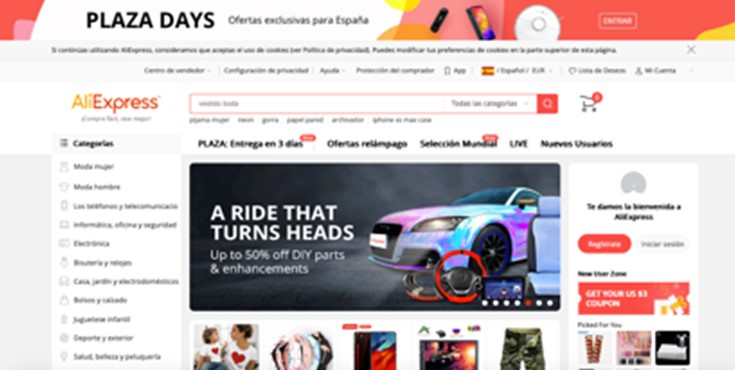
The Asian giant markets practically all types of wholesale products for online stores spread across all five continents.
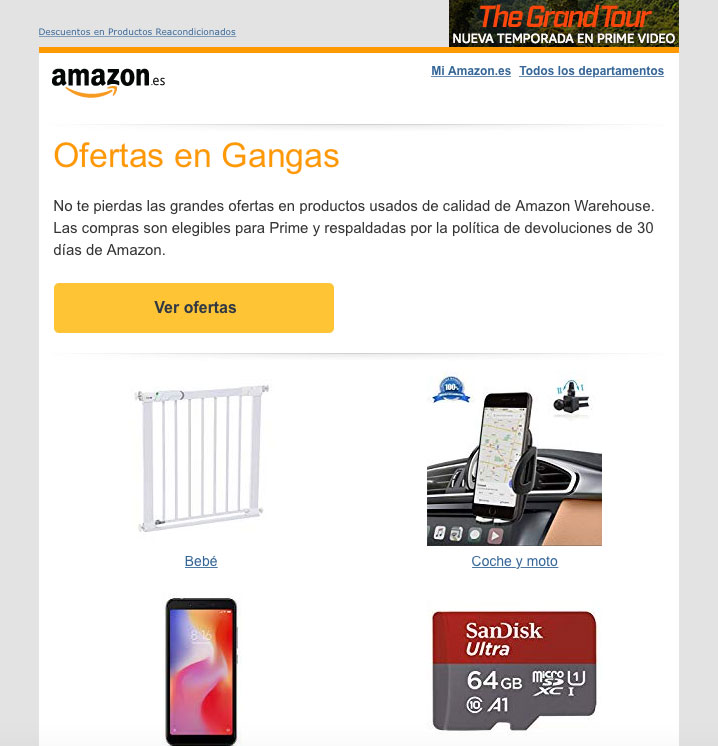
Sales giants from the United States such as Amazon, Sears, eBay, or Zappos do it too.
Jack Ma, founder of Alibaba, and Jeff Bezos, CEO of Amazon, top the billionaire rankings with profits gained from e-commerce.
In addition to AliExpress, in China there are platforms like Chinavasion, DealExtreme, or MiniInTheBox.
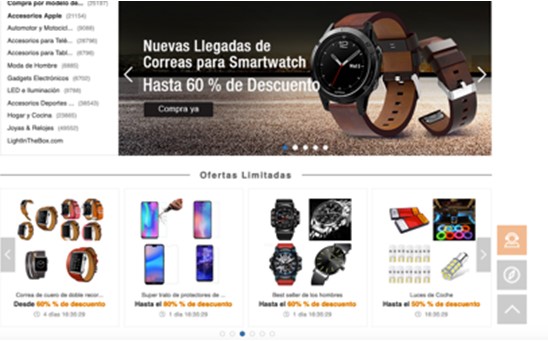
The latter, available in 24 different languages, markets products such as watches, jewelry, phones, automotive items, and smartphone accessories.
Also related items such as men’s fashion, gadgets, home, kitchen, pets, and lighting. They work directly with the manufacturer and guarantee fast deliveries (with warehouses in Europe and the United States) and secure transactions.
A European-level dropshipping wholesaler is BigBuy, a B2B online store available in 24 languages with a multichannel integration platform across different mediums (PrestaShop, eBay, or Amazon).
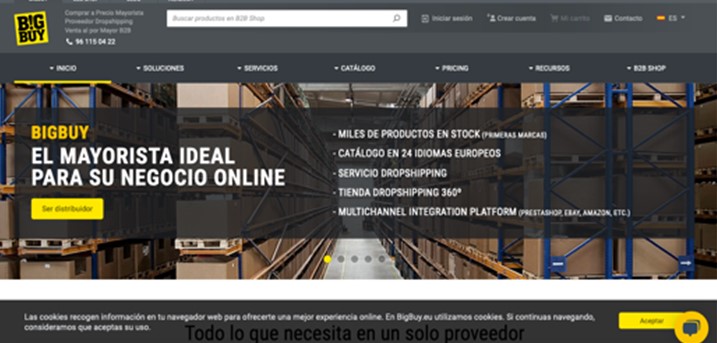
It has online and offline channels and offers two pricing rates: for wholesalers and 360.
Its corporate blog includes sales tips for e-commerce, corporate information, and sales tools for campaigns like Valentine’s Day or Black Friday, for example.
Other similar Dropshippers where you can find all kinds of products are RedPointShop, Shopify, or Plasticosur.
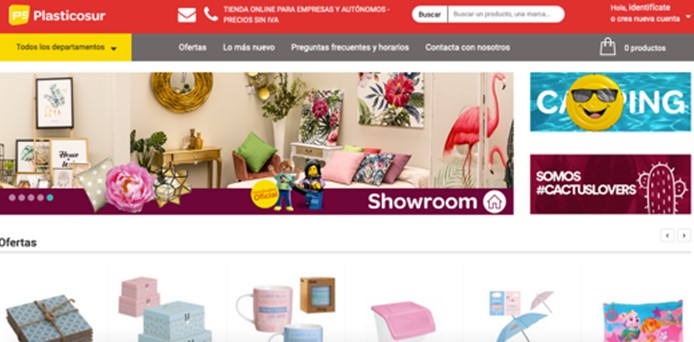
The latter is based in Seville and offers a wide range of products for leisure, toys, in addition to ticket management and purchase.
Fashion and footwear are represented on platforms like Grupocoas, Mabisy, Lenceriasecret, ModaCreativa, Chollomoda, Secret, Brandsdistribution, or Garatti, the latter specialized in manufacturing Spanish footwear and distributing it in physical shoe stores.
Home and decoration products are found at AquimasBarato, Cristalymenajeonline, Mabisy, Nedis, and Red Point Source.
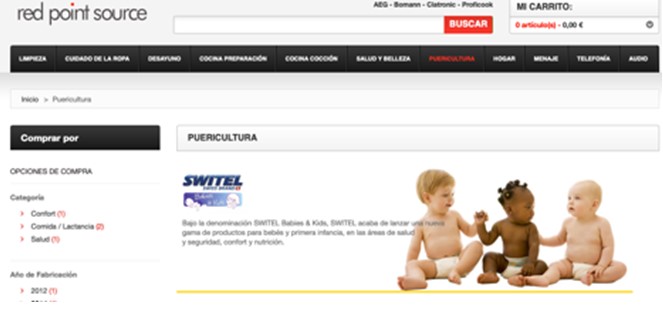
Cleaning, clothing care, breakfast, childcare, home, audio equipment, telephony, and health and beauty are the categories of this last dropshipper based in Madrid.
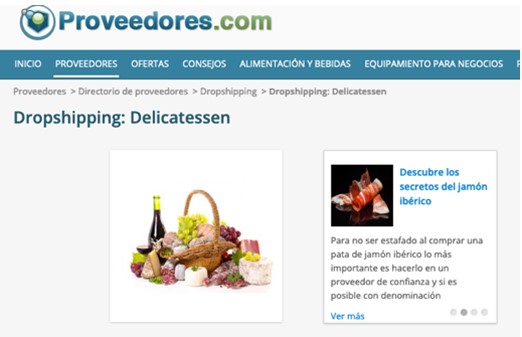
When it comes to gastronomy dropshippers, suppliers like Ecopasion, Delicatplural, Frappemania, Productosecologicos, Productosnavarioja stand out, as well as delicatessen suppliers like Proveedores.com specializing in catering.
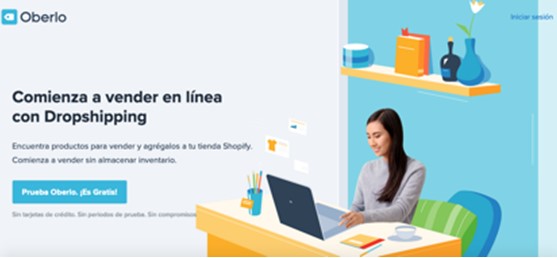
For the sale of computers and accessories, consoles, and video games. Dedicated to computing, suppliers like Oberlo, Printful, Infortisa, Ociovisual, or Megasur also stand out.
Conclusions
We have mentioned that the main objective of developing a Dropshipping initiative is to obtain economic profitability, but you can also use this sales strategy to increase your website traffic or define a branding initiative with valuable information about the products you market in your store. Content marketing is the ideal alternative in this regard.
Monetizing a website or an e-commerce platform with a Dropshipping sales system is relatively simple and viable with a small budget and without extensive technological knowledge.
Having said that, despite its viability, it is important to develop a broader structure involving other web mediums such as a blog, emailing, and social media. The latter are very necessary if you want people to know your product, know about you, see what you do, and what solutions you offer so that, ultimately, they end up buying your products.
Oh! One last thing, do not forget to read the fine print of the agreements closed with dropshippers to avoid disappointments with your customers and maintain the quality standards your company needs to thrive.