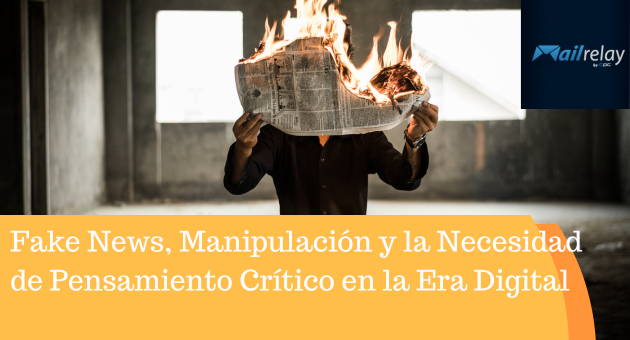
We live in the information age, a time when access to news and data is literally at our fingertips.
However, this abundance of information comes with its own set of challenges.
Chief among them is the proliferation of “fake news” — false stories or disinformation that spreads through digital communication channels.
These “fake news” stories are much more than simple lies; often, they’re tools used to manipulate public opinion, influence political decisions, and sow discord.
In this complex information landscape, critical thinking becomes more important than ever.
We need the ability to tell truth from lies, question sources, and resist manipulation.
In this article, we’ll explore the phenomenon of “fake news”, how it’s used to lie and manipulate, and the vital importance of critical thinking in the digital age.
A Brief Explanation of What “Fake News” Is
“Fake news”, or false news, is inaccurate or misleading information presented as real facts.
It’s often distributed through social media and other digital platforms, taking advantage of their ability to spread information quickly to large numbers of people.
“Fake news” can take many forms, from sensationalist headlines designed to attract clicks to fabricated articles and videos aimed at spreading disinformation.
It’s important to keep in mind that “fake news” isn’t simply errors or inaccuracies in information.
Instead, it’s a deliberate attempt to spread falsehoods and deceive the public.
Whether to influence public opinion, promote a political agenda, or generate profit through online traffic, “fake news” poses a significant challenge to the public’s understanding of facts and truth in our digital age.
📌 The Importance of Fake News in Today’s Era
In today’s era, the issue of “fake news” is of critical importance.
We live in an era characterized by the rapid flow of information, where news headlines spread across social media and websites faster than most of us can keep up with.
This environment, while offering many advantages in terms of access to information, has also made it easier for disinformation to spread.
“Fake news” can have serious, harmful consequences.
On an individual level, it can distort our perspectives and our decisions.
Collectively, it can polarize societies, influence election outcomes, and taint public debate.
In some cases, “fake news” has even contributed to violence and social unrest.
What’s more, the rise of “fake news” has eroded trust in institutions and traditional media, making it harder to establish the truth and fostering a climate of skepticism and distrust.
Therefore, addressing and understanding “fake news”, as well as developing critical thinking skills to combat it, is essential in today’s hyperconnected, information-flooded world.

What Is Fake News?
“Fake news”, or false news, is a form of disinformation that is deliberately presented as true.
While this phenomenon isn’t new, it has become especially relevant in the digital age due to the ease with which information can be created, altered, and spread through the internet and social media.
“Fake news” can take many forms and spreads for a variety of reasons.
Some is created and spread for political purposes, seeking to influence voters, discredit opponents, or manipulate public debate.
Other fake news may have economic motives, since eye-catching headlines can attract visitors to websites, generating advertising revenue.
“Fake news” can range from sensationalist or misleading headlines to completely fabricated stories.
In some cases, a story may contain elements of truth, but they’re distorted or taken out of context to serve a particular agenda.
The impact of “fake news” is considerable.
It can erode trust in institutions and the media, influence people’s attitudes and behaviors, and even affect the outcome of elections and other important events.

Common Signs That Give Away a Fake News Story
Identifying “fake news” can be challenging, especially when the disinformation is designed to look credible.
However, there are some warning signs that can indicate you’re looking at a fake news story:
- Unknown origin: If the source of the story is unknown, or the information hasn’t been reported by any reliable news organization, that could be a sign the story is false.
- Sensationalist headline: “Fake news” headlines are often sensationalist and designed to provoke an emotional response. They may make exaggerated or alarmist claims that aren’t backed up by the content of the article.
- Grammar and spelling errors: “Fake news” tends to have more frequent grammar and spelling errors than real news. If you see an article with these kinds of errors, it could be a sign that it’s not reliable.
- Lack of evidence: “Fake news” tends to make claims without providing evidence or references to reliable sources. If a story makes important claims without backing them up, it’s likely false.
- Manipulated images or videos: “Fake news” often uses images or videos that have been manipulated or taken out of context to support its narrative.
- Old or missing publication date: “Fake news” often recycles old stories or doesn’t include a publication date at all.
- Suspicious-looking website: “Fake news” often spreads through websites that may have low-quality design, strange URLs, or that try to imitate legitimate news sites.
Spotting these warning signs can help you detect “fake news”.
However, it’s important to remember that no single one of these signs is definitive proof that a story is false, which is why it’s crucial to practice critical thinking and verify information against multiple reliable sources.
Motivations Behind Fake News
The motivations behind “fake news” vary and often depend on the individual or group creating and spreading it.
Here are some of the most common motivations:
→ Political Motivations
“Fake news” can be used as a tool to influence public opinion, favor a candidate or political party, discredit opponents, or simply create confusion and discontent.
In election contexts, “fake news” can be particularly damaging, since it can alter voters’ perceptions and decisions.
→ Economic Motivations
A lot of “fake news” is created with the goal of generating traffic to websites or social media platforms.
Sensationalist headlines and shocking stories can attract large numbers of users, which translates into advertising revenue.
This type of “fake news” is often created without regard for its implications or the harm it can cause.
→ Ideological or Religious Motivations
Some “fake news” is generated to promote a particular ideology or religious belief.
It can be used to reinforce existing prejudices, foster intolerance or hatred, or radicalize individuals and groups.
→ Destabilization Motivations
In some cases, “fake news” is used as a tactic to destabilize a society, a government, or an organization.
By creating and spreading false stories, bad actors can sow discord, foster fear and distrust, and erode faith in institutions.
It’s important to remember that these motivations aren’t mutually exclusive and often overlap.
Regardless of the motivation, “fake news” poses a threat to the accuracy of information and requires us to exercise critical thinking to unmask it.

Motivations for Sharing Fake News
Beyond the motivations behind creating “fake news”, it’s important to look at why people share it.
Often, those who spread these false stories aren’t the ones who create them, but everyday social media users who, for various reasons, decide to share them.
Some of the most common motivations:
→ Confirming Preexisting Beliefs:
Often, people share “fake news” because it confirms their existing beliefs or biases.
This phenomenon, known as confirmation bias, makes us more likely to accept information that supports our opinions and to ignore or reject information that contradicts them.
→ Identity and Group Belonging
Some people share “fake news” as a way to reaffirm their identity or their membership in a particular group.
Sharing stories that reflect a group’s beliefs or values can strengthen ties with that group and reinforce a shared identity.
→ Emotions and Reactions
“Fake news” often triggers strong emotions, whether fear, outrage, surprise, or amusement.
Stories that trigger these intense emotional reactions are more likely to be shared, even if the accuracy of the information is questionable.
→ Influence and Popularity
In some cases, people share “fake news” to gain influence, recognition, or popularity on social media.
Sharing shocking or sensationalist stories can attract attention and generate engagement, which can make a person feel more visible or important.
Understanding these motivations can help us fight the spread of “fake news”.
→ Economic Motivations
In some cases, people may receive financial incentives for sharing “fake news”.
This can happen on platforms that reward users for the traffic or engagement they generate, or through more direct monetization schemes.
For example, some people may be hired to spread disinformation, or they may earn money promoting products, services, or ideas by spreading false stories.
By becoming aware of why we share it, we can start to question our own actions and exercise more critical thinking.

Some Curious Examples of Fake News
→ The War of the Worlds:
In 1938, Orson Welles adapted H.G. Wells’s novel “The War of the Worlds” into a radio news bulletin format.
Although it was announced that the broadcast was a work of fiction, many listeners believed Earth was being invaded by aliens, causing panic in some areas.
→ The 2016 U.S. Presidential Election:
During the 2016 election, “fake news” played a prominent role.
Numerous false stories spread, such as the one about a Washington D.C. pizzeria supposedly involved in a human trafficking ring led by senior Democratic Party officials.
→ The Flying Spaghetti Monster:
In 2005, Bobby Henderson wrote an open letter to the Kansas Board of Education claiming he believed in a deity made of spaghetti and meatballs, in response to the board’s decision to allow intelligent design to be taught as an alternative to evolution in schools.
Although the intent was satirical, some people took the letter literally and believed in the existence of this deity.
→ The Death of Paul McCartney
In 1969, a rumor claimed that Beatles member Paul McCartney had died in a car accident in 1966 and had been replaced by a lookalike.
Fans of the band searched for “proof” of this theory in song lyrics and album covers.
→ Sharks on the Highway
After every major hurricane or flood, photos tend to appear of sharks swimming in flooded streets or highways.
Although these images are usually fake composites, they’re often widely shared on social media.
These examples show that “fake news” can arise in a variety of contexts and can vary in seriousness and credibility.
Regardless of the intent behind these stories, they all underscore the importance of verifying information before sharing it.

Fake News and Conspiracy Theories
“Fake news” and conspiracy theories share many similarities.
Both rely on spreading unverified information or outright false information that, in many cases, can be sensationalist or provoke fear or discontent.
However, there are also key differences between the two.
Conspiracy theories tend to involve the belief in a secret or powerful group manipulating world events for malevolent purposes.
These theories can be especially appealing in times of uncertainty or fear, since they provide simple explanations for complex problems and help people feel they have some control over a situation by understanding what’s “really” happening.
“Fake news”, on the other hand, doesn’t always involve a conspiracy theory.
Often, it’s simply false or misleading information spread with the goal of influencing opinions, generating clicks on a website, or, in some cases, just for fun.
However, “fake news” and conspiracy theories are often intertwined.
“Fake news” can fuel and spread conspiracy theories, and people who believe in conspiracy theories can be especially susceptible to “fake news”, since it can confirm their preexisting beliefs.
What’s more, both “fake news” and conspiracy theories can have harmful effects on society.
They can generate distrust toward institutions and experts, foster polarization and conflict, and make it harder to make fact-based decisions.
That’s why it’s crucial to develop critical thinking skills and media literacy to identify and counter both “fake news” and conspiracy theories.

How Social Media and Digitalization Have Fueled the Spread of Fake News
Social media and digitalization have played a crucial role in the spread of “fake news”.
Before the digital age, news production and distribution was largely in the hands of established journalistic organizations, which generally followed certain standards and ethical practices.
However, with the rise of the internet and social media, anyone can publish and share information, regardless of its accuracy.
This has made it easier for “fake news” to spread quickly for several reasons:
→ Speed and Reach:
Social media allows information to spread quickly and reach a global audience within seconds.
This means “fake news” can spread long before there’s a chance to verify or debunk it.
→ Closed Information Ecosystems:
On social media, people often interact mainly with individuals who share their beliefs and views.
This can create “echo chambers” where “fake news” spreads unchallenged.
→ Personalization Algorithms:
Social media platforms use algorithms to determine what content to show each user, based on their past behavior.
This can lead people to see and share more “fake news” that confirms their own beliefs, a phenomenon known as “confirmation bias”.
→ Lack of Fact-Checking:
In the digital age, information is often shared based on catchy headlines or striking images, without its content being verified.
This makes it easier for “fake news” to spread.
→ Anonymity:
The internet and social media allow for anonymity, which can make it easier to create and spread “fake news” without fear of repercussions.
So, while social media and digitalization have many benefits, they’ve also made it easier for “fake news” to spread.
This underscores the importance of promoting media and digital literacy, and encouraging responsible information sharing.

Lies and Manipulation Through Fake News
“Fake news” is a powerful tool for lies and manipulation.
By spreading false or misleading information, “fake news” can distort reality, create or worsen conflict and polarization, and manipulate public opinion.
→ How “Fake News” Is Used to Lie to and Manipulate People
“Fake news” can be used to promote specific political, economic, or social agendas.
For example, it can spread lies about a political candidate to damage their reputation, or exaggerate a product’s benefits to boost sales.
It can also be used to foster division and fear, for example by spreading false rumors about an ethnic or religious group.
→ Examples of How It Has Been Used to Influence Public Opinion, Elections, and More
A notable example of how “fake news” can influence public opinion is the 2016 U.S. presidential election, where disinformation was used to sow doubt about the candidates and polarize voters.
Another example is the Brexit referendum in the United Kingdom, where false claims about the costs and benefits of EU membership were spread.
→ The Psychology Behind Why People Believe “Fake News”
There are several psychological reasons why people may believe “fake news”.
One is confirmation bias, the tendency to seek out and believe information that confirms our preexisting beliefs.
Another is the availability heuristic, which leads us to give more weight to information we recall easily, which is often the most recent or emotionally charged information.
In addition, people may be more likely to believe “fake news” when they’re anxious or feel threatened, since these stories often play on our fears and worries.
Fake News and Geopolitics
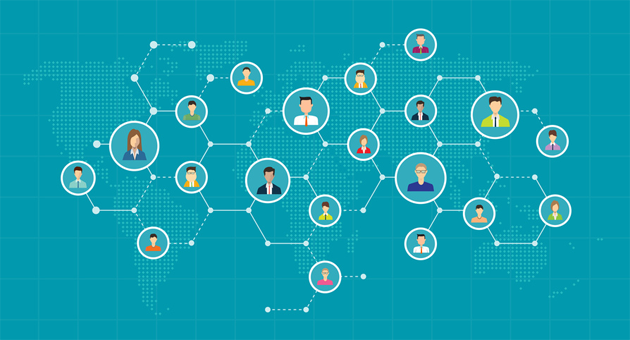
“Fake news” can be, and has been, used for geopolitical purposes.
In fact, disinformation is a common tool in “information warfare”, a form of conflict in which countries use information and disinformation to achieve their strategic goals.
Some examples of how “fake news” is used in the geopolitical context include:
→ Influencing Elections:
As mentioned earlier, “fake news” can be used to influence a country’s elections.
This can include spreading false or misleading information about candidates, policies, or the electoral process itself.
The goal may be to influence the outcome of the election or simply to sow distrust in the democratic process.
→ Destabilizing Societies:
“Fake news” can be used to deepen social and political divisions within a country.
This can include spreading rumors or conspiracy theories that fuel fear, anger, or resentment between different groups.
→ Manipulating the International Narrative:
“Fake news” can also be used to influence international perceptions of a country or a conflict.
This can include spreading false or biased information to portray a country or its leaders in a particular light, or to justify specific actions or policies.
In all these cases, the goal is to influence people’s perception and behavior in order to achieve strategic objectives.

The Importance of Critical Thinking
In today’s climate of fast, abundant information, critical thinking is more important than ever.
Critical thinking allows us to evaluate and analyze the information we receive, instead of simply accepting it without question.
“Fake news” and disinformation thrive in the absence of critical thinking.
When people accept information based on catchy headlines or how well it matches their preconceptions, rather than evaluating the source, logic, and evidence, “fake news” can spread quickly.
→ This Is Where Critical Thinking Comes In
By questioning the information we receive, seeking out reliable sources, checking facts, and considering multiple perspectives, we can protect ourselves against disinformation and make better-informed decisions.
Critical thinking also helps us better understand the world around us.
It helps us identify biases, recognize the complexity of problems, and think of creative solutions.
Developing critical thinking skills should be a priority in education and ongoing training.
By fostering critical thinking in schools, workplaces, and society at large, we can counter the impact of “fake news” and disinformation, and promote a more informed and engaged citizenry.

Why Is Critical Thinking a Crucial Skill for Detecting “Fake News”?
Critical thinking is an essential skill for detecting “fake news” because it allows us to evaluate and analyze the information we receive in an objective, logical way.
Instead of accepting information at face value, critical thinking encourages us to question it and look for evidence that backs it up.
Here are some specific ways critical thinking helps us detect “fake news”:
→ Evaluating Sources:
Critical thinking helps us assess how reliable a source of information is.
This means considering who’s providing the information, what their motives are, whether they have any affiliation that could bias their perspective, and whether the information has been verified or corroborated by other reliable sources.
→ Fact-Checking:
Critical thinking encourages us to verify facts for ourselves.
This can involve looking up information across multiple sources, checking data against official or expert sources, or using online fact-checking tools.
→ Analyzing Logic and Bias:
Critical thinking lets us analyze the logic behind arguments and spot any bias or logical fallacy.
This helps us see whether information is being presented in a misleading way, or leaving out important details.
→ Considering Multiple Perspectives:
Critical thinking pushes us to consider multiple perspectives and understand the complexity of issues.
This helps us avoid the simplistic or one-sided views often presented in “fake news”.
Critical thinking is a crucial skill for detecting “fake news” because it lets us be smarter, better-informed consumers of information.
Instead of being passively influenced by the information we receive, it allows us to actively evaluate it, question it, and make our own decisions based on a clear, objective understanding of the facts.

Strategies for Developing Critical Thinking
Developing critical thinking is a skill that can be learned and improved through practice and conscious application.
Here are some effective strategies you can use to strengthen your critical thinking and become a more informed consumer of news and information.
- Cross-check with multiple sources: Whenever possible, verify information across several sources before accepting it as true. Compare how different sources present the information to get a more complete, balanced view.
- Examine the source of the story: Consider who published the information and what their motivations might be. Is it a reliable, well-respected source? Do they have any bias or stake in the topic? Are experts cited, or is research referenced to back up the claims?
- Seek out opposing views: Exposing yourself to different viewpoints can help you better understand a topic and recognize any bias in your own thinking. Look for opinions and arguments that oppose your own point of view and consider their merits.
- Ask and question: Don’t accept information at face value. Ask questions, seek clarity, and question assumptions. If something seems too good (or too bad) to be true, it probably is.
- Reflect on your own biases: We all have biases that can influence how we interpret and respond to information. By becoming aware of your own biases and striving to think more objectively, you can improve your critical thinking.
- Develop empathy and an open mind: Critical thinking isn’t just about debunking false or misleading ideas. It’s also about better understanding others and seeing the world from different perspectives. Empathy and open-mindedness are essential for this.
Critical thinking is a skill that develops over time.
Don’t get discouraged if you don’t always manage to spot “fake news” or if you find it hard to consider opposing perspectives.
With practice and patience, you can improve your critical thinking skills and become a more informed, mindful consumer of information.
📌 How Fake News Relates to Business Marketing
The phenomenon of “fake news” and disinformation in general can wear down public trust in the messages people receive, even those that aren’t news per se.
This can be particularly relevant in marketing and advertising, where credibility and trust are essential to the relationship between brands and their customers.
The widespread distrust generated by the prevalence of “fake news” can make consumers more skeptical of marketing and advertising messages, and they may require more evidence before believing brands’ claims.
This means companies may need to work harder to build and maintain trust with their customers, and be especially transparent and honest in their communications.

Email Marketing as a Response to an Environment of Distrust
Email marketing can be an effective strategy in this environment.
First of all, email marketing is based on consent; the recipients of your emails have opted in to receive your communications, which indicates a certain level of preexisting trust and relationship.
In addition, email marketing offers the chance to personalize and tailor your messages in a way that other marketing channels sometimes don’t allow.
This can help strengthen customer relationships and build greater trust.
Here are some ways email marketing can help:
→ Direct, Personalized Communication:
Through email marketing, you can speak directly to your customers, personalizing messages according to their needs and preferences.
This level of personalization can increase the relevance and authenticity of your messages.
→ Transparency:
You can use email marketing to be transparent with your customers.
For example, you can share details about how your business works, your commitment to fair and ethical practices, and so on.
→ Education:
Email marketing can also be a platform to educate your customers about your products or services, sharing detailed, accurate information.
You can also help educate your customers on how to recognize and respond to “fake news”.
→ Community Building:
Finally, email marketing can be a way to build a community of engaged, loyal customers.
You can use your emails to share customer stories, highlight how your products or services are helping people, and use other strategies to build an emotional connection with your customers.
In conclusion, email marketing can be an effective tool for building and maintaining trust in an environment where “fake news” has increased skepticism and distrust.
Conclusion
In our digital age, the proliferation of “fake news” has highlighted the crucial importance of critical thinking.
With it, we can effectively analyze and evaluate the information we receive, telling fact from fiction.
Developing this skill is an ongoing process, one that requires reflection, source-checking, and a willingness to understand multiple perspectives.
Despite the challenges posed by “fake news”, armed with critical thinking, we’re better equipped to navigate our information-driven world, seeking the truth amid disinformation.
This phenomenon spreads largely thanks to social norms and certain psychological triggers that push us to share without verifying.