Brand image: what it is, examples and how to measure and improve it
What the public thinks of your brand when you're not in the room, and how to measure and improve it
What is brand image?
Brand image is what the public thinks and feels about a brand: the ideas, memories and emotions that come to mind when they hear its name. It isn’t decided by the company, but by each customer, based on what they see, hear and experience with it.
Marketing professor Kevin Lane Keller defined it in 1993, in the Journal of Marketing, as the perceptions about a brand as reflected by the brand associations held in consumer memory. That’s why two people can have very different images of the same brand.
Brand image refers to the perceptions and associations consumers have with a particular brand.
It is the set of beliefs, ideas and impressions that a person has about a product, service or company.
This image is influenced by advertising, design, customer experience, reputation and other factors that shape the brand identity.
Brand image carries a lot of weight in marketing, as it influences how consumers perceive and react to a brand.
A positive brand image can increase loyalty, encourage word of mouth and allow a company to charge premium prices.
On the other hand, a negative brand image can deter customers and reduce sales.
Elements of brand image
Some of the aspects that shape this image are:
- Brand personality: The human traits or characteristics associated with a brand, such as being innovative, reliable or fun.
- Brand values: The core principles and beliefs a brand stands for.
- Brand associations: The thoughts and feelings connected to a brand, which can be both rational and emotional.
- Brand positioning: The way a brand sets itself apart from its competitors in the consumer’s mind.
How is it different from brand identity, branding and positioning?
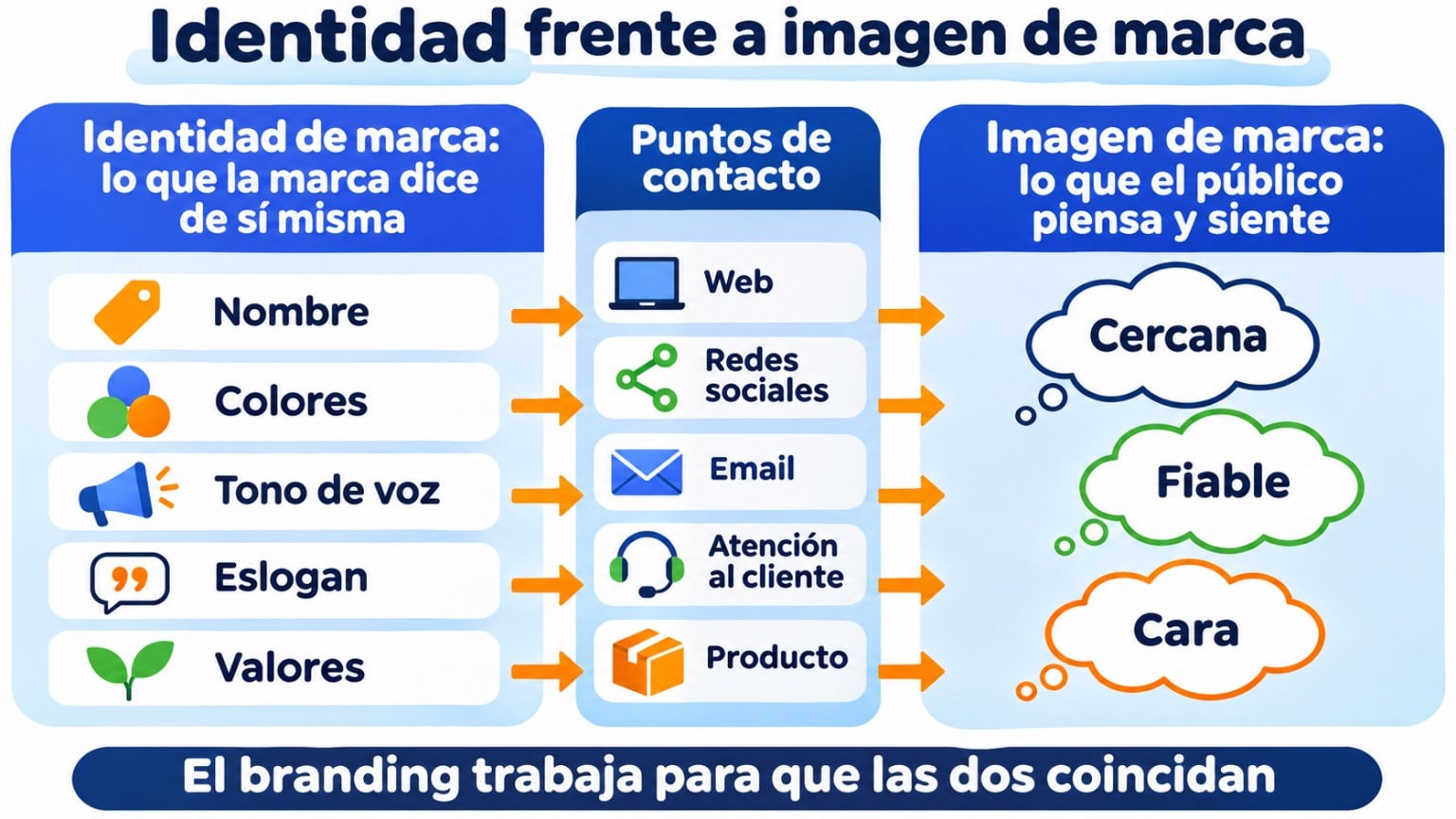
These concepts are often used almost as synonyms, but each one looks at the brand from a different angle. The difference lies in who controls it.
| Concept | What it is | Who controls it |
|---|---|---|
| Brand identity | What the brand says about itself: name, logo, colors, tone, slogan | The company |
| Brand image | What the public thinks and feels about it | The public |
| Corporate image | How the company as a whole is perceived, not a specific product | The public |
| Branding | The work of bringing the image closer to the identity | The company |
| Positioning | The place the brand holds in the customer’s mind compared with the competition | Both |
| Brand awareness | How many people know and remember it | The public |
That’s why a brand can be very well known and have a poor image, or have an excellent image that hardly anyone knows about. Brand building is about improving both at the same time.
Brand image examples in small businesses
These three cases are made up, but they happen in many businesses. In all three, the company knows what it wants to convey. What changes is what the customer takes away.
| Business | What it wants to convey | What the customer perceives | What fails or what works |
|---|---|---|---|
| Neighborhood bakery | Artisan products and a personal touch | “Good bread, but there’s always a line and they don’t say hello” | The product fits, the service doesn’t |
| Online clothing store | Sustainable fashion | “Nice, but I get three discount emails a day” | The sending frequency clashes with the message of responsible consumption |
| Advisory firm for freelancers | Clarity and speed | “They reply the same day and explain things without jargon” | The experience delivers on the promise |
Brand image is formed at every touchpoint of the customer journey, not just in advertising. A nice poster doesn’t make up for cold service, and a clear value proposition loses strength if the experience doesn’t live up to it. In the post on brand marketing you’ll find more ideas for working on it through your communication.
Strategies to build a positive brand image
These are some of the strategies that help the most:
- Brand consistency: Ensure that every customer touchpoint is consistent in tone, style and message.
- Commitment to quality: Offer high-quality products or services that meet or exceed expectations.
- Effective communication: Use advertising and promotions that clearly communicate the brand’s values and benefits.
- Corporate Social Responsibility (CSR): Engage in ethical and socially responsible practices to strengthen reputation.
How do you measure brand image?
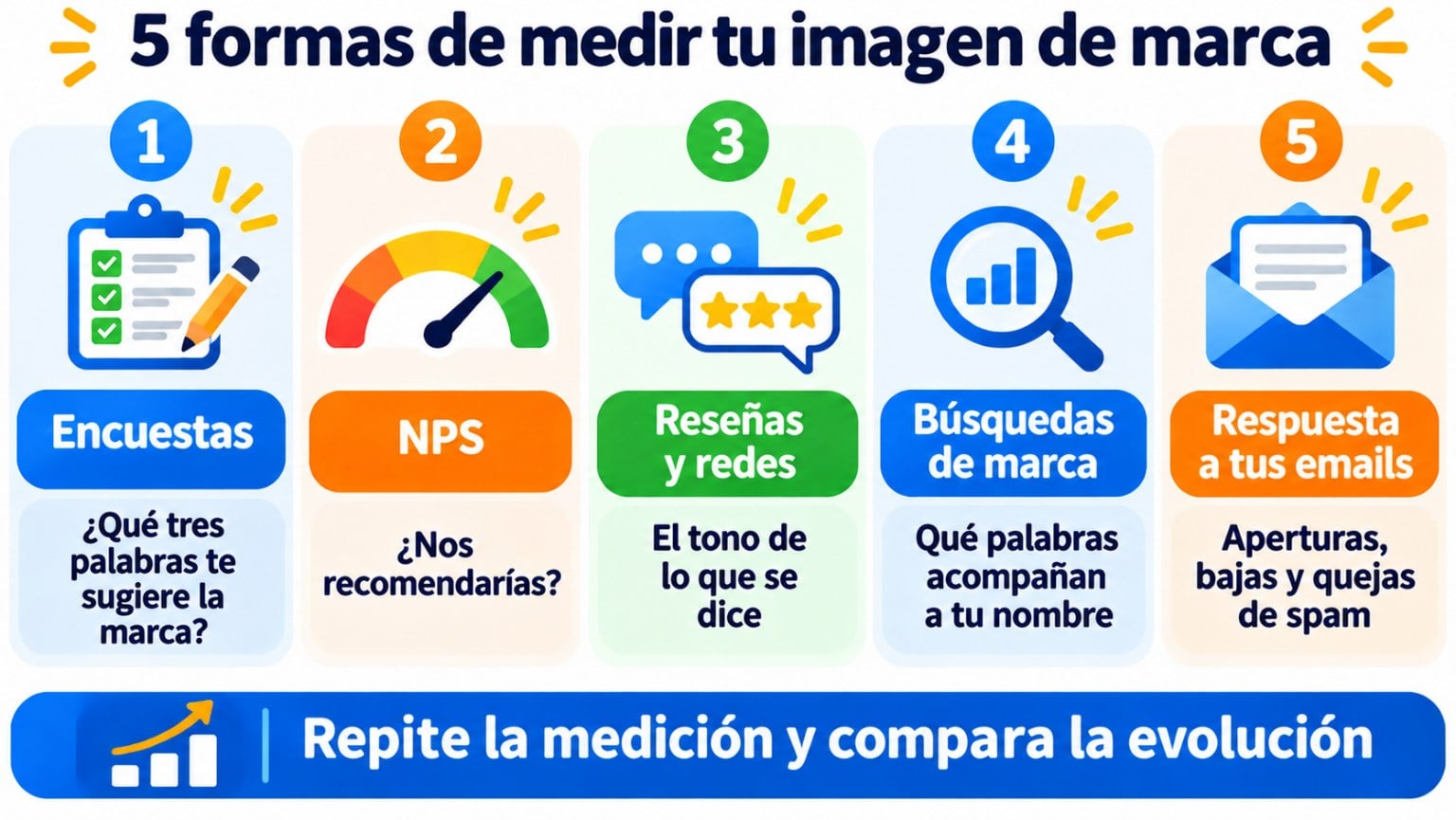
Brand image lives in people’s heads, so there’s no single number that sums it up. The usual approach is to combine several signals and repeat the measurement from time to time to see the trend.
Association surveys. Ask customers, and people who aren’t customers yet, which three words come to mind when they think of your brand. Compare them with the ones you want to convey. If you say “approachable” and they say “expensive”, you know where to start.
NPS. The Net Promoter Score measures how many customers would recommend you. It doesn’t explain why, but if it drops, something in your image is going wrong.
Reviews and social media. Read what people say about you in reviews, comments and mentions. More than the number, what matters is the tone and whether it gets better or worse over time.
Searches for your brand. In Google Search Console you can see whether searches for your name are growing and which words come with them, such as “reviews”, “price” or “problems”.
Response to your emails. Opens, unsubscribes and spam complaints also say something about your image. If a lot of people unsubscribe after a send, the message didn’t match what they expected from you.
How does email affect brand image?
For many customers, the newsletter is their most frequent contact with a brand, more than the website or the store. Every send either adds to it or takes away from it. Points in your favor: a sender they recognize, templates in your colors, a consistent signature, a reasonable frequency and an easy unsubscribe. Points against: emails that land in spam, emails that don’t let people unsubscribe and emails sent without thinking about who receives them. Taking care of your sender reputation and your email marketing strategy is also taking care of your brand image.
Impact on marketing
Indeed, everything we’ve mentioned has a major impact on marketing. In fact, not having a clear brand image is one of the most common marketing problems.
On customer loyalty (retention), because a strong brand image can foster it, resulting in repeat sales, a longer customer lifetime and potential referrals.
It also improves competitiveness, becoming a competitive advantage for the company.
Moreover, brands with a strong image tend to be more resilient in times of crisis or market changes.
Brand image is an intangible but very valuable asset that has a big influence on the success of a marketing strategy.
Make every email strengthen your brand
Design your newsletters with your colors, your logo and your tone, and send them from a sender your customers recognize. Get started for free with Mailrelay.
Frequently asked questions
Positioning is the place a brand wants to hold compared with the competition (the cheapest, the most approachable, the most expert). Brand image is what the public actually perceives. If the two match, the positioning is working. If not, you need to change the communication or what the brand does.
What is a brand image campaign?
It’s a campaign that doesn’t aim to sell a specific product, but to improve how the brand is perceived: its values, its story or the way it works. It usually relies on storytelling and branded content, and it’s measured with surveys and brand searches rather than direct sales.