Guerrilla marketing: what it is, characteristics and types
Creative, low-cost advertising that surprises people where they least expect it
Guerrilla marketing is a way of advertising through original, surprising and low-cost actions that aim to grab attention in unexpected places and moments. Instead of buying lots of media space, it relies on creativity to get people talking about the brand.
A sticker on a zebra crossing, a street bench turned into an ad or a flashmob at a station are typical guerrilla actions.
Where does the term come from?
The name was popularized by American advertising executive Jay Conrad Levinson with his 1984 book Guerrilla Marketing. The idea came from guerrilla warfare: small groups with few resources that catch a larger opponent by surprise.
Levinson had in mind small businesses that couldn’t compete with the budgets of big brands. Today multinationals use it too, because a good action gets coverage on social media and in the press without paying for it.
In Spanish, it is also called publicidad de guerrilla or mercadotecnia de guerrilla. In English, it is known as guerrilla marketing.
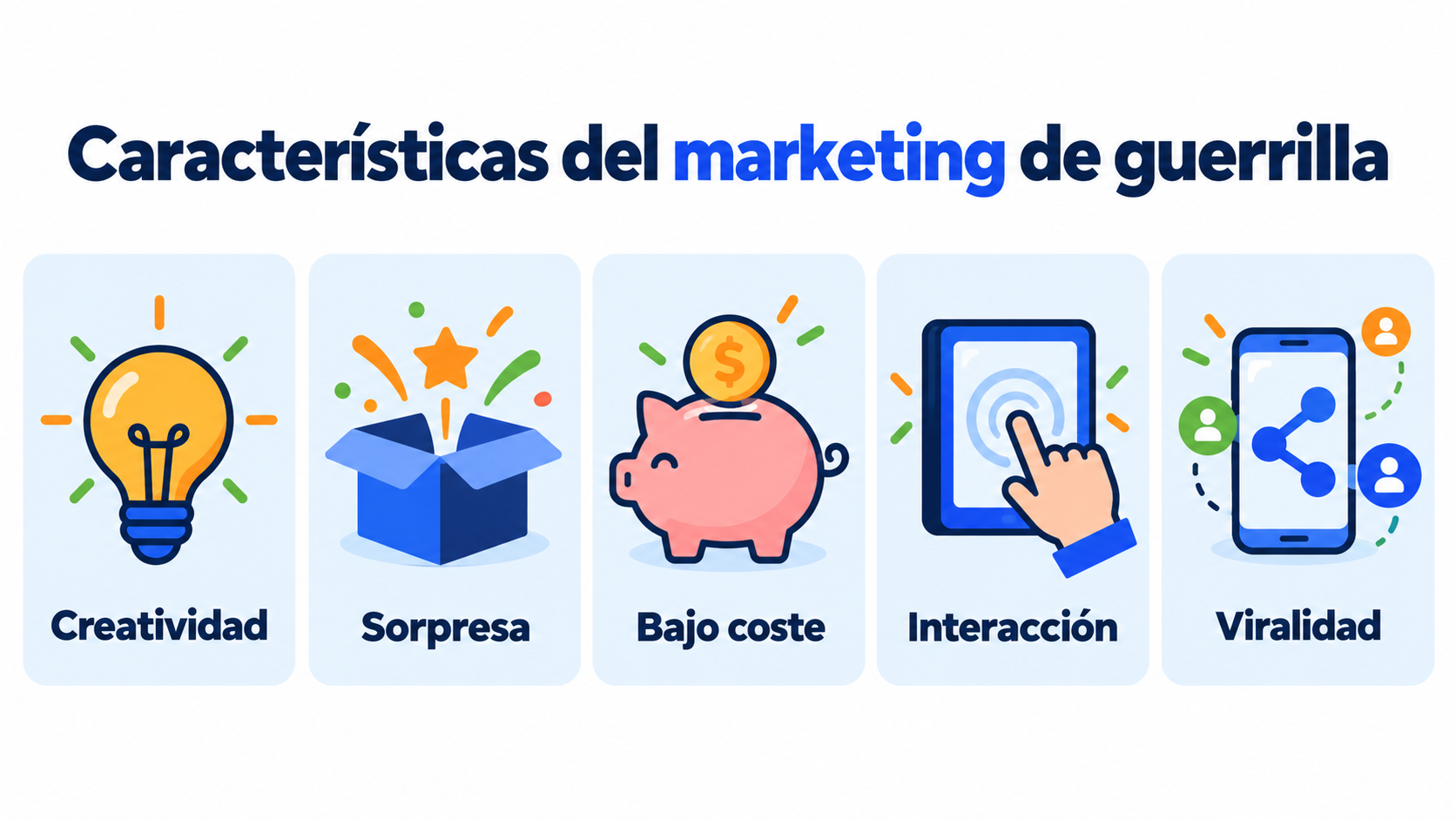
Characteristics of guerrilla marketing
These are the hallmarks of a guerrilla action:
| Feature | What it means |
|---|---|
| Creativity | The idea matters more than the budget |
| Surprise | It appears where nobody expects an ad |
| Low cost | Few resources compared to a media campaign |
| Interaction | The audience takes part in, touches or photographs the action |
| Virality | It aims to be shared on social media and picked up by the press |
| Short duration | It is usually one-off and short-lived |
| Simple message | It can be understood in a few seconds |
Types of guerrilla marketing
Depending on where and how the action is carried out, there are several types:
Ambient marketing. It uses elements of the urban environment, such as benches, stairs, bus stops or zebra crossings, and turns them into an ad.
Street marketing. Street actions with people, giveaways or installations that interact with passers-by.
Ambush marketing. A brand takes advantage of an event sponsored by another to gain visibility. We explain it in our ambush marketing entry.
Experiential marketing. Flashmobs, surprise events or experiences that people live and remember.
Digital guerrilla. Creative actions designed for the internet that aim to become viral marketing.
Stealth marketing. The product appears naturally, without looking like advertising. It is the most controversial type, because it can mislead the public.
Don’t let your campaign stay on the street
Turn the attention your action gets into subscribers with Mailrelay forms and newsletters.
Advantages and risks
Guerrilla marketing has clear strengths, but also risks worth knowing about:
| Advantages | Risks |
|---|---|
| Low cost compared to a media campaign | Results are hard to measure |
| Great brand awareness if it works | If it doesn’t surprise, it goes unnoticed |
| Free exposure on social media and in the press | It can annoy people or feel invasive |
| It sets the brand apart from the competition | Some actions require permits from the city council |
| Emotional connection with the audience | A bad idea can go viral for the wrong reasons |
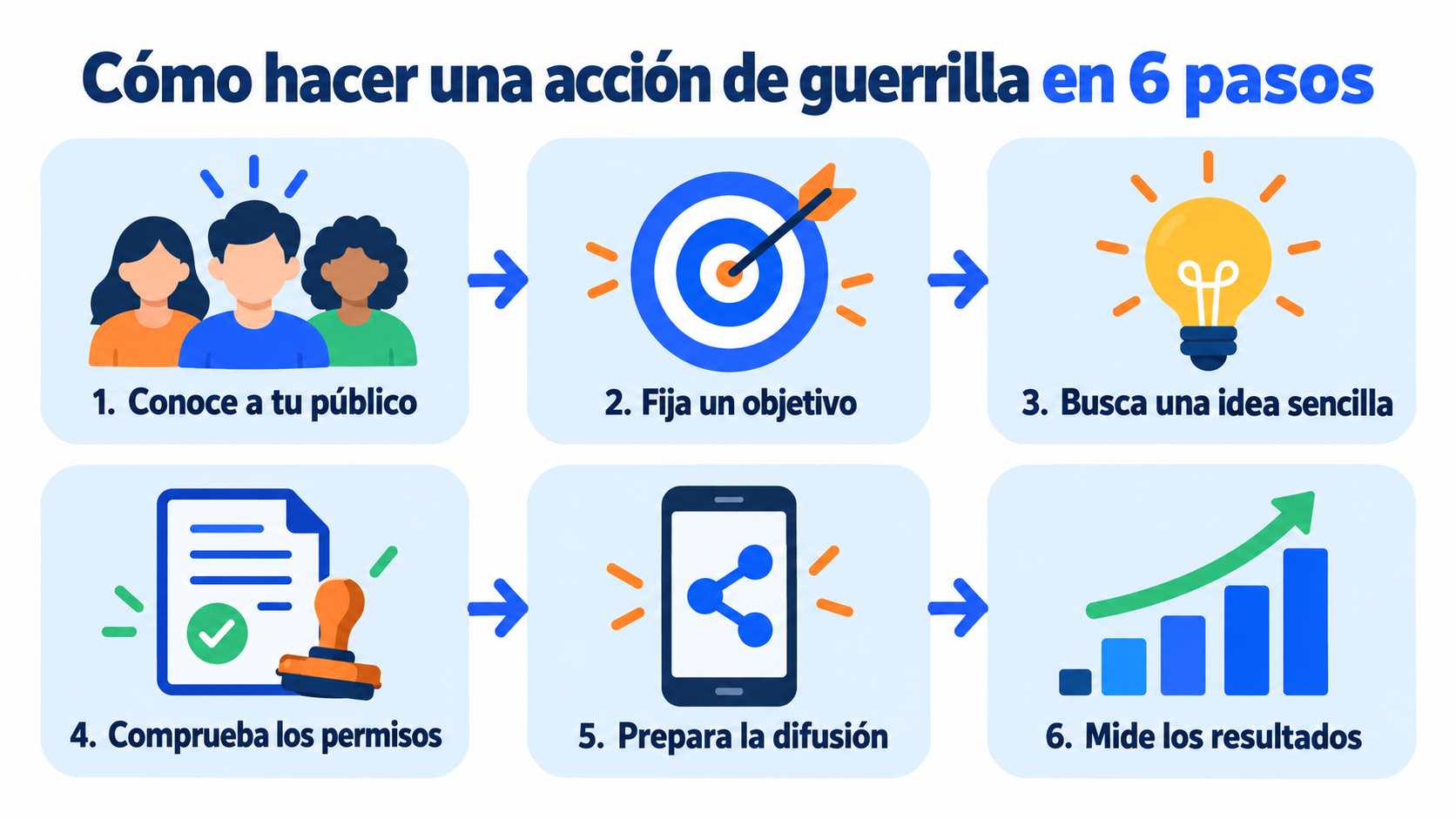
How to run a guerrilla marketing action
1. Know your audience. Define your buyer persona and the places they frequent.
2. Set a goal. Awareness, website visits, sign-ups or sales at a specific store.
3. Look for a simple idea. It should be understood in seconds and tied to your product.
4. Check the permits. Actions in public spaces usually need authorization from the city council.
5. Plan the promotion. Photos, videos and a message for social media, plus a way for people to follow you, such as a QR code that leads to a landing page.
6. Measure the results. Mentions, visits, contacts captured and sales in the following weeks.
Guerrilla marketing and email marketing
A guerrilla action doesn’t last long. If you don’t take advantage of the attention it gets, it fades within a few days.
Email helps turn that spike in attention into something lasting. Send people to a subscription form with an incentive, such as a discount or a giveaway, and confirm each sign-up with double opt-in. Then tell them the story of the campaign in your newsletter and stay in touch with them.
That way, anyone who noticed your action on the street becomes a contact you can write to whenever you want.
If you’re looking for ideas, there’s a selection of guerrilla marketing examples on our blog.
How Mailrelay helps you
With Mailrelay you can create the form to capture the people who discover you through a guerrilla action. You can also send an automatic welcome email and share the campaign’s results in your newsletter.
The free account includes up to 80,000 emails a month and 20,000 contacts, with human support by chat, ticket and phone.
Send your newsletters with Mailrelay
Up to 80,000 emails a month and 20,000 contacts for free, with human support on every plan.
Frequently Asked Questions
These are the most common questions about guerrilla marketing.
What is guerrilla marketing in a nutshell?
It is advertising through creative, surprising and cheap actions in unexpected places to get people talking about the brand.
Who invented guerrilla marketing?
The term was popularized by Jay Conrad Levinson with his book Guerrilla Marketing, published in 1984.
What is the difference between guerrilla marketing and street marketing?
Street marketing is a type of guerrilla marketing carried out on the street. Guerrilla marketing also includes digital, ambush and stealth actions.
Is guerrilla marketing legal?
Yes, but actions in public spaces usually need permission from the city council, and stealth marketing can be misleading advertising if it hides that it is an ad.
Does guerrilla marketing work for small businesses?
Yes. It was born precisely for them: with creativity and a small budget, a small business can get more attention than with a traditional ad.