Inbound marketing
What is inbound marketing?
Inbound marketing is a method that attracts potential customers in a friendly way by adding value to their business.
To do this, it makes it easy for them to find you online, provides valuable and useful content to support their processes, sells them products and services, and ultimately builds their loyalty.
In inbound marketing, you guide the customer from the moment they discover you to the point of purchase, and then work to keep them as long-term customers.
To achieve this, it uses multiple techniques, mainly content marketing, SEO optimization, SEM campaigns, email marketing and social media.
All of this combined with advanced analytics, automation, and email marketing tools.
1. Phases or stages of inbound marketing
Like any methodology, inbound marketing includes several stages, as follows:
Attract
In this stage of inbound marketing, the company or service positions itself so ideal customers can find its content—and through it, the products and services it offers.
This is achieved through a solid content strategy, along with SEO, SEM campaigns, social media, and various commercial activities.
Convert
Once the website gets traffic, the next step is to convert those visits into leads that become part of the company’s database, with the goal of turning them into customers.
To do this, you can use resources like forms, chatbots, and CTAs. These are usually tied to downloadable content or limited-time offers to improve performance.
Close
At this point, the focus should be on closing the sale, which involves properly executing strategies like email marketing to stay top-of-mind with the buyer persona and guide them through the sales funnel.
Personalizing communication and understanding the recipient are key to delivering more accurate messages and driving conversions.
Delight
After the desired conversion, it’s time to focus on building loyalty by continuing to work with the customer and developing strategies that encourage repeat purchases and turn them into promoters of your company, creating a long-term relationship.
2. Benefits of using inbound marketing
Inbound marketing is a method that offers several benefits to companies that use it. Some of the most important include:
- It strengthens your online presence, making it easier for potential customers to find you.
- It builds loyalty and fosters long-term relationships, as long as you can earn trust, offer personalized attention, and deliver value to the customer’s business.
- It helps generate more leads, which directly creates more sales opportunities and increases profitability.
- It creates customers who enhance our company’s reputation, helping us reach an even wider audience.
- It keeps you at the forefront of your industry, as the increased visibility helps establish your product or service as a trusted benchmark.
How to run a successful inbound marketing campaign?
To run a successful inbound marketing campaign, you need to carry out all the stages we mentioned earlier.
However, within each stage, there’s a wide range of actions you can take.
While the possibilities are endless, let’s explore some of these actions below:
1) To attract
To attract users and turn them into potential customers, the first strategy should aim to spark interest in your company’s website.
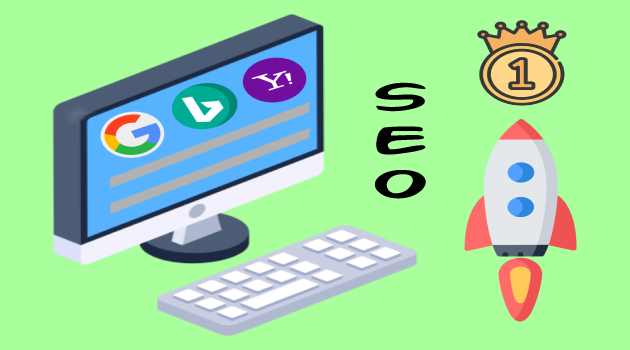
To do this, you need to take a series of actions to improve the SEO (Search Engine Optimization) ranking of your website. In other words, you need to appear in the top positions of search engines like Google, Yahoo or Bing.
But first, you also need to find out who the ideal buyer of your product is and what their main characteristics are, since this will let you gather the information you need to offer a personalized service.
Based on this, you should create content like blogs, articles, posts, videos, and graphics that fit their need for information.
Techniques to improve SEO use various resources. These include using keywords, backlinks, managing social media, and technical details (like improving loading speed by optimizing certain elements).
The aim is for the potential customer to reach the website and for their curiosity or interest to turn them into a “lead”.
2) To convert
Once the interaction happens, you need to leverage it to collect all the information that helps refine the customer profile and improve service quality.
Generally, at this stage, the interaction is initiated by the company, but sometimes potential customers can also reach out.
When a company has executed the previous phase correctly, consumers will feel encouraged to contact the business.
This is known as inbound telemarketing, since the user takes the initiative, making it a less intrusive method than conventional telemarketing.
Thanks to advances in new technologies, there are mass outbound calling software solutions that let us handle calls (and even instant messaging chats) from potential customers to offer them a personalized solution.
This gives us the chance to highlight our product’s features and smoothly transition to the next phase.
However, you must know exactly how to launch this campaign. If you want to learn more, you’ll find all the details in this guide.

3) To sell
Once the customer has all the necessary information and decides to buy, it’s crucial to guide them through the process.
To do this, you need to pay attention to certain details, like the communication channels you provide to your customers, as this will make the difference between a lost sale and a won one.
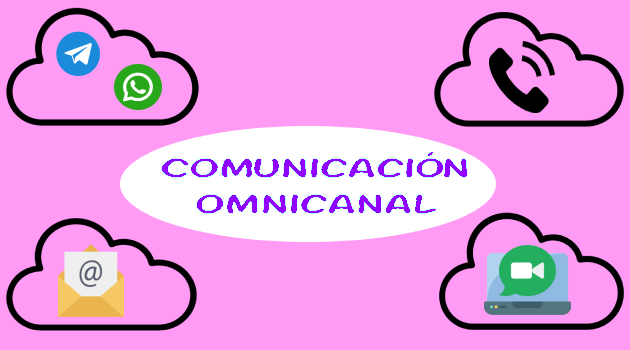
Choosing an omnichannel communication strategy that lets you talk to consumers regardless of the channel used (phone call, WhatsApp, video conference…) will help provide quality service, making it easier for customers to feel encouraged to buy and complete the process.
Integrating different communication channels into your telephony system will boost your omnichannel approach and help your inbound marketing campaign.
And if you add elements like a connection to the company’s CRM so that all customer information is centralized and you can offer personalized attention, success is guaranteed.
If you want to know more details about all the technology available to sell your products, you’ll find all the information at this link.
4) To build loyalty
This is the final phase of the cycle. At this point, the customer has purchased and satisfied the need for which they bought the product.
This is where you can use satisfaction surveys and follow up through post-sales service to ensure everything is fine.
This way, you’ll gain a brand-loyal customer who will become an advocate and attract new clients.

How to build your inbound marketing strategy in 7 steps?
For the three previously described phases to work, you need to follow some preliminary steps. In other words, you need to plan.
Step 1. Define your customer
It’s the foundation of inbound marketing: defining what type of customer you want to attract and what their needs and interests are.
Otherwise, you’ll get visitors to your website who will never be interested in your product or service. Your conversion rates will be low, and the inbound cycle will never operate at full capacity.
Step 2. Define your marketing triggers
Trigger literally means the lever that fires a gun. With marketing triggers (also called “prompts”), you can find out what leads your customers to look for information.
In other words, this phase involves defining their problems and needs (their pain points) and finding the intersection between those issues and your product.
Step 3. Define your keywords
You know your customers. You know what leads them to search for information. Now it’s time to figure out how they search for it.
And yes, they search online. They type words into search engines, and those words (keywords) are the ones you need to know.
The goal is to achieve strong search engine rankings by creating engaging content for your potential customers.
Step 4. Define your goals
This is essential for measuring the return on investment (ROI) of your inbound strategy. You need to identify where you want to go and when.
Goals must be SMART, which stands for specific, measurable, attainable, relevant and timely.
To define them, you can use metrics like the number of unique monthly visitors to your website or your monthly lead count.
Step 5. Define your content strategy
Content is king, as you’ve probably read and heard many times. But it’s king not just in the first phase (attraction), but in all of them.
That’s why you need to define a content strategy for each phase. This includes not just blog articles, but also webinars, ebooks, infographics, tutorials, videos, FAQ sections, and more.
Step 6. Define your lead nurturing strategy
Lead nurturing is a process that runs from attracting a visitor to converting them into a customer. It consists of nurturing your potential customer with information so that their visit ends in a sale.
To properly define this process, you need to understand the concept of the conversion funnel in inbound marketing (or, as it’s usually called, the inbound marketing funnel).
The conversion funnel consists of three parts: in the wide part of the funnel, potential customers (your website visitors) arrive with a general idea of what they are looking for.
Then the funnel narrows, and the middle concentrates on those potential customers who have an idea of what they want and are looking for a specific solution.
Finally, the funnel narrows into a third layer where customers know exactly what they want and are ready to buy.
Your content strategy must cater to these three funnel layers using different techniques. For example, using lead magnets—content like ebooks, guides, webinars, or templates that you offer potential customers in exchange for their details. And from there, you start nurturing your relationship with emails.
Step 7. Find the right inbound marketing tools
To implement your inbound marketing campaign, you will need a range of tools to cover all fronts. The following stand out:
- CRM (Customer Relationship Management) tools to help you manage your leads
- SEO tools to optimize your content for search engines
- Email marketing tools to nurture your leads
- Web analytics tools to measure your strategy’s results
- Tools for SEM campaigns
There are many on the market, and some names will sound familiar (HubSpot, Semrush, Mailchimp, Google Analytics, etc.).
Inbound marketing vs. outbound marketing
Outbound marketing is also known as traditional marketing and refers to a more intrusive type of marketing, based on paid ads (online and offline), calls, email and direct mail.
Its main advantage? The results are more immediate. Its downside: it’s more expensive.
You could dive deeper into the difference between the two types of marketing with this analogy: inbound is a marathon, and outbound is a sprint.
But has anyone ever seen a team stop competing in a marathon just to run a sprint?
Usually, a team competes in both. Well, it’s also normal for companies to combine both types of marketing into a single strategy.
In fact, some analysts have pointed out that the distinction between these two types of marketing doesn’t make sense.
Nowadays, there is a gray area where they converge: outbound has managed to exploit social media, and no inbound strategy, for instance, skips SEM (pay-per-click) or, as we’ll see later, other traditional methods like direct email.
Inbound marketing vs. content marketing
It’s common to confuse inbound marketing and content marketing. Many definitions of inbound lend themselves to this.
For example, this one from HubSpot, taken from a benchmark academic paper on Google Scholar that compiles several definitions:
“Inbound marketing is a strategy for attracting customers with relevant information and useful content”.
If you’ve followed everything we’ve told you so far, this won’t surprise you: content marketing is the main pillar that inbound marketing rests on. But it’s not the only one.
As we’ve already pointed out, inbound is a holistic strategy that combines and integrates different marketing methods.
We’ll see this better below, when we talk about the phases of inbound marketing.
Examples of inbound marketing techniques
Many companies use inbound marketing. It’s a strategy just as useful for business-to-business (B2B) marketing as it is for direct-to-consumer (B2C) marketing.
Remember that inbound is a holistic method, so when looking for inspiration, don’t focus on isolated elements.
In its annual inbound marketing report (The State of Inbound Marketing Trends 2022), HubSpot highlights the latest trends. You can keep them in mind as examples for your campaigns:
- Influencer marketing
- Mobile marketing
- Short-form video marketing
- Virtual events
- Experiential marketing
Even so, the preferred inbound marketing actions are still social media, blogs, and sending emails.
Among their predictions, you can take note of the following: the rise of TikTok for B2B marketing and influencer marketing.
Examples of brands correctly applying inbound marketing
Attracting the ideal people through the right channels isn’t impossible, but it does require some inspiration to provide that unique value that will make your audience stick with your brand and not look elsewhere.
Below are examples of brands that have taken Inbound Marketing to another level with campaigns that have allowed them to convert large numbers of their target audience.
Pay attention to each of them and take note of what might work for your own strategy.
· Columbia
Yes, we’re talking about the institution; as a brand, they noticed that their leads or prospective students often felt confused about what career path to take, what their aspirations were, and what each major offered.
To help them make a decision, they created a specialized eBook, downloadable from their website, covering each career offered at the institution, along with a study of what the market offers for each profession.
By helping to resolve this doubt about their true calling, Columbia helped its students make an informed decision based on what they needed to know, while also increasing its conversion rate by 27%.
Ultimately, it boosted the number of leads or students interested in studying at this institution.
· Starbucks
The social media of this world-famous coffee chain appeals to its followers’ emotions by selling, rather than just coffee, a lifestyle where peace is found right after taking a sip of their product.
Additionally, part of their strategy relies on using user-generated content, tagging them, and featuring their photos on the brand’s timeline.
Another thing that has worked for them is printing consumers’ names on the cups along with positive messages; this encourages more content to be shared on social media and makes the brand a Lovemark.
They’ve managed to build an interactive community dedicated to enjoying life while having a coffee at Starbucks locations.
· GoPro
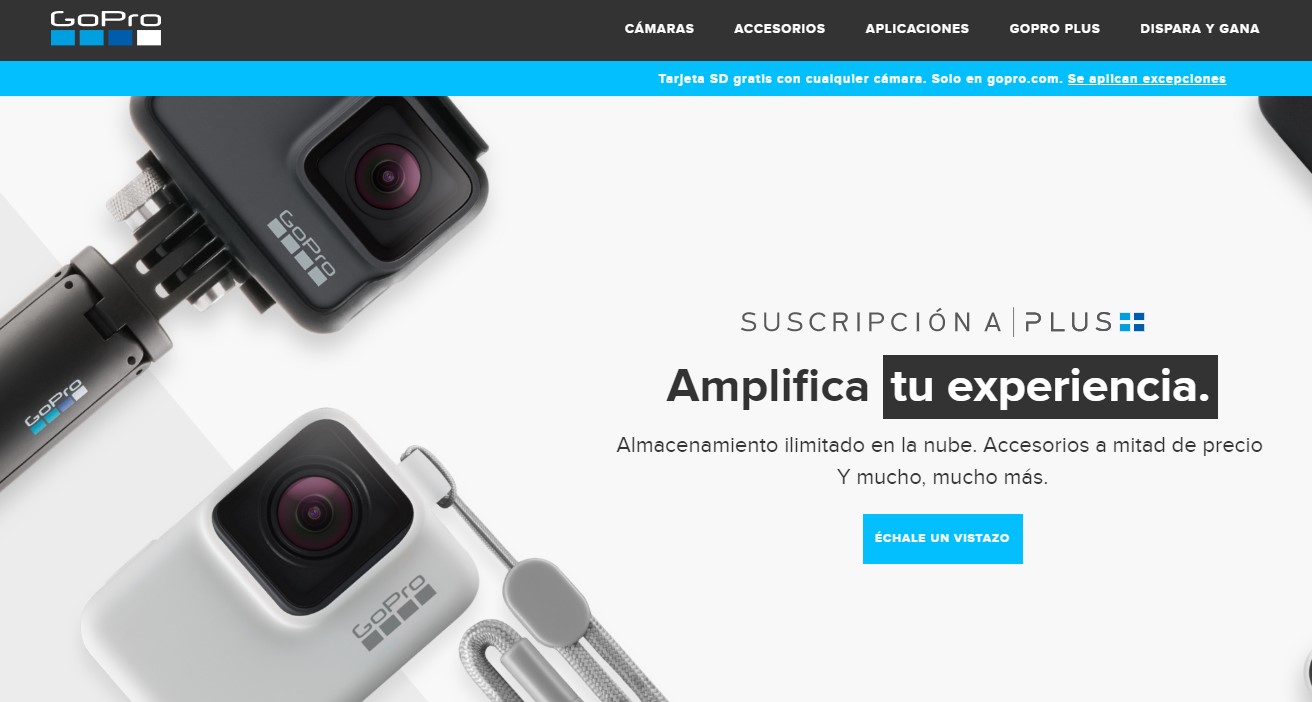
This well-known American company, which manufactures high-definition professional cameras, doesn’t have a YouTube channel dedicated solely to selling and showcasing the product.
What matters most about a camera is the resulting photos, and GoPro recognized that its audience consists of photography enthusiasts who admire each other’s work.
So this channel is packed with extreme sports videos and incredible landscapes shared by users of this professional camera, making others want to buy the product to achieve the same stunning results.
Furthermore, other people will want their video work featured on this channel to gain more exposure, making it very much a win-win.
· Spotify
This instant access to millions of songs via an online service features a personalized email marketing plan that has successfully won the loyalty of the platform’s users.
Before sending an email, Spotify makes sure to learn the user’s tastes and interests. Then, it sends a personalized message addressing them by name, sharing news about their favorite songs, bands, or singers.
The more personalized your newsletters are, offering your users what they need and want at that moment, the more successful your campaign will be.
· American Express
This company has created a blog that works as a forum called OPEN Forum, where an interactive community has been built to share the content people need.
The personalized content gives this blog a unique touch, focusing heavily on tailored information designed to help SMBs succeed.
· Adidas
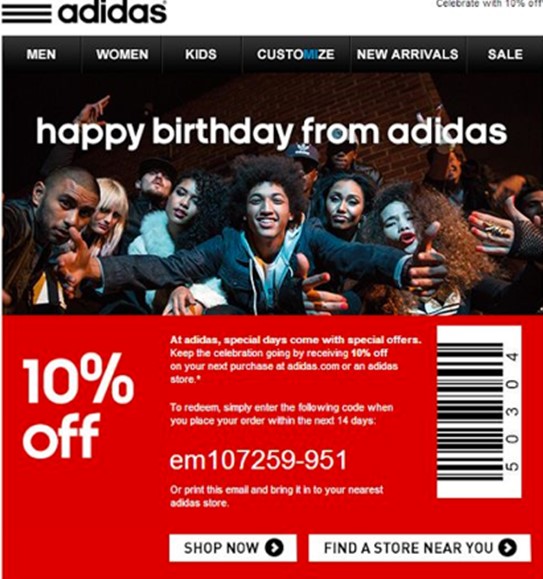
Adidas is a brand that needs no introduction, but it has been doing exceptionally well with its Inbound Marketing strategy.
As well as a blog with all the information its Buyer Personas need about sports and related topics, it also offers a special workout app that works as a personal coach whenever and wherever you want to use it.
Little by little, it has built an interactive community with shared sports interests, drawing even more people closer to the brand.
· Always
This brand knows how to talk to its audience in the most effective way because it knows them inside out.
Not only does it run controversial campaigns about female empowerment, such as “Like a girl”, it also has a YouTube channel full of tips and recommendations for women during their menstrual cycle.
Furthermore, their website features a calculator so girls can track when their next cycle is due, along with other lifestyle content that proves incredibly useful in their daily lives.
· Coca Cola
From its traditional media ads, this brand has demonstrated its power to establish its brand positioning, ultimately winning the hearts of consumers.
They dropped the slogan “Destapa la felicidad” (“Open Happiness”) and replaced it with the now-famous “Taste the Feeling”, or “Siente el sabor” in Spanish, with a theme song reinterpreted by Conrad Sewell.
With this, the company sought to highlight consumer insights, appealing to their emotions and making them recall moments shared with the refreshing drink.
Like Starbucks, they aim to sell a lifestyle and convey the brand’s commitment to its audiences.
· Home Depot
This famous home improvement brand is a clear example of content perfectly aligned with the brand.
On its YouTube channel you can find “How to” tutorials, or “Cómo hacer” in Spanish, so people can learn about things they can do in the comfort of their own homes.
Additionally, their blog offers tips on topics like hosting a family BBQ, along with other content closely tied to the products they sell, instantly hooking their audience.
In conclusion, brands doing it right are those that know not only their audience’s demographics but also their habits and behaviors.
To conclude: the future of inbound marketing
Since its emergence just two decades ago, inbound marketing has proven to be an undeniably successful marketing strategy.
Its main secret: adapting marketing strategies to the way 21st-century consumers and businesses think and act.
To implement it, you need a long-term strategic vision that leverages the various information and consumption channels the internet offers.
Continuous technological innovation in the digital world promises a bright future. The key for your business? Taking advantage of and experimenting with new channels and digital formats.
One last tip? A highly powerful email marketing tool that will let you successfully nurture every phase of the inbound cycle, improve your conversions, and build customer loyalty.