Meme: what it is, features, types and what it is for
The funny image everyone shares: features, types, examples and how it is used in marketing
A meme is an image, video or text, usually humorous, that people modify and share online until it becomes popular. The most common form is a well-known photo with a caption on top that each user adapts to their own situation.
Memes are part of the way we talk on social media and on WhatsApp. That is why brands also use them to connect with their audience.
What does meme mean?
The word was coined by the biologist Richard Dawkins in 1976, in his book The Selfish Gene. He based it on the Greek mimema, “imitation”, to name an idea or custom that is copied from person to person, just as a gene passes from parents to children.
With the internet, the term came to mean the funny content that people share online. In 2018 the Royal Spanish Academy added this meaning to its dictionary.
In Spanish the word is masculine: el meme, los memes. “La meme”, “mem” and “neme” are common mistakes.
Features of a meme
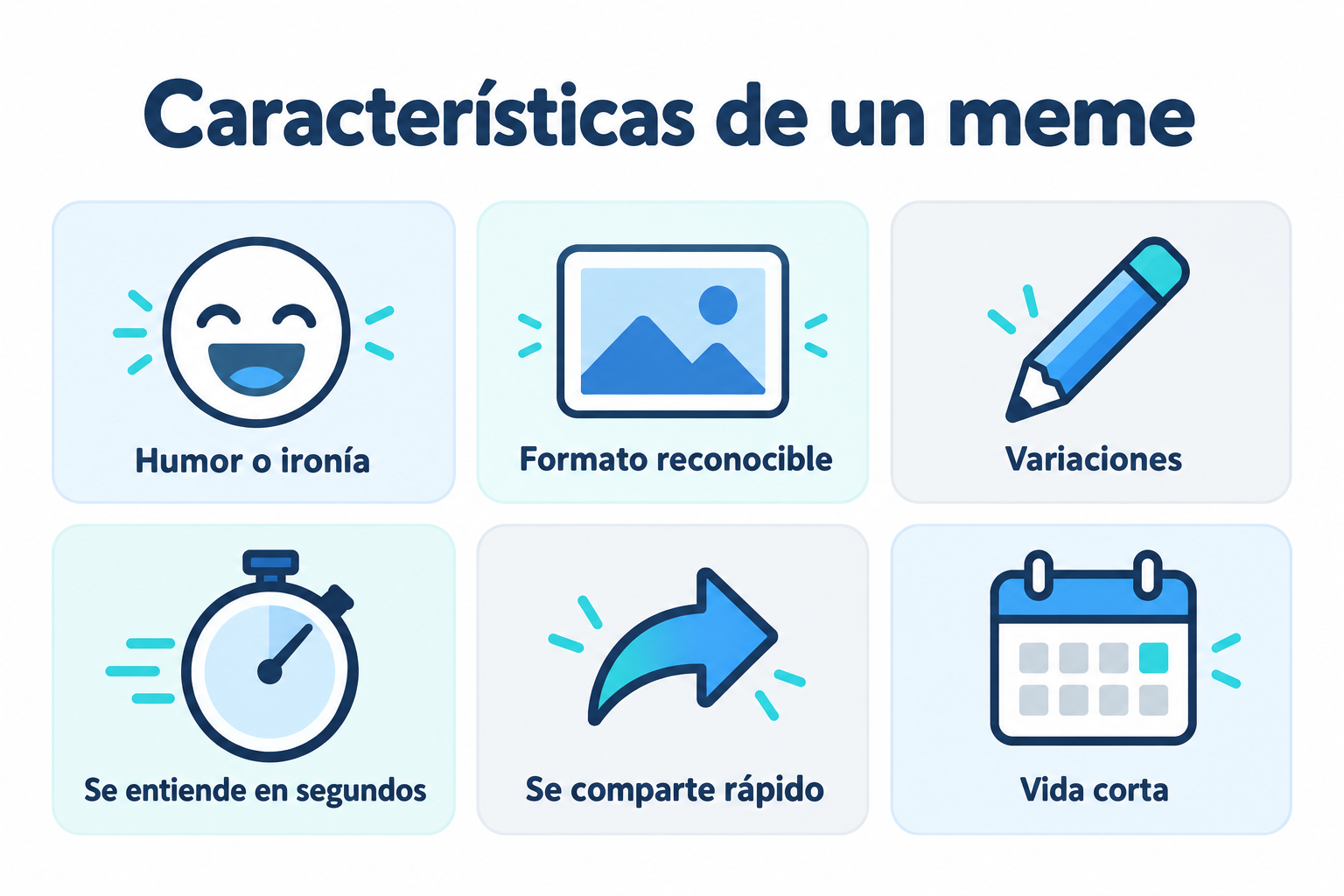
A meme almost always has these traits:
| Feature | What it means |
|---|---|
| Humor or irony | It aims to make people laugh or sum up a situation in a witty way |
| Recognizable format | An image or template that people identify instantly |
| Variations | Each user changes the text to fit their own case |
| Brevity | You get it in a second or two |
| Fast spread | It is shared massively on social media and messaging apps |
| Short life | Many go out of fashion within weeks |
A meme works because it reflects a shared experience. Whoever sees it thinks “that happens to me too” and shares it.
Bring the humor of your social media to your newsletter
Create emails with images, GIFs and memes in a drag-and-drop editor. Free up to 80,000 emails a month.
Types of memes
The most common memes can be grouped like this:
- Image with text: a photo or illustration with one line of text at the top and another at the bottom.
- Comparison: two or more panels that contrast a situation, for example “what I expect” versus “what actually happens”.
- GIF and short video: a brief scene that loops; it is often used as a reply in chats. Learn more in our entry on the GIF.
- Text or phrase: an expression that gets repeated on social media, such as YOLO.
- Audio or trend: a sound or a dance that thousands of people recreate in short videos.
- Emoji and reactions: combinations of emojis that everyone reads the same way.
What is a meme for?
People share memes to laugh, express an opinion, comment on current events or feel part of a group. A meme says in one image what would take several sentences to explain.
For a brand, a well-chosen meme helps show a friendly tone, gain engagement on social media and reach a young audience.
Examples of memes
Here are some examples of situations that often turn into memes:
| Situation | How it becomes a meme |
|---|---|
| Monday morning | An image of someone exhausted with the caption “me, Monday at 8 a.m.” |
| Expectation vs. reality | Two photos: the dish on the menu and the one that arrives at the table |
| A mistake by the brand itself | The company laughs at itself with an image of a confused cat |
| A viral event | Thousands of versions of the same photo within a few hours |
Memes in marketing
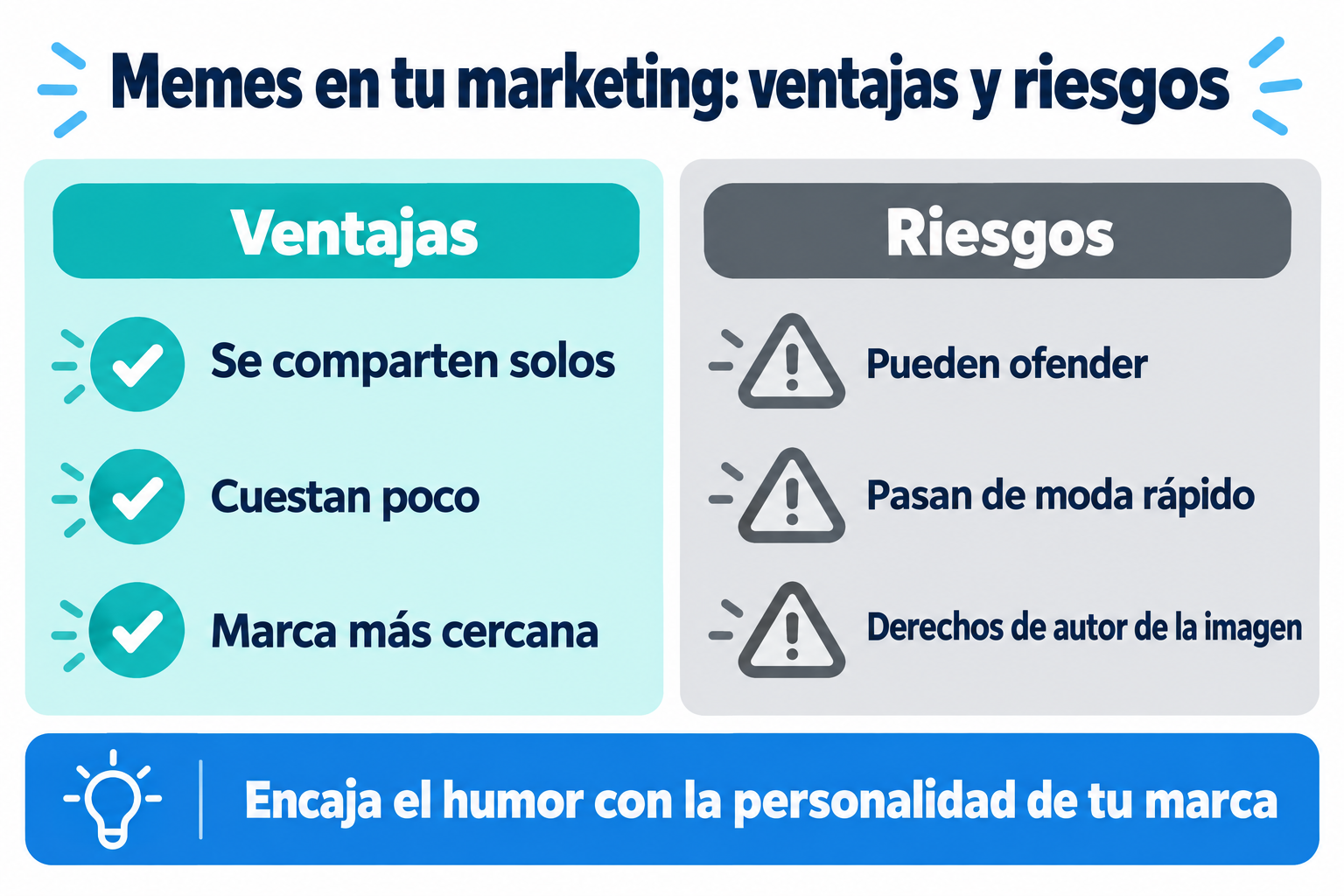
Using memes in a marketing strategy has advantages and risks:
- Advantages: they get shared on their own, cost little to create and make the brand look more human.
- Risks: a misunderstood meme can offend, it goes out of fashion very quickly and some images are protected by copyright.
The golden rule is to match the humor to the brand’s personality. A bank and a T-shirt shop can’t joke in the same way. Before you publish, also check that you are allowed to use the image: the safest option is to create your own templates.
How to use memes in your email marketing
A meme in a newsletter can break the routine and increase clicks. Follow these guidelines:
- Know your audience: it works best with young subscribers and in informal industries.
- Use them sparingly: one meme per email is enough.
- Tie it to the message: the humor should lead to the offer or the content, not distract from it.
- Add alt text: many email clients block images at first.
- Run an A/B test: send one version with a meme and another without it, and compare the results.
A good place to start is re-engagement emails or reminders, where a touch of humor makes them feel less pushy.
How Mailrelay helps you
With Mailrelay you can create newsletters with images, GIFs and memes in a drag-and-drop editor. You can segment your list to send the more informal tone only to the people it suits, and run A/B tests to find out whether the humor works.
The free account includes up to 80,000 emails a month and 20,000 contacts, with human support on every plan.
Find out whether your audience finds it funny
Test your emails with an A/B test and measure which version gets more clicks. Human support in English.
Frequently asked questions about memes
These are the most common questions.
What is a meme in a nutshell?
A humorous image, video or text that people modify and share online.
Who coined the word meme?
The biologist Richard Dawkins, in 1976, in his book The Selfish Gene.
In Spanish, is it el meme or la meme?
El meme. It is a masculine word: el meme, los memes.
What are the features of a meme?
Humor, a recognizable format, variations made by users, brevity and fast spread.
Yes, as long as they suit your brand and your audience, you don’t overdo it and you check that you have the right to use the image.