Merchandising: what it is, what it means, types and examples
What merchandising means, its types, examples and how to use it to sell more in physical and online stores
Merchandising is the set of techniques used to present products at the point of sale, whether physical or online, so that they catch the eye and sell more. It covers where products are placed, how they are displayed, what is highlighted and the atmosphere surrounding the purchase.
Its goal is to help customers easily find what they are looking for and discover products they hadn’t planned to buy. That’s why it is used in stores, supermarkets and pharmacies, but also in online stores and in a brand’s emails.
What does merchandising mean?
The word comes from the English merchandise (goods) and the ending -ing, which indicates an action. In Spanish, it is usually translated as «comercialización» (commercialization) or «técnicas de presentación en el punto de venta» (point-of-sale presentation techniques), although in practice the English term is used.
It is spelled merchandising, with “ch” and no accent mark. Spellings such as “merchandaising” or “marchandising” are common mistakes.
Merchandising vs. merchandise: what’s the difference?
Many people use the word merchandising for T-shirts, mugs or pens with a brand’s logo. In fact, those items are merchandise (or merch, informally). Merchandising is the technique; merchandise is the product.
| Merchandising | Merchandise (merch) | |
|---|---|---|
| What it is | Techniques for presenting and selling products | Branded promotional items |
| Example | Placing candy next to the checkout | A T-shirt with a band’s logo |
| Goal | Increase sales at the point of sale | Give the brand visibility or sell it as a product |
| Where it is used | Physical store, online store, email | Events, corporate gifts, fan stores |
Types of merchandising
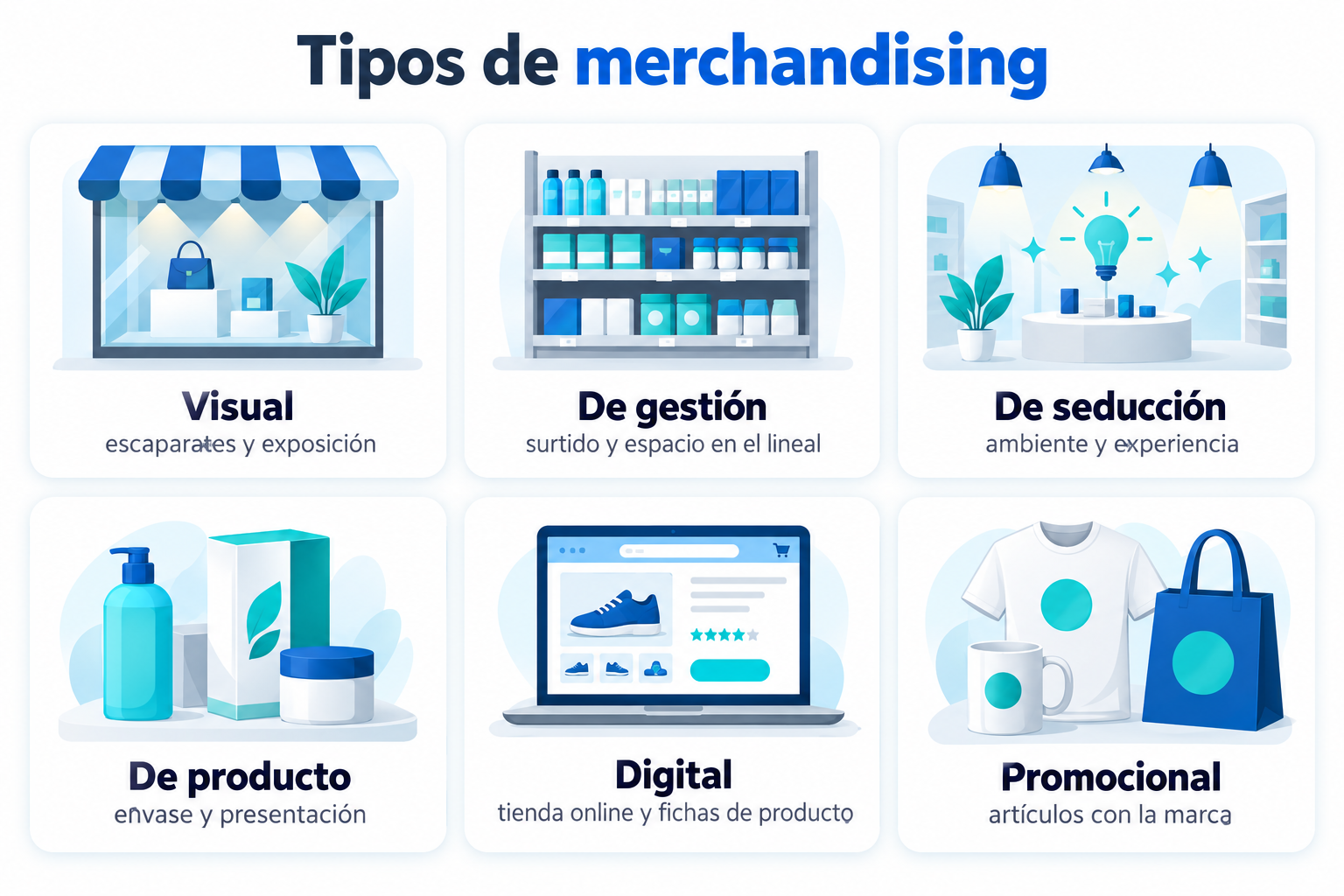
Depending on what it focuses on, these types are usually distinguished:
- Visual: shop windows, product displays, lighting and signage.
- Management: which range of products is offered and how much shelf space each product gets, based on how much it sells and the margin it brings.
- Seduction: the store’s atmosphere (music, scent, decor) to make the visit enjoyable. It is related to experiential marketing.
- Product: the packaging, label and presentation of the item itself.
- Digital: applying all of the above to the online store: home page, categories, product pages and recommendations.
- Promotional: branded items (merchandise) that are given away or sold to strengthen branding.
Showcase your products in the inbox too
Create newsletters with your featured products, new arrivals and offers. Free for up to 80,000 emails a month.
What is merchandising for?
Merchandising increases impulse sales and the average order value, helps move seasonal or slow-moving products and makes shopping quicker and more convenient. It also strengthens the brand image, sets the store apart from its competitors and improves the experience, which helps build customer loyalty.
Planned and unplanned purchases
Merchandising mainly targets purchases the customer hadn’t planned. These are the types of purchase usually distinguished:
| Type of purchase | What happens | Example |
|---|---|---|
| Planned | The customer buys what they had in mind | They go in for milk and buy milk |
| Impulse | They buy something they weren’t thinking of when they see it | A chocolate bar next to the checkout |
| Reminder | Seeing the product reminds them they need it | Batteries displayed near the toys |
| Suggested | They buy because of a recommendation or demonstration | A tasting at the supermarket |
| Planned by category | They know what they need, but choose the brand in the store | They decide which coffee to buy in front of the shelf |
Examples of merchandising
| Technique | Example |
|---|---|
| Store layout | Bread and milk at the back of the supermarket so customers walk through more aisles |
| Eye level | The highest-margin products on the shelf that is seen first |
| Checkout area | Chewing gum, batteries or chocolate bars for impulse purchases |
| Seasonal shop window | Decor and products that change with each season or shopping event |
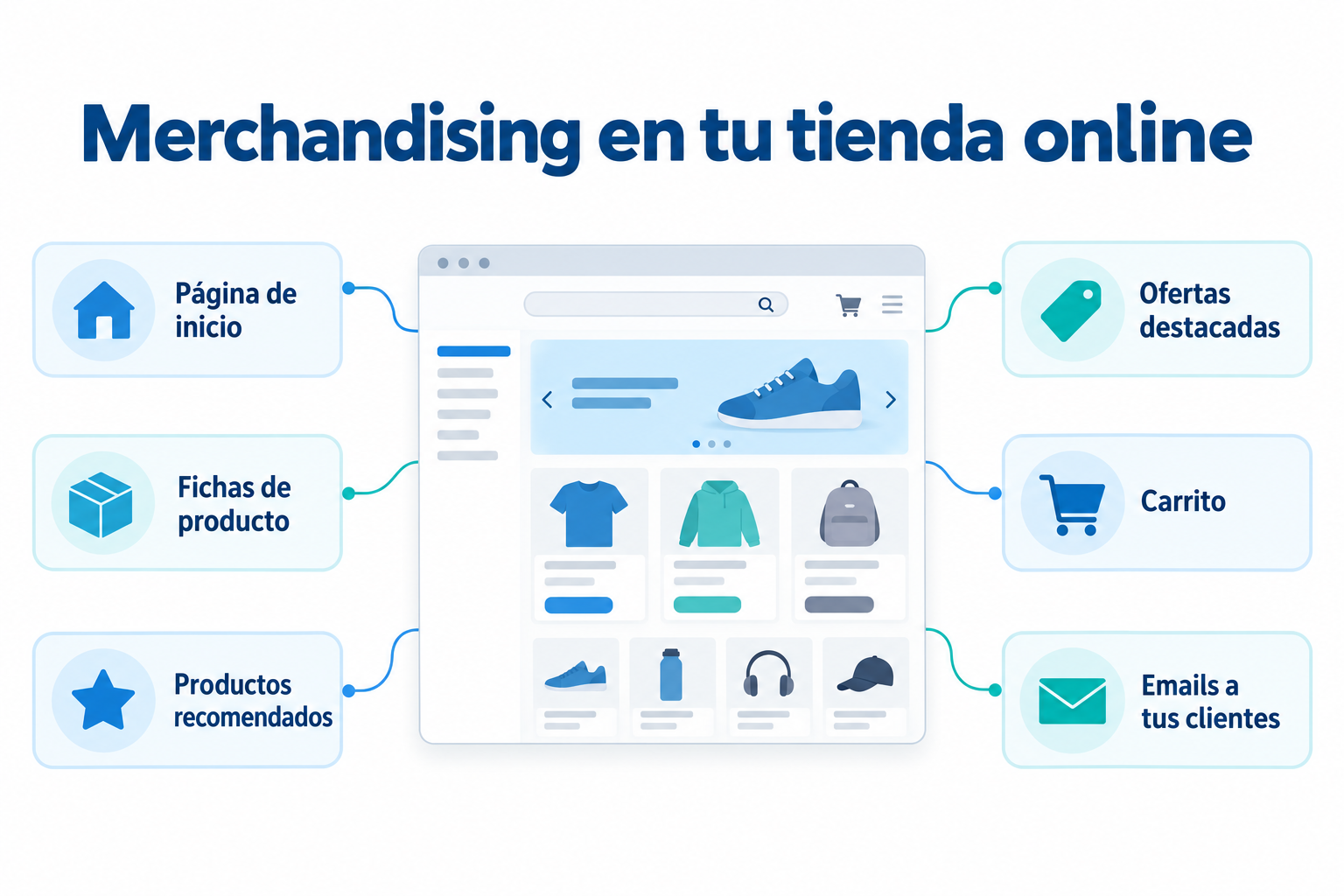
| Online recommendations | “Customers also bought” blocks and cross-selling in the cart |
How to apply merchandising in your online store
- Know your audience. Highlight what matters most to your buyer persona, not everything you sell.
- Take care of your home page. It’s your shop window: new arrivals, offers and main categories in plain sight.
- Don’t overload it. A few well-chosen offers sell more than a home page full of banners.
- Create complete product pages. Good photos, a clear price, reviews and related products.
- Keep your catalog up to date. Refresh your featured products and home page every season.
- Look at your competitors. Pay attention to how they present their products and how you can stand out.
Merchandising in email marketing
A newsletter works like a shop window that reaches the customer’s home. You can apply the same principles:
- One featured product or offer per email, with a high-quality image.
- Recommendations based on what each customer has bought or viewed.
- Seasonal and shopping-event emails, such as Black Friday.
- Abandoned cart reminders with the product and complementary products.
- Catalog news for your best customers before everyone else.
How Mailrelay helps you
With Mailrelay, you can bring your digital merchandising to the inbox: design newsletters with your featured products, segment your list based on each customer’s interests, automate emails such as abandoned cart reminders and run A/B tests to find out which presentation sells more.
The free account includes up to 80,000 emails a month and 20,000 contacts, with human support on all plans.
Turn your newsletter into your best shop window
Show your products to the right customer at the right time, with human support.
Frequently asked questions about merchandising
These are the most common questions.
What is merchandising, in a nutshell?
The set of techniques for presenting products at the point of sale so that they sell more.
How do you spell merchandising?
Merchandising, with “ch” and no accent mark. “Merchandaising”, “merchandasing” or “marchandising” are common mistakes.
What is the difference between merchandising and merchandise?
Merchandising is the technique of presenting and selling products; merchandise (or merch) is branded promotional items, such as T-shirts or mugs.
What is visual merchandising?
It is the part of merchandising that deals with what can be seen: shop windows, product displays, colors, lighting and signage.
Can you do merchandising in an online store?
Yes. That’s digital merchandising: home page, categories, product pages, recommendations and also the emails you send to your customers.