Have you heard of Corporate Social Responsibility or CSR? Well, you may have been avoiding a hugely important topic for all companies and corporations today and, probably, one of the ways you can save your company quite a lot of money.
Given the importance of this Social Responsibility, in this article I am going to talk to you about sustainable business models and, more specifically, about so-called “Sustainable Marketing”.
This is a particular type of Marketing that derives from the social responsibility companies have towards their surroundings, and it can bring great long-term benefits.
If you follow the Mailrelay blog regularly, I suspect you already know what Corporate Social Responsibility is and that you are aware it refers to the voluntary participation of companies and corporations in complying with rules and laws on environmental protection, human rights and professional ethics.
· But is complying with sustainability laws and regulations enough?
The blunt answer is NO; what is more, the company needs to actively and consistently pursue a business model that is friendlier to its social and environmental surroundings, while remaining economically viable, both in its daily operations and in any action or event it carries out.
A company that complies with Corporate Social Responsibility is generally known as a “sustainable” company.
These companies usually follow this business model with three fundamental goals:
1.- Improve the company’s public image and the public’s trust. Generally through a positive impact on the social and environmental surroundings.
2.- Add value to the company and to what it represents, such as its products and/or services, improving its competitiveness in the market. By opting for viable economic practices that have no negative effect on society or the environment.
3.- Reduce costs and, as a result, increase the company’s revenue in the medium and long term thanks to a “greener” way of operating, which lets you save and optimize the way we use the company’s resources.
Now, there are many ways to put social responsibility or sustainability practices into action within a company, and one of them is through Sustainable Marketing.

· What should we understand by “Sustainable Marketing”?
The first thing you should know is that “Sustainable Marketing” can be seen as a practice derived from Corporate Social Responsibility.
Similar to what we mentioned earlier, to be called “Sustainable” Marketing, it has to meet 3 fundamental requirements:
- Care for the social environment.
- Do the same for the environmental surroundings in which the company operates.
- Implement practices that help make day-to-day operations economically viable.
With this in mind, we can say that Sustainable Marketing is one that implements new, “greener” strategies while developing its campaigns, while also complying with ethical standards in doing so.
And note that being “green” and “ethical” does not automatically mean it will have a
negative economic impact on the company; and it is important that you
take this on board: the “bad guys” don’t always win.

· What is the current state of Sustainable Marketing and why do we need to start moving to these good practices?
Deceiving the consumer or potential customer and an “anything goes” attitude are some of the behaviors furthest from what we know today as “Sustainable Marketing”.
Unfortunately, this was for a long time an “unwritten rule”, a way of doing Marketing that was silently accepted.
Because yes, over the last few decades it was not unusual for advertising or Marketing campaigns to play “dirty” with consumers, ultimately trying to sell a product.
“It doesn’t matter what you do, it doesn’t matter whether the product is fit for purpose or not, it has to sell, and it has to sell well”
This way of thinking not only fails to meet the professional ethical standards we should all have, but is even immoral and treats the consumer as a mere target, something you have to sell to “just because”.
And what about companies with a negative environmental impact?
Yes, those that consume resources and at the same time harm the environment they operate in, polluting something that belongs to everyone, without the slightest concern.
A behavior that was not very rare to see a few years ago either.
But we want to believe that this is an ideology that has been left behind, that everything has been changing for the better, or hasn’t it?

· Sustainable Models Are Trends “in Theory”, but What About in Practice?
Sustainable Marketing is the next step companies must take to achieve a business model that meets its responsibility towards the environment and its social surroundings, while remaining viable. And this is what many governments and organizations are trying to promote in today’s society.
We see day after day how “sustainable” models are promoted so that companies comply with their Corporate Social Responsibility, but this is only the theory.
► How are we doing it in practice?
Opinions abound on this point; but fortunately, there are indeed a great many companies taking that leap, changing for the better.
Some may be taking their first steps, others lead this Sustainable Marketing, but whatever the case, the intention is there and it is tangible.
Of course, not everything is good or positive, and even though we all have a responsibility to fulfill, both to ourselves and to the environment, there are still companies that keep taking the easy way out, betting on whatever takes the least effort, with the mistaken idea that today’s consumers are still the same as those of years ago.
Luckily for us, these are the companies that, over time, hit a wall.
In the world of technology, where everyone knows what is going on, don’t you think a consumer has enough tools to determine whether or not a product is really right for them?
The short answer is yes. It is not easy to deceive today’s potential buyers, and at the slightest whiff of something strange, they will choose the competition.
Later on we will see examples of both types of company: those that apply Sustainable Marketing and those that don’t.

· What actions should we implement in our business to make it sustainable?
Now that we have talked in depth about social responsibility and sustainable Marketing, there are several actions you can try that will help you move to a more sustainable model.
1. Start with the basics: recycling
While a sustainable business is not one exclusively focused on being greener, “green” practices do play a very important role.
With this in mind, why not take the first step with something simple? Recycling is a green practice that helps reduce our impact on the environment and that, incidentally, helps us save money if we do it properly.
Even something as simple as sorting the trash by material can have a positive impact on both the environment and your company.
Don’t think it’s “that big a deal”? Well, later I will tell you about a recent
case in which poor waste recycling put an
organization like IFEMA under public scrutiny.
2. Optimize the use of resources
We often waste the resources we have, and we don’t even notice some of them, as can happen with the electricity supply.
That is why learning to optimize the use of the resources we have is an important task for any company that wants to fulfill its social responsibility and make the leap to Sustainable Marketing.
There are many ways to do it, from becoming a more “digital” company, reducing the use of paper and other materials, to changing the type of energy we use and regulating its consumption.
New York is one of the cities where buildings account for the largest share of energy use, and the Empire State was one of those buildings.
Yes, was, because a huge renovation project began in 2009 (and is still ongoing) that aimed to turn this flagship building of the city into a flagship of sustainable models.
Thanks to the implementation of new technologies and techniques, the Empire State managed to considerably reduce its energy use, saving more than 2 million dollars a year and becoming a true green icon for Manhattan.
Not only is it economically viable, it is also friendly to its social and environmental surroundings; a clear sign that change and resource optimization can bring profits.
3. It all starts with the product
I mentioned before that companies used to try to “sell their product at all costs”, regardless of whether it really delivered what it promised.
Sustainable Marketing starts from the ground up, with the product.
Focus on making a good product, not an advertising campaign that makes consumers think your product is good.
If your product is good, even a simple advertising campaign can deliver good results; but if your product is bad, even a brilliant Marketing campaign will produce poor results.
Remember, your potential customers don’t like being deceived, and that takes a lot of effort to achieve nowadays. Focus on making a product that meets the expectations of your target audience and that truly has what you promise.
4. Look after your work environment and your employees
There is an aspect that is often overlooked: taking care of the work environment. Keeping your employees happy is also part of social responsibility and is therefore necessary to achieve Sustainable Marketing.
There are generally many ways to keep your employees happy, from good pay to knowing how to recognize the effort they put in.
Often a “Congratulations, you did a great job” can lift the spirits
of your employees and make them perform better at work.
Nobody likes working somewhere they don’t feel comfortable, and this affects the overall performance of the people within the company. Always try to improve your employees’ working conditions and to make sure they are comfortable with what they do and with their work environment.
5. Raise awareness among those around you
Something important to keep in mind is that we should all do our bit to help more and more companies move to Sustainable Marketing, and one way to do so is by helping raise awareness of the environmental and social problems that affect our world.
To achieve this, an effective method is through campaigns, Marketing and Sustainability events and conferences that help promote social responsibility and a more sustainable lifestyle, while you set an example.

· Examples of companies or organizations that are sustainable
To finish, I would like to show you some examples of companies that fulfill their social responsibility and put Sustainable Marketing into practice.
You will see that these are very well-known businesses that have already started to change towards a greener, more ethical way of operating.
● Puma
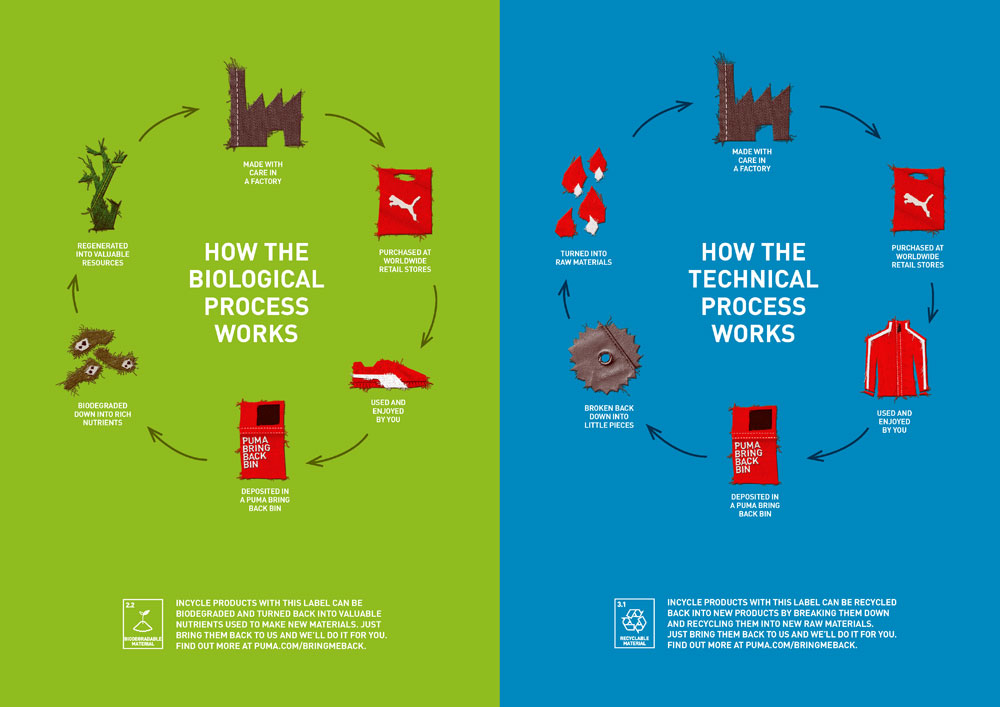
Puma is one of the best-known sportswear and sports equipment brands worldwide, and it has its own line of sustainable products: InCycle.
A line of biodegradable products that includes footwear, clothing and accessories.
It stands out for its use of recycled products and materials that can be reused once the garment is discarded; which saves not only production energy, but also avoids increasing the use of harmful non-renewable resources such as oil.
● Nike
Nike is another company recognized for its green initiatives, in which it always seeks to make use of biodegradable and recycled materials for the production of its different lines.
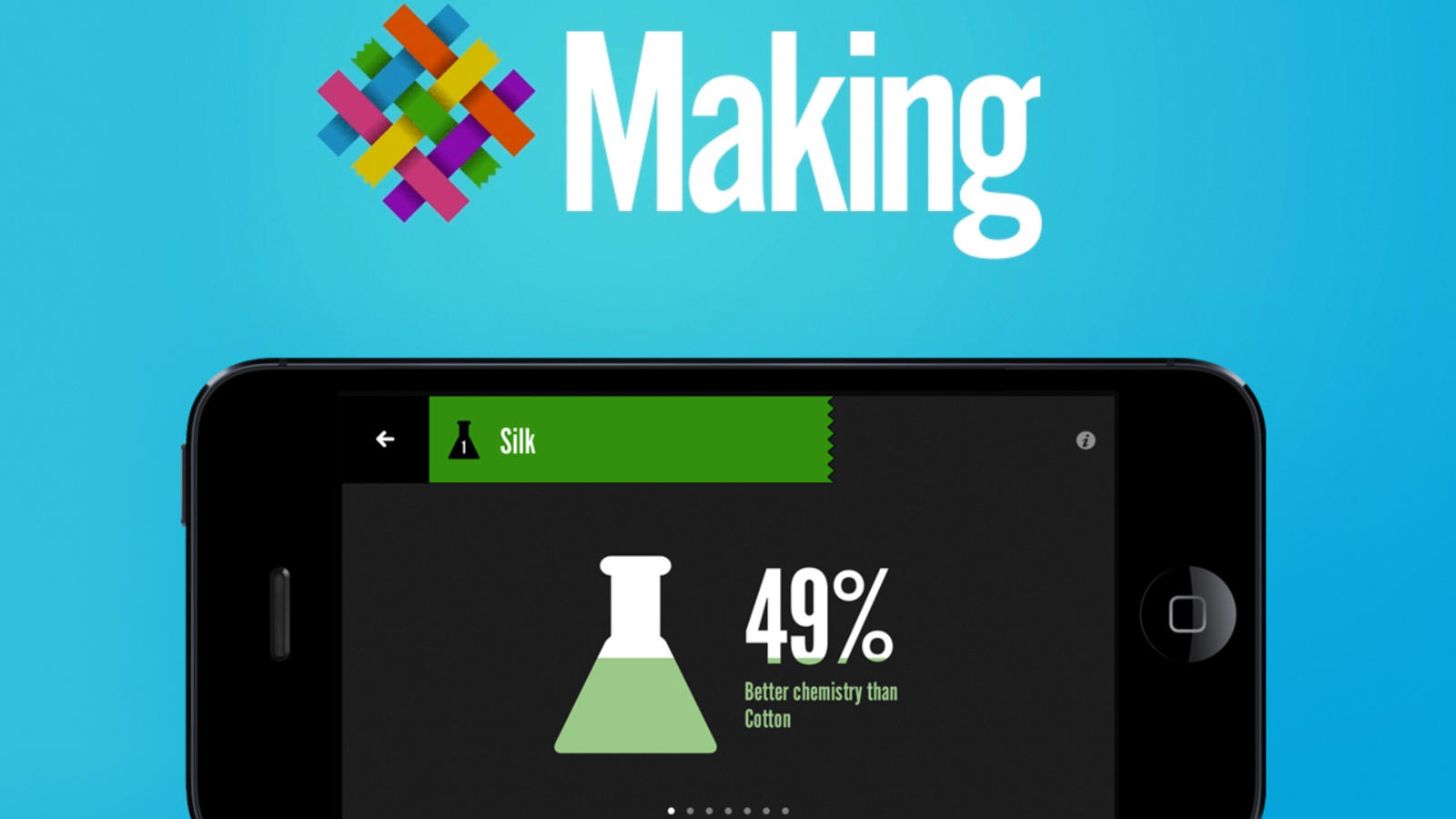
One of Nike’s best-known examples is precisely its app “Nike’s Making”, where designers can learn a lot about how to make use of recycled and biodegradable materials to produce clothing, footwear and even accessories.
● Marks & Spencer
Fashion is one of the industries that is constantly changing: new trends come out every season while others are completely forgotten.
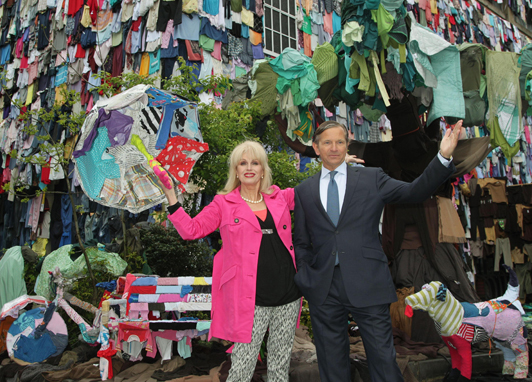
Marks & Spencer, a clothing manufacturer, noticed that people often set aside old clothes to free up space for new trends.
Their response? Creating the “Go Shwopping” campaign.
This campaign is quite interesting, as it focuses on giving a second chance to the garments we don’t use, encouraging clothing swapping and recycling.
To do so, people who were about to throw away their clothes could drop them off at Marks & Spencer stores or at the offices of Oxfam, with whom they collaborated on this project.
From there, the aim was to give these “old” garments a second chance.
● Intermarché
Have you seen those typical “ugly or misshapen” vegetables in the supermarket that practically nobody wants to buy and that will surely end up in the trash?
Well, to give you an idea, this is one of the main causes of food waste (in this case, vegetables).
Intermarché is a supermarket chain known for its “Inglorious” campaign, which aimed to educate people shopping at its stores and make them see that the “imperfections” of some vegetables don’t mean they are spoiled or that they lack the same nutritional value as other, more “perfect” ones.
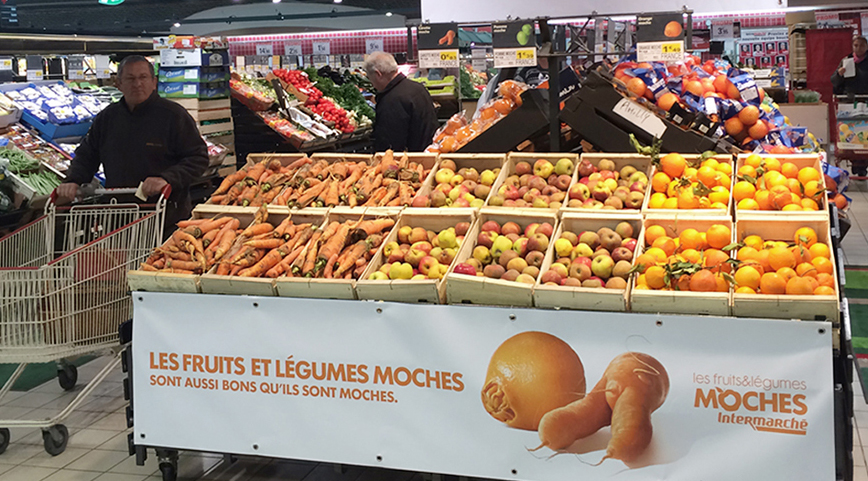
The campaign is an excellent example of sustainability, since from production to sale, a great deal of resources tend to be wasted in order to obtain “perfect” vegetables, when those with only minor deformities are almost entirely discarded.
● Starbucks
You obviously already know Starbucks, as it is one of the biggest examples of sustainable companies today.
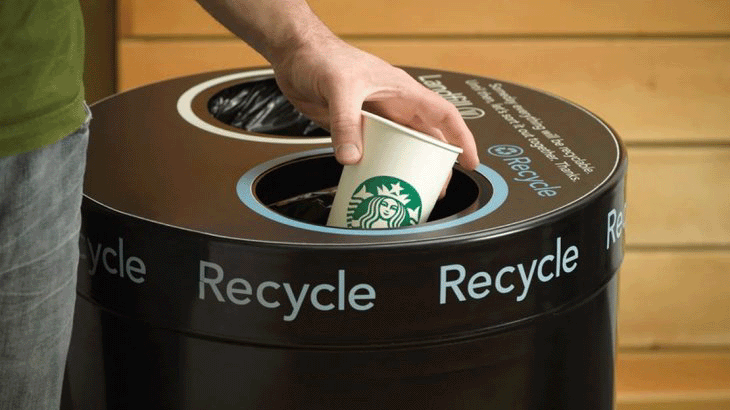
Not only is it a company where a large percentage of its materials are recycled, it also actively encourages a sustainable lifestyle among its customers.
It is also worth noting that sustainable methods are used from production to the packaging of its products.
● Amazon
In the case of the online retail giant Amazon, it may not be as direct as Starbucks, but this powerful company has on more than one occasion given its direct support to other sustainable companies, and has also helped develop new sustainable initiatives in the market.
That such a large company shows interest and takes part in developing a more sustainable market makes us realize that there are many more that want positive change.

· Examples of some companies that still don’t care “that much” about the environment
Just as there are companies concerned about social responsibility and caring for the environment, there are also those that still have a way to go.
It turns out that the Madrid Trade Fair Institution (IFEMA) was not properly fulfilling its social responsibility, more specifically with the recycling of its waste.
According to IFEMA’s defense, it is not responsible for what happened, since not all the events held there are entirely under its control, and it cannot be held responsible for the actions of third-party organizations.
However, is this really true? We are talking about a case in which practically all the trash went into the same container, so it is absurd to think that it was one specific organization and not the whole institution.
Furthermore, it must be taken into account that the events take place inside IFEMA, so it is not impossible for it to impose its rules, including that of properly recycling waste.
And this is just one recent case among the many there have been over the past decade. Another striking example is Grupo Herdez, a Mexican company that in 2012 published a “Sustainability Report” that placed it on more than one list of eco-friendly companies.
What’s the problem? Cases of waste dumping in
ports in the state of Chiapas, Mexico, where the company operates, have been uncovered.
How can you claim to be sustainable when you are systematically dumping waste into completely clean waters?
· Conclusion
But even with cases like these, I still think we are on the right track. More and more companies care about fulfilling their social responsibility, and those that seek to put Sustainable Marketing into practice.
Let’s hope this new decade brings us greener surprises from big companies.
To properly understand the context your company operates in, it is worth relying on a PESTEL analysis, and looking at these examples and success stories for inspiration.