Technology is one of the most important sectors we have today. It’s fair to say it can have a huge impact on practically every area of our lives, for better or worse.
This impact ranges from how we communicate to how we do our daily work — can you imagine doing marketing in today’s world without a powerful laptop or fiber-optic internet access?
As with the areas we live with day to day, technology also plays an important role in the development of many other fields that are still growing and that we increasingly value in our society.
And one of these cases is Sustainable Development, a field that is growing and becoming increasingly important to how businesses and society as a whole operate and grow.
· How Can Technology Drive These Goals?
In 2015, the UN proposed what we know as the 17 Sustainable Development Goals, which serve as a “guide” or agenda for the 15 years following the summit.
However, the importance given to technology at that summit was minimal compared to the role it can actually play, and that’s exactly what I want to talk about today: how technology can drive the Sustainable Development Goals that the UN proposed 5 years ago.
· What Are the SDGs or Sustainable Development Goals About?
On September 25, 26, and 27, 2015, the United Nations Sustainable Development Summit took place in New York, one of the most important conferences on sustainability that year. Its goal was to determine possible solutions and actions to tackle the growing environmental, social, and cultural problems in an increasingly globalized world.
From this summit came 17 points to address over the 15 years from the event’s date until 2030, the famous “2030 Agenda,” which includes the 17 SDGs or Sustainable Development Goals.
Each of these goals addresses an environmental, social, economic, or cultural issue affecting our world today, one that could bring serious consequences if not corrected in time.
These SDGs are mainly set out as a goal we must achieve within these 15 years (of which only 10 remain), and they also serve as a guide, motivating companies, governments, and organizations to work more sustainably.
► “Sustainable” Isn’t Just About Being Eco-Friendly
It’s important to clarify from the start that “Sustainable” isn’t simply “Eco-friendly” or “Green”; it also includes social and cultural issues such as inequality, racism, and gender discrimination.
Many people tend to confuse “Sustainable” with “Eco-friendly,” when they are not identical terms.

· What Are the 17 Sustainable Development Goals?
Before looking at how we can drive these goals with technology, we first need to know what they are.
So let’s briefly go over what each of these points is about:
[su_list icon=”icon: caret-right” icon_color=”#008af7″]
- End poverty in all its forms everywhere.
- End hunger, achieve food security, improve nutrition, and promote sustainable agriculture.
- Ensure healthy lives and promote well-being for everyone at every age.
- Ensure inclusive education, equitable and of quality, and promote lifelong learning opportunities for all.
- Achieve gender equality and empower all women and girls.
- Ensure availability of water, its sustainable management, and sanitation for all.
- Ensure access to affordable energy, that is reliable, sustainable, and modern for all.
- Promote sustained economic growth that is inclusive and sustainable, full and productive employment, and decent work for all.
- Build resilient infrastructure, promote inclusive and sustainable industrialization, and foster innovation.
- Reduce inequality within and among countries.
- Make cities and human settlements inclusive, safe, resilient, and sustainable.
- Ensure sustainable consumption and production patterns.
- Take urgent action to combat climate change and its impacts.
- Conserve and sustainably use the oceans, seas, and marine resources for sustainable development.
- Protect, restore, and promote sustainable use of terrestrial ecosystems, manage forests sustainably, combat desertification, halt and reverse land degradation, and halt biodiversity loss.
- Promote peaceful and inclusive societies for sustainable development, provide access to justice for all, and build effective, accountable, and inclusive institutions at all levels.
- Strengthen the means of implementation and revitalize the Global Partnership for Sustainable Development.
[/su_list]
► Where Can You Learn More About the Sustainable Development Goals?
Those are the 17 goals proposed by the United Nations. If you want to know more about what each of these points covers, you can visit this link on the United Nations website, where you’ll find complete information on each of these goals.
I really recommend you go check them out.
· And What About Technology? Where Does It Fit Into These 17 Points?
If we look closely, only a few of these points consider technology as a leading role.
In other words, while some goals do mention technology and access to it as a labor or even human right, few of them consider that it could have a positive impact on achieving these goals.
In short, technology takes a back seat, even in a modernized world where technology and technological development are a very important part of society, especially in the most developed countries.
I want to place special emphasis on goals 8 and 9, where technology is indeed proposed as a force for change — a sector that must be developed given its capacity to drive these goals, while also diversifying so that more and more industries, companies, and even countries gain access to it for better and faster economic and infrastructure development that is, in turn, sustainable.
In a way, these are the 2 points that truly consider technology as the protagonist of positive change.

· But How Can These Factors Drive the Rest of the Sustainable Development Goals Beyond Economic and Infrastructure Growth?
The Potential Use of Technology as a Driver for Sustainable Development
We have to start from the premise that technology is a fundamental pillar in our daily lives — we basically depend on it for many things.
With this in mind, it’s easy to implement it to drive the different projects or Sustainable Development Goals — in fact, it’s practically an obligation.
● Let’s Start With Poverty and Inequality in the World
It’s no secret that one of the biggest social problems affecting our world today is poverty and the inequality generated by each individual’s purchasing power.
And this isn’t just an issue within each country, since this inequality can also be seen between countries.
The clearest example is the classification we give countries based on their development and their population’s general standard of living.
Without going too far, it’s easy to see how people living in the United States, Russia, and even much of Europe live much “better” than the inhabitants of countries like Honduras, Venezuela, El Salvador, and much of Africa.
And it’s not even an exclusively economic inequality, but we’ll talk more about that later.
● Blockchain Technology Could Be a Solution to This Economic Problem
This type of technology is more commonly known as that of cryptocurrencies. Quite a few authors consider this type of virtual currency to be a possible solution to the poverty crisis being experienced in many parts of the world.
And with the implementation of the right technology, it could even become a stable source of income for many communities that today earn less than $1 a day.
Moreover, developing and implementing new technologies for blockchain network operations is itself a source of jobs, another of the Sustainable Development Goals; it’s no secret that even in developing countries, unemployment remains a critical problem that brings poverty with it, and since we’ve touched on this point, let’s clarify something important:
● Technology Can Become a Source of Jobs and an Exceptional Training Tool
From development to installation and maintenance of new technologies, each of the stages typically involved in implementing new technology projects can easily become a source of jobs for hundreds of thousands of people in critical situations.
At least when the right training is available.
In turn, technology can be a strong support and play a fundamental role in training new professionals and technicians so they can take part in developing these new technologies.
Let’s remember that unemployment sometimes stems mainly from a lack of qualified training for individuals to perform certain jobs or carry out certain tasks.
With highly modernized and hyper-specialized training centers, it’s possible to considerably reduce energy and resource consumption, while also cutting down the time needed to train new workforces capable of performing well in more technically demanding jobs.
Not to mention that, thanks to major technology projects like the application of virtual reality, it’s possible to considerably increase the quality of education provided, including education that requires hands-on classes.
● With It, Tasks in Traditional Sectors Could Be Automated
Additionally, technology also gives rise to new business models, which in the long run helps lower unemployment rates while fostering innovation and creating new projects that can have a positive impact on both society and the environment.
● Optimizing and Automating Agriculture Is a Possibility
Another way to contribute to both the global economy and the food problem is implementing technology as a means to optimize, automate, and enhance various agricultural activities.
Since it’s possible to develop technologies that help monitor both crops and animal farms, it becomes possible to create sustainable crops that allow for better food production by preventing problems such as infections, animal deaths, infestations, and even through better land care.
Moreover, at this point, technology can help us automate tasks that would otherwise take much more time, freeing up that time to be invested in projects that help increase annual food production, both for domestic consumption and for export, lowering malnutrition rates and increasing the GDP of low-production countries.
● 3D Printing Is a Sustainable Production Method
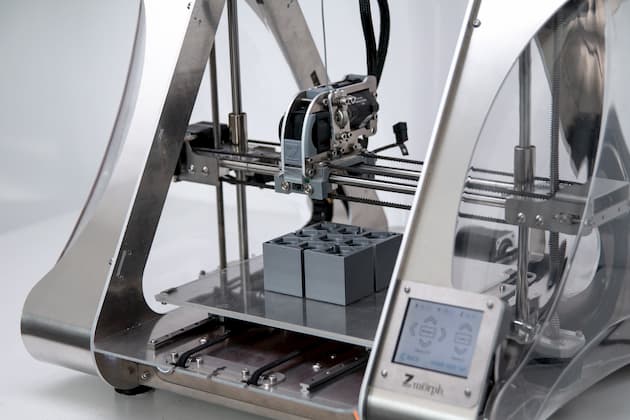
In recent years, 3D printing has found more and more applications — it’s one of the most sustainable methods for producing parts and creating entire products and machinery. The process is relatively simple, almost automated, and helps reduce costs along the way.
The problem is that this technology still needs further development before it can be used at an industrial scale, since that takes time.
Still, on a small scale, applying 3D printing works very well. There are people who build their own equipment and machinery using these printers, and the results are truly amazing — and functional, which is what matters. An example of what technology is capable of achieving if we look to apply it the right way.
● Create Adaptable Products for Any Need
Inequality is a serious problem afflicting our society, and I’m not just talking about monetary inequality.
Gender inequality, social inequality, racial inequality, and even inequality between countries. Inequality can take many forms, and we must look for ways to combat it.
Technology happens to have a feature that makes it especially useful here: it’s highly adaptable.
Many products can adapt to the needs a customer may have, and this is something we can — and should — leverage to tackle inequality in the world.
Create products that adapt to the user, and there are many examples of this:
1) There are facial recognition companies already working on software capable of recognizing the racial differences each person may have, since this type of software previously had a large margin of error when dealing with people whose racial features differed from the average in the place where it was developed.
2) And the same can be done with many other products, so they can be adapted to any person regardless of their gender, race, or social background.
● And There’s Still Much More to Explore
So far I’ve only mentioned some of the possible ways technology can drive the Sustainable Development Goals. I haven’t even touched on points like the globalization of information, Big Data, and the sustainable management of marine resources.
There are also technological advances that can drive these and other SDGs, such as the internet itself or technology applied to hydroelectric plants or responsible fishing.
I’ll also remind you that science is constantly advancing, and the tech sector moves at the same pace; so measures we think are impossible today may well become possible tomorrow.
As I said before, it’s not about which technology to use, but how we use it. There are hundreds of inventions that can have a useful application outside their primary field and that can help efficiently drive sustainable projects — you just need to set your mind to it.
● Admittedly, Not Everything Is Positive
Now, we’ve talked about the positive impact, but I also have to mention that, unfortunately, not everything is good. There are still problems when it comes to implementing technology within the Sustainable Development Goals.
Let’s start with one of the cases that concerns people the most: the displacement of human labor.
It’s no surprise to anyone that robots capable of performing certain tasks already exist across many industries; unfortunately, this translates into automated labor that is much cheaper for companies.
As a result, many jobs are cut, making way for a relatively cheaper, automated workforce that doesn’t need breaks or food, and for a new wave of unemployment.
So, while technology can be a source of new jobs, it can also replace human labor in many other job sectors.
And this is just the tip of the iceberg — there are many areas where technology can not only help but also be harmful.
Going back to agriculture for a moment, technology can indeed drive agricultural development, but it can also have consequences for the environment, since overgrowth of agricultural activities in certain regions can lead to problems such as habitat destruction or the displacement of entire populations, both animal and human settlements.
It’s also estimated that implementing current technology, in the absence of 100% sustainable energy sources and materials, can cause great harm to the environment, due to the use of polluting materials that considerably increase the carbon footprint.
And like these, there are many more problems we also need to work on if we want to fully implement technology within the Sustainable Development Goals.
New advances are needed to find new solutions and new ways of implementing technology that deliver sustainable results, helping both society and the environment.
· Conclusions
These are just a few points to keep in mind regarding technology and how it can affect the Sustainable Development Goals in both positive and negative ways.
What other ways of driving the SDGs with technology do you know of? Any solutions for the negative effects it might have?
Aligning your business with the SDGs also strengthens your Corporate Social Responsibility (CSR), and it’s worth analyzing within a solid PESTEL analysis.