Pure player: what it is, what it means and examples of 100% online businesses
Online-only businesses: how they work, examples and how they build customer loyalty
A pure player is a business that sells its products or services only online, with no physical stores. All of its sales activity happens on its website, its app, marketplaces or social media.
It is also known as a 100% online business, a digitally native company or a pure e-commerce business. The plural is pure players.
What does pure player mean?
Pure means “exclusive” or “only”, and a player is a participant in a game. In business, a player is any company that competes in a market: “the big players in the industry” are the most important companies.
So a pure player is a “pure” competitor: it competes only in the online channel. The term is also used in the media to describe newspapers born on the internet that have no print edition.
Pure player, brick and mortar and click and mortar
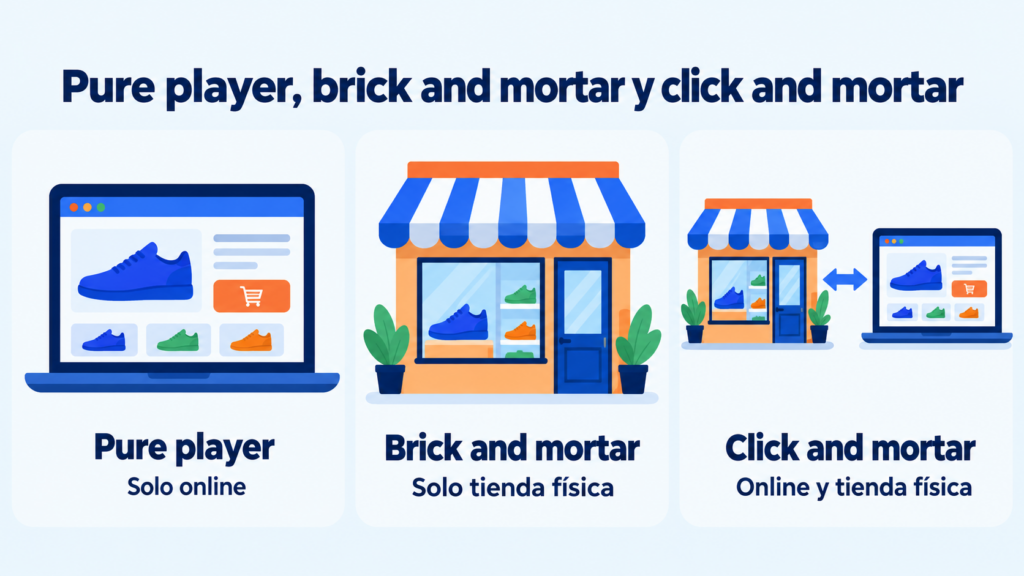
Depending on where they sell, businesses fall into three models:
| Model | Where it sells | Example |
|---|---|---|
| Pure player | Online only | A store that sells only on its website and on marketplaces |
| Brick and mortar | Physical stores only | A local hardware store with no website |
| Click and mortar | Online and in physical stores | A fashion chain with stores and an ecommerce site |
Many businesses change models over time. Some pure players open stores so customers can see the product, and some physical stores make the leap to ecommerce. When they combine channels in a coordinated way, it is called omnichannel.
Examples of pure players
Here are some well-known examples:
| Company | Industry | What makes it a pure player |
|---|---|---|
| Amazon | Ecommerce | Founded in 1995 as an online bookstore, with no stores |
| Zalando | Fashion | Founded in 2008 as an online clothing and footwear store |
| Booking.com | Travel | Sells accommodation only through its website and app |
| Netflix | Entertainment | Its streaming service exists only on the internet |
| El Confidencial | Media | A newspaper born on the internet, with no daily print edition |
Some, like Amazon, later opened physical stores. They are still the most cited example of how a pure player is born and grows.
Types of pure players
Not all of them sell the same way. These are the most common models:
| Type | How it sells | Example |
|---|---|---|
| Own online store | On its own website, with its own catalog and brand | A cosmetics brand that sells only on its website |
| Marketplace | Brings many sellers together on one platform | A second-hand goods marketplace |
| Subscription | Charges a recurring fee | A monthly coffee box or a streaming service |
| Digital services | Sells something that is used online | Software or an online course platform |
| Dropshipping | Sells without stock: the supplier ships the order | A store with no warehouse of its own |
Brands that are born online and sell directly to consumers, without intermediaries, are also known as DNVBs (digitally native vertical brands).
Advantages and challenges of a pure player
Selling only online has its strengths, but also its challenges:
| Advantages | Challenges |
|---|---|
| Lower initial investment: no need to rent premises | Lots of competition and increasingly expensive advertising |
| Can sell anywhere it can ship to | Customers can’t touch or try the product |
| Data on every visit and every purchase | Returns and shipping costs |
| Adapts quickly to market changes | Depends on search engines, social media and marketplaces |
| Competitive prices thanks to its lean structure | Harder to build trust at first |
Do you sell only online?
Turn your visitors into subscribers and recover sales with Mailrelay’s automated emails.
Email marketing for a pure player
A pure player has no shop assistant to greet customers and no shop window to remind them of the brand. Email does a good part of that work.
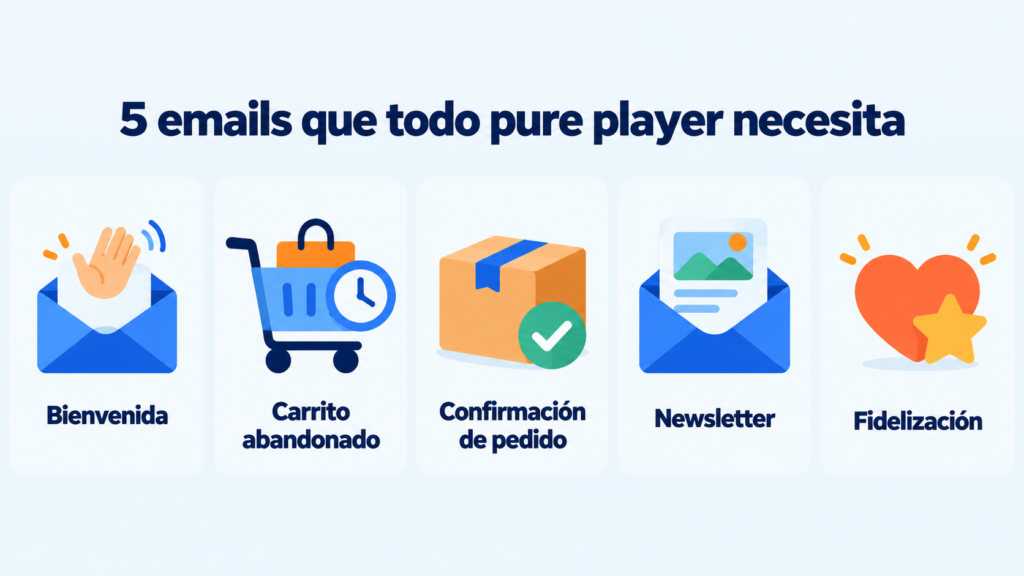
These are the most useful emails:
Welcome. The first message after someone subscribes or buys. It introduces the brand and builds trust. Learn more in welcome email.
Abandoned cart. Recovers purchases that are left unfinished. Learn more in abandoned cart email.
Transactional. Order, shipping and delivery confirmation. Learn more in transactional email.
Newsletter and offers. News, discounts and useful content, with segmentation so each customer receives what interests them.
Loyalty. Post-purchase recommendations, reviews and perks for repeat customers.
On top of that, the subscriber list is a channel you own: it doesn’t depend on search engine or social media algorithms. For a business that lives on the internet, that brings stability.
You’ll find more ideas in our guide to email marketing for ecommerce.
How Mailrelay helps you
With Mailrelay you can capture subscribers with forms and pop-ups, send the welcome email automatically and segment your customers based on what they buy. You can also send transactional emails via API or SMTP.
The free account includes up to 80,000 emails a month and 20,000 contacts, with human support by chat, ticket and phone.
Send your newsletters with Mailrelay
Up to 80,000 emails a month and 20,000 contacts for free, with human support on every plan.
Frequently Asked Questions
These are the most common questions about pure players.
What is a pure player in a nutshell?
It’s a business that sells only online and has no physical stores.
What is a player in marketing or advertising?
It’s any company that competes in a market. For example, people say that the big players in an industry take most of the sales.
What is the difference between a pure player and ecommerce?
Ecommerce is commerce over the internet. A pure player is a business that only does ecommerce; a store with physical locations that also sells online is not one.
Is Amazon a pure player?
It was founded as a pure player in 1995. Today it also has some physical stores, although the vast majority of its sales are online.
What is the opposite of a pure player?
A brick and mortar business, which sells only in physical stores.