In this article we’re going to reveal some of the secrets behind the success of online commerce’s leading player, Amazon, thanks to one of its latest business strategies: private label brands.
This initiative, based on developing names similar to those already sold on the platform but available at unbeatable prices, actually began in 2007 with the arrival of the Kindle, its popular e-book reader.
The success of this product may have encouraged the e-commerce giant to take the next step in sales by capitalizing on its most successful items.
Over the last decade, the company founded by Jeff Bezos has added a good number of products to this private label initiative in sectors as varied as electronics, fashion, accessories, pets, food and home goods.
To give you an idea, CNN published a report by Sun Trust stating that by 2022 sales of Amazon’s private label brands will reach $25 billion worldwide, standing out especially in categories such as textiles and food.
In this post we’ll analyze Amazon’s successful private label strategy, explaining a bit about how this initiative — based on experimenting with new products — works and how it achieves record figures. Let’s get started!
· The private label business
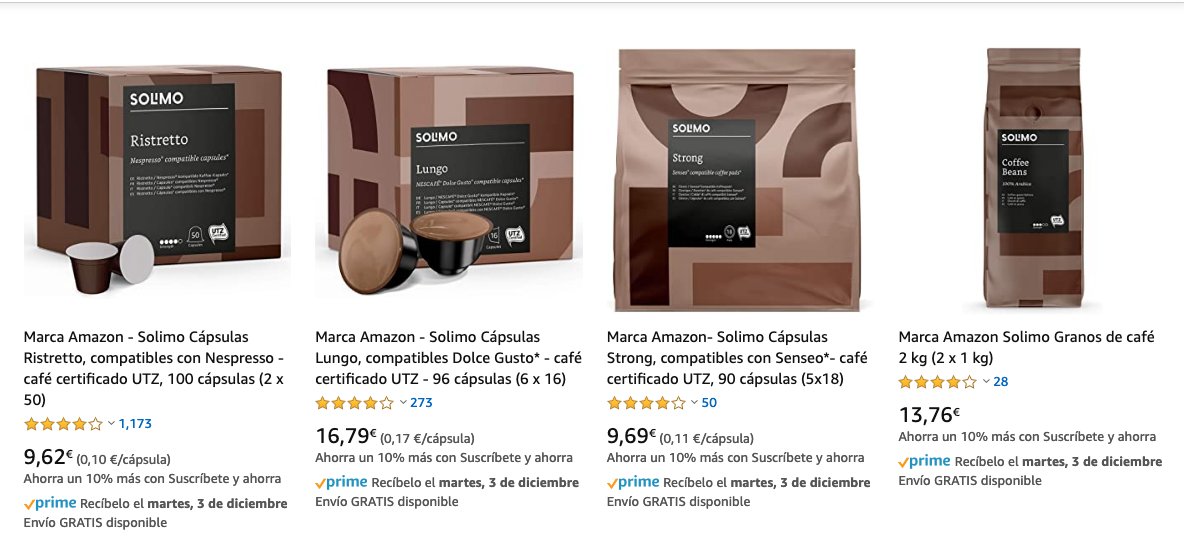
After surprising everyone with the launch of its e-reader, Amazon began experimenting with Solimo coffee capsules, Happy Belly nuts, Mama Bear baby products, NuProy tech and other furniture lines like Strathwood, Movian or Alkove.
Beyond these, the list also includes Wickedly Prime for food, Pinzon by Amazon for bedding and towels, Find for makeup, clothing and footwear, Iris & Lilly (lingerie), and Meraki and Aurique for the men’s segment.
Today, many product lines have been born “under the wing” of the marketplace (most of them as niche categories).
However, over time, after seeing how successful they were, Amazon expanded its portfolio by replicating their distinguishing features.
In fact, they’re not always easy to recognize, because some don’t include the Amazon name, such as Core10 software solutions or fashion items like Goodthreads or Find.
One note: you can find them by searching for a product in Amazon’s search bar: when you scroll down the left side of the browser, a box appears specifying Amazon – Our Brands.
By choosing this path, Amazon has gone from selling technology and accessories to selling practically everything.
A total of 80 brands are sold through its ecommerce store, although only 19 of them are available in Spain. Two of the best known and most recognizable worldwide are Basics and Beauty.
Business Insider España has put together a list with all of them, in case you’d like to learn more.
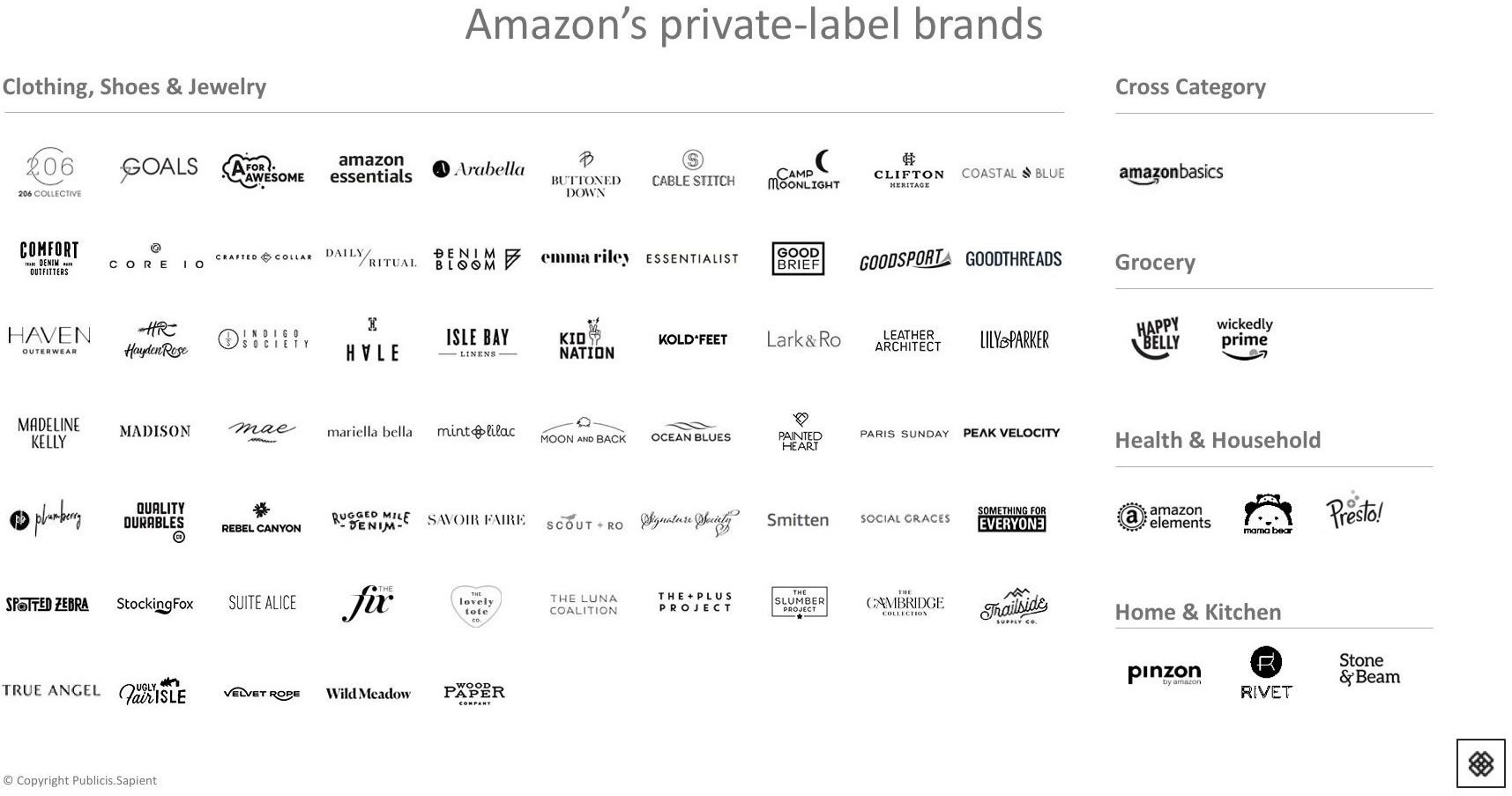
The private label brands Amazon sells cover every vertical
Food, children’s products, home goods, home and office furniture, fashion, accessories, footwear, technology, jewelry, leisure and free time.
In recent years, the marketplace has shown a particular interest in fashion, especially niche segments (plus sizes, women’s, men’s and children’s underwear, for example), standing up to the sector’s distributors and manufacturers.
If they do well, the portfolio is diversified; otherwise, they end up disappearing — as happened with Jump Club, Strathwood, Kalei Athletics and North Eleven, now listed under Amazon’s Discontinued category.
Amazon bought the healthy food supermarket chain Whole Foods Market for $13 billion in 2017. This acquisition was made with a broader goal in mind: gaining its customers, its stores and its logistics hubs to speed up deliveries to under 2 hours. It was the beginning of Amazon Prime Now.
Blucó has carried out a detailed analysis of how private label brands have evolved within the sectors and target audiences that are strategic for Amazon. The data confirms that the most successful brands are those aimed at women, followed by unisex brands and, lastly, men’s and children’s brands. Some interesting conclusions can be drawn from this analysis:
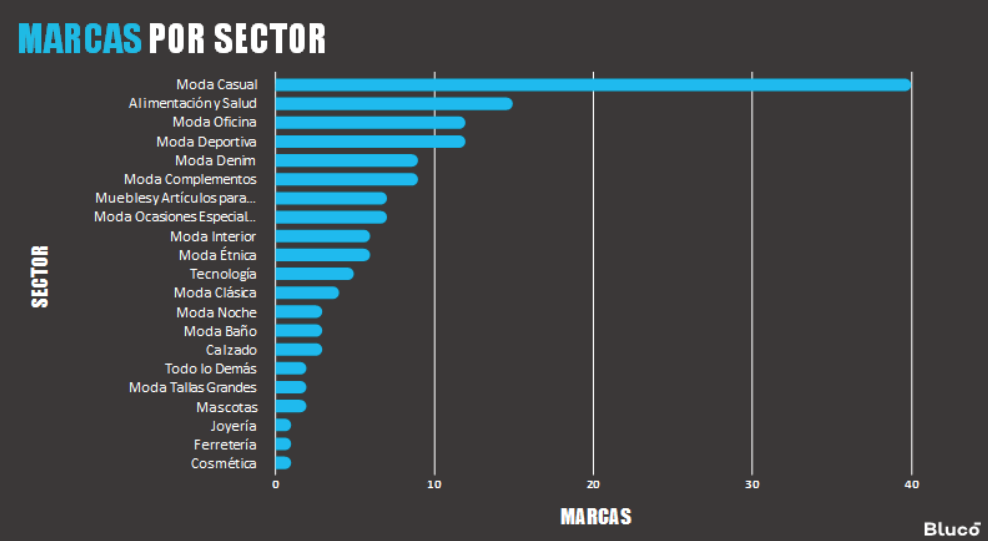
· Of Amazon’s 150 brands, 116 (77.3%) belong to the fashion sector
· The ecommerce store shows its own-brand products in the carousel with greater visibility than competitors’ products
· Amazon’s search engine has become the third most used on the planet, and it has tweaked its algorithm so that the products generating the highest profit margins are the ones automatically promoted within it — in other words, Amazon’s own brands and products

· Although the goal of a private label brand is to increase sales without linking them directly to the marketplace, it’s sometimes hard to tell them apart
· In Spain and the rest of Europe, private label brands are highly rated by users, which is a strong asset for Jeff Bezos’s company
Even though the profitability of some of the new brands is in question
Amazon lets them run and checks how they perform in different countries. The process is as follows: it develops a private label in a profitable niche, ideally an everyday essential or consumable, and adapts it based on consumer reaction.
If the reaction is positive, it sometimes chooses to create a second private label, usually a premium version of the first. That’s the case, for example, with the coffee brands Solimo and Happy Belly. It also makes adjustments to its portfolio or diversifies its product range.
Amazon’s private label brands: within anyone’s reach?
In theory, anyone can create a brand exclusively to sell on Amazon.
It’s also a very profitable way to give visibility to small and
medium-sized businesses, helping them improve their bottom line. Even so, although the partnership may seem appealing at first glance, not everything that glitters is gold.
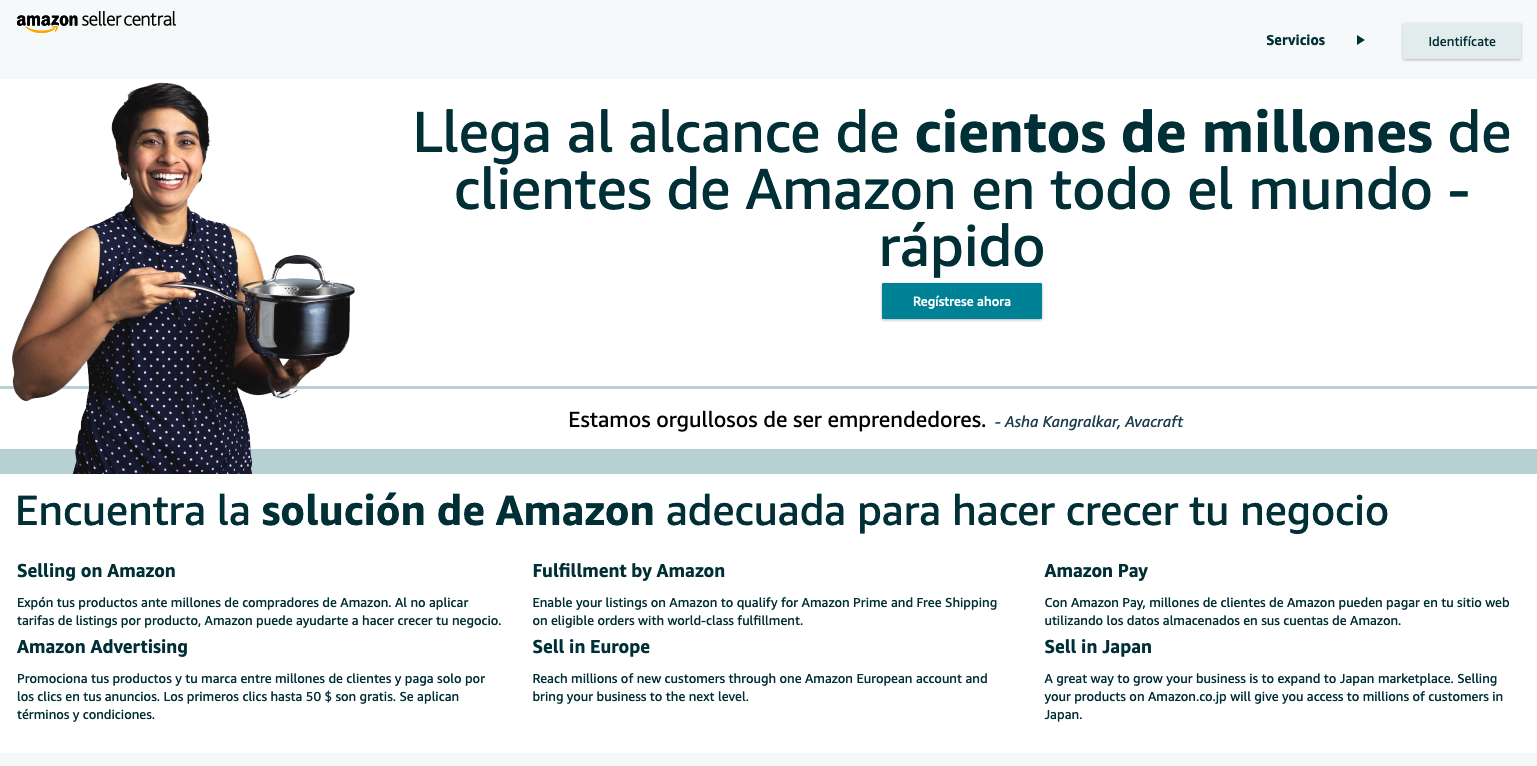
To sell on Amazon, you need to open an account on ‘Amazon Seller’ and fill out a form with tax information and other billing or logistics details.
First of all, keep in mind that Amazon will require you to offer competitive prices, since you have to factor in its margins and the taxes generated. That’s why the Seattle retail giant is more appealing if you’re a brand, manufacturer or distributor, and makes less sense if you sell through third parties.
In any case, the deciding factor for gaining organic visibility and earning stars on your product listings has to do with the product’s price.
So, if your price isn’t competitive, it’s hard to rank well in the marketplace; remember that Amazon is the third-largest advertising platform after Google and Facebook.
On top of that, bear in mind that to be chosen for the ‘Buy Box’ you need a solid sales history, which closes many doors for newcomers and favors longer-standing partners.
By creating its private label strategy, Amazon has welcomed new manufacturers.
So when Amazon acts as an intermediary between your products and the customer, it doesn’t just win on commercial margins — it also gets direct access to customer data, learns your business model, can replicate it, and spots new sales opportunities; either way, it’s a win-win business for Amazon, isn’t it?
That’s why competing with this giant is very difficult: companies have to make major efforts to gain visibility by standing out through the added value of their products or by optimizing their descriptions.
The numbers say it all
Although the e-commerce giant’s revenue and business volume figures aren’t entirely transparent, below we share some interesting data on the subject.
· Amazon leads the ranking of the most popular shopping apps in the United States: 145.2 billion mobile users accessed its app in March 2019. Amazon Prime has 103 million subscribers in the United States; in June 2018 it had 95 million (Statista, 2019).
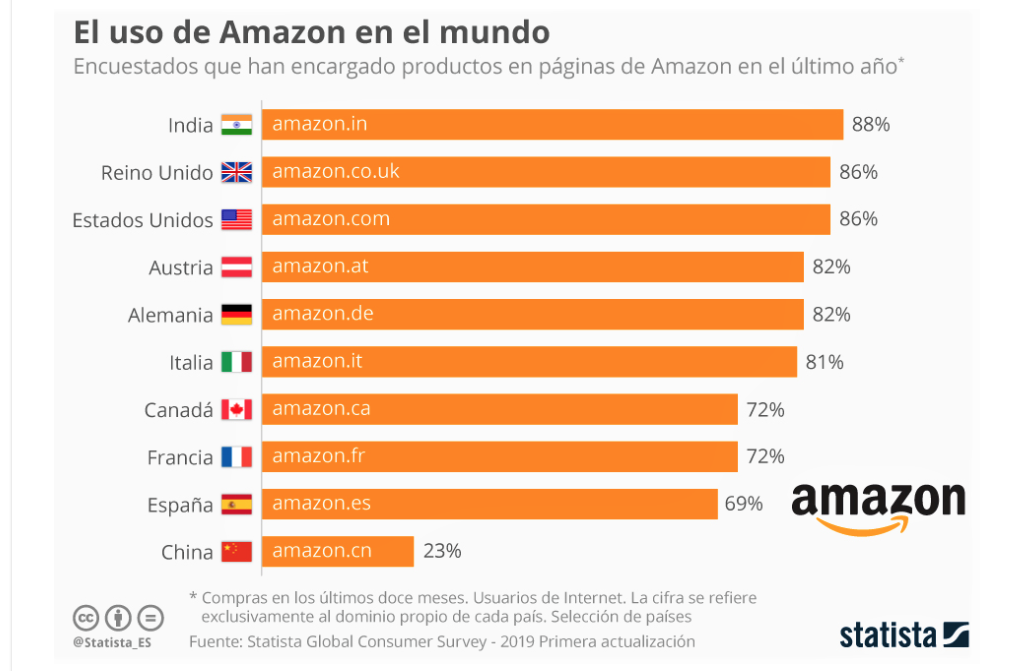
· Most US customers trust Amazon: 89% of its shoppers say they are more likely to buy products from Amazon than from other e-commerce sites. ‘Electronics’, at 44%, is the most popular product category purchased by Amazon shoppers, closely followed by clothing, shoes and jewelry at 43% and home and kitchen products at 39% in the United States. (Feedvisor, 2019).
· Customers who search for a product on the Seattle marketplace usually do so because they’re confident they’ll find it there. The roughly 120 million products available in April 2019 confirm this (Scrapehero, 2019). More than half of the items sold on Amazon come from SMEs. In the United States, they sell more than 4,000 items per minute, according to the platform’s own sources (Amazon, 2019).
· ‘Books’, with 44 million products, followed by ‘Electronics’ (just over 10 million) and ‘Home & Kitchen’ (6.6 million), are the categories with the highest number of listings.
· Amazon has more than 2.5 million active sellers on the marketplace generating over $1 million in sales. 200,000 of them bring in more than $100,000. (Marketplacepulse, 2019).
· In a study conducted by Wells Fargo for Yahoo during 2018, Amazon’s unique visitor count represented 74% of all internet users in the United States. In addition, the share of budget consumers dedicate to shopping on Amazon has risen from 27% to 33%. Last year, the Marketplace became the top seller of fashion and footwear, with 9.9% of all clothing sales and 42.5% of online sales; by comparison, Walmart ranks second with an 8.3% market share.
In Spain there are certain peculiarities compared to the United States, although the marketplace’s upward trend in its private label penetration continues (Source: Expansión). The e-commerce giant’s corporate structure makes it impossible to know the total revenue it generates in Spain, since it operates through three companies, from which the following growth figures are drawn.
· 85% of the sales declared by the three subsidiaries (logistics, online advertising and service provision) comes from logistics (the warehouses in Madrid, Barcelona and Toledo). Together, these three companies report a net profit of €8.44 million.
· Amazon Spain Fulfillment, the logistics division, brought in up to €365 million in 2018 (a 72% increase over the previous year) with a net profit of €5.17 million. El Corte Inglés and Mercadona are adjusting their shipping models to become more competitive and add value for the end customer — the former with express deliveries and the latter by opening new logistics centers across Spain.
· Digital advertising, managed by the company Amazon Online Spain, tripled its revenue to €55.3 million and reported profits of €12,363. The third company, Amazon Data Services, reported revenue of €5.7 million, compared to €3.4 million the previous year.
· In Spain, Amazon leads online sales with €4.5 billion, followed by Aliexpress with €1.363 billion, El Corte Inglés with €1.192 billion, Carrefour with €653 million and Ikea with close to €617 million (Source: Eshow).
· Amazon’s buyer profile in Spain: 21 million unique users, 14 million buyers and 6 million mobile users. The average is 45 visits per user per month, with visits lasting 6.6 minutes. Its portfolio includes 250 million products spread across 35 categories (Brainy Commerce).
· New business opportunities for Amazon
You’ve probably already discovered Amazon’s enormous capacity for research and launching new business ventures — an aspect that’s shaking up companies across every sector, from food to fashion to insurance and finance. Here are some of its lines of action over the past two years:
· This year Amazon surprised everyone by introducing a new product in its private label category: mattresses. The move came after noticing the traction of brands like Casper and Leesa in the United States. The King-size memory foam mattress, for example, is available at a price competitors can’t beat. Once again, price is the deciding factor.
· A few weeks ago we learned about the alliance between the insurance company Mapfre and the Seattle marketplace to open a virtual branch of the Spanish multinational on Amazon’s website. This first step lays the groundwork for future integration of the Amazon Pay payment system, Amazon Family, both organizations’ customer loyalty programs, and international expansion.
· Telefónica announced its alliance with Amazon last year to offer cloud services. The agreement affects customers worldwide and aims to speed up go-to-market steps, cut costs and support their businesses globally, according to sources at the Spanish tech company.
· Amazon Business for companies and freelancers. With this product, the e-commerce giant covers the non-Prime customer niche by offering specific services such as exclusive prices for bulk purchases, a curated selection of suppliers and products, invoicing, preferred shipping and payment integration. The energy company Cepsa has been using this service for just over a year to simplify and speed up its purchasing.
· El Economista reported last year on Amazon’s possible negotiations with Spanish suppliers like Persán in the consumer goods market for household cleaning and hygiene products.
· After acquiring Whole Foods, Amazon took part in another major strategic move: the purchase of Ring, a security company that sells a smart recording system for home security.
· Beyond its strategic alliances with companies, Amazon has just unveiled its new Echo Frames glasses with Alexa access — a tech alternative that will shake up the hearing aid and eyewear industries. The same goes for the Echo Loop smart ring. These new devices are part of its “beta” program, which lets customers try out new inventions through Day 1 Editions.
· Amazon Fashion organized ‘Destination Denim’, a free event held in Berlin aimed at “inspiring” its customers by blending fashion, technology, music and culture, showcasing its range of jeans from different brands.
· Also related to fashion, Amazon’s app has developed a product recommendation feature known as StyleSnap. With this tool, the online commerce giant is taking its first steps into influencer marketing.
· Conclusions
You’ll have already discovered Amazon’s boundless ability to diversify its product and service lines in a short amount of time. Since its founding in 1994, the company started by Jeff Bezos — its current CEO and one of the richest men in the world (Forbes estimates his fortune at €100.44 billion) — has become the number one player in the online market, with a strategy based on customer knowledge, huge sales volumes and an unbeatable logistics structure.
The new private label strategy and other services like Amazon Prime, Go, Business and Fresh are some examples of this constant pursuit of successful business lines. On top of all this, remember that the American marketplace has become a digital advertising giant and has the upper hand in data analytics and artificial intelligence. Within this framework, there’s still a lot left to see and discover, don’t you think?
This model works because brands know their ideal customer very well and tailor the product to their exact needs.