
Public relations, or PR (you know, “pee-ar”). Call it what you like, but digital public relations is the most crucial part of marketing for gaining media visibility.
Do you want the media to notice your brand? To talk about it? To position you as an expert in your industry?
That’s where digital PR comes in, as a catapult to build, grow and improve your online reputation. And all with the goal of making sales. And more sales. Because in the end, it’s always about sales.
But let’s start by acknowledging a truth: launching a digital PR strategy is more complex than starting a blog, setting up a test campaign in Google Ads or publishing a post on a social network.
Digital PR is a super powerful tool that can be intimidating. The kind where you wonder whether you’re already late getting started and, when you think about it, you don’t even know where to begin.
In this guide, we tell you everything you need to know to decide whether you want to take your first steps with the media. Or, at the very least, so you’re clear on what digital PR is all about.
And all of it with good examples, the kind that inspire and motivate. So, come on, let’s start at the beginning by defining what it is and what it isn’t.
What are digital public relations, or digital PR?
As a starting point, let’s clear up the basics: in this context, PR stands for digital public relations.
[su_note note_color=”#38aaf8″ text_color=”#ffffff” radius=”0″]Public relations are a set of techniques for making your business known to relevant audiences, conveying messages that fit your brand values and strengthening its reputation. [/su_note]
And although old-school public relations still exist, in the world we live in everything revolves around the online channel and its media.
That’s why you’ll often see the terms (digital) PR, (digital) public relations or (digital) media relations used interchangeably to refer to the same thing: actions aimed at getting coverage in digital media.
Mind you, just so you know, digital public relations also include other types of sites, such as websites and blogs, professional associations, social media or podcasts. But most digital PR focuses on the media.
How is PR different from other digital marketing actions?
At this point, you may be wondering why PR isn’t considered just another advertising technique. And you may also have wondered what the word “relations” really adds to the definition.
Both questions have the same answer: public relations are part of marketing, yes, but they aren’t considered a form of advertising because the key to PR is building relationships with audiences that matter to the brand.
Ultimately, that audience would be made up of potential customers. But in practice, the main audience of a brand developing a digital PR strategy is made up of journalists.
In other words, the digital media presence we were talking about is achieved by building relationships with journalists and nurturing them over time with valuable content.
👉🏼 To be clear: it’s not about paying to be interviewed or to get an article published about your company, but about getting people to talk about you because you’ve earned that attention.[/]
And this means PR presents its own challenges within the digital marketing strategy.
The digital PR mantra
Obviously, building relationships takes time and effort. And, even more importantly, it requires empathy, respect, patience and generosity
Empathy? Respect? Patience? Generosity? Exactly, like any other relationship 🙂
In fact, many of us think all marketing should be guided by these same principles. Although that’s another topic we could talk about for much longer 🤔
The thing is, in digital PR that respect for the audience is even more crucial, because you earn the media’s trust and attention by offering the audience helpful, interesting content.
In other words, relevant content that makes journalists’ work easier.
You can only do this by understanding the day-to-day work of the media (hence the empathy and respect) and making a constant effort to add value (patience and generosity).
But since adding value can sometimes sound a little abstract, let’s look at 5 examples of different types of public relations actions. So it’s clear exactly what we mean when we talk about digital PR.
Types of actions and examples of digital public relations
Digital PR example #1: the study or expert analysis
Media content based on studies and expert analysis is a very popular type of digital PR action.
Put quickly and simply: if they’re done well, they’re an almost guaranteed way to get into the media and position yourself as an expert in your industry (the famous thought leadership).
Look at this example from Declarando, an online tax advisory firm for the self-employed that works on its public relations by analyzing information relevant to its audience and getting it to journalists in a constant, methodical way.

The action in the example was based on an analysis of the data the brand had on the more than 70,000 self-employed workers registered on its platform.
Declarando knew that contributions to pension plans meant a significant tax reduction for its clients, and it wanted more self-employed workers to benefit from them.
To do that, it had to shed some light on the issue: How many self-employed workers had a pension plan? How much did they contribute? What impact did these contributions have on their income?
They analyzed the data and created a report with key figures so interested journalists could write a piece on the savings potential of this tax benefit.
And voilà: a study cited in all kinds of media, from specialized outlets such as Autónomos y Emprendedores or Muypymes to leading general or business media such as Cinco Días or El Economista.
Example 2: the periodic trends report
If the study or expert analysis is one of digital PR’s big favorites, the periodic report is a variant that adds a spectacular advantage: it guarantees a regular media presence.
But let’s not kid ourselves: planning a report of this kind takes an impressive amount of work.
The good thing, though, is that once you’ve organized the methodology and the structure of the information, you just have to replicate the process and stick to the publishing frequency.
The most obvious example of the potential of this type of public relations action is Idealista’s price reports.
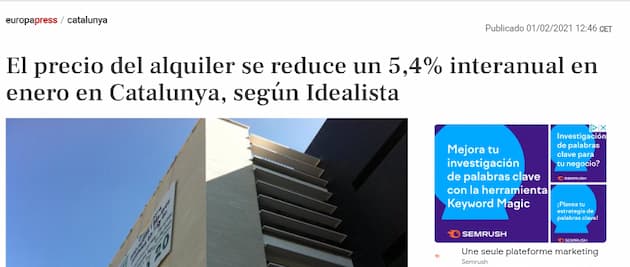
With press releases that regularly report on price trends, Idealista not only gets constant coverage and mentions in all kinds of media.
It has also positioned itself as the absolute benchmark for the real estate market. And every time digital media want to talk about purchase and rental prices, guess who they’re going to ask?
Bingo. Idealista has become the main source of information. That’s why it has a tool that lets journalists access the reports and use them in a personalized way.
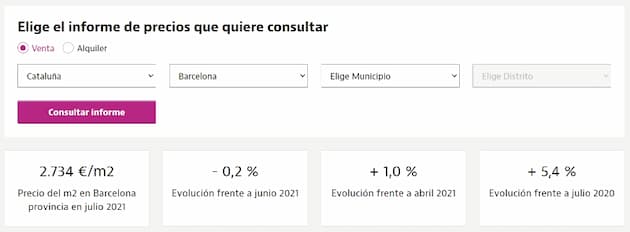
This is a very popular option among companies that have huge amounts of data at their disposal and the resources to analyze it regularly.
And yes, we’re not all Idealista, and we don’t all handle large volumes of data. But that doesn’t mean there aren’t ways to make the most of this type of digital PR action.
Even if your company is highly specialized, for example in a B2B niche, you can use this same formula to establish your reputation as a leader with your industry’s media.
🔗 You may be interested in: The best B2B mailing campaigns [with examples]
If not, look at how Cobee does it: a startup in the human resources sector that publishes an annual study on employee benefits trends for specialized media.
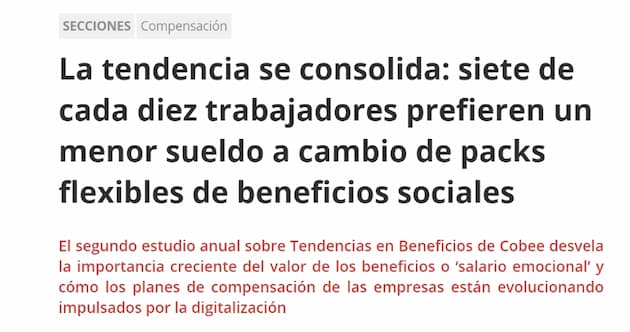
Digital PR example #3: the inspiring, informal piece
This is the light version of studies, reports and expert analyses.
Because yes, it’s still information that brands give journalists based on their knowledge of a particular topic.
But, great news: it doesn’t require as much data or effort as the previous options. It’s about gathering useful information for journalists and packaging it in a simple report; if it’s entertaining, even better.

That’s what the home laundry service app Mr Jeff did with this informal article on how to save space in your suitcase when going on vacation.
The information is so simple it might seem trivial. But it’s the kind of fresh, light, inspiring content that fits perfectly in the media at certain times of year, such as summer.
A tip like “sneakers or hiking boots can be used to store small items” doesn’t require consulting an expert or analyzing databases. But it serves as a guide and can help journalists do their job.
And while they tell us how to look great on vacation, they’re linking household matters such as clothing care to a particular lifestyle.
In other words, they position themselves as a benchmark and reinforce an idea that fits Mr Jeff’s proposition like a glove: forget about your laundry and live better.
Digital PR example #4: celebrating a special date
Throughout the year, there are dates when your chances of catching a journalist’s attention multiply.
Think of holidays, peak seasons, and international and world days related to your activity or to events and happenings in your industry.
Journalists usually work on stories related to these dates, and they’re very likely looking for sources or comments to include in their articles.
Well, this is the perfect moment to create your own digital PR campaign. Because what matters here is timing.
A good example is the one from Atrápalo you’re about to see. The ticketing company made the most of this opportunity by building the campaign “Somos teatreros aficionados” (“We’re amateur theater buffs”) around World Theatre Day.
A microsite, a video and a 50% discount on a selection of shows for 9 days became its ticket to the most relevant national media.
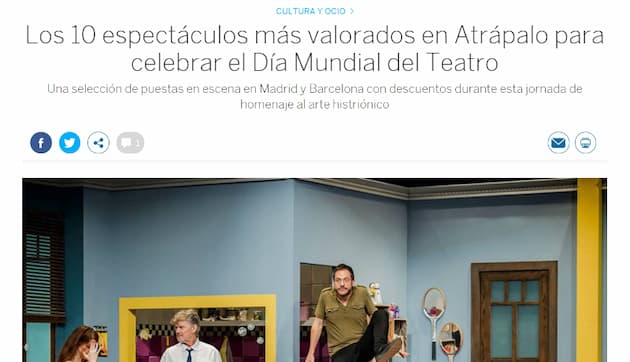
What’s more, this is an all-terrain tactic with a reach that goes beyond public relations.
You can take advantage of special dates to create amazing content that enriches your whole editorial calendar, from your blog to social media to digital PR.
In fact, the best thing in the world is being able to combine these three strategies (content, social media and PR), creating synergies and using the resources of one to produce content for the others.
Digital PR example #5: guerrilla public relations
We’ve seen that timing plays a key role in digital public relations. After all, the media essentially live on reporting and analyzing current events.
This is where brands can respond to controversial topics or ones that spark the media’s interest, turning the response into a digital PR opportunity.
That’s what Marmota, the online mattress store, did with an explosive combination of guerrilla marketing and digital PR.
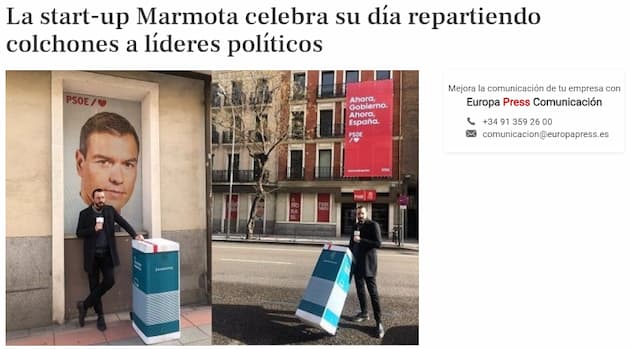
It all started when Pedro Sánchez stated in his book “Manual de resistencia” that his first decision on arriving at La Moncloa (the Spanish prime minister’s residence) had been to change the mattress.
The story went viral, and Marmota, a brand known for its fresh, cheeky style, decided to respond by delivering a mattress to Sánchez and the country’s other political leaders.
And that’s how they turned the controversy into an opportunity: handing out mattresses with funny, critical messages such as «Pedro, now you really will sleep soundly», «Santi, if you’re going to reconquer something, make it hours of sleep» or «Inés, better to lose votes than lose sleep».
In addition, timing played a huge role, because they planned the action to coincide with Groundhog Day (“Día de la Marmota” in Spanish), celebrated in early February in the United States and Canada.
[su_note note_color=”#38aaf8″ text_color=”#ffffff” radius=”0″]We were living through a real political Groundhog Day, and we wanted to poke a little fun at everyone and give them a humorous wake-up call, as if to say, “hey, you need to get better rest”.
– Paula Rodríguez, Chief Strategy Officer at Marmota [/su_note]
With this, they managed not only to appear in the media but also to make noise on social media, with interactions from very influential accounts such as Cabronazi and congratulations from creatives and executives at the country’s leading advertising agencies.
In their case, the ingredients were a bit of sarcasm, a wake-up call to the political class and a nod to current events.
But what does this example teach us? Above all, that each brand has to stay true to its personality to create its own explosive digital PR recipe.
Now… who takes care of digital PR?
At this point, you may be wondering who’s in charge of carrying out these kinds of media actions.
Public relations usually fall to the team or person responsible for marketing and/or communication.
But depending on the resources and the priority you want to give it, it can be done in-house by contacting journalists directly, or with the help of a digital PR agency.
But with or without an agency, there’s one key point that will always be there: generating relevant ideas. Because when it comes to identifying digital PR opportunities, you need in-depth knowledge of the product, the service or the industry.
That’s where you come in, if you’re a one-person-band entrepreneur (you know, handling sales, logistics, marketing and the legal side all at once). Or the management team, if you’re part of a team in charge of digital strategy.
Whatever your case, it’s about generating public relations ideas based on knowing the business inside out.
Related posts:
- The art of persuasion: exploring the depths of rhetoric and oratory
- Tips for Creating a PERFECT Content Campaign
- Philip Kotler: What Is Marketing? 7 Amazing Ideas
- Best Content Marketing Examples
Bonus: how to generate interesting digital public relations ideas
So it’s clear that a good digital PR idea should start from a strategic understanding of the product or service. It’s also important to keep up with current events (remember the Marmota example!).
This is what will give you the ability to create newsworthy content, which usually includes one of these elements:
● Visionary ideas about the service/product/industry
● Exclusive knowledge of industry trends and news
● The ability to predict the future of the industry
● Personal, strong or original opinions on current events
But more specifically, how do you come up with the ideas that end up in the media? We’ll finish with this bonus, in case you’re thinking of giving it a try.
Most of the time, the knowledge is there, and we simply aren’t aware of how valuable it is. That’s why a simple brainstorming session may be enough.
The key to bringing ideas to the surface is asking the right questions. Here are some questions that can serve as a starting point for generating digital PR ideas:
● What was your industry or product/service like 5 or 10 years ago, and what is it like today?
● What factors have contributed to the change?
● What does that change mean for your customers and for the market?
● Which dates are relevant to your audience in relation to your product/service/industry?
● How does your product/service/industry help create a better world?
● What could your company do to encourage positive changes in the industry or in society?
● What trends do you see right now in the product/service/industry?
● How do these current trends affect your product/service/industry?
● What are the main technological and socioeconomic changes shaping your product/service/industry today?
● How do you imagine the future of your product/service/industry?
As the ideas come up, create a document to develop the most interesting ones. You may not have the necessary resources right now, or there may be no data to support a basic hypothesis, for example.
This document will serve as a roadmap for prioritizing ideas by cost, potential impact and available information. And that way, you won’t forget opportunities you can’t take advantage of today but may be able to later.
Remembering the digital PR mantra
And finally, if you only take away one thing, let it be this: in digital public relations, what matters most is making journalists’ lives easier by giving them content that’s relevant to their work.
Is it important to have contacts? To build them? Of course; we’re talking about developing synergies with journalists and other influential people in the media.
But your best weapons for keeping the relationship alive will be knowledge, a constant search for good ideas and the desire to add a lot of value.
Oh, yes, and always remember the digital PR mantra: empathy, respect, patience and generosity.
These public relations actions are part of a broader digital marketing strategy.