The concept of a teaser isn’t exclusive to cinema or to in-house audiovisual production for traditional media.
In fact, it has been used far more often than you might think in the world of advertising.
Even more so now that video is booming in the digital world and stands out as the format preferred by most users. So today we’re talking about advertising teasers and how to incorporate them into a specific digital marketing strategy.
If the concept isn’t entirely clear to you and you’d like to dig a little deeper into its history, we recommend taking a look at this article, which offers a more in-depth analysis of how the term has evolved: what a teaser is.
A teaser is an advertising or content resource that, through a short and eye-catching message (often in video format), seeks to generate curiosity and anticipation about an upcoming product, service or event. It usually offers only a few details or clues, without revealing all the information, to encourage the audience to want to find out more.
Although the concept of a teaser is very well known in the film world (for example, to promote the release of movies), it is also especially useful in marketing and advertising. Brands use it to announce upcoming news or launches, spark interest in something that hasn’t yet been fully revealed, and position the idea or name of the brand in the public’s mind.
In the digital environment, where consumption of audiovisual content grows every day, teasers have become a key tool for capturing the audience’s attention, reinforcing brand identity and encouraging people to want to know more, whether through a specific channel (website, social media, etc.) or as part of a broader online marketing strategy.
At first glance, even if you’re clear on what the concept of a teaser is, you probably think you’ve seen very few related to the advertising sector.
Many more associated with the world of cinema will probably come to mind.
So we think a good starting point is to name a couple of campaigns that appeared in this format and achieved quite remarkable success.
Tezenis making the most of Rita Ora’s image
In reality, the video you’ve just watched is really short (a characteristic of teasers), barely shows any details of the product being advertised, and makes little reference to values commonly highlighted in advertising such as price, quality, colors or lifestyle.
In this case, it only uses the celebrity’s appeal to leave the audience halfway between surprise and anticipation about what the brand is going to launch. They’ve already achieved at least this much: the brand is on people’s minds, and they’ve marked the date on their calendars.
Although the video is no longer available online, I’m sure you remember this campaign.
In it, there was no corporate trace of the brand, and although the topic of conversation was a car, it was never said which one.
The dialogue between two young people, one of them making the other envious with the most dreamed-of car, would be just the starting point for the following actions to convince young people that Mercedes wasn’t a brand for grandparents.
It’s true that they didn’t achieve it with the teaser alone, but it was an open door to that change of concept that brought the brand back to success.

Before starting an advertising teaser strategy, it’s worth asking yourself two basic questions.
The first is whether the product or service is really suited to this medium, and what communication method will convey that novelty, anticipation and surprise to the audience.
The second has more to do with the specific means of production.
Do you already have a team? Have you thought about hiring an external audiovisual production company to take charge of the project? If you’re already clear on that, let’s move on to the step-by-step strategy.
● Defining the campaign objective and the message
On the one hand, you need to establish what you want to achieve (direct sales, loyalty, branding,…). On the other, what the message you’ll design is meant to accomplish (to convince, to make people think, to position the brand in the consumer’s mind among the options,…)
● Message design
Following the guideline above, you first need to design the message in broad strokes. Then comes the teaser script, built from the message together with audiovisual specialists. You shouldn’t forget the format you’re creating and all its characteristics.
● Channel selection
Although a teaser is always a short video, the channels it can be distributed through are endless, even more so if you add those of traditional media and the internet. Choosing the most suitable ones must be in line with your objectives and, of course, your budget.
● Dates and timing
Before you start doing anything, once you have the strategy more or less designed, you need to add dates to each of the phases you’ll be working on. Of course, you’ll then have to commit to them so the project isn’t delayed.
● Complementary campaign
Beyond launching the teaser on the chosen channels, it’s advisable to design a complementary support campaign that helps spread it and boosts its virality. It can be carried out through SEO, SEM, content marketing, traditional press relations, etc.
● Measuring results
Even though a teaser can be used as an audiovisual piece in traditional and online media, nothing exempts you from measuring the results.
In fact, it’s one of the most important keys to knowing how you’ve done, what can be improved and what has been a resounding success.

#1 Know your audience
It goes without saying that you need to know your audience well if you want to create texts that attract them more than once. If you don’t know who your readers, viewers or listeners are, you won’t be able to create content that grabs their attention and makes them want to keep engaging with your pages.
When you study your audience’s behavior, start with the basics, such as demographic data and personal information. Then move on to more specific details, such as their content format preferences, hobbies and interests, etc. Knowing all these characteristics of your target audience will help you segment it and create profiles for each group.
After creating different profiles for each segment of your audience, you can create personalized teaser texts to attract the type of reader most likely to read your content. You’ll be able to address each user’s pain point, create personalized CTAs and much more.
#2 Develop a unique voice
Speaking of how you address your target audience or your segments, you also need to develop a distinct brand voice that you’ll use in your teasers and in your overall content marketing strategy. Here are some tips to help you develop your brand’s voice:
· Write in a friendly tone, especially if you want to come across as informal and as if you were talking to a friend.
· Don’t try to go off on a tangent; be clear, honest and concise. You know your customer, so why not address them the way they’d like?
· Speak the same language as your audience. In other words, use the tone and jargon they would use, but avoid overusing terminology that could overwhelm your content.
· Focus on the positive and avoid using negative language. You can be subtle, but this should be present in your message.
#3 Give users a reason to click to read more
Since you’re working on a text that will be used as a teaser, your main goal is to get users to click the link to see the main content. That’s precisely why you should always look for a reason to convince them to click, usually by showing what they’ll discover, learn or miss out on if they ignore your message. No matter what you use as bait to encourage them to act, here are some techniques you can use:
· Point out that your content is already popular. This shows that your content has already been recognized by others, just as marketers use social proof to sell a product.
· Mention exclusive content or a bonus. If your article has some kind of bonus that your audience would appreciate, it’s worth pointing it out in the text you’ve published to convince more people to click.
· Find something in the content that fascinates users. Of course, not all content will have something like that, but if it does, you should definitely include information to intrigue visitors.

#4 Include relevant sources
An interesting way to get people to engage with your content is to quote parts of the material to show what they’ll find if they visit your website or blog. In other words, you should select a relevant part of the content and offer it on social media to capture readers’ attention, the typical “see more” link.
On the other hand, you can quote or include hashtags from other trusted sources that are relevant to your audience. For example, if you publish an article about a particular brand, you could include relevant hashtags or links that corroborate and demonstrate the importance of the content.
If you’ve published an interview with someone, you could mention the interviewee or a hashtag in the teaser.
In most cases, it’s best to quote well-known sources, experts, brands, etc. However, you can also mention lesser-known sources if you think this information would be relevant to your users. This can still help spread your content, especially if the person or brand you mention interacts with you and your followers.
#5 Show a table of contents
Although hashtags or mentions are a great way to give your audience a glimpse of your content, another way to do it is by showing a table of contents. This way, you’re showing your audience what they can expect to see once they click the link and check out your content.
Keep in mind that you don’t need to mention everything they’ll find; including the most important parts is enough. For example, if you’ve published a video about how to find a freelancer, you can show that they’ll find information on how to find a reliable expert, how to avoid scammers and which services are the most recommended.
#6 Add visual content
A good teaser should be brief and precise, with no unnecessary information. However, it should also be eye-catching. With this type of content you can’t just add text, because the goal is to use every weapon at your disposal to attract the user. Here are some tips you can follow to make your teaser stand out:
· Use fun but relevant images if you need to promote entertainment-related content.
· Experiment with different types of visual content, including illustrations, photos, GIFs, videos, animations, infographics and much more.
· Avoid using clickbait in titles and visual content, but don’t be afraid to edit some images or video thumbnails to create a more intriguing teaser.

#7 Use CTAs effectively
Undoubtedly, CTAs play a big role in the success of your content marketing strategy as a whole and in the teasers you prepare. However, using them effectively may take more effort than you’d expect. Including a call to action in your teasers is vital to increase engagement, but you also need to make sure your CTAs are written correctly. Here are some things to keep in mind when writing CTAs that convert:
· Be direct, but don’t demand more than your audience can realistically do. The ideal is to go step by step.
· Prioritize CTAs that persuade your audience to click and check out your content (for example, “Click here to read more”).
· From time to time, ask them to complete more complicated actions related to your content (for example, subscribing to your channel or newsletter, following you on social media, sharing your content).
· Ask a question instead of adding a direct CTA. The question should be related to your content so that they engage by asking, commenting, etc.
#8 User-generated content
You don’t always have to create content yourself, so not all your teasers have to be about your own content. In other words, you can make the most of the content you’ve received to improve your digital presence.
On the other hand, you can source content relevant to your audience from trusted sources and publish teasers about this content. In any case, here are some ways to work with third-party content:
· Search for relevant hashtags, both within and outside your industry. The content you find and share with your audience doesn’t necessarily have to be about your brand; it only has to be relevant to your audience.
· Share content related to topics they’re interested in.
· Engage with people who mention your brand or talk about your products or services. This is especially important as social proof. You can share the positive reviews you find on the brand’s official profiles.
· Look at what your peers and work colleagues are posting. Their content can also be used and reposted on your brand’s official profiles, as long as it’s useful to your audience.
#9 Find the best time to publish content
Just as you’d publish a specific piece of content at a certain time of day and week, you also need to consider the same aspects when publishing a teaser. Here are some tips that may be useful for planning your launch schedule:
· It’s best to balance different types of content, for example about the latest trends and evergreen content. If there’s something urgent you need to talk about, don’t hesitate to publish the content and a teaser on social media.
· Schedule your evergreen content for when your audience will be most active online. Run some tests to find out when your audience responds best to teasers, since you’ll need to schedule them for those times of day and week.
· Be consistent with your posting frequency. If you want to stand out with your social media marketing in the long term, you need to set long-term goals for your activities and always post at the same frequency.
#10 Evaluate results to improve
Last but not least, don’t be afraid to change some aspects of your content teaser strategy if you think some things aren’t working. To understand which tactics have worked and which weren’t as effective as you expected, always make sure to track the performance of your teasers and your content.
If you constantly monitor performance and have metrics to measure success, you’ll be able to accurately evaluate results and make smarter decisions in the future. In other words, it’s about finding what works specifically for your brand and how you can make it work even better in the future. Always keep this in mind when planning your future social media marketing activities.
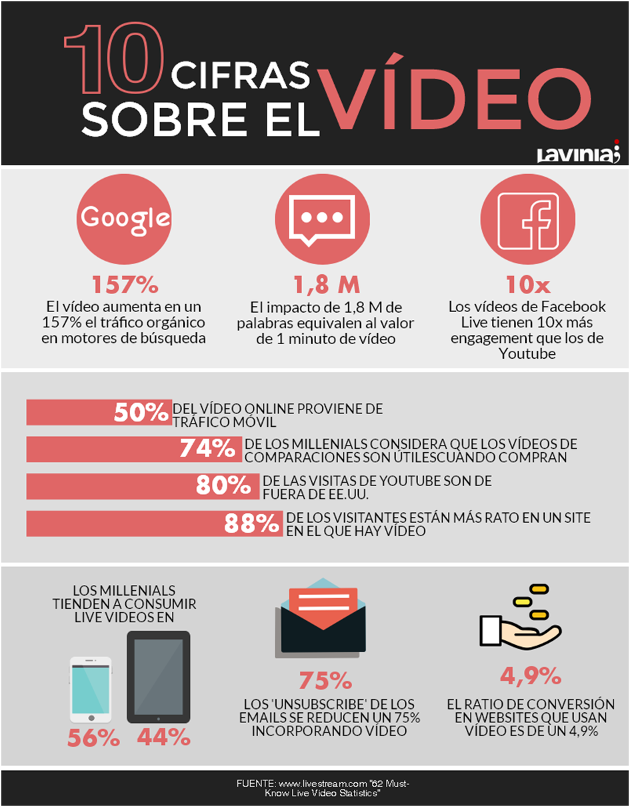
Surely at this point, the question or doubt that comes to mind has to do with the medium in which to launch an advertising teaser.
Aren’t you convinced yet that the internet is the right place?
The following figures will probably change your mind:
If you still have doubts, this completely free guide to video marketing can help you resolve them. Also, remember that teasers can be used alongside other digital marketing actions, such as email marketing, to achieve record-breaking performance. See you on social media!
Its effectiveness is largely explained by the psychological triggers that spark the user’s curiosity.