How to create a simple, effective media plan
Goals, budget, message and channels: how to plan your media, plus a table template to get started today
Goals, budget, message and channels: how to plan your media, plus a table template to get started today
The media plan is the document in which we set out the channels we’ll use to reach a specific goal.
Company goals can be extremely varied, from reaching a certain number of sales or achieving a certain level of visibility to developing the brand image.
Since goals can be so varied, the channels used in each case will also be different.
In this article, we’ll talk about how to develop an effective media plan, focusing on the digital world.
That means we’ll leave aside actions such as TV advertising, for example.
Why?
Because the reality is that it’s difficult for most small businesses, SMEs, entrepreneurs and freelancers to use these channels.
That’s why we’ll focus on the most accessible channels, which are no less effective for that.
Some key questions before choosing the channels we’ll use would be:
One of the most important things is to be clear from the start about what we want to achieve.
Ideally, it should be a single goal for which we have previous data to compare against.
For example, if the goal is to reach a certain number of sales, it helps to know the sales volume achieved in a similar period.
The first thing is to know what financial resources we have.
Also whether they’re larger or smaller than on other occasions, since it would be hard to get better results with a smaller budget.
Setting the budget from the start will help you:
◆ Know roughly how many channels you’ll be able to work with
◆ And what type of channels they’ll be
Knowing the goal to reach and the available budget, you already have two key pieces.
Your target audience may be similar to your current customers, or completely different.
You probably already know your current customers. From what they look for in your product to their tastes, expectations and so on. If your target audience is similar to your current customers, use all the information you have available.
And if you find it isn’t enough, look for ways to gather more information (surveys, contacting key customers, etc.)
If your target audience is going to be different from your current customers, the first question to answer will be:
◆ Why?
In the media plan, we’ll set out which channels we’ll use to reach the target audience; that’s important, and it’s also important to understand why we want to reach those people.
Perhaps we want to expand our target market.
We may already have as much presence as possible in our current market, or it may be showing signs of exhaustion.
Whatever it is, we need to be clear about the reason.
Finally, in this section we can consider the company’s owned media.
That is, the channels over which we have full control and where we can:
◆ Publish whatever we want
◆ In the way we want
◆ Moderating or steering the conversation if necessary
For example, we may have the company website, the blog, our own newsletter and our own social media.
Using these channels has both advantages and limitations.
On the one hand, it’s clear that we can have full control over the communication.
On the other hand, our audience is what it is, and we can’t expand it instantly without marketing efforts (which, in any case, are unlikely to have immediate results).
In other words, if we want to reach a wider audience than the one we already have, it will be hard to do it with owned media.
Turn your campaigns into subscribers
With Mailrelay’s forms, every visit your paid media brings in can become a contact you can write to again.
I wasn’t sure whether to add this section to the previous point or keep it separate.
In the end, since it’s very important, I decided to keep it separate.
The message we’ll convey is directly related to:
◆ The goal we’ve defined
◆ The channels we’ll use
In other words, if you know what you want to achieve and which audience is most likely to be interested, setting the message to convey is the next logical step.
And once we know the message, we’ll have a better idea of the best channels to spread it.
What is the message we want to spread about?
Maybe it’s an offer, a discount or a new feature.
Some change in the product or service.
Or something as important as the story of the product or service, so people get to know the brand.
The message content is what we believe, when the target audience sees it, will help them take the action we want.
This will depend on the available budget and the channels we roughly have in mind.
The message could be a video, a text, an email, a podcast, several social media posts, etc.
Depending on the target audience, some formats are more effective than others.
Depending on your product or service, the start date may matter.
Maybe your customers are on vacation in summer, or aren’t interested in making new investments.
Or quite the opposite!
You’re the one who knows.
A delicate point.
If the message is a discount coupon, a week or two may be more than enough.
However, if we’ve just launched a new product or service, we’ll very likely want to keep promoting it for longer.
If we have the budget, of course.

I’ve already told you about owned media.
Clearly, you should use them properly whenever possible.
In addition to owned media, we can consider:
These are the media we all aspire to, right?
Having people talk about us without us having to pay anything sounds more than interesting, there’s no denying it.
However, it isn’t easy to achieve.
It depends on several factors:
◆ The message. It’ll be hard to get lots of people talking about a 5% discount on the first purchase. Whereas a giveaway where you offer something of greater value may spread further.
◆ The format. A fun video may be easier to share than a boring spec sheet, for example.
◆ The “reward” for the outlet. In other words, what does the outlet gain by talking about your product? Even if they’re not paid media, many will want something in return. Such as getting visibility, or traffic from people looking for information about your product.
An entertaining message, where both the audience and the outlet gain something in return, is more likely to be spread by various media without us having to pay them.
These are the ones we’ll need to study most carefully for our media plan.
They’re the channels we find interesting for spreading our message and that we pay for because we expect a positive return, or because they’ll help us achieve the goals we’ve set.
◆ Paid SEM advertising
◆ Sponsorship of blogs (articles) or newsletters
◆ Sponsored social media posts
◆ Sponsorship of podcasts or channels
◆ Press releases
◆ Etc.
Choosing some channels or others will depend on the budget and the type of action. We’ll talk about that a little further on.
With some outlets, we may be able to set up collaborations.
For example, with brands or products that complement ours, we can reach collaboration agreements where we use our owned media and they use theirs to spread a joint message.
This kind of collaboration can also lead to earned media.
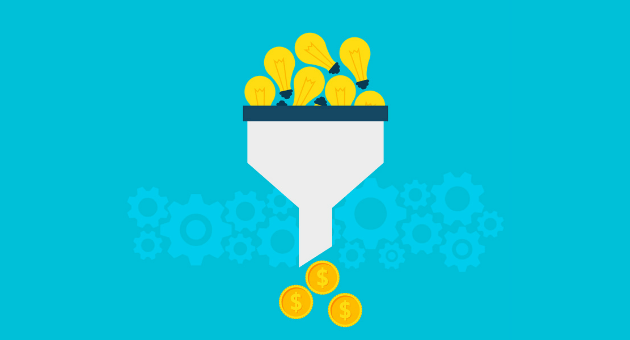
Depending on the type of action, we’ll need to choose some channels or others.
If we’re planning an immediate-response action, the channels we use will be different from those for an action that doesn’t require an immediate response.
Some channels that tend to be useful for immediate-response actions are:
Because they achieve wide reach in a short time.
You have to be careful, because not all messages are interesting and we may not get the impact we expect.
On the other hand, although the reach is usually very wide, potentially tens of thousands of people, how interested those people are is very relative.
Very useful in campaigns where the action we expect recipients to take is to buy.
The main advantage is that these ads are usually shown to people who show real interest, that is, who are actively searching.
Google Ads is usually a very effective tool.
Some outlets, such as blogs or websites, offer the option of advertising in their newsletters.
Again, the advantage is the chance to reach a wide audience, although how interested they are is unknown.
】 ◆ 【 】 ◆ 【 】 ◆ 【
On the other hand, some useful channels for messages that don’t require an immediate response would be:
This can give us a lot of visibility, and if we keep the action going long enough, we could achieve goals such as developing the brand image, for example.
On the downside, ad spots in these media tend to go largely unnoticed, so they’re not as useful for direct-response actions.
This kind of action can be very interesting from two angles.
On the one hand, it helps you gain visibility and, almost always, you can include a link to your site, which can help bring in traffic.
On the other hand, these actions don’t usually get a direct response.
Some tools you can use would be:
◆ Prensarank
◆ Publisuites
◆ Growwer
These campaigns usually show graphic ads embedded in websites, newspapers and even videos.
They help build brand awareness.
You can use Google Ads in this case too.

Send your newsletters with Mailrelay
Up to 80,000 emails a month and 20,000 contacts for free, with human support on every plan.
Now that we’ve reviewed which types of channels may be most interesting in each case, the question arises: how can we choose the best channels?
There are various tools that can be useful for finding the right channels:
◆ Semrush, Sistrix or even a Google search > can help us find sites whose topics are right for our product or service. The search is done with keywords, so we need to be clear about them.
◆ Publisuites, Growwer and Prensarank > are marketplaces where we can buy sponsored posts. They all show information that helps us decide which sites may be of most interest to us.
◆ Influencer analytics platforms such as HypeAuditor > make it easy to find suitable influencers.
These are just a few examples that can help you find the most suitable channels.
By following the strategy described, I’m sure you’ll be able to put together a media plan tailored to your needs.
Before splitting the budget between channels, it’s a good idea to be clear about the KPIs (key performance indicators) you’re going to measure, especially if you’re going to invest in digital advertising.
This planning work goes hand in hand with a good brand marketing strategy, so the brand comes across consistently in all the chosen channels.
You can summarize your media plan in a table like this one. Each row is a channel and each column is a decision you need to make before you start.
| Channel | Goal | Format | Dates | Budget | How it’s measured |
|---|---|---|---|---|---|
| Your own newsletter | Sales to current customers | Email with an offer | 1 email per week | Tool cost | Clicks and sales per campaign |
| Social media ads | New subscribers | Short video + form | 4 weeks | Fixed monthly amount | Cost per subscriber |
| Search ads | Sales of a product | Text ad | The whole quarter | Maximum cost per click | Cost per sale |
| Sponsored article | Visibility and links | Post on an industry blog | One post | Fixed price | Visits and mentions |
Fill it in with your real figures and review it at the end of each campaign: whatever isn’t working gets adjusted or replaced.
Don’t forget your owned media. Your newsletter is the channel that doesn’t depend on bids or algorithms: every subscriber you gain through paid media is someone you can write to again at no cost per impression.
Add your newsletter to your media plan
Create your free Mailrelay account: up to 80,000 emails a month and 20,000 contacts, with human support on every plan.
These are the most common questions when putting together a media plan.
The document in which you decide which media you’ll use to communicate, with what message, when, on what budget and how you’ll measure the results.
Owned media are yours, like your website or your newsletter. Earned media are mentions you get without paying. Paid media are ads and sponsorships.
It depends on the goal and the channels. Start with an amount you can afford to lose while you test, and increase your investment in whatever delivers results.
At the end of each campaign and, for long campaigns, every few weeks.
It’s the owned medium that turns the people you attract with paid and earned media into customers.

Jose Argudo
CMO at Mailrelay. Writes about email marketing, copywriting and conversion for small businesses and entrepreneurs.