Online mailing: what it is and free tools for your campaigns
Free tools and resources to create, test and send your email campaigns

Free tools and resources to create, test and send your email campaigns
Online mailing is still one of the favorite strategies of companies that want to increase their sales and build customer loyalty.
Of all the online marketing tools (social media, Google Ads, content marketing, …) it is the one that usually delivers the best sales results and the highest return on investment.
In fact, in some cases you can use some mailing platforms completely free of charge and send your mailings at no cost at all, which makes the financial return even higher.
That is exactly what we are going to look at in this article, so you can reduce your online marketing costs while increasing your sales opportunities.
A very interesting way to reduce the financial risk of these marketing investments, right?
If this is your first campaign, start with how to create a mailing step by step.
The most common definition describes mailing as sending advertising by email to a large number of contacts.
It’s not that this definition is wrong, but it perhaps falls a little short of the real usefulness of mailing.
It’s true that with our mailing we are sending advertising with the goal of selling, but the reality is that the emails we send are useful for much more:
In short, it not only lets us sell more, much more, but mailing also helps us stay in touch with customers, better understand their needs and objections, and retain them for longer.
In the previous section we already started to look at what mailing is and some of the reasons why it matters to businesses.
And to this day it remains a relevant and effective strategy.
The reasons are quite clear:
It gives us private communication with our potential customer, fully under our control.
Something other channels don’t offer us.
If you have a Google Ads ad that drives traffic to your website, that traffic may or may not convert on its first visit.
But if, before the visitor leaves, you show them a popup and get their email, you will have more sales opportunities in the following email campaigns you send them.
Another example.
If a visitor buys from you and, during the checkout process, you offer them the option to subscribe, you will be able to send them mailings and get them to buy from you again in the future, keeping the customer.
This way we increase the profitability of all our online marketing actions.
Now that its usefulness is clear, let’s look at the tools we have to create our mailings.

Having seen how useful mailing is, the next step is to see how our company can do mailing, but for free.
We have several options; here are some of the main ones:
These are the options many companies tend to think of when it comes to sending mailings for free, since they are available and are often tools they already know and know how to use.
The problem is that these tools were not developed for bulk email sending, so they lack basic features such as managing unsubscribes and invalid emails.
They don’t allow a large sending volume either: Gmail, for example, is limited to about 500 recipients per day on personal accounts, so as soon as your campaigns grow in volume, you would have to look for another option to send them.
The next option, for many companies, is installing a plugin on their WordPress site or website that allows them to send mailings.
At first it also looks like a good option, since you can keep working in a more or less familiar environment, at a low cost most of the time.
The problem is that these tools, by default, use the hosting infrastructure where the website is hosted, an infrastructure designed to run a website, not to send an online mailing.
So they will have limitations when it comes to sending large volumes, as well as problems reaching the inbox at the different ISPs.
The logical next step leads to the last option
Such as Mailrelay.
Even though they are professional tools, many of them offer free accounts to try the system or, as in the case of Mailrelay, the option to use the tool completely free of charge for as long as you like.
These mailing services are undoubtedly the best option, since they are tools designed and developed precisely for this purpose.
If we take Mailrelay as an example, since it offers a fully functional free account, any company that wants to use the service can do so with no financial risk at all, which makes a positive return on investment easier to achieve.
Send your online mailing for free
Create your account and send up to 80,000 emails a month to 20,000 contacts, with the editor and statistics included.
Now let’s look at some useful resources for your email campaigns.

In this section we are going to look at some utilities and tools to make designing your mailings easier, starting with the most obvious of all:
If we use Gmail or Outlook to send our emails, or even one of the WordPress plugins, we almost certainly won’t have a powerful newsletter editor. However, most professional email marketing tools include some kind of editor.
With Mailrelay you have a fully drag & drop newsletter editor you can use to create your mailing designs in minutes, without any technical knowledge.
You will probably want to use an image or two to create your mailing.
It’s advisable not to use too many images, yes, but one to add emphasis or simply to catch the contact’s attention can be useful.
I can recommend a few free stock image sites:
There are of course many more, but on these you will find lots of images you can use for free, commercially and without attribution.
They are a good place to start looking for the image you need for your mailing.
In our mailings it’s important that images aren’t too heavy, so it’s advisable to reduce their file size before using them.
There are many tools to do this, but there is one that is very easy to use:
You pretty much just upload the image and download it optimized. It’s very easy to use and, as I said, highly recommended.
To set our online mailing apart from the rest, we can add emoticons or emojis to the subject line, and in this way make our email stand out from the others.
There are many options you can find online, but I recommend:
Because they offer the best compatibility with the different email clients.
I’m not a big fan of GIFs in emails, but if you think they could interest your audience, you can find plenty at:
Remember to use them mainly to catch attention, improve engagement or add a fun touch. And don’t overdo it by adding lots of them. As with images, you have to find the right balance or we won’t reach the inbox.
Earlier we mentioned some free image banks where you can get images for your mailings. But beyond that, we may want to prepare a banner or some kind of element that combines images and text.
For that we can use:
It lets us upload our own images, or use the ones it includes, to create compositions, banners, etc.
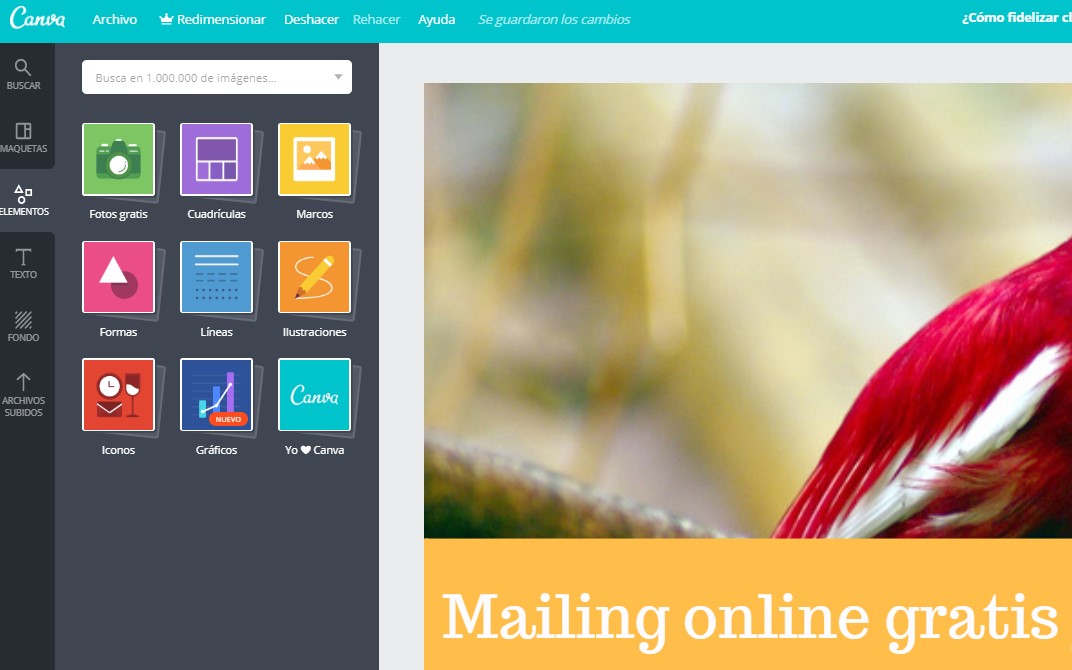
It’s an easy-to-use tool, and it’s free too.
Videos bring many benefits to our online marketing strategy.
The problem is that videos don’t usually work very well in emails; in fact, most of the time they don’t work at all. However, Mailrelay’s new newsletter editor lets you link a YouTube video: you enter the URL and Mailrelay generates an image that links directly to the video.
For now, this is what works best.
And to prepare your videos, I recommend Lumen5 as a free option (its free plan allows 5 videos a month, with a watermark), since it lets you create videos from the text articles on your blog.
A very interesting option.
I’ve saved for last a tool you should definitely use before sending your mailings. It is:
This tool lets you send it a test email and gives you a score from 1 to 10. It assesses aspects that could make your mailing end up in spam instead of the inbox, letting us fix them before sending.
Besides sending to this tool, you should also send the email to your own email accounts to make sure everything is correct.
Google Analytics is a web analytics tool that lets you measure website traffic, conversion rate, user behavior and other key performance indicators.
It can be useful for measuring the impact of the email marketing campaign on the website and adjusting the strategy accordingly.
Google Ads (formerly Google AdWords) is the advertising platform that lets you show ads on the Google search engine and on partner websites.
It can be useful to complement the email marketing campaign and increase brand visibility.
Tools like Buffer, which has a free plan, or Hootsuite, which is paid, can be useful for analyzing and managing social media, which can be an important part of the email marketing campaign.
Tools like SEMrush or Moz can be useful for optimizing the website and increasing its visibility in search engines.
This can complement the email marketing campaign and attract more traffic to the website.
I know, there are countless resources on the internet on this topic.
You can watch this video:
And if you still have questions, just contact our support team.
Segmentation makes the difference in online mailing campaigns, since it lets you send more personalized and relevant messages to different groups of subscribers.
By segmenting your mailing list, you can improve the effectiveness of your campaigns and increase open, click and conversion rates.
Here are some common segmentation strategies in online mailing campaigns:
This strategy involves dividing your subscribers based on demographic characteristics such as age, gender, education level and occupation.
Demographic segmentation lets you tailor your messages and offers to the needs and preferences of each demographic group.
With geographic segmentation, you can divide your subscribers by their geographic location, such as country, region, city or even zip code.
This approach is useful for tailoring your campaigns to regional factors such as local events, cultural differences and product preferences.
This strategy is based on analyzing your subscribers’ behavior, such as the pages they visit on your website, the products they buy, their click history in your emails and other interaction data.
Behavioral segmentation lets you send highly personalized and relevant messages to your subscribers based on their specific actions and interests.
With interest-based segmentation, you can divide your subscribers according to their stated or inferred preferences and interests.
For example, you can ask your subscribers about their interests when they sign up, or infer their preferences from their online behavior.
Interest-based segmentation lets you send more relevant content and offers to each group of subscribers, which increases the likelihood that they will interact with your emails.
By implementing segmentation strategies in your online mailing campaigns, you can significantly improve the relevance and effectiveness of your messages, resulting in higher open, click and conversion rates.
In addition, segmentation lets subscribers receive content they are interested in, which improves their experience and builds loyalty to your brand.
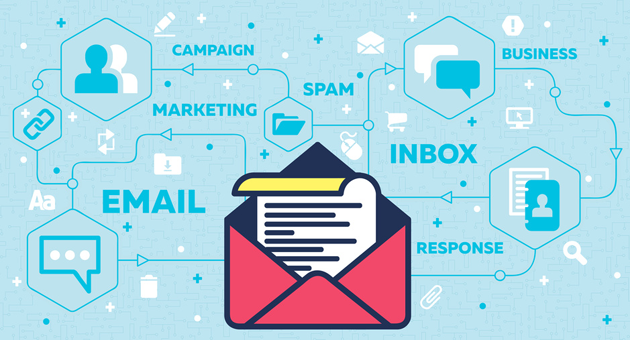
Achieving high open and click rates in your online mailing campaigns determines the results of your email marketing.
Here are some tips and best practices you can implement to improve these key metrics:
The subject line is one of the main factors influencing a subscriber’s decision whether or not to open an email.
Write attractive, short and clear subject lines that spark curiosity and interest.
You can include relevant keywords, numbers or questions to catch your subscribers’ attention.
The preheader is the text that appears next to the subject line in a subscriber’s inbox.
Use this space to provide additional information or summarize the content of the email, encouraging subscribers to open the message.
Personalization can significantly improve the open and click rates of your online mailing campaigns.
Use custom fields, such as the subscriber’s name or location, to address them in a more individual way.
You can also segment your mailing lists and send specific content based on your subscribers’ interests and behavior.
Make sure your emails look good and are easy to read on all devices, including mobile phones.
Use a responsive design and check that links, images and buttons are easy to interact with on touch screens.
Include clear and compelling calls to action (CTAs) in your emails to guide subscribers toward the desired action.
Use visible buttons or links and highlight the benefit or value they will get by clicking the CTA.
Experiment with different sending days and times to find out when your subscribers are most active and receptive.
You can use historical data and analytics tools to identify the most effective times for your online mailing campaigns.
Test different elements of your emails, such as subject lines, images, content and design, to find out what works best with your subscribers.
Use A/B tests to optimize your online mailing campaigns and continuously improve open and click rates.
By following these tips and best practices, you will be able to increase the open and click rates of your online mailing campaigns, which in turn will improve the overall performance of your email marketing efforts.
It remains a very useful tool in our online marketing strategies, and in many cases we can use it for free.
With Mailrelay you get a free account that lets you:
Mailrelay includes the tools you need to design and send your mailing, such as a visual graphic editor, a send scheduler, a contact segmenter, etc.
Among many other features you will discover as you use the tool and design your mailings, so you can run effective online marketing campaigns that sell more.
To complete the mailing design process, we have covered some tools that let us get images, edit them, prepare banners and even test and check that our email is correct.
Now all that’s left is for you to take the step: create your free Mailrelay account, then prepare and send your free mailing.
Design and send your first mailing today
Drag-and-drop editor, templates and support by chat, ticket and phone, on the free plan too.

Jose Argudo
CMO at Mailrelay. Writes about email marketing, copywriting, and conversion for small businesses and entrepreneurs.