Email is a powerful and effective marketing tool.
For an email marketing campaign to succeed, it’s essential to know how to win over your recipients.
In this article, we offer you tips and key strategies for creating a highly effective email marketing campaign.
Discover how to create an appealing subject line, how to get to know your audience, how to design an attractive template, how to offer quality content, and how to include an effective call to action.
Keep reading to win over your audience with a successful email marketing campaign.
:: Get to Know Your Audience — The Basics
· Identify Your Target Audience
Before starting an email marketing campaign, it’s important to identify your target audience. Who do you want to reach with your emails? What’s their profile?
You can create profiles of your target audience based on demographic factors such as age, gender, location, income and occupation, as well as psychographic factors such as interests, values and lifestyle.
The better you know your audience, the better you’ll be able to tailor your message to their needs and wants.
· Personalize Your Messages
Once you’ve identified your target audience, it’s important to personalize your messages so they feel specifically addressed to them.
You can personalize your messages in several ways, such as using the recipient’s name in the greeting, segmenting your email list according to your recipients’ interests, and adapting the content of your emails to the specific needs of each group.
Personalizing your messages can increase the open rate and conversion rate of your emails, since your recipients will feel more connected to the content you offer them.
· Tools to Get to Know Your Audience
There are various tools and resources you can use to get to know your audience better, such as online surveys, analyzing your website and social media data, or observing your recipients’ interactions with your emails.
The more information you have about your audience, the more effective your email marketing campaign will be.

:: Get to Know Your Audience — Example
Let’s say you have an online store that sells clothing and accessories for young men and women.
Your target audience is people between 18 and 30 years old who have an active, urban lifestyle.
You want to create an email marketing campaign to promote a new spring clothing collection.
To get to know your audience better, you can use an online survey or an analysis of your social media data to identify the interests and preferences of your potential customers.
You discover that your customers like a casual, comfortable style, and that they prefer clothing and accessories in bright colors and fun prints.
You also know that many of them are college students or young professionals interested in fashion and the latest trends.
With this information, you can personalize your messages in your email marketing campaign as follows:
- Use an eye-catching subject line that reflects your recipients’ lifestyle and interests, such as “Get your wardrobe ready for spring with our new collection”.
- Include images of young, urban models wearing your store’s spring clothing, in settings that reflect their active lifestyle.
- Offer exclusive discounts for college students and young professionals interested in fashion, and highlight the latest trends in clothing and accessories.
- Use casual, friendly language that reflects your recipients’ style and personality.
- Include a clear, direct call to action, such as “Shop now and take advantage of our exclusive offers”.
By personalizing your messages this way, you’ll be creating an effective email marketing campaign that reflects your audience’s interests and needs and offers them added value.
Always remember to test and optimize your results to improve the effectiveness of your email marketing campaigns.

:: Create an Appealing Subject Line — The Theory
Tips for Creating an Eye-Catching Subject Line
The email subject line is the first thing your recipients see, so it’s essential that it be eye-catching and persuasive.
Use clear, concise language, and try to spark your recipients’ interest.
Use numbers and statistics to highlight the value of your email. For example, “10 tricks to save on your next online purchase”.
Include a sense of urgency, such as “Limited offer! Today only!”. Recipients will feel motivated to act quickly if they perceive it as a limited offer.
Avoid words and phrases that could trigger spam filters, such as “free”, “money”, “offer”, “get rich”, etc.
Personalize the Subject Line
Personalizing the subject line can increase the open rate of your emails. Use the recipient’s name in the subject line so they feel it’s specifically addressed to them.
You can also segment your email list and create different subject lines for different groups of recipients, based on their interests and needs.
Test Different Subject Lines
Run A/B tests with different subject lines to see which works best with your audience.
Send two versions of the same email to a group of recipients and measure the open rate and click-through rate to determine which subject line is more effective.
Use analytics tools to determine which subject lines work best with different segments of your email list.
:: Create an Appealing Subject Line — Example
Let’s say you have an online store that sells beauty and personal care products.
You want to create an email marketing campaign to promote a new product, a moisturizing cream with sun protection.
To create an appealing subject line for your email marketing campaign, you can use some of the following ideas:
- Use persuasive, clear language, such as “Protect your skin from the sun and keep it hydrated with our new product!”.
- Highlight the value of the product, for example, “Save time and money with our 2-in-1 moisturizing and protective cream”.
- Include a sense of urgency, such as “Get ready for summer with our moisturizing and protective cream! Limited time only!”.
- Personalize the subject line using the recipient’s name, for example, “Ana, protect your skin from the sun and keep it hydrated with our new product”.
Remember that it’s important to test different subject lines to determine which works best with your audience.
In your email marketing strategy, run A/B tests with different subject lines and measure the open rate and click-through rate to determine which email marketing technique is most effective.
:: Design an Appealing Template
In Your Email Marketing Campaign, Use a Professional Email Template Consistent With Your Brand Image
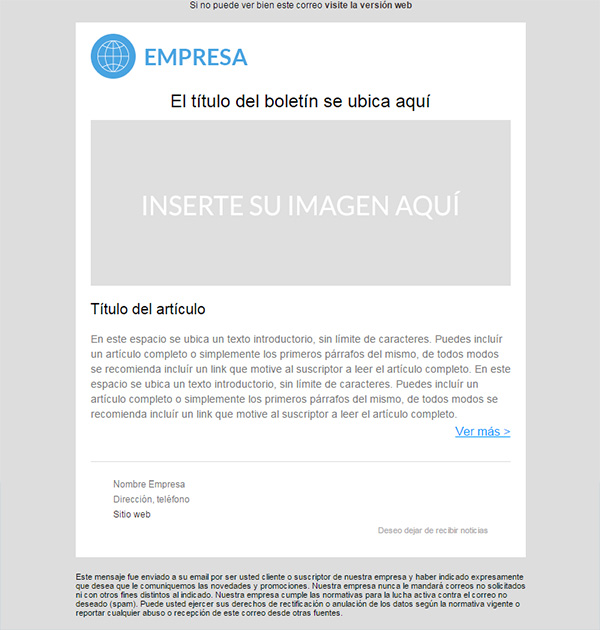
The design of your email template should be consistent with your company’s brand image.
Use the colors, fonts and styles you use on your website and other marketing materials to create a professional, recognizable template.
The template should be easy to read and visually appealing. Use headings and subheadings to organize the content and highlight the most important information.
Images and videos can make your email more visually appealing, but make sure they’re high quality and don’t slow down page loading.
The Importance of Visual Consistency
It’s important that your email template be consistent across all devices and email platforms.
It should look good at different screen resolutions and in different email clients.
Visual consistency helps create a consistent, professional brand experience, and can also improve the open rate and click-through rate of your emails.
Email Structure and Content
The structure of your email should be clear and organized. Use headings and subheadings to organize the content and highlight the most important information.
The content of your email should be brief and to the point. Include a clear, direct call to action that encourages your recipients to click your link or take the action you want.
Avoid using overly technical or formal language. Use a friendly, approachable tone to connect with your recipients.
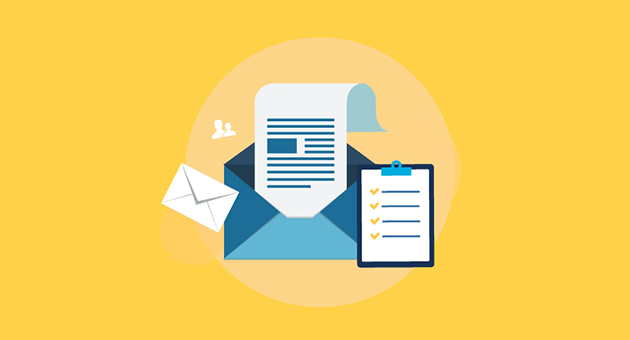
:: Example of a Basic Email Template
:: Offer Valuable Content
What Is Valuable Content?
In an effective email marketing campaign, valuable content refers to any information that’s relevant and useful to your recipients.
It can be educational, entertaining or informative content that recipients find interesting and that provides them with added value.
Valuable content can include tips and tricks, information about industry trends, relevant news, and more.
Why It’s Important to Offer Valuable Content
Valuable content helps build a solid, trusting relationship with your recipients.
By providing them with useful, relevant information, your recipients perceive that you care about their needs and want to offer them solutions to their problems.
In addition, valuable content can improve the open rate and click-through rate of your emails, since recipients are more likely to open your emails if they know they’re going to receive useful, relevant information.
How to Offer Valuable Content in Your Emails
Include educational or informative content in your emails, such as tips and tricks or relevant industry news.
Use multimedia content, such as videos or infographics, to make your content more visually appealing and easier to digest.
Offer exclusive discounts, promotions and special deals to your recipients to thank them for their loyalty and encourage interaction with your brand.
Personalize the valuable content for different segments of your email list based on their interests and needs.

:: Offer Valuable Content — Content Example
Let’s say you have an online store that sells fashion clothing and accessories. You want to create an email that offers valuable content to your recipients and motivates them to click your link.
To offer valuable content in your email, you can use some of the following ideas:
- Include fashion and style tips in the email, such as “10 tricks for matching your accessories with your clothing”.
- Offer an exclusive discount to your recipients to thank them for their loyalty and encourage interaction with your brand. For example, “10% off your next online purchase”.
- Use high-quality images to showcase your products and make your email more visually appealing.
- Include a clear, direct call to action that encourages your recipients to click your link or take the action you want. For example, “Click here to see our new spring collection”.
Add a call to action (CTA)
What Is a Call to Action (CTA)?
A call to action (CTA), essential in any email marketing campaign, is a phrase or button that encourages your recipients to take a specific action, such as clicking a link, downloading a resource, buying a product, or registering for an event.
The CTA should be clear, concise and easy to understand. It should be placed in a prominent spot in the email so it’s easily visible.
How to Create an Effective Call to Action
The CTA should be specific and direct. Use action verbs, such as “download”, “buy”, “sign up”, “click here”, etc.
Use persuasive language with a sense of urgency, such as “Sign up today and don’t miss our special offer!”.
Use a visually appealing design for the CTA, such as a button or an image that highlights the text.
Place the CTA in a prominent spot in the email, such as at the end of the email or in a visible spot at the beginning of the email.
How to Measure the Effectiveness of the Call to Action
Use analytics tools to measure the click-through rate on your CTA and determine its effectiveness.
Run A/B tests with different versions of your CTA to determine which is more effective with your audience.

:: Examples of CTAs for Email Marketing Campaigns
Here are a few more examples of calls to action you can use in your emails to make them more impactful:
- Save 50% today!
- Discover the secret to our success!
- Click now for a special surprise!
- Don’t miss this unique opportunity!
- Join the [your industry] revolution!
- Take the first step toward success!
- Act now and get an extra bonus!
- Take advantage of our exclusive offer!
- Sign up before it’s too late!
Remember that the call to action should be clear, specific and persuasive to encourage your recipients to take the desired action.
Also, it’s important to place the CTA in a prominent, easily visible spot in your email to improve its effectiveness.
Conclusion
Email marketing campaigns remain one of the most effective marketing strategies available to businesses today.
However, to succeed with an email marketing campaign, it’s important to follow a few key principles.
First, to have a successful email marketing campaign, you need to make sure your email list is up to date and properly segmented.
Second, it’s essential to create an appealing subject line that motivates your recipients to open the email.
Third, you need to offer valuable content for your recipients that provides them with useful, relevant information.
Fourth, it’s important to use an appealing, functional template design to improve the readability and aesthetics of the email.
Fifth, you need to include a clear, persuasive call to action to encourage your recipients to take the desired action.
Finally, it’s essential to measure and analyze the results of your email campaigns to determine their effectiveness and make adjustments to improve performance in future campaigns.
By following these principles, you can increase the effectiveness of your email marketing campaigns and improve your open rate, click-through rate and conversion rate.
Remember that email is a powerful and effective tool, but it’s also important to respect your recipients’ privacy and preferences.
By providing valuable, relevant content to your recipients, you can build solid, lasting relationships with them. This is a key to success in your email marketing campaigns.