Clickbait
What it is, examples and how to avoid it in email marketing
“You won’t believe what happened next.” You’ve surely seen headlines like this and, almost without meaning to, clicked. Then comes the disappointment: there was nothing surprising about the content. That’s clickbait, and it works precisely because it plays on your curiosity.
What is clickbait?
Clickbait, sometimes called a “click lure”, is a technique that uses eye-catching headlines to provoke a click. It usually relies on sensationalism, intrigue or exaggeration.
The problem arises when the content doesn’t deliver on its promise. That’s when the user feels deceived. And that feeling, repeated several times, ends up damaging the publisher’s image.
It’s worth distinguishing it from a headline that is simply compelling. A good headline sparks interest and then satisfies it. Clickbait only takes care of the first part.
The origin of clickbait
The term emerged with the growth of digital media and social networks. Many publishers discovered that exaggerated headlines multiplied their traffic. Since their revenue depended on advertising, every click was worth money.
Over time, the practice spread to blogs, videos and email too. But users learned to recognize it. And the platforms reacted: Google and Meta have adjusted their algorithms to reduce the visibility of misleading headlines.
Common examples of clickbait
Some patterns are so common that they’re easy to spot:
- The exaggerated promise: “This trick will double your sales in 24 hours.”
- The forced mystery: “What this customer discovered will leave you speechless.”
- The false urgency: “Last chance” in an email that is sent every week.
- The subject line that fakes a conversation: an “RE:” or “FW:” on an email you never replied to.
They’re all after the same thing. Getting you to open before you think.
Clickbait in email marketing: why it costs you
On a blog, a deceptive headline costs you a disappointed visit. In email marketing, the damage is greater, because the reader has a button to punish you: marking your message as spam.
A misleading subject line can make a specific campaign’s open rate soar. However, what comes next is usually worse: more unsubscribes, more complaints and fewer real clicks inside the email.
Mailbox providers keep an eye on those signals. If many recipients ignore or report your emails, your sender reputation drops. And with it, your deliverability: your next campaigns will end up in the spam folder more often.
In addition, some typical formulas of this technique (capital letters, excessive exclamation marks, impossible promises) directly trigger spam filters.
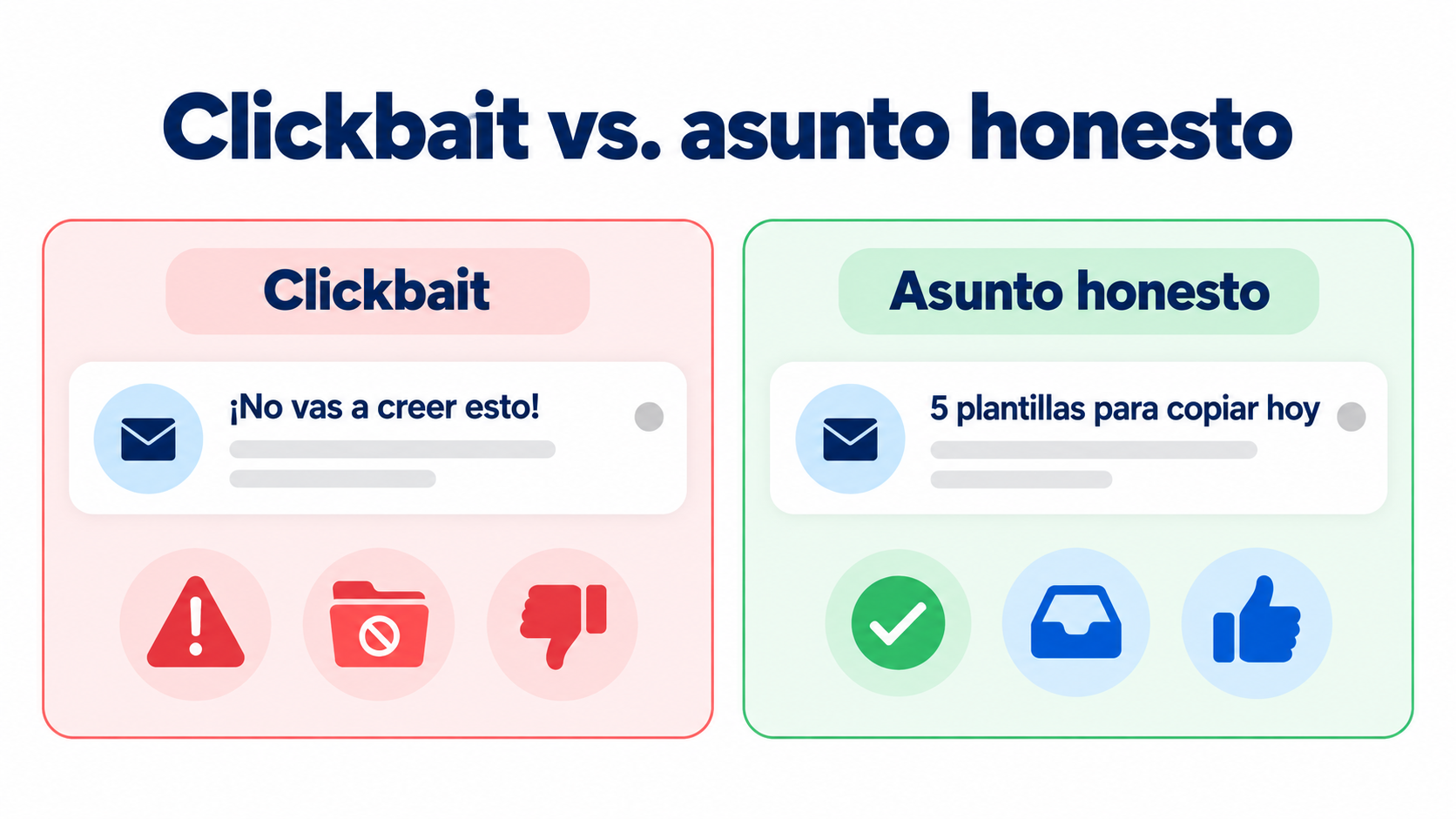
How to write compelling subject lines without resorting to clickbait
Curiosity isn’t the enemy. The trick is to spark interest and then deliver on what you announce. These guidelines will help:
- Be specific: “5 welcome templates you can copy today” builds more trust than “The secret nobody tells you.”
- Only promise what the email delivers: if the subject line mentions a discount, the discount has to be in the first line.
- Make use of the preheader: the preheader expands on the subject line and reduces the feeling of empty mystery.
- Test before you decide: an A/B test tells you which subject line works best with your real audience, without any need to exaggerate.
Although it may seem contradictory, honest subject lines tend to deliver better results in the medium term. Readers learn that your emails are worth it, and they open them out of habit.
How we help you at Mailrelay
At Mailrelay, we know that a good subject line is a mix of copywriting and data. That’s why our platform includes subject line A/B testing, so you can decide based on figures rather than hunches.
Our real-time reports show you the opens, clicks and unsubscribes for every send. That way, you can spot right away if a subject line attracts opens but disappoints inside the email. You also get an editor with AI-assisted writing that suggests clearer subject line alternatives.
All of this is available on the free plan, with up to 80,000 emails a month and 20,000 contacts. If you want to try it with your own list, you can create your Mailrelay account today.
Frequently asked questions about clickbait
Is clickbait illegal? Generally, no. However, if the headline is misleading about a product or a price, it may be considered misleading advertising under consumer protection laws.
Can a clickbait subject line send my emails to spam? Yes. Both because of automatic filters, which detect suspicious patterns, and because of complaints from recipients who feel deceived.
What’s the difference between clickbait and a persuasive headline? A persuasive headline delivers on its promise. Clickbait creates an expectation that the content doesn’t meet.
In conclusion
Clickbait can give you a spike in clicks or opens, but that boost is short-lived. In return, it puts at risk something much harder to win back: your audience’s trust.
In email marketing, that trust translates into deliverability, so it’s worth looking after. A clear, specific and honest subject line almost always wins in the long run.