Nowadays, most businesses with an online presence run mailing campaigns to large databases. A very wise decision if you consider the high conversion rates it delivers, as long as it is done lawfully.
If you are among the percentage that hasn’t taken the leap yet, I’ll tell you that it’s about time to start. To launch your first campaign, all you need is a database of subscribers, a tool like Mailrelay for bulk sending, and content and communications to share.
Having a quality database (made up of potential customers) takes time, consistency and also a financial investment.
When I talk about investment, I mean running advertising campaigns to attract your target audience. And not practices like buying email databases.
Besides being an illegal practice in most cases, it is an investment you will hardly recover, since the contacts included in those lists don’t know your brand and your emails may be considered spam.
For all these reasons, in this article we will take a close look at:
- The definition of emailing and email marketing campaigns.
- The features of the most effective business mailing.
- Examples that show how to do mass mailing.
· Emailing or Mass Mailing: Meaning
How about we start by talking about mailing: what it is and why its use is recommended as a sales tool? Let’s take a look!
Aspects such as closeness, personalization, the ease of interaction between user and brand, availability on mobile devices, and the room for improvement thanks to the metrics you can get from it put it among the top ten digital marketing strategies.
This is because the features of well-done mass mailing, which give it its meaning, build trust and credibility. Something essential to close sales.
After all, users prefer to use email to stay connected with their favorite brands, find out the latest news, receive promotions and consume content that may interest them.
It is a convenient medium, because it can be checked at any time and doesn’t interrupt people’s daily lives. Moreover, far from being an aggressive sales channel, it is based on building long-term relationships.
► Strict Definition of Email Marketing
Email Marketing is defined as a strategy based on sending emails to the users of a database, and it is used as a communication, marketing or sales tool.
Depending on how it is used, it can have different goals:
- Turning subscribers into customers.
- Improving the relationship with your audience.
- Building trust and credibility.
- Engaging with your target audience.
- Increasing sales.
- Running surveys.
- Rewarding loyalty.
- Announcing new products or services.
For its part, the simplest definition of emailing could be this one. But it can be complemented by looking at it from an angle other than the commercial one, since large companies also use it to send internal communications among their employees.
► And What Is a Mass Mailing Campaign?
When we talk about mass mailing and its meaning, we refer to the very act of sending email marketing campaigns to a large database.
This type of campaign can be one of the most effective channels for building a relationship with subscribers, moving them through the different stages of your sales funnel and turning them into customers.
The real value of emailing for businesses, even though it involves mass sending, is its potential to be personalized according to the audience’s interests (to a greater or lesser extent).
Sending a message tailored to a shared interest lets us communicate with different user profiles in a database at the same time. And this must be done for each conversion stage they are at.
► Advantages and Disadvantages of Mass Mailing
- Cost-effective: Email Marketing is a low-cost tool compared to other advertising media, which allows companies to reach a large number of recipients without investing large sums of money.
- Segmentation: Mass mailing campaigns can be segmented by various criteria (age, location, interests, etc.), which allows you to send specific messages to each group of recipients and improve the effectiveness of your communications.
- Easy tracking and analysis: Email Marketing platforms offer detailed statistics that let you analyze campaign performance, such as open rates, clicks and conversions, making it easier to make decisions and adjust your strategy.
- Personalization: Email Marketing lets you personalize messages for each recipient, which strengthens the emotional connection with the brand and improves conversion rates.
- Automation: Mass mailing tools let you automate processes, such as scheduled sends
· Features of an Effective Mailing
Despite being one of the tools that generates the most conversions, if mass sending in email marketing campaigns isn’t used well, implementing it can have the opposite effect.
The moment a brand is tagged as spam, it moves away from such positive qualities as value, trust, authority and credibility.
To keep that from happening, below I’m going to share a list of 8 features you should pay attention to when running mailing campaigns:
❖ Database:
As I told you at the beginning, you can’t (or shouldn’t) buy a database of contacts who have never heard of you, since you don’t even know whether they are interested in what you offer enough to start sending them emails. Remember that:
- It is not legal.
- You will be flagged as spam.
Besides, the return you can get from these sends will be very low, since those contacts aren’t really qualified and, therefore, you won’t reach your potential customers. In other words, you will be losing business opportunities.
To have a quality database, you should place a form on your website and take legitimate actions that help you attract subscribers lawfully.
❖ Personalization:
Although segmentation isn’t a feature that truly defines mass mailings, you should base their main message on shared interests or desires (and on the stage of the sales funnel).
Think about it: receiving an email that speaks directly to your pain points is not the same as receiving a more generic one. And the more personalized an email is, the more it will catch the attention of the person receiving it. In this regard, you could, for example:
- Address the reader in a one-to-one, personal way and include their name to make it feel closer (both in the subject line and in the body of the message).
- Schedule your emailing campaigns according to time zones (even if it doesn’t amount to strict segmentation).
The majority of email marketing software allows for some personalization.
❖ Subject line:
This phrase or set of words will determine whether a user opens your email or not, since it is the first element we have to capture their attention. So the effectiveness of an emailing campaign is largely down to it.
When you are going to run a mass mailing:
- Take some time to come up with a subject line that hooks, sparks curiosity and is appealing.
- Avoid words that ISPs consider spam, such as “free”, “discount”, “urgent”…
- Don’t go overboard with the number of words, otherwise the user may not see the whole subject in their email client and may never open it.
❖ Design:
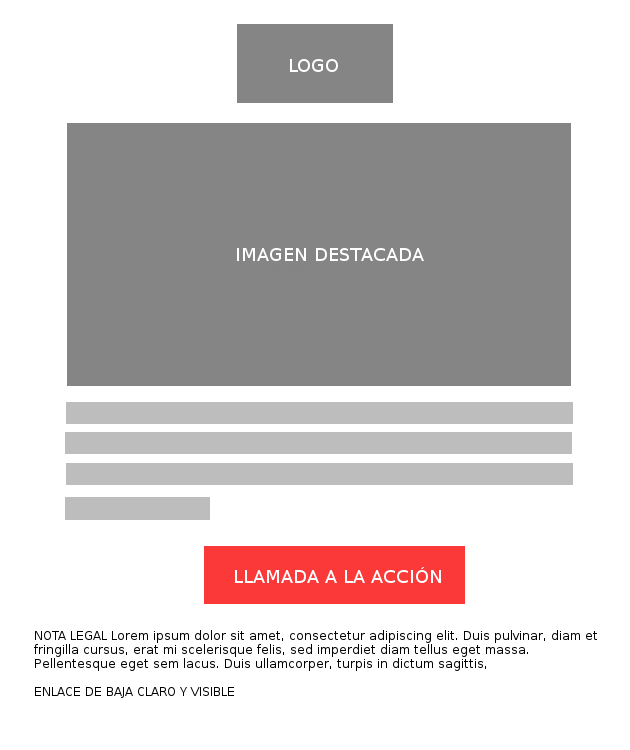
When it comes to design, less is more. Emails with too many images, different typefaces, overly dense paragraphs or small font sizes lower your metrics in terms of clicks and conversions.
The best approach is to create concise emails that, for example, include:
- A descriptive text.
- An eye-catching image.
- A call to action aligned with the goal of the email.
❖ Content:
Even though it is a sales tool, pushing the commercial side too aggressively drives users away. Ideally, alongside each sales call to action, you should share other valuable content or important communications.
There are many ways to do it. This is just one example, but what you need to keep in mind is that the brands that get the best results from emailing campaigns are the ones that look after the user through this kind of content.
❖ Copywriting:
Just as with web optimization, persuasive writing techniques also carry a lot of weight when creating effective email marketing campaigns. They are essential both in the subject line and in the body of the email.
By applying copywriting in your emails you will:
- Generate interest.
- Stir emotion.
- Guide readers toward taking action.
It is precisely emotions that move readers to make decisions, which is why it is so important to include this kind of technique. What’s more, when it comes to making a purchase, emotion is the engine behind it.
❖ Tools:
None of this would be possible without using email marketing software with good functionality and features. When choosing yours, make sure it has:
- A simple, intuitive interface.
- Segmentation capabilities.
- Easily editable templates.
- Responsive templates.
- Simple campaign setup and scheduling.
· How to Do Mass Mailing: Examples
In practice, you can find examples of mailing campaigns that perfectly implement the features we have discussed above. They are truly effective campaigns, because they generate engagement, trust and sales.
Next, I’d like to show you a few of them.
► Benefit-Based Mailing Campaigns
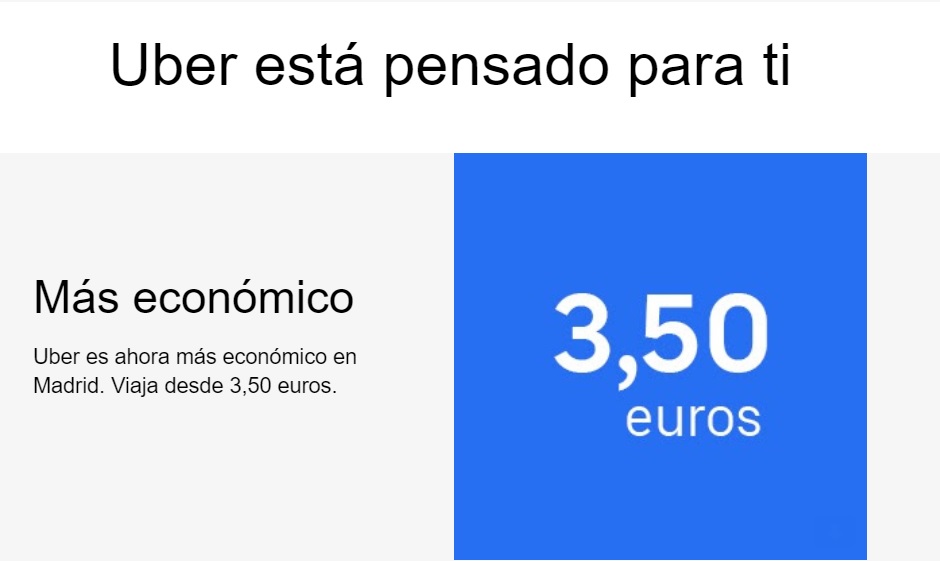
These campaigns catch the user’s attention through what they can achieve by trusting your products or services. Benefits and results are really effective in a sales email (more so than the features themselves).
Ideally they should be highlighted very directly, so the reader can appreciate them without much effort and want to know more. Here’s an example from Uber:
► Mass Emails That Also Add Value
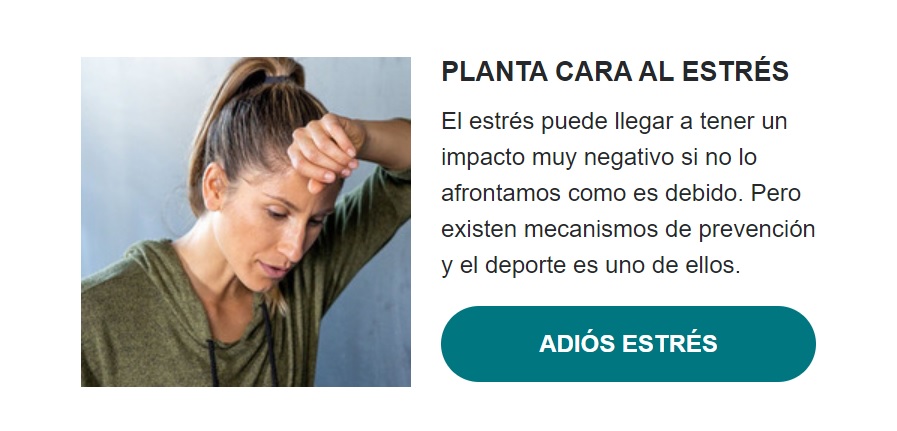
People who subscribe to a newsletter do so because they are interested in receiving relevant information about the topics a brand covers.
This is a great opportunity to spark interest through valuable content and keep the user’s attention in the long term.
This valuable content must be tied to the needs and desires of the target audience. So, for example, if it’s a sports brand, the content should be useful for feeling better and healthier.

► Mass Sends That Appeal to Desire
Everyone desires something. You just have to help them take the step of making that desire a reality. To do so, it’s enough to talk to them about it and show them what their life could be like if they fulfilled those desires.
Here, persuasive writing plays a major role, since through words you must be able to paint that desired reality, so that the reader’s mind can imagine it and feel pushed to take action.
An example of this, although a more visual one, is this email from Ryanair. The phrase “Travel to exciting places” appeals to the desire to leave home, live adventures, discover new towns and cities, and escape the routine.

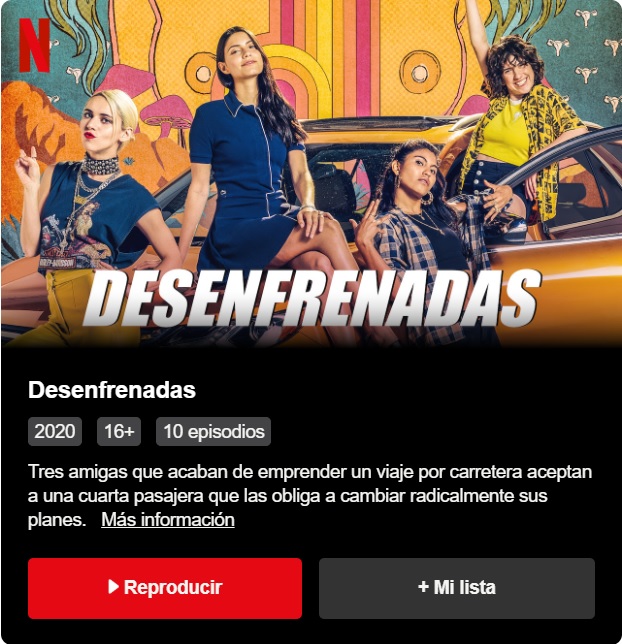
These are specially designed to hold the audience’s attention. If a brand constantly informs the user about topics they care about, they will open its emails without hesitation.
This is the case with Netflix, which informs its subscribers about the new series and films available on its platform. Here you can see an example:
► Mass Mailing Campaigns That Convey Urgency
Urgency is an element that pushes people to take immediate action. The fact that an offer or anything else is about to disappear sets off alarm bells, and the fear of missing out pushes us to click.
This type of email is widely used in sales campaigns and product or service launches. Moreover, subject lines like these are very effective at increasing the open rate of your mass mailing. Here’s an example:

► Emailing for Customer Loyalty and Retention
Mailing campaigns can also focus on customer loyalty and retention. To achieve this, it is important to consider the following aspects:
- Personalized communication: Offer relevant, personalized content based on your customers’ interests and needs, which will make them feel valued and foster their loyalty to the brand.
- Exclusive offers: Provide special offers, discounts and promotions only to your subscribers, which will give them the feeling of belonging to an exclusive group and reinforce their preference.
- Loyalty programs: Implement loyalty programs that reward your customers’ loyalty with incentives such as accumulable points, discounts and gifts.
- Feedback and surveys: Run regular surveys to learn your customers’ opinions about your products or services, which will allow you to identify areas for improvement and adjust your offer to increase their satisfaction.
► Mailing Campaigns for Events or Special Promotions
Mailing campaigns can be an effective tool for promoting events or special promotions. Some recommendations for this type of campaign include:
- Advance planning: Start promoting the event or special promotion well in advance, so recipients have time to plan their participation and take advantage of the offers.
- Clear and concise information: Provide all the necessary information about the event or promotion in the email, including dates, times, location, offer details and how to take part in or access the promotion.
- Attractive, eye-catching design: Use a visually appealing design that grabs recipients’ attention and conveys the importance and exclusivity of the event or special promotion.
- Effective call to action (CTA): Include a clear, visible call to action in the email that invites recipients to sign up for the event, take advantage of the promotion or take any other desired action.

· Conclusions for Your Mass Mailing Campaigns
All these examples fit the features we have seen in this article. It is important that you keep them in mind when creating your mailing campaigns. They will help you get better results.
As you can see, there are plenty of ideas for doing it. But there is one trick that never fails: before sending an email, ask yourself questions like “would I open this email?” or “is it appealing enough to read and click?”…
You can be your own harshest critic and, at the same time, the fairest one. If the answer is yes, go for it! But if deep down you know the answer is no, give it another go, review the features I’ve shared with you and commit to improving it.
Key Success Factors
To ensure the success of your mass mailing campaigns, you need to take the following factors into account:
- Effective segmentation: Properly segmenting your audience will let you send relevant, personalized messages, which will increase your open and conversion rates.
- Quality content: Offer useful, informative and entertaining content that meets your recipients’ needs and interests, which will increase engagement and loyalty to the brand.
- Responsive design: Make sure your emails display correctly on all devices, especially mobile devices, since more and more users access their email from smartphones and tablets.
- Attractive subject lines: Use subject lines that capture recipients’ attention and entice them to open the email.
- Analysis and optimization: Constantly monitor the performance of your campaigns and use the data you collect to optimize your actions and improve results.
The Importance of Planning and Strategy
Planning and strategy are essential to the success of your mass mailing campaigns. These aspects will allow you to:
- Set clear goals: Define specific, measurable goals for your campaigns, such as increasing sales, raising the open rate or improving customer retention. Setting clear goals will help you focus your efforts and evaluate the success of your actions.
- Identify your target audience: Understanding your recipients’ needs and interests will let you create relevant, personalized messages that have a greater impact.
- Create a content calendar: Plan your mailing campaigns in advance, taking into account special dates, events and promotions. A content calendar will help you organize and coordinate your marketing actions and maintain coherence and consistency in your communications.
- Define your tone and style: Establish a consistent tone and style for your communications that reflects your brand’s personality and resonates with your audience. Consistency in tone and style will strengthen your brand identity and make it easier to build an emotional connection with your recipients.
- Integrate with other marketing channels: Plan your mass mailing campaigns so that they complement and reinforce your marketing efforts on other channels, such as social media, online advertising and content marketing. Channel integration will let you reach your audience more effectively and cohesively.
- Monitor and adjust your strategy: Constantly evaluate the performance of your mailing campaigns and use the data you collect to adjust and improve your strategy in real time. Adaptability and the ability to learn from your actions are key to long-term success in Email Marketing.
Adapting to Market Trends and Changes
Adapting to market trends and changes is crucial to maintaining the effectiveness and success of your mailing campaigns.
The digital environment is constantly evolving, and consumers’ behaviors and preferences change as new technologies, platforms and practices emerge.
Staying up to date on the latest Email Marketing trends, such as automation, the use of artificial intelligence, the growing importance of the mobile experience and privacy regulations, will let you adjust your campaigns to keep them relevant and effective in the current context.
In addition, it is important to stay alert to trends and changes in your specific industry and in your customers’ needs.
Adapting to trends also means maintaining a mindset of innovation and experimentation in your mailing campaigns.
Try new formats, content styles, segmentations and creative approaches to find out what works best for your audience and achieve better results.
Don’t be afraid to change and adapt your strategies based on results and the market context, since flexibility and adaptability are essential to long-term success in Email Marketing.
Innovation and Creativity in Your Campaigns
Innovation and creativity play a crucial role in the success of your mailing campaigns.
In a world where consumers receive a huge number of emails every day, it is essential to stand out and capture their attention.
Explore different formats and styles in your emails to keep your audience interested.
For example, use eye-catching images, videos, animated GIFs or infographics to make your messages more attractive and dynamic.
Experiment with creative approaches to the copy and design of your emails. Play with humor, storytelling or emotions to connect with your recipients in a more personal and authentic way.
Also, don’t limit yourself to following current trends; instead, seek to create your own trends and become a leader in your industry. This will not only help you stand out from the competition, but will also position you as an innovative, cutting-edge brand in your customers’ minds.
Remember that innovation and creativity apply not only to the content and design of your emails, but also to the strategy and tactics you use.
Don’t be afraid to try new ideas.
Hyper-personalization in marketing and a good subject line that improves your open rate are two of the factors that most influence the effectiveness of a mailing.