Few tools have caused as much of a stir as this one. Everybody is talking about ChatGPT! And no wonder… Artificial Intelligence is here to stay and promises to revolutionize the way we do things in the digital world.
For those of us who work in marketing… it’s all anyone talks about! Many say this tool will be a great ally for content creation. And yes, it will be, but only if it’s used well.
What I mean is that, just as when the first digital encyclopedias appeared, this isn’t about simply copying and pasting, but about having a support tool to look things up and develop our creativity. And, in doing so, create increasingly valuable content.
In this sense, it can also be a great ally in email marketing. All it takes is asking the right questions to get original answers. Answers that help us create ever more interesting and persuasive emails (if that’s even possible).
That’s why, in this article, I invite you to take a detailed look at what ChatGPT is, what its advantages are and how we can use it in our email marketing strategies to really benefit from it. Let’s get started!
What is ChatGPT?
ChatGPT is a tool developed by a company called OpenAI, which uses artificial intelligence to perform different tasks related to language. Thus, it is able to generate texts from the questions you ask and even translate content.
It’s a system that has been trained on a huge volume of text to provide reliable answers or, at least, answers that are as accurate as possible. And, to this day, it keeps training through user interactions.
Having a conversation with ChatGPT can help us land on that idea that just won’t come. In the end, our goal should be focused on finding answers that support our content to generate more interest, impact and visibility.
For example, if you ask it “what happened in the Battle of Stalingrad and why is it one of the best-known battles of World War II?”, it can explain everything that happened in several paragraphs. With specific facts and dates!
And if something isn’t entirely clear, you can press it to be even more specific. Also, without putting blind faith in AI to give our brands their voice, it’s worth pointing out that it expresses itself quite naturally.
So… why not put it to practical use in our marketing strategies? Like many others, I’m sure you’re fascinated by the idea of making the most of ChatGPT in your business, company or professional activity. Let’s see how 😉

You might also be interested in these articles:
- 8 Brilliant Marketing Examples with Copy Templates
- How to Send Bulk Emails for Free
- Benefits of Email Marketing
General uses of ChatGPT
Now that we’ve defined what ChatGPT is, let’s take a detailed look at what we can do with it. First of all, you should know that the results you get from this tool will depend on your ingenuity and how you use it.
Although new features will gradually appear, for now we can say that ChatGPT can be used especially to:
● Develop arguments. This is the simplest thing we can ask the system to do. We can ask about any concept and it will give us a comprehensive answer about it. It will draw on the data it was trained on and give us the information we need.
● Write articles or summaries. The tool can also write articles or summaries of a given length. However, although the writing seems perfect, ChatGPT can make mistakes, so we must use it as a source of inspiration (or to collect information). Likewise, we will need to apply our own SEO optimization.
● Write texts in a specific format. Besides the above, ChatGPT can write texts in other formats. In other words, we can ask it to write a YouTube script, or a description for the video we’re going to publish. That said, keep the previous recommendations in mind and use it as a reference tool.
● Create images. Another ChatGPT feature that has attracted attention is its ability to generate images based on the instructions we give it. Thus, you can get covers for your YouTube videos or images for articles (among others). But, once again, it’s best to treat it as a starting point that only a professional will know how to refine.
● Translate. Another interesting use is using ChatGPT to translate content when you need to prepare versions of a mailing in different languages.
● Other features. Finally, I’d like to briefly sum up other kinds of tasks you can ask it to do. For example, writing lines of code, making comparisons, jokes, songs and poems; you can even ask it for advice on which laptop to buy. In this case, you’ll need to specify what you need so that it gives you the most accurate answer.
ChatGPT helps us to find inspiration, generate ideas and expand information about a wide variety of topics. In short, content creators, designers and other professionals can rely on it to overcome creative block and achieve more creative and efficient results.
Advantages of ChatGPT for your email marketing
Before explaining how to use ChatGPT, let’s see how it can help us in our email marketing strategy. As I mentioned, this is a support tool and should never be used to replace the expert hand of the content creator (who will know how to use it properly).
In this context, ChatGPT can be very beneficial when it comes to creating emails. For example, it can help with tasks like the following.
Find new ideas
Sometimes, we are clear about our email marketing strategy, we know what we want to convey and what we want to achieve, but we lack creative ideas to give life to our emails. ChatGPT can be a fantastic ally in this regard.
For example, imagine you want to catch your reader’s attention with a fun fact. Why not ask the tool? It can give you ideas that you can work on later.
And, to avoid falling into the clichés that every company in your industry covers, you can ask it for fresh ideas on a topic. It’s sure to give you countless new threads to pull on!
Overcome writer’s block
Another of the most dreaded moments when writing an email is when, despite having the idea, you don’t know how to put it into words. The words just won’t come…
In those cases, you could, for example, ask ChatGPT to tell you a story about your idea or answer a related question. Maybe that will help you find the right words.
Research
Where ChatGPT is undoubtedly most useful is research. You can dig into as much detail as you like to get the information you’re looking for. However, the results will depend on how precise you are in your questions.
For example, asking “what are the benefits of a healthy diet?” is not the same as asking “what are the benefits of eating vegetables for 3-year-olds?”.
Create interesting subject lines
Another task you can give ChatGPT is, for example: “5 interesting subject line ideas for an email about healthy food”.
The tool will then give you a list of them. And, if you don’t like any suggestion, you can ask for 5 more or be more precise in what you are looking for.
In any case, rather than copying one of them and pasting it into your email subject line, it’s best to use the idea and give it the style that best fits your strategy.
Find striking comparisons
Devices such as metaphors and comparisons are often very effective at capturing the user’s attention in an email. However, it’s not always easy to find them or express them the way we’d like.
ChatGPT can be a big help here. But, again, you’ll need to be patient and phrase your question precisely.
Don’t expect to get a text ready to copy as is! The point is to get an original idea that you wouldn’t have found otherwise. So don’t settle: you can always edit it to create more effective emails 😉
Expand your vocabulary
Finally, in order not to sound repetitive, we can use the tool to search for synonyms or new expressions. Again, what we want is to avoid clichés and come up with new ideas that set us apart.
For example, we can ask it: “what other ways can I say that my service will help my clients increase their revenue?”.
How to use ChatGPT for email marketing (3 examples)
Before starting to use ChatGPT, the first thing you should be clear about is your email marketing strategy. After all, designing it is up to you (that’s something ChatGPT can’t help you with).
So, first of all, define what you want to achieve, how often you’ll send your emails and what approach you’ll take with each of them.
With this information, we can go to the tool and start our conversation with it. The emails you’ll need to create won’t be the same if your goal is lead nurturing as if it’s customer loyalty.
1) Generate ideas
To see how to use ChatGPT in email marketing, let’s imagine that our strategy’s goal is to book meetings with potential clients, and that in this case we are a tax advisory firm.
We’ll start by asking the tool to come up with some content ideas to write about. These ideas should focus on the issues that concern the reader and that they want to solve. So we can enter the following: “What problems do companies have with their tax advisors?”.
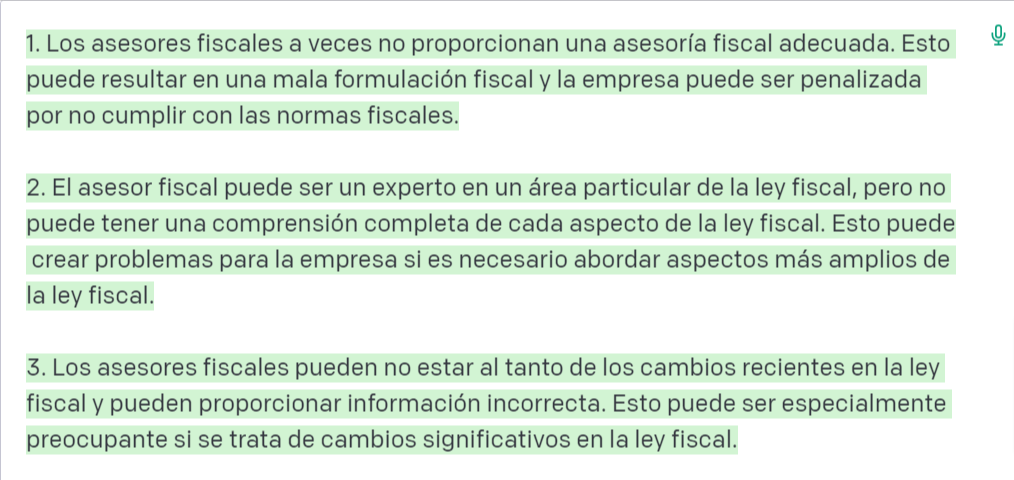
If we focus on point 3, we can dig even deeper into the problem. So we’ll ask it: “What are the consequences for companies of not keeping up with changes in tax law?”.
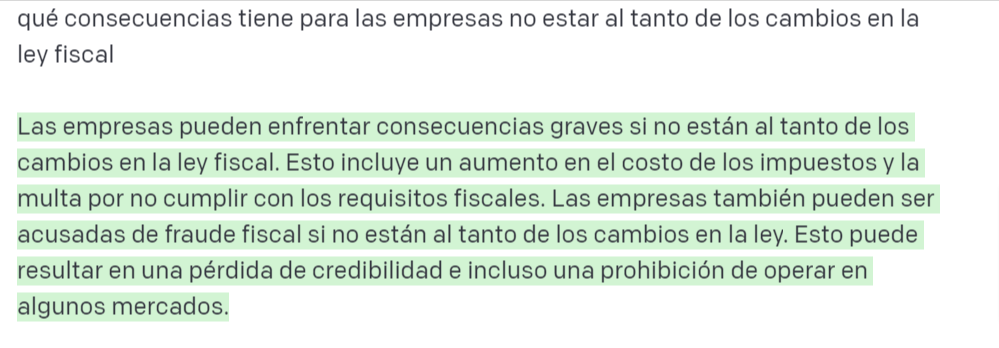
On this point, we can ask two more questions: “What fines do Spanish companies face for not complying with tax law, and how much are those fines?”.
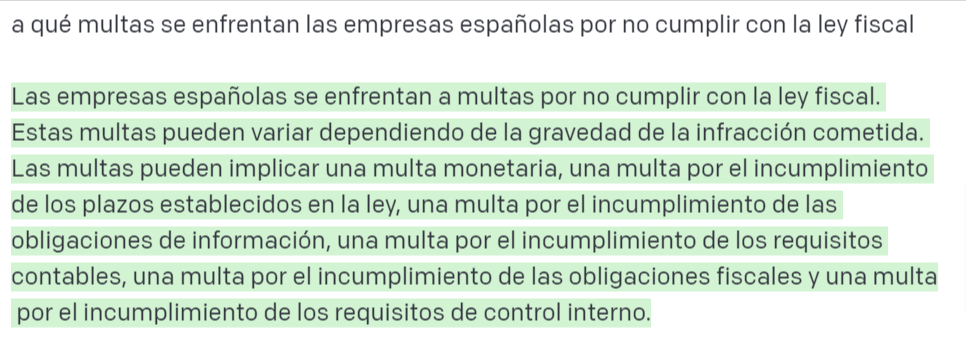
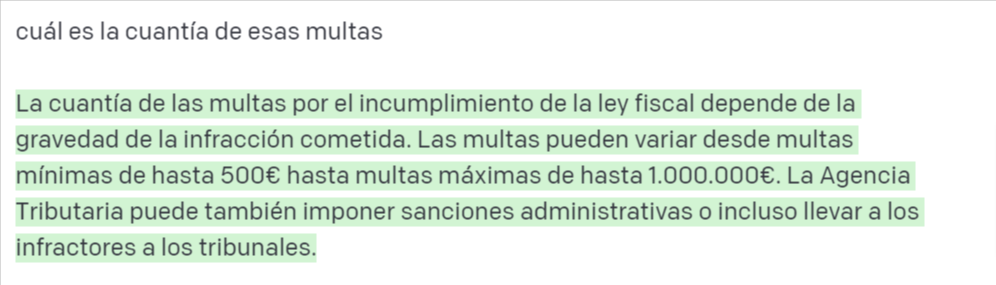
This information may be enough to start our email sequence, focusing on this problem.
It seems that changes in tax law are among companies’ biggest concerns and, at the same time, something that often confuses advisors.
So a first email could focus on the problem and a second one on its consequences. In both cases, we can keep researching based on the ideas we got from ChatGPT.
2) Email body
The next step will be to ask it to write the email. But, be careful, remember that we will only use this as inspiration. Then we’ll have to make our own adjustments. Otherwise, we’ll probably end up with a flat, unpersuasive email.
This is the question we entered in ChatGPT: “Can you write an email about how companies are affected when their tax advisor isn’t up to date with changes in tax law?”
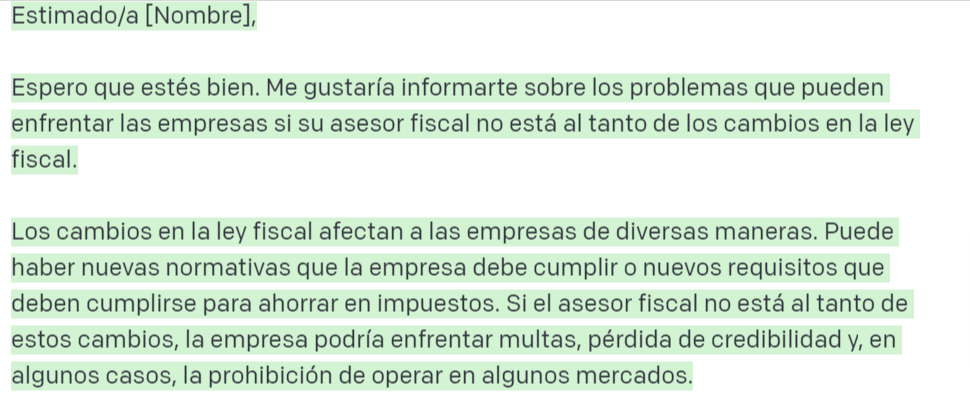
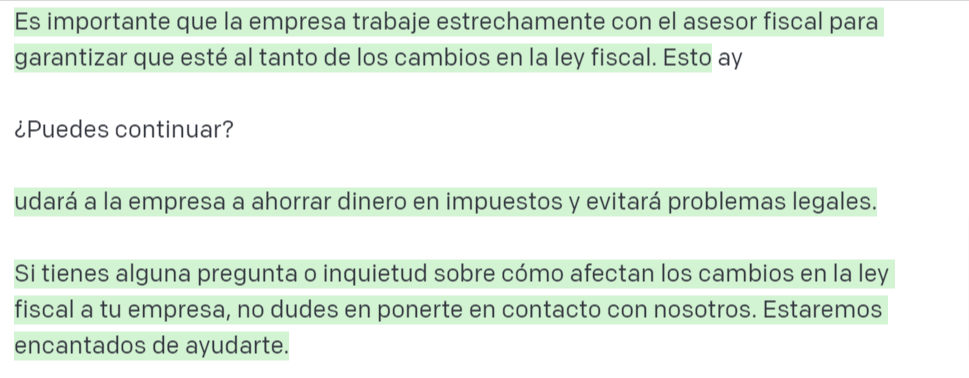

As you can see, the email copy has plenty of room for improvement. So we ask the tool whether it can write another, more persuasive email. This would be its answer:
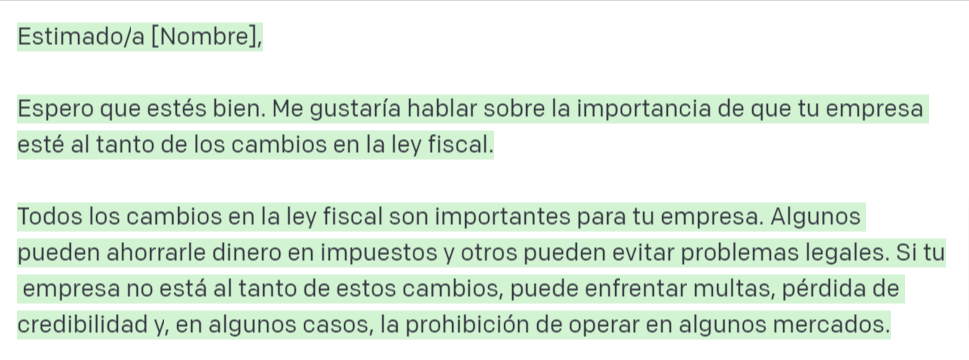
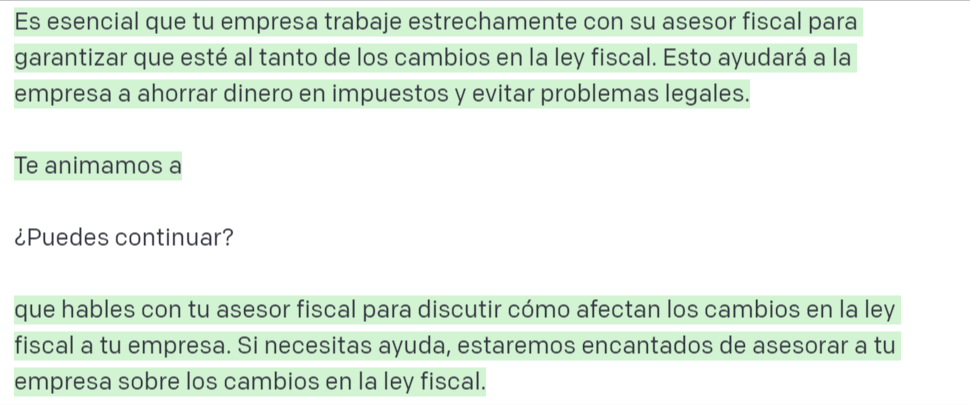

As I said, the ideal is to use ChatGPT as a tool for research and idea generation. Personally, I wouldn’t include this text as is in my email marketing strategy, but I would make use of its common thread.
3) Email Subject Line
Finally, let’s see how to use ChatGPT to come up with possible email subject line ideas. Continuing the conversation we’ve been having with it, we’ll ask it for 5 subject line ideas for the email:
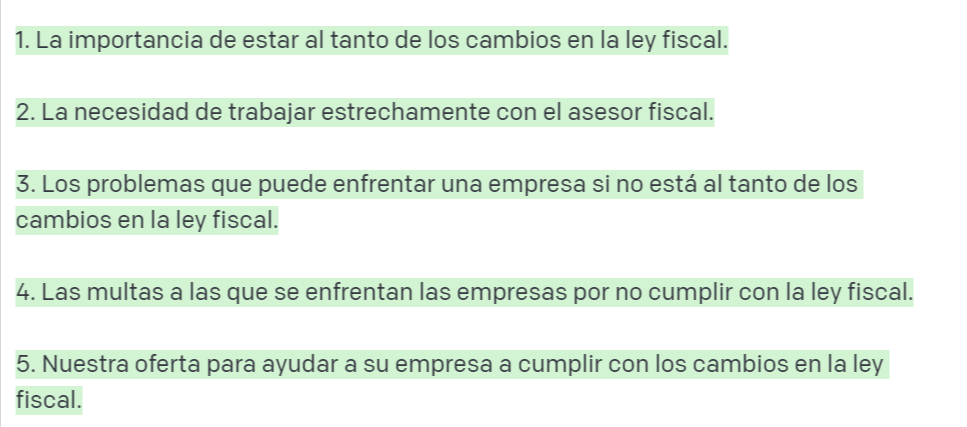
I’ll ask it to be more original.
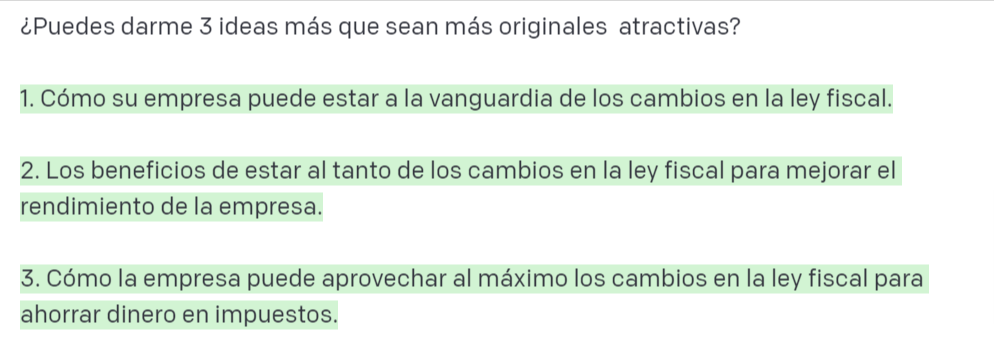
As you can see, it still hasn’t given us the final subject line since, in my opinion, they’re not very eye-catching and wouldn’t get many opens. So I stand by the idea that ChatGPT is a great tool that will help us generate content, but it should be used as support, not to copy what it tells us.
All that said, I encourage you to try this tool and use the information it generates. But don’t stop there! Remember that only a professional will know how to get the best out of ChatGPT for an email marketing strategy.