Ghosting: what it is, why it happens and what to do when a customer disappears
Why people disappear without a word and how to win back customers and subscribers who stop replying
Ghosting is cutting off communication with someone suddenly and without explanation. You stop answering their messages, calls and emails, as if you had turned into a ghost.
The word comes from the English ghost. It was born to describe romantic relationships, but today it is also used at work, in sales and in email marketing.
What does it mean to ghost someone?
It means vanishing from someone’s life without warning. There is no argument and no goodbye: the other person simply stops getting replies.
The term caught on with dating apps and instant messaging. In 2015 it made the Collins Dictionary’s words of the year list. And in February 2017 Merriam-Webster added it to its dictionary.
In Spanish, the Anglicism isn’t needed: you can say esfumarse (“to vanish”) or desaparecer (“to disappear”), and fantasmear and fantasmeo are also used. When ghosting is written in Spanish, it goes in italics like any foreign word.
Why do people ghost?
Almost always, to avoid an awkward conversation. Saying “I’m not interested” takes more effort than just not replying.
The way we communicate plays a part too. With so many messages, notifications and emails, it’s easy to leave one unanswered and let it turn into silence.
Sometimes it isn’t even a decision: the person forgets, feels overwhelmed or puts it off until tomorrow.
For the person on the receiving end, the problem is the uncertainty. You don’t know whether the other person has lost interest, is busy or hasn’t seen your message.
Terms similar to ghosting
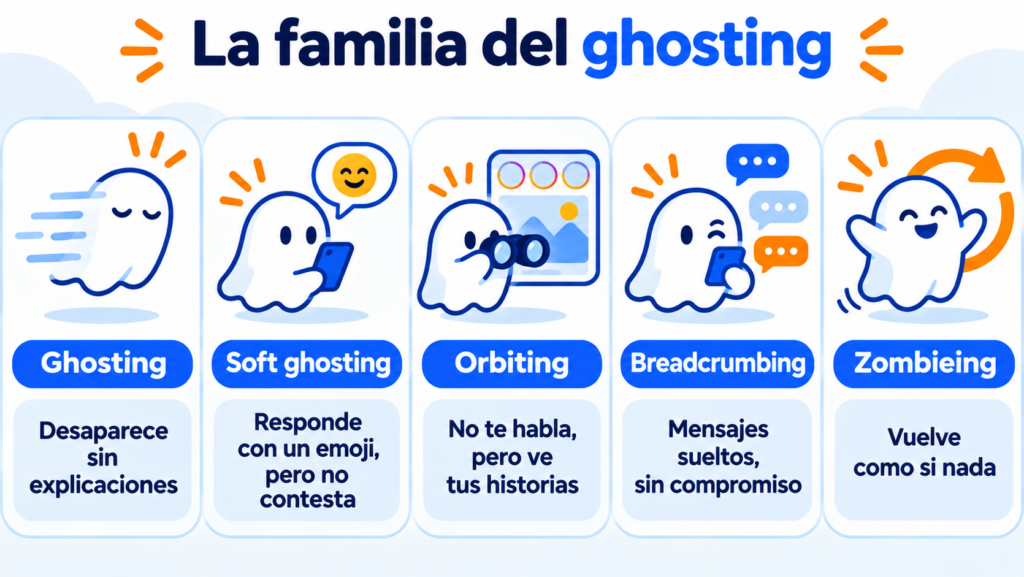
Ghosting has a whole family of cousins, almost all of them born on social media:
| Term | What it means |
|---|---|
| Ghosting | Disappearing without explanation |
| Soft ghosting | Responding with a “like” or an emoji, but without really replying |
| Orbiting | Stopping talking to you, but still watching your stories and posts |
| Breadcrumbing | Sending occasional messages to keep the interest alive, without committing |
| Zombieing | Getting back in touch as if nothing had happened, after disappearing |
They are all part of internet slang, just like FOMO or “leaving someone on read”.
Don’t let your subscribers vanish
Send an automatic welcome email and stay in touch with your list from day one.
Ghosting at work and in sales
In the workplace, ghosting goes both ways. Some candidates don’t show up to an interview, and some companies never reply after a hiring process.
According to a 2019 Indeed survey, 83% of employers said a candidate had stopped responding. And 22% of candidates admitted to accepting a job offer and then not showing up on the first day.
The same thing happens in sales. You send a quote, the customer seems interested and, suddenly, silence. Before writing it off, it’s worth trying a good follow-up email.
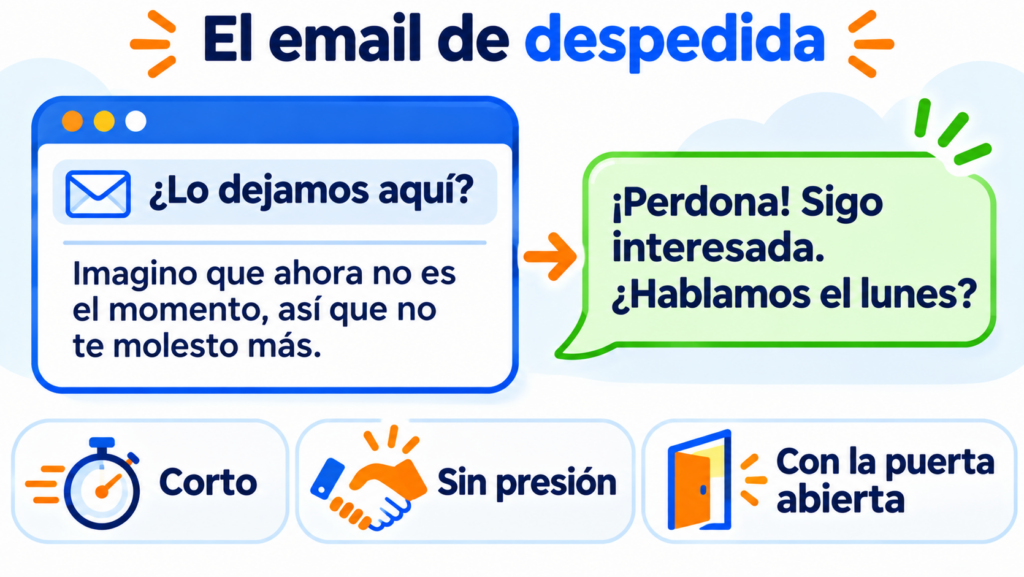
An effective way to close the loop is the breakup email: one last short, no-pressure message. For example:
“Hi Marta, I wrote to you a few weeks ago about the quote for the new website. I imagine now isn’t the right time, so I won’t bother you again.
If you’d like to pick it up again later, just reply to this email.”
Often, that’s the message that gets a reply. It takes the pressure off and leaves the door open.
Ghosting in email marketing: when your subscribers disappear
In email marketing, ghosting looks different. Some subscribers don’t unsubscribe, but stop opening your emails for months.
Those inactive contacts are a problem. Mailbox providers like Gmail pay attention to whether people open and engage with your messages.
If a large part of your list doesn’t, your sender reputation can drop and more emails will end up in spam.
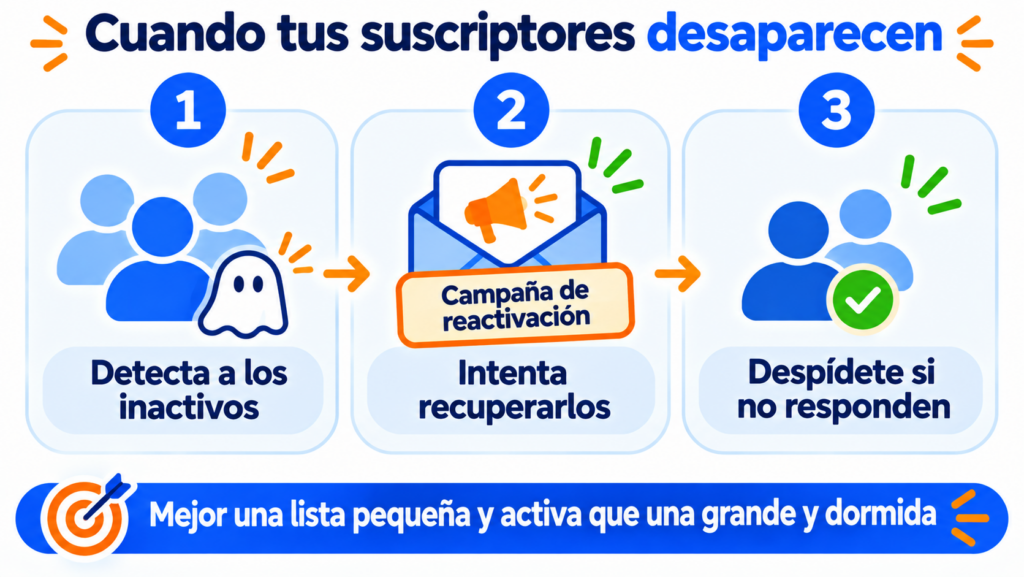
What you can do:
- Identify inactive subscribers. Move the ones who haven’t engaged in a while into a group of their own.
- Try to win them back. Send them a reactivation campaign with a different subject line, a question or an incentive.
- Say goodbye if they don’t respond. If they still show no sign of life after two or three attempts, remove them from your sends. A smaller, active list is worth more than a large, dormant one.
And a word of warning: don’t disappear yourself. If someone signs up and doesn’t hear from you for months, they’ll forget who you are.
Send a welcome email right away and keep a steady sending frequency.
How Mailrelay helps
Mailrelay gives each contact a reputation of 1 to 5 stars based on how they engage with your emails.
With it, you can create a segment of dormant subscribers and send them a reactivation campaign.
Automations help make sure you don’t disappear either: the welcome email goes out on its own as soon as someone subscribes.
And automatic list cleaning removes bounces, so your list hygiene doesn’t depend on you.
The free account lets you send up to 80,000 emails a month to 20,000 contacts, with human support on every plan.
Win back your dormant subscribers
Separate inactive subscribers by their reputation and send them a reactivation campaign. Free for up to 80,000 emails a month.
Frequently asked questions about ghosting
Here are two common questions about the term.
Is ghosting rude?
Generally, yes, especially if there was a relationship or a commitment involved. A short message saying you’re not moving forward takes little effort and spares the other person the uncertainty.
What’s the difference between ghosting and leaving someone on read?
Leaving someone on read means reading a message and not replying, once. Ghosting means stopping replying completely and for good.