A lot is said and written about email marketing and its benefits… and you may have wondered more than once, “how much of this is actually true?”
Because one thing you know for sure: your time and your budget are limited.
So it makes sense that you want to be sure email marketing works and that you’re using it correctly to get the most out of it for your business.
If you have doubts and what you want is data, numbers and facts about specific aspects of email marketing, such as these:
- What is the open rate of commercial emails? (most email marketing tools give you this information)
- Do my customers like receiving emails, or do they find them annoying?
- How exactly does email marketing affect purchasing decisions?
- What is the ROI of email marketing?
… then keep reading, because in this article you’ll find a complete collection of email marketing statistics you should know.
(Psst… prefer to get straight to the point? We’ve prepared a summary list at the end of the article. To take the fast track, just scroll down)
Email marketing is a mass channel
One of the biggest reasons to do email marketing is the massive use of email as a communication channel.
If your customers have an email address, then you have a unique opportunity to reach them by speaking to them directly, one on one.
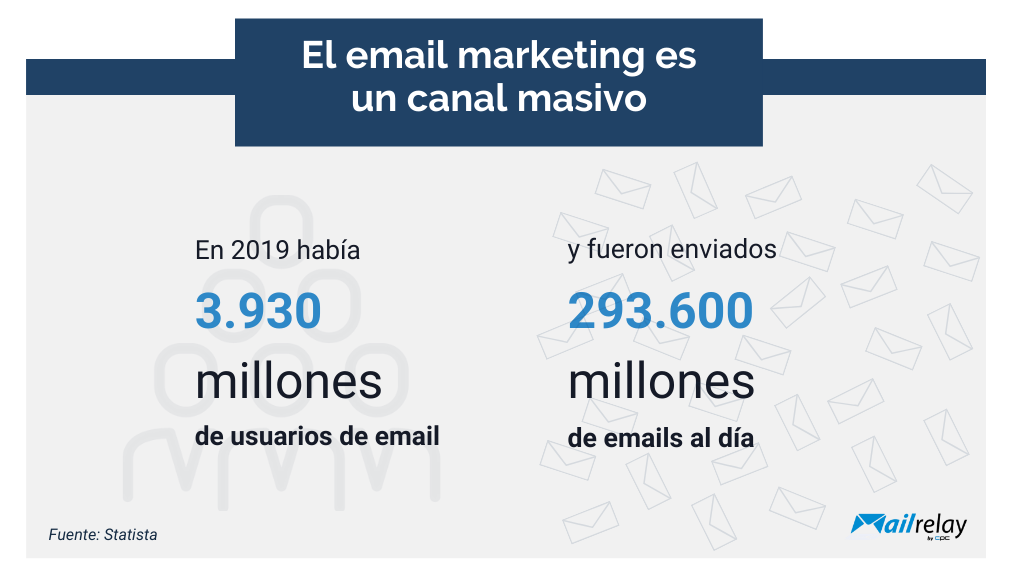
And email marketing statistics tell us they most likely do: according to Statista, 3.93 billion people were email users in 2019, a figure expected to reach 4.371 billion in 2023.
The number of emails sent keeps growing too. In 2019, 293.6 billion emails were sent every day (every day!), and statistics estimate that this figure could reach 347.3 billion in 2023, an increase of 18.29%.
That’s more than good news for email marketing. Because what these statistics tell us is that email, as a communication channel, is booming.
Your customers prefer email marketing
OK, it’s now clear that email is a massively accepted communication channel.
But… email isn’t the same as email marketing, right?
If you’ve ever wondered whether your customers want to receive commercial emails, the answer is… it depends, of course — it depends on whether the email is useful and appealing, well written, and so on.
But if you know how to be relevant, the latest email marketing statistics would answer yes: they want to receive your emails.
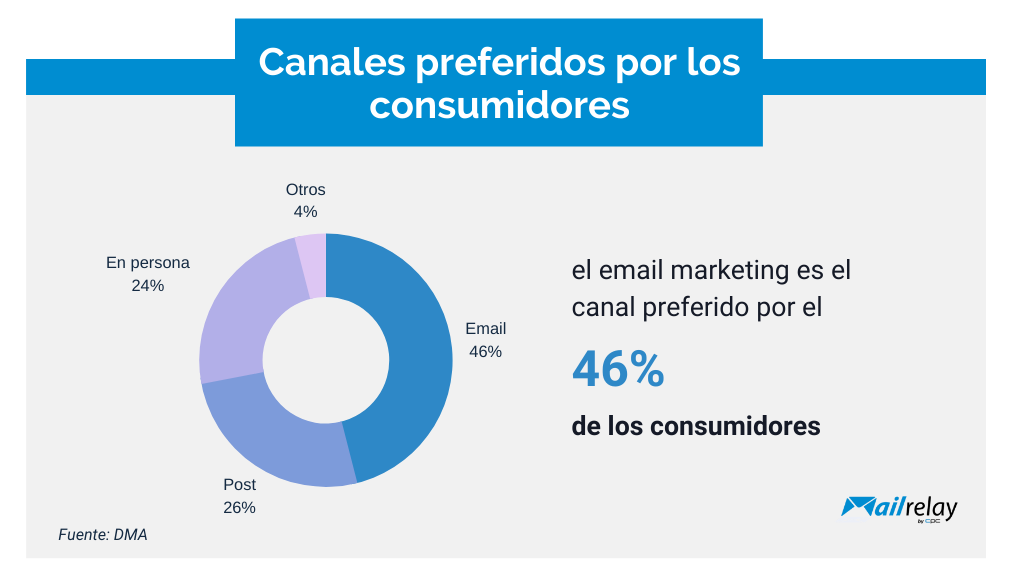
In fact, email marketing is the preferred channel for 46% of consumers (Only Influencers/DMA). By comparison, only 26% and 24% would prefer a post or in-person communication, respectively.
But the fact that your customers prefer email marketing to other channels doesn’t mean they have to like everything you send. Much less that they’re going to buy.
That’s why it’s important to qualify this figure with another key statistic: 86% of consumers say that more than half of the emails they receive aren’t useful.
That’s a very high figure… what do you think it means?
Everything suggests that consumers are comfortable with email marketing, even though most of the emails they receive leave a lot of room for improvement and weren’t sent with their interests in mind.
Email marketers get a clear fail when it comes to usefulness.
But to wrap up this point, let’s focus on the positive: we have a really wide margin to improve the effectiveness of our emails.
The keys to open rate
One of the things we worry about most when sending a mass email is how many people will open it. Because only a small portion do, and that percentage is what’s known as the open rate.
The average email marketing open rate is 22.86% (SaleCycle). But if there’s something more interesting than knowing the average open rate, it’s understanding why your audience decides to open an email or not.
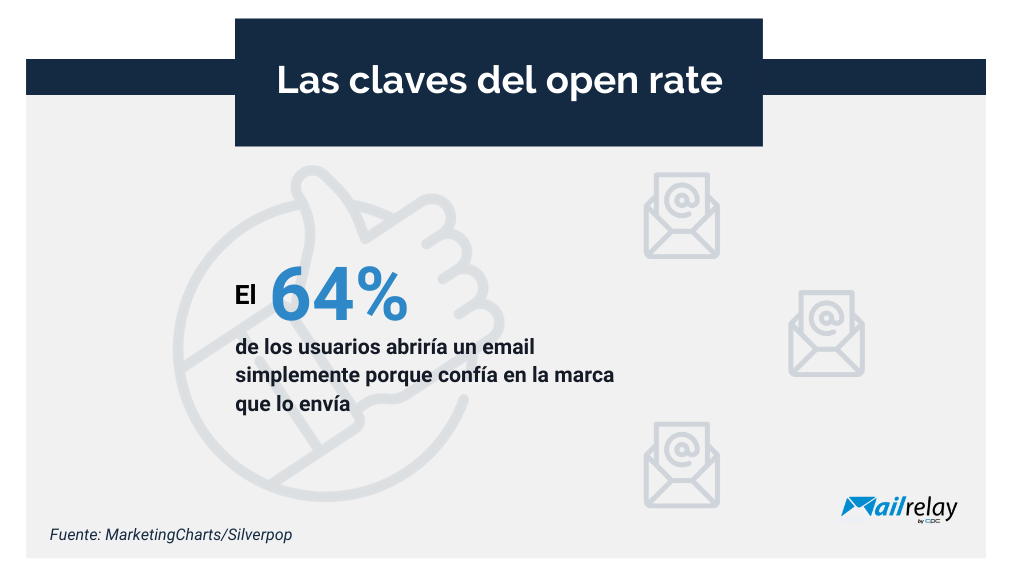
And this statistic on email marketing open rates sheds some light: 64% of users would open an email simply because they trust the brand that sends it.
According to the same source (MarketingCharts / Silverpop), 58% of the audience wouldn’t open an email if they didn’t consider it relevant to their needs.
The subject line matters (a lot)
We’ve just seen that email marketing statistics point to relevance as one of the keys to open rate.
But that means we decide whether an email is relevant or not before opening it.
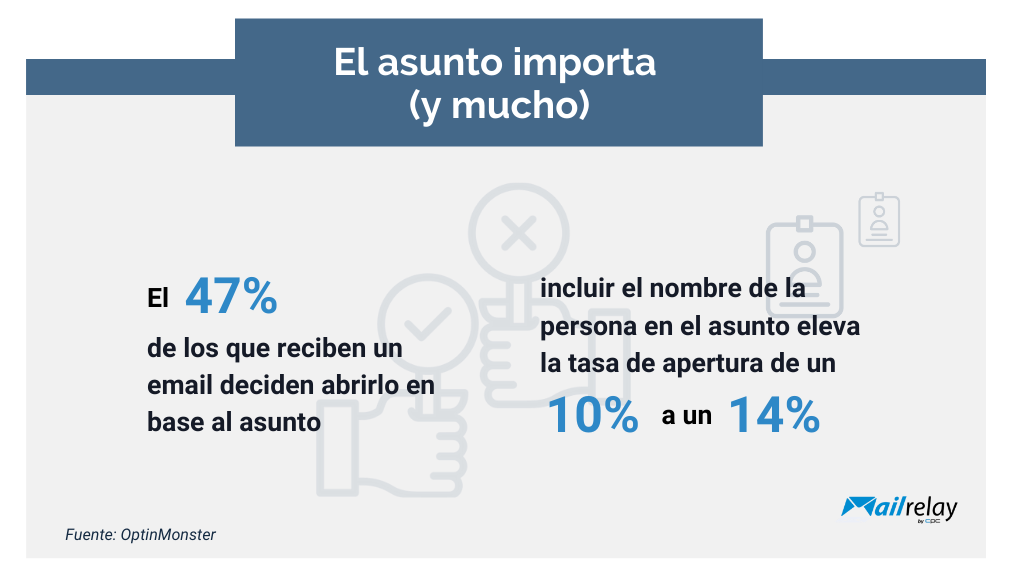
According to OptinMonster, 47% of email recipients decide whether to open it based on the subject line. What’s more, 69% would mark an email as spam for the same reason.
OptinMonster also points out the importance of personalization when it comes to opening an email. Simply including the person’s name in the email subject line could raise the open rate by 10% to 14%.
Another SaleCycle study, which analyzed the open rates of 500 customers, confirmed this hypothesis and found that the best-performing subject lines are those that include the person’s name, followed by those that include the product name or details related to it.
Email marketing and abandoned carts
Most e-commerce statistics show that the cart abandonment rate is between 70% and 80%.
In other words, about three quarters of those who add a product to their cart in an online store leave without buying.
And this is where email marketing plays a key role.
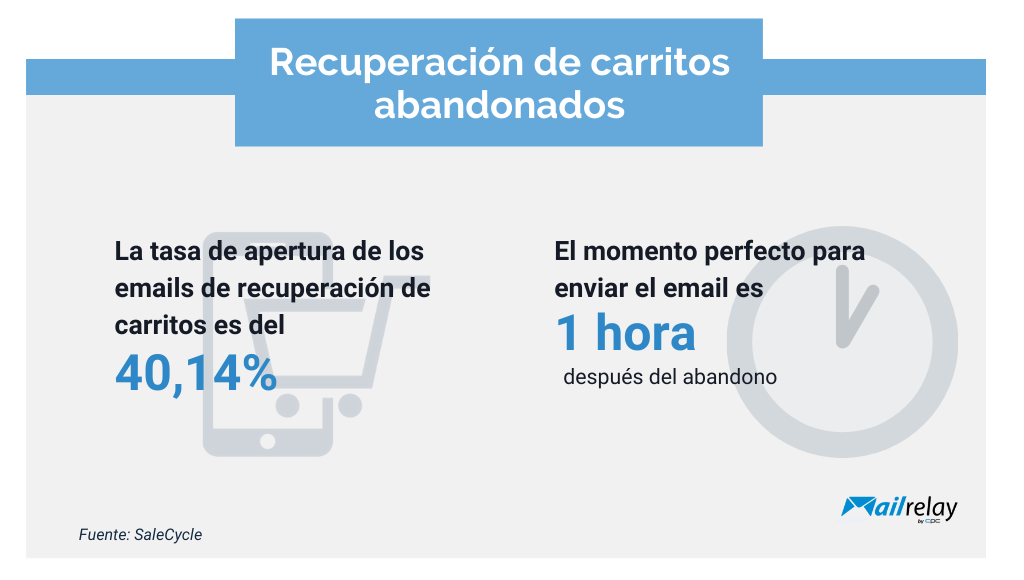
SaleCycle puts the average open rate for abandoned cart recovery campaigns at 40.14%. For online fashion stores, this figure even rises to 43.15%.
What does this data tell us? If you remember the open rate statistics we saw, only emails considered relevant get opened. Such a high open rate tells us that these emails (clearly) are.
But pay attention, because according to the same source, timing is crucial in this type of campaign: the perfect moment to send a cart recovery email would be exactly 1 hour after abandonment.
→ Want to take advantage of this opportunity but don’t know where to start? In our article 4 newsletter templates for your next email marketing campaign you’ll find a ready-to-use abandoned cart recovery template.
Yes, email marketing works
We’re getting to the high point. The one where email marketing statistics should give us big answers to big questions:
- Does email marketing really work?
- How does it affect purchasing decisions?
- What can I expect if I invest in email marketing?
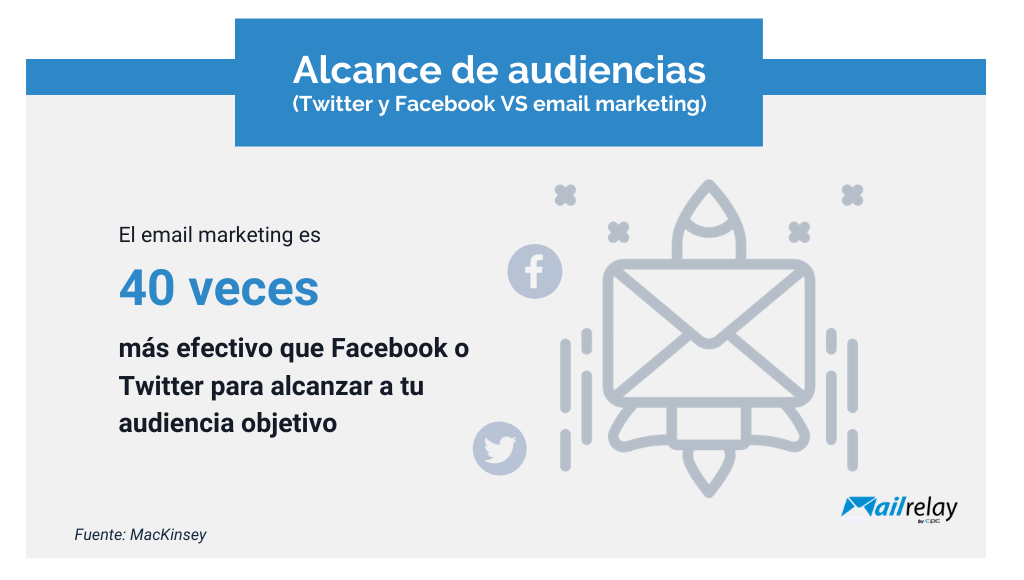
According to a McKinsey report, using email marketing is 40 times more effective than Facebook or Twitter for reaching a target audience.
And according to a SaleCycle study, email marketing affects the purchasing decisions of 59% of participants.
In fact, more than half would make purchases directly related to email marketing at least once a month.
But of course, these percentages can change radically depending on how relevant the email is. And here a keyword we’ve already seen appears again: personalization.
71% would be more likely to buy if the email were tailored to their tastes and preferences, according to the Silverpop study.
In addition, Experian points out that personalized emails would generate 6 times more transactions than non-personalized ones.
The ROI of email marketing
When it comes to email marketing performance, in the end there’s one metric that matters most: ROI, or Return on Investment. Or in other words, how much you’ve invested and how much you’ve gotten in return.
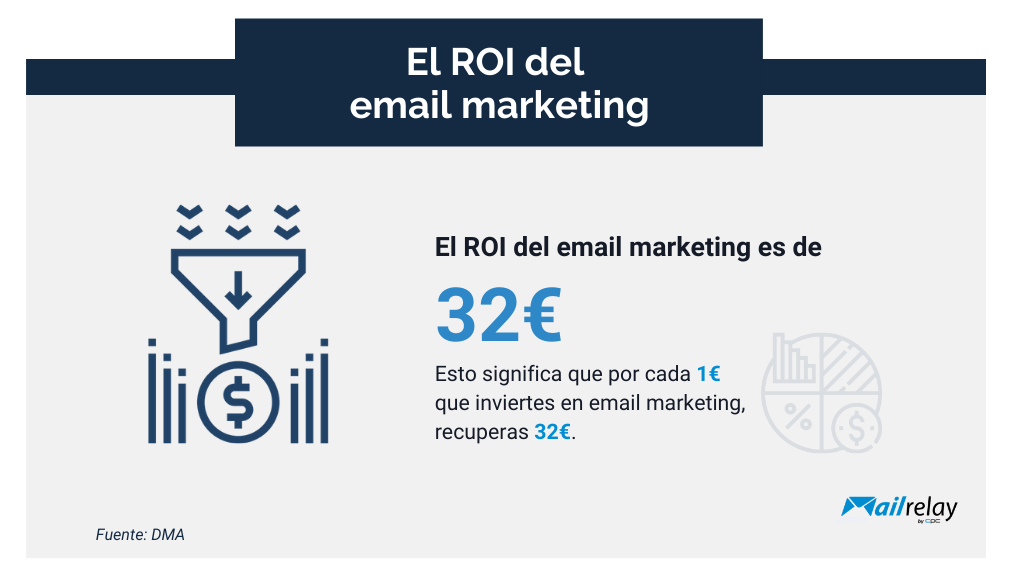
Well, according to one of the most influential sources on the subject, the DMA, the ROI of email marketing is €32.
So if you remember just one email marketing statistic, make it this one: for every euro you spend on mailings, you get thirty-two back.
Summary of email marketing statistics
To remember, recap or skip ahead. Here’s a list of the 20 email marketing statistics we’ve covered in this article:
1) In 2019 there were 3.93 billion email users (Statista)
2) In 2019, an average of 293.6 billion emails were sent every day (Statista)
3) 46% of consumers prefer email marketing as a commercial communication channel in various contexts (OnlyInfluencers/DMA)
4) 86% of consumers believe that more than half of the emails they receive aren’t useful (OnlyInfluencers/DMA)
5) The average open rate is 22.86% (SaleCycle)
6) 64% of users would open an email simply because they trust the brand that sends it (MarketingCharts/Silverpop)
7) 58% of users wouldn’t open an email if they didn’t consider it relevant to their needs (MarketingCharts/Silverpop)
8) 47% of email recipients decide whether to open it based on the subject line alone (OptinMonster)
9) 69% of email recipients would mark an email as spam for the same reason (OptinMonster)
10) Including the person’s name in the subject line raises the open rate by 10% to 14% (OptinMonster)
11) The best-performing subject lines are those that include the person’s name (SaleCycle)
12) The second best-performing subject lines are those that include the product name or details related to it (SaleCycle)
13) The average open rate for abandoned cart recovery campaigns is 40.14%. In the fashion sector, the average open rate for abandoned cart recovery campaigns is 43.15% (SaleCycle)
14) The perfect moment to send a cart recovery email would be exactly 1 hour after the cart was abandoned (SaleCycle)
15) Email marketing is 40 times more effective than Facebook or Twitter for reaching your target audience (McKinsey)
16) Email marketing affects the purchasing decisions of 59% of recipients (SaleCycle)
17) More than half of recipients would make purchases directly related to email marketing at least once a month (SaleCycle)
18) 71% would be more likely to buy if the email content were tailored to their tastes and preferences (MarketingCharts/ Silverpop)
19) Personalized emails would generate 6 times more transactions than non-personalized ones (Experian)
20) The ROI, or Return on Investment, of email marketing is €32 (DMA)
In conclusion: email marketing works, and the statistics prove it.
→ Enjoyed this and want to read more? Learn all about email marketing and discover how to generate more sales with your mass emails on the Mailrelay blog.
Great statistics. Thanks for sharing.