Rebranding: what it is, what it means and how to do it
When to change your brand, how to do it step by step and how to tell your customers
Rebranding is the process of changing a brand’s identity: its name, logo, colors, message or the way it presents itself to the public. It can be a partial adjustment or a complete transformation.
Companies do it to modernize, reach a different audience, distance themselves from a bad reputation or reflect a change in the business.
What does rebranding mean?
Rebranding comes from the word brand with the prefix re-, meaning “again”. It is also referred to as a brand change, brand renewal or brand repositioning.
It is written as one word. The forms “re-branding” and “re branding” are often seen, but they are not the usual ones. If you want to avoid the jargon, “brand renewal” is the clearest option.
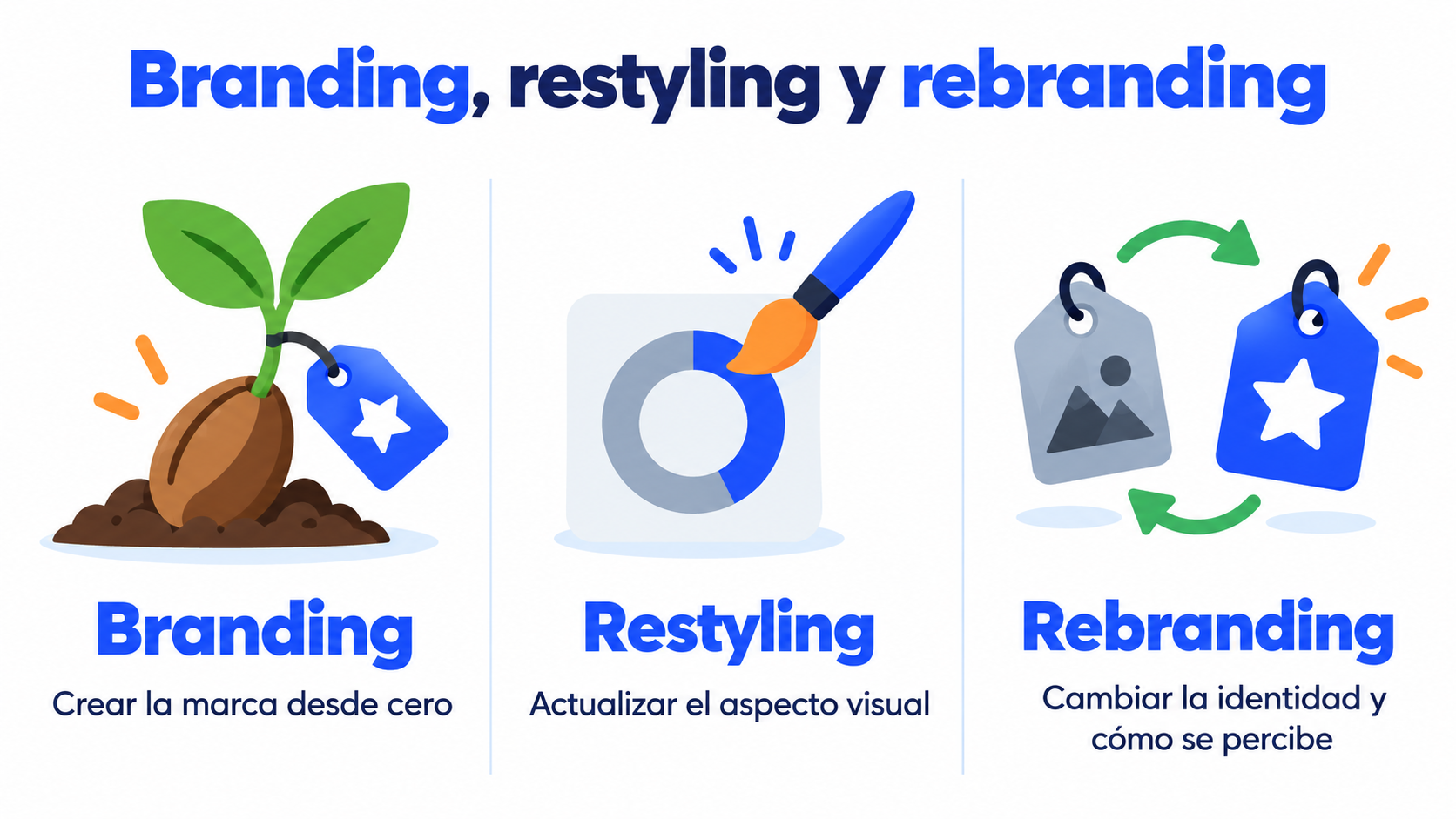
What is the difference between branding, rebranding and restyling?
The three terms are related, but they don’t mean the same thing:
| Term | What it is | Example |
|---|---|---|
| Branding | Creating and managing a brand from scratch | A startup defining its name, logo and tone |
| Restyling | Updating the visual look without changing the essence | Redrawing the logo with cleaner lines |
| Rebranding | Changing the brand’s identity, sometimes also its name or positioning | A company that changes its name and target audience |
In other words: restyling changes how the brand looks. Rebranding changes what the brand is and how it is perceived.
Types of rebranding
Depending on the scope of the change, there are usually two types:
Partial rebranding. Some elements are refreshed, such as the logo, colors, slogan or tone of the messages, but the name and positioning stay the same.
Total rebranding. The name and visual identity change, and often the value proposition or the audience the brand targets too.
A distinction is also made between proactive change, when the company gets ahead of the market, and reactive change, when it responds to a problem. For example, a reputation crisis or a merger.
When should you rebrand?
These are the most common situations:
The brand has become outdated. The audience no longer identifies with it.
The business has changed. The company sells other products or targets a different audience.
Mergers and acquisitions. Two companies join forces and need a single identity.
International expansion. The name doesn’t work in other languages or markets.
Reputation problems. The brand carries a negative image that it’s best to leave behind.
Confusion with competitors. The name or logo is too similar to another company’s.
Are you rebranding?
Design templates with your new look in Mailrelay and tell your customers by email.
Rebranding examples
These are some of the best-known brand changes of recent years:
| Before | After | What changed |
|---|---|---|
| Facebook (the company) | Meta (2021) | New group name to reflect its bet on the metaverse |
| X (2023) | Name, logo and colors of the entire social network | |
| Dunkin’ Donuts | Dunkin’ (2019) | Shorter name to also sell coffee and drinks |
| Sendinblue | Brevo (2023) | New name for a platform that was no longer just about email |
| Google My Business | Google Business Profile (2021) | More descriptive name for the service |
Not all of them go well. Gap changed its logo in 2010 and withdrew it within a week due to criticism, and Tropicana had to bring back its old packaging in 2009. You’ll find more cases in our post about the most disastrous rebrandings in history.
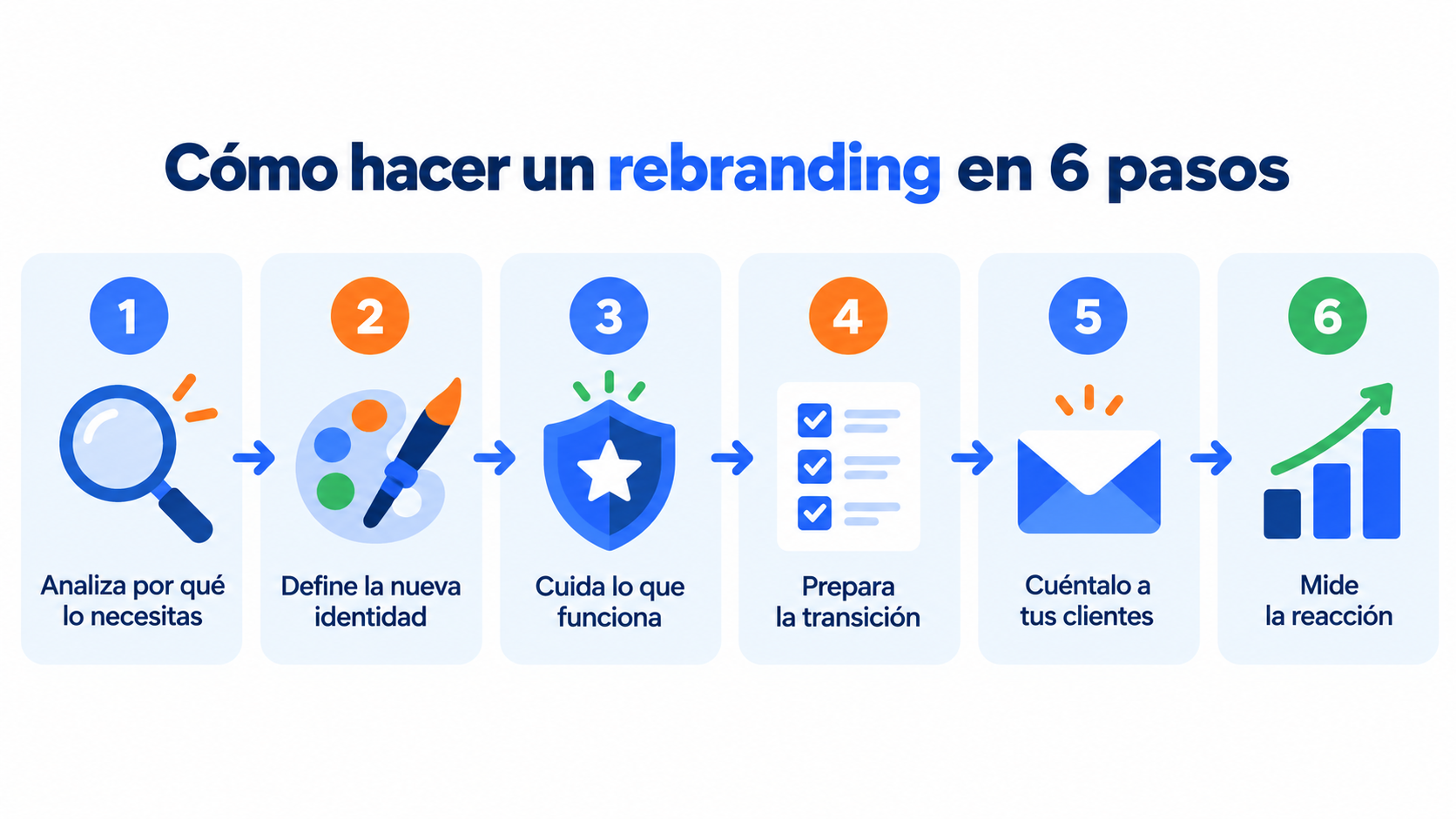
How to rebrand step by step
Analyze why you need it. Talk to customers and your team, and define the problem you want to solve.
Define the new identity. Mission, values, buyer persona, name, logo, colors and tone of voice.
Protect what works. Don’t change what your customers already recognize and value unless you need to.
Prepare the transition. Update your website, social media, documents, email templates and directory listings.
Tell your customers. Explain the change before they find out by surprise.
Measure the reaction. Track mentions, traffic, sales and unsubscribes over the following weeks.
How to announce a rebrand by email
Email is the most direct channel for letting your customers know, because it reaches people who already know you:
An announcement email. Explain what is changing, why, and what stays the same for the customer.
A recognizable sender. For a few weeks, use a name that combines the old and new brand, for example “New Brand (formerly Old Brand)”. That way you avoid being mistaken for spam.
Refreshed templates. Update the logo, colors and signature of your newsletters and automated emails.
A short sequence. A first notice, a reminder on the day of the change and an email with what’s new with the new brand.
If you change domains, set up authentication for the new one and warm it up gradually so you don’t lose deliverability.
How Mailrelay helps you
With Mailrelay you can design new templates with your refreshed identity, announce the change to your whole list or by groups, and measure who opens and clicks on each send.
You can schedule the announcement sequence and see how your customers react in the statistics. The free account includes up to 80,000 emails a month and 20,000 contacts, with human support by chat, ticket and phone.
Send your newsletters with Mailrelay
Up to 80,000 emails a month and 20,000 contacts for free, with human support on every plan.
Frequently Asked Questions
These are the most common questions about rebranding.
What is rebranding in a nutshell?
It’s changing a brand’s identity, fully or partially, so that the public perceives it differently.
What is another word for rebranding?
Brand change, brand renewal or brand repositioning.
Is rebranding the same as restyling?
No. Restyling updates the visual look. Rebranding can also change the name, the message and the positioning.
How long does a rebrand take?
A restyling can be done in a few weeks. A complete rebrand usually takes several months between analysis, design and launch.
Does rebranding make you lose customers?
It can happen if it’s done without warning or if you change what customers valued. That’s why it’s worth explaining it well and measuring the reaction.