Neuromarketing is an innovative discipline that has, in recent years, driven a revolution in the world of marketing and a transformation of the current market, generating new trends and adapting more and more to consumers’ wishes.
Have you ever wondered why marketing or advertising strategies have such a big impact on you? or how search engines and social networks ‘read your mind’ when you notice posts appearing about something you wanted and had been thinking about, without ever having googled it?
Neuromarketing can answer several of these questions.
This is the first of two articles we have prepared for you with all the information you need to know about this powerful trend that is here to stay and to keep transforming paradigms around the world.
The key points
- Studies based on neuroscience have shown that most of our decisions are unconscious. The part we believe to be conscious is only a justification or rationalization of what our brain has already determined unconsciously.
- Neuromarketing makes it possible to link the unconscious processes of the mind with behaviors related to buying actions.
- With the information obtained from Neuromarketing studies, campaigns can be structured with greater certainty that their elements will hold the user’s attention and, therefore, that the company’s ROI will be secured.
What is Neuromarketing?
Neuromarketing can be defined as a discipline that uses techniques from neuroscience and biometrics to generate precise data on how our brain works when it is exposed to traditional marketing methods.
This makes it possible to learn in depth and obtain reliable information about which areas of the brain are most stimulated by any marketing and advertising strategy, as well as to know what emotional valence it may generate in users. In other words, it links the unconscious processes of the mind with behaviors related to buying actions.

When we talk about the areas of the brain involved in these processes, for example the hippocampus, nucleus accumbens, amygdala and insula, among others, we are using terms that doctors or researchers can understand more easily.
For marketing specialists it is usually more useful to get a translation of these structures, understanding that, depending on the brain area where the activity takes place, it will refer to:
- How the user processes the campaign or strategy, and which areas of the brain allow the retention and memory of the information.
- What emotional valence it produces in the person; that is, whether the brain structures related to pleasure or enjoyment are activated (positive valence) or whether structures related to sadness or disgust interact instead (negative valence).
- How well the strategy manages to hold the user’s attention. Does it engage them so they keep watching, or does it bore them and lose their interest?
It is important to point out that positive or negative valence is relative to the intention behind the advertising campaign: some movements play with anger, sadness or other negative valences to mobilize users to take a specific action.
With this information, advertising campaigns, web pages, etc. can be structured, and actions related to branding or brand engagement can be developed, with greater certainty that their elements will hold the user’s attention and, therefore, that the company’s ROI will be secured.
Origin of Neuromarketing
Based on what we mentioned earlier, the concept of Neuromarketing can be summed up as the perfect combination of neuroscience, traditional marketing and the use of technology and data to reach consumers one to one.
Neuromarketing makes it possible to create a richer user experience, which translates into specialized, differentiated communication strategies for our consumers, resulting in a stronger connection and greater engagement with the brand.

But where does this discipline come from?
The origin of Neuromarketing lies in neuroscience. For hundreds of years, people have been interested in understanding how the structures of the brain and the nervous system in general work. Disciplines such as:
- Neuroanatomy.
- Neurophysiology.
- Neurochemistry.
- Neuropharmacology.
- Neuroendocrinology.
have studied the nervous system from different perspectives, which has sparked greater curiosity to understand how it directly influences all of our behavior.
From the analysis of research on human actions, neuropsychology was born: the science dedicated to understanding neural activity in relation to different human behaviors and motivations. Building on this, around 1980, several scientists became interested in understanding human beings, specifically as consumers.
In 2002, the term ‘Neuromarketing’ was used for the first time by Ale Smidts, and in the same year ‘Sales Brain’, the first official Neuromarketing company, was launched.
As the years have gone by, this discipline has made its way, since the impact it has had on the marketing strategies of the companies that use it has been very successful; and more and more companies are adopting the models resulting from Neuromarketing to create new methodologies in their processes.
What neuroscience tools does Neuromarketing use?
There are several neuroscience tools that are applied to study the mind of the consumer. Among the most widely used are:
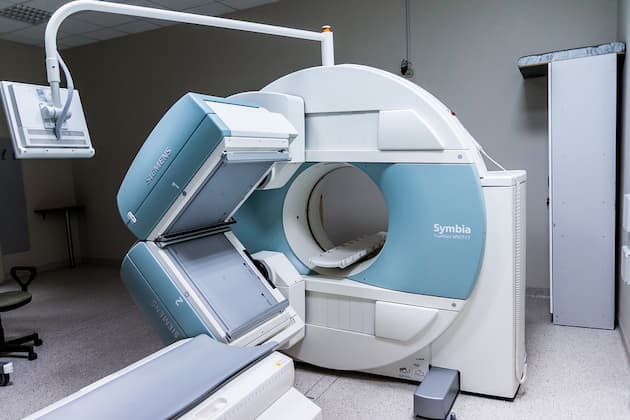
Functional magnetic resonance imaging (fMRI):
This is a non-invasive technique that produces highly detailed images of the brain. In Neuromarketing studies, the individual is usually exposed to a visual, auditory, gustatory, olfactory or tactile stimulus in order to analyze which neural areas are involved in processing it
This type of tool can measure how memory is encoded in response to the product, whether it is more or less likely to be remembered, how sensory perception is involved (that is, which senses it stimulates most) and the emotional valence (the type of emotion) it generates. It can determine whether the person feels trust and brand loyalty or, in the case of a comparative study, their preference between brands.
Electroencephalogram (EEG):
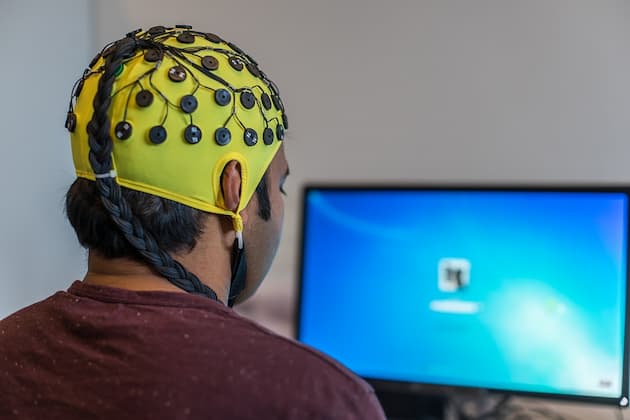
It makes it possible to observe variations in brain waves when a marketing-related stimulus is presented. It is considered a non-invasive method and is generally small, portable equipment. It is often combined with eye-tracking devices or electrodermal activity sensors.
The variations in brain waves make it possible to interpret how much attention the stimulus produces in the user. It also lets us measure whether the strategy generates engagement or boredom, or what emotion the stimulus produces in the person, as well as how memory is encoded.
Eye tracking:
This is an eye-tracking device that makes it possible to analyze certain mental processes of the user by studying their visual path. Unlike EEG and fMRI, this device does not study brain activity; it only captures the movements (saccades and fixations) made by the individual’s eyes.
The data observed with this tool are the subject’s visual fixations when presented with the marketing stimulus. It studies how long they keep looking at the stimulus, the path their gaze follows and whether or not the pupil dilates. From this data, it is possible to interpret whether the proposal shown is able to hold attention and what the user’s search patterns are like.
In this last case, search patterns, with the path of the gaze and the fixations, are very useful to study when designing web pages. It shows how well the page or program is designed, and whether the layout and structure of the design are the most suitable for users to interact with the interface easily.

Facial coding:
Using special software and a video camera, this tool can measure muscle activity and microexpressions of the face when exposed to the marketing stimulus.
The purpose of studies that use this type of measurement is to distinguish the facial expression associated with one of the basic emotions (joy, surprise, fear, anger or sadness) and to analyze unconscious reactions to the strategy you plan to use. This software can be combined with eye-tracking devices built into the computer, so that data from both tools can be obtained.

Skin conductance:
This tool makes it possible to study small changes in the galvanic response of the skin. It measures the person’s arousal when exposed to the marketing stimulus being played, and the response can be used to predict buying action.
This tool is not usually used on its own, but combined with other measures such as eye tracking, facial coding or EEG, to obtain more information and give more concrete answers to the study.

Implicit association test:
It consists of presenting comparative and mutually exclusive categories from the same domain. For example: science – humanities; female – male; which are presented together with attributes that the person has to associate with them. The categories are usually represented with images and the attributes with words. Examples of attributes would be: young – old, good – bad, among others.
The characteristics and attributes to be presented in the test must be structured around the topic to be studied, and must be able to correlate the person’s attitudes and associations regarding it.
This test makes it possible to measure attitudes and evaluations the person may not be aware of, as well as to study the response time in which they make them. In marketing, this type of measurement is being used to analyze prejudice, or in neuropolitics.

In other materials, you may find more Neuromarketing tools than the ones I have mentioned, but the truth is that the list we have shown sums up the most effective and popular methods.
However, there are many more; the thing is that they are used less often because they can be more invasive for the subject of the study. They include:
- Positron emission tomography (PET).
- Eye-attached sensor methods for eye tracking.
- Electrooculography.
- Evoked potentials.
- Electromyography.
- Magnetoencephalography.
- Transcranial magnetic stimulation.
Summary
Neuromarketing takes a multidisciplinary approach that combines the latest in neuroscience. This discipline focuses on certain aspects related to behavior studied by psychology and on traditional marketing techniques, which are its starting point.
Unlike traditional marketing, which focuses on conscious processes or what the consumer says out loud, Neuromarketing uses tools from neuroscience to study the deepest roots of the human being, that is, the non-conscious part that shows itself when we are exposed to an advertising stimulus. This allows a better understanding of consumers and of how the purchase decision-making process works.
In this way, techniques and procedures can be adjusted to what best fits the individual needs of our customers and to what we want to reaffirm as a brand. Today, large companies use this powerful tool to influence their customers and to know how to stand out from their competitors.
If you want to learn more about Neuromarketing, such as its benefits and drawbacks, how its emergence has changed the market, which companies currently use it and what it can contribute to market research, I invite you to read part 2 of this article, where we go deeper into these aspects, which will be very helpful to you.
Understanding these mechanisms helps you identify the psychological triggers that really move your customers to action.