Can you imagine entering a three-dimensional virtual store in the form of an avatar, where you can buy and try on clothes almost as you do in real life?
Technological advances are increasingly present in all areas of daily life and are on their way to conquering all digital channels.
The metaverse is one of them, giving users the ability to interact with different spaces through a fusion of what is known as virtual reality and augmented reality.
The ways people buy are evolving and today customers are looking for something different, virtual, but personalized, something that makes a difference.
The metaverse brings us a new way of shopping, very similar to real life, but totally virtual, where customers can interact in an immersive way with the environment.
It is an exceptional tool for creating a good customer experience and standing out from the competition. In this article we will tell you a little about what it is, its advantages, disadvantages and its possibilities in digital marketing.
What is the metaverse?
The metaverse, as we mentioned, is a space where the real world and the virtual world meet, through the use of virtual reality and augmented reality tools. In this space, which is digital in nature, people can interact with other people who are in the same metaverse or with three-dimensional objects.
It is, in short, an extension of real space into the virtual world.
To be more specific, users can, through elements such as virtual or augmented reality glasses and applications for devices such as computers or smartphones, enter a virtual world and take part in various experiences.
These types of activities, which can be, for example, playing, buying, trying on clothes, working, or interacting with other users of that virtual environment, can be done using an avatar, which is a virtual representation of the user.
A well-known example of a metaverse was recently presented by Facebook founder Mark Zuckerberg, who showed off a mixed reality headset prototype, in the context of his Cambria project.
This headset enables an enhanced mixed reality experience through interaction with virtual elements in the real world, such as taking notes, playing with a pet, or following a training class.
In addition, several video game platforms that started out with the concept of mixed reality, such as Second Life, Fortnite, Minecraft and Roblox, are now developing their own metaverses.
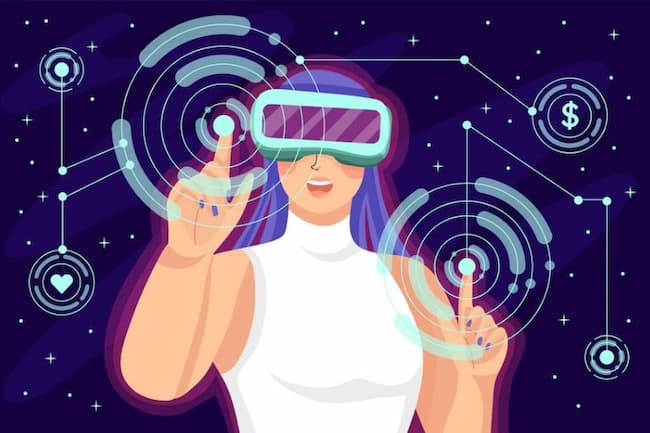
How does the metaverse work?
It is important to take into account some of the basic characteristics that metaverses have or will have.
● Digital avatars are used to enter each metaverse. These avatars represent the user and will carry out whatever the user wants to show or do in that metaverse.
● It is an immersive experience that blurs the boundaries between the physical and digital worlds.
● It is collective and collaborative, since it is shared with other users who are connected and active in the same metaverse and can act in it at the same time.
● It has no borders or distances, since you can connect with places all over the world without limits. In addition, you will be able to connect with other metaverses keeping the same avatar.
● It is persistent and does not disappear when you disconnect. You can go back and see how everything is going in that metaverse, what’s new, changes, etc.
● It has its own economy, based on NFT and cryptocurrencies. NFTs are unique digital assets that can’t be replaced. In other words, a person can turn a digital file into an NFT, which acts as a digital certificate of authenticity. This allows it to be sold online, for example with cryptocurrencies. This asset is widely used to sell works of art or other pieces that require authenticity and, combined with cryptocurrencies, NFTs are very useful in the metaverse.

Possibilities offered by the metaverse in digital marketing
Now that we know the basics of the metaverse, let’s get to what really matters to us: how the metaverse influences, and will influence, digital marketing.
The metaverse will radically change the way people buy and sell products and services in cyberspace, giving users completely different and personalized digital experiences, very similar to those in the real world, and giving companies more brand recognition.
Although today there are some concepts similar to the metaverse, based on virtual reality and augmented reality, the fusion of both to provide a platform as similar to the real world as could be achieved in a metaverse is not yet developed.
So what different possibilities will the metaverse bring us for digital marketing?
● It will be possible to buy digital versions of products or services, such as demonstrations or gym routines performed by an avatar.
● You will be able to shop in 3D virtual stores, which you enter by accessing a metaverse with your own avatar.
● Businesses will be able to offer customers a different, fully immersive experience, where they can get the information they want about the product or service they are interested in. In addition, you will also be able to do things that are not possible today in a classic virtual purchase, such as trying on clothes, discovering how the furniture will look in the house or viewing the menu of a restaurant live with the information you deem necessary.
● It will be possible to sell unique products as NFTs, giving customers a sense of belonging and exclusivity.
● You will be able to meet a potential customer in a metaverse for a remote but much more personalized and realistic meeting.
● It will be possible to organize product demonstrations in the metaverse and run webinars or courses in real time, creating an immersive experience for the customer.
● Many more forms of digital advertising can be exploited in the metaverse, since it offers many opportunities and ways to sell a product or service. It will also change the way products are advertised. Today the goal is to reach as many people as possible, sending lots of emails and placing ads in different places. In the metaverse, advertising will be available to every user who enters it.
● Content marketing strategies can be improved by creating new virtual content available in the metaverse to everyone who passes through it, and brands can also position themselves with a good influencer marketing strategy, with influencers running their campaigns as avatars.
Advantages and disadvantages of the metaverse
Any technological advance is, of course, full of advantages, because it is the future and what is coming, but it also has disadvantages, because it is new and has little experience and testing behind it.
That is why we will now tell you about some of the advantages and disadvantages we believe this new technology may have, not only in digital marketing but in every area it can reach.
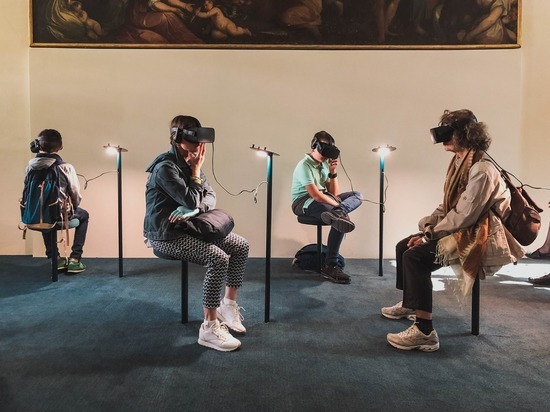
● Advantages
Education
The classes can be more dynamic and educational, since the students will be able to travel to other places and get to know them in the first person, as well as learn concepts that are much more practical to visualize in 3D than captured on a page or on a computer.
Remote work
The concept of working from home will change radically, since it will be possible to access offices and hold meetings in virtual places, where you can meet other people and interact in a virtual environment very similar to the real one.
Medical consultations
It will be possible to have virtual medical appointments that are much more effective than today’s, where the patient and their symptoms can be assessed much better.
Games
This is the best-known advantage, since games are the pioneers of the metaverse. But the possibility of playing with people from all over the world in a virtual reality environment stands out.
Online marketing
The purchase and sale of products and services in the metaverse can be totally personalized and realistic, and a better customer experience can be provided than with classic online purchases. This will improve the reach of your brand
Compatibility
Diverse technology that is compatible with different digital formats.
Community and cooperation
The possibility of easily creating connected communities across any distance.
Sustainability
In some respects it can reduce pollution, since doing more activities remotely will reduce the consumption of unsustainable resources, such as transport.
Connected generations
The possibility of connecting different generations.
● Disadvantages
Inequality
The high cost of technology will inevitably produce an increase in socioeconomic inequality, not only for companies with fewer resources to invest in digital marketing, but also for those consumers who don’t have easy access to this type of technology.
Alienation
Less physical contact between people. The possibility of spending too much time in the virtual world, due to its resemblance to the real one.
Unknown legislation
Unfamiliarity with the law or a lack of legislation, which can make these spaces unsafe for users.
Sensitive data
Weak protection of personal data and privacy.
Vulnerable transactions
Insecurity in financial transactions made with virtual means of payment such as cryptocurrencies, which makes the metaverse an easy target for scams.
Conclusion
Although at present the metaverse seems to be more oriented and developed for video games, it is clear that the continuous growth of the use of augmented reality and virtual reality tools will open more and more possibilities in the virtual world. That is why many companies are setting out on this path, to take the next step towards the fusion of realities that is the metaverse.
This will directly affect brands that sell their products digitally, as they will have to keep up if they want to stand out and offer customers a fully personalized and realistic experience, in which they can get all the product information they want, whenever they want, without having to go to a physical store.
Creating a good customer experience is a necessary differentiation strategy for any company, and using new technologies in digital marketing will be essential.
Technologies such as virtual reality (VR) and augmented reality (AR) are the foundation of these experiences, which connect directly with the future of consumption.