List bombing: what it is, how it works and how to protect your forms
When someone turns your signup form into a weapon against another person, it's your reputation that pays the price
One day your list gains 800 subscribers in an hour, and you haven’t launched any campaign. It looks like good news until you check the addresses: many don’t exist and others belong to people who have never heard of you. That’s list bombing, and your sender reputation is what pays the price.
What is list bombing?
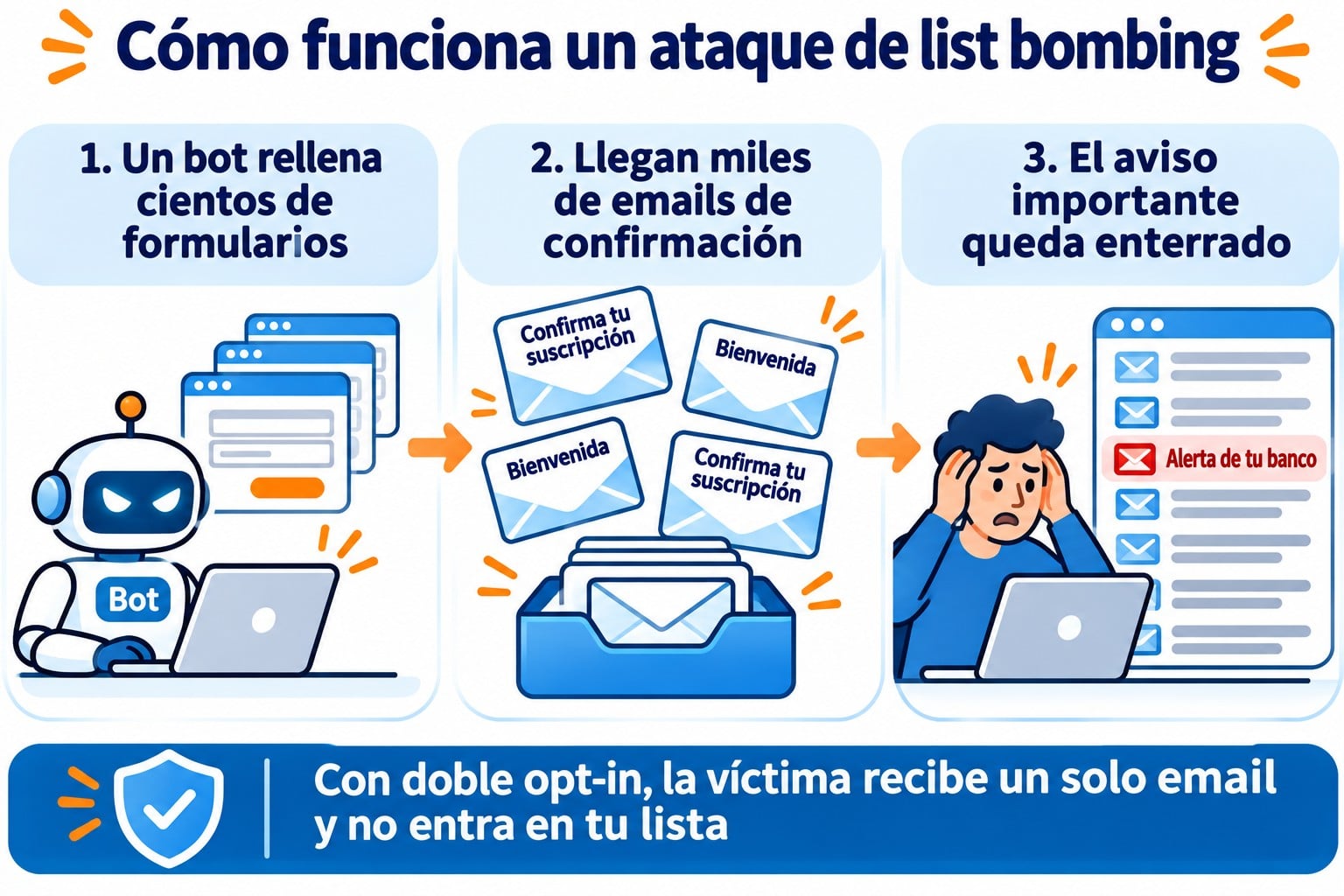
List bombing is an attack in which a bot signs a victim’s address up to hundreds or thousands of mailing lists at once. The victim receives a flood of welcome and confirmation emails they never asked for. The forms used in the attack belong to legitimate businesses, like yours.
It’s also known as subscription bombing. It belongs to a broader family, email bombing or mail bombing, which covers any attack that aims to flood an inbox.
How does list bombing happen?
The attacker uses a program that crawls websites with open signup forms. On each one, it enters the victim’s address and submits it. Within a few minutes, that person is signed up to thousands of sites.
The goal is usually one of these:
- Burying an important notice. While the inbox fills up, the attacker uses a stolen card or changes a password, and the alert email gets buried among hundreds of messages.
- Harassing or blocking someone. The victim can’t use their email for hours or days.
- Harming the senders. The spam complaints land on the businesses whose forms were used.
Sometimes the attack doesn’t target anyone in particular. A bot fills in your form with made-up addresses or spamtraps, and your list fills up with contacts that hurt you.
List bombing, email bombing and mail bomber: the differences
These terms are often used as if they meant the same thing, but they don’t:
| Term | What it is | Who sends the emails |
|---|---|---|
| List bombing | Subscribing the victim to many lists at once | Legitimate businesses, unknowingly |
| Email bombing or mail bombing | Any attack that floods an inbox | The attacker or third parties |
| Mail bomber | Program or service that launches the attack | Run by the attacker |
Using a mail bomber against another person is no joke. It can stop them from working, cover up fraud and have legal consequences for whoever launches it.
Grow your list with real people only
Every signup goes through double opt-in: anyone who doesn’t confirm doesn’t receive your campaigns. The free account lets you send 80,000 emails a month to 20,000 contacts.
How does list bombing affect email marketing?
If a bot uses your form, your list receives addresses that never gave you permission. If you send them campaigns, the problem becomes yours.
Your reputation drops. People who don’t know you mark your emails as spam.
Gmail’s sender guidelines ask you to keep the complaint rate below 0.3%, and a few dozen complaints on a small send are enough to exceed it. Your sender reputation suffers and your emails start landing in the spam folder.
Bounces go up. Made-up addresses don’t exist and bounce. If any of them is a spam trap, you can end up on a blacklist.
You pay for contacts that are useless. Many tools charge by number of contacts, so every fake address costs you money.
You send without consent. In Spain, Article 21 of the LSSI prohibits sending commercial communications by email to anyone who hasn’t requested or authorized them. An address signed up by a bot hasn’t authorized anything.
How to protect yourself from list bombing
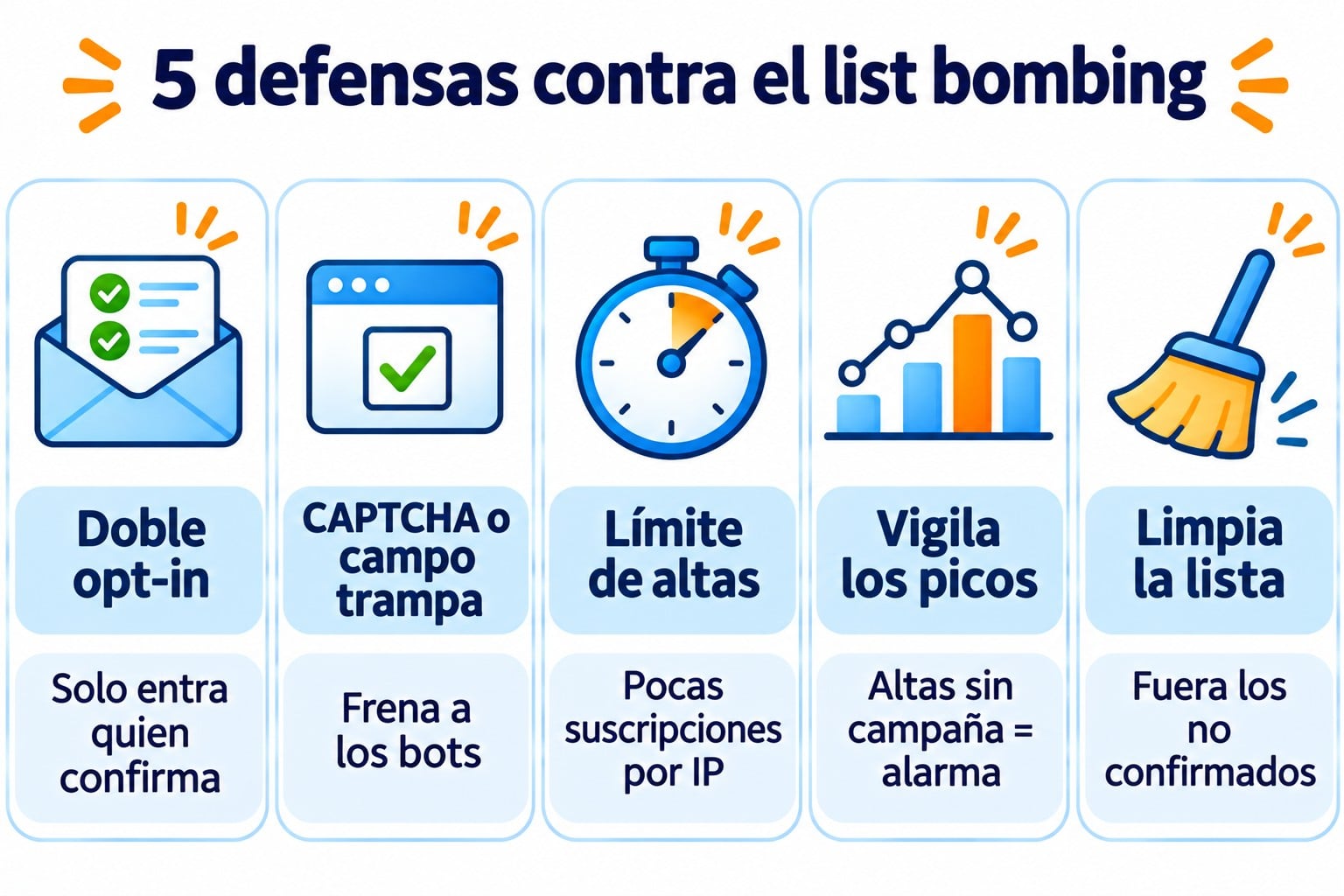
No single measure stops it completely, but together they close almost every door:
- Double opt-in. A contact only joins the list after confirming from their inbox. A list bombing victim doesn’t confirm, so they never receive your campaigns.
- CAPTCHA or honeypot field. A reCAPTCHA or a hidden field that only bots fill in stops most automated submissions.
- Signup limits. Block many consecutive signups from the same IP or within a few seconds.
- Spike monitoring. Check your daily signups. A jump with no campaign behind it is a red flag.
- Regular cleanup. Remove unconfirmed contacts and the ones that bounce. Good list hygiene keeps the problem from growing.
What to do if you’ve already been a victim of list bombing?
If your form has been used in an attack, stop sending to the new contacts. Set aside the signups from the suspicious period, delete the ones that haven’t confirmed and add a CAPTCHA before reopening the form. Then keep an eye on complaints and bounces in your next campaigns.
If yours is the inbox receiving the flood, first check your bank accounts, your purchases and any password changes. The attack may be trying to hide something. Then create filters for the words “confirm”, “subscription” and “welcome” and wait for the flow to stop. Don’t click unsubscribe links from senders you don’t know.
How Mailrelay helps you
In Mailrelay, form signups always use double opt-in. If a bot signs someone up to your list, that person receives a single confirmation email and nothing else. Until they confirm, they don’t receive your campaigns.
Addresses that hard bounce are marked as bounced and stop receiving sends, so you don’t keep hitting inboxes that don’t exist. With the free account you can send 80,000 emails a month to 20,000 contacts, and you get human support on every plan if you notice anything odd in your signups.
Protect your reputation from your very first send
Double opt-in, bounces removed automatically and human support on every plan.
Frequently Asked Questions
Does double opt-in stop list bombing completely?
It doesn’t stop a bot from using your form, but it does keep those addresses out of your list. The victim receives a single confirmation email and your reputation stays safe.
How do I know if my form is being hit by list bombing?
Typical signs are a spike in signups for no reason, many addresses that don’t confirm, nonsense names in the fields and consecutive signups from the same IPs.
Is using a mail bomber illegal?
Deliberately flooding someone else’s inbox can have legal consequences, especially if it causes harm or is used to harass someone or cover up fraud.
Key takeaways about list bombing
List bombing turns your forms into a weapon against other people and, as a knock-on effect, against your own deliverability. Double opt-in, a CAPTCHA and a regular look at your signups are enough to make sure your list grows only with people who really want to read you.