YOLO: what it means, where it comes from and how to use it
You only live once: what YOLO means, where it comes from and when to use the expression
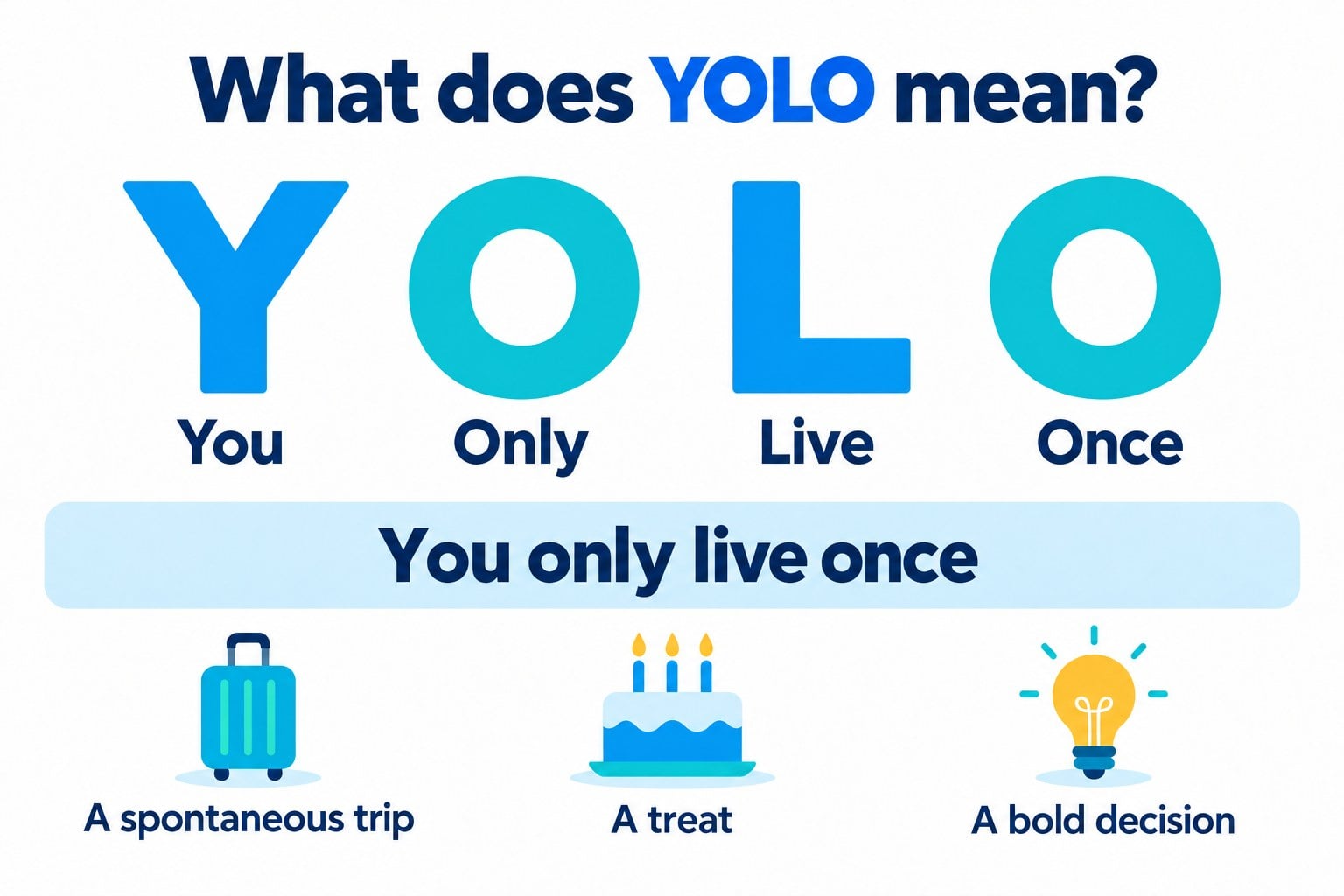
YOLO is an acronym for the English expression You Only Live Once. It is used to justify a spontaneous, bold or impulsive decision: a last-minute trip, changing jobs or an extra dessert.
It started out as youth slang on the internet and today it shows up on social media, in WhatsApp chats and in advertising campaigns aimed at a young audience.
What does YOLO mean in Spanish?
In Spanish, You Only Live Once translates as “solo se vive una vez” or “solo vives una vez”. The acronym is formed from the first letter of each word.
The idea is simple: life is short and you should make the most of every opportunity. Depending on the tone, it can express excitement, irony or an excuse for doing something unwise.
It is pronounced “YOH-loh” and written in capitals, although in informal messages it is common to see it in lowercase or as a hashtag: #YOLO.
Where does YOLO come from?
The phrase you only live once has been around in English for a long time. In 1937, for example, Fritz Lang used it as the title of one of his films.
The acronym became famous in 2011 with the song The Motto by Canadian rapper Drake, whose chorus repeated the letters. Within a few months it was everywhere: memes, T-shirts and posts with the hashtag #YOLO.
It spread so widely that in 2016 the Oxford English Dictionary added the expression to its list of new words. It reached the Spanish-speaking world through social media, and today it is understood mainly by millennials and younger generations.
You only live once: make your emails memorable
Create newsletters with a friendly tone and find out which messages resonate best with your audience. Free for up to 80,000 emails a month.
How to use YOLO: examples
It works as an interjection at the end of a sentence or as a justification for a decision. Here are some common uses:
| Situation | Example |
|---|---|
| Spontaneous plan | “I’m off to Lisbon this weekend without booking a hotel. YOLO.” |
| Treating yourself | “I ordered dessert and a coffee with whipped cream. Whatever, YOLO.” |
| Big decision | “I’m quitting my job to start my own business. You only live once.” |
| Ironic use | “I replied to the email without checking for typos. Oh well, you only live once.” |
| On social media | Skydiving photo with the hashtag #yolo |
It is also used as an adjective or noun: “a very YOLO plan” or “the YOLO philosophy”.
YOLO, FOMO and carpe diem: the differences
All three expressions are about seizing the moment, but they don’t mean the same thing:
| Expression | Meaning | Nuance |
|---|---|---|
| YOLO | You only live once | Encourages you to take the plunge and try new things |
| FOMO | Being afraid of missing something (fear of missing out) | Anxiety about not being where things are happening |
| Carpe diem | Seize the day (Latin, Horace) | A classic invitation to enjoy the present |
It is the modern, light-hearted version of carpe diem. FOMO, on the other hand, is a negative feeling that brands use as a psychological trigger to encourage people to buy.
The YOLO philosophy: benefits and risks
Taken the right way, this mindset encourages you to break out of your routine, try new experiences and stop putting plans off.
The problem comes when it becomes an excuse for reckless decisions: overspending, driving dangerously or ignoring the consequences. That’s why it is often used ironically.
YOLO in marketing
Brands tap into this spirit to connect with a young audience that values experiences over things. They do it in several ways:
- Messages that invite people to live in the moment: travel, leisure, food or sport.
- Last-minute offers: getaways, tickets or places that are running out.
- Social media content: challenges, memes and hashtags that people share.
- Unique experiences: limited editions or one-off events.
It works because it appeals to emotion, like the rest of emotional marketing. But it should be used responsibly. Encouraging people to spend without thinking or inventing urgency that doesn’t exist damages trust in the brand.
YOLO in email marketing
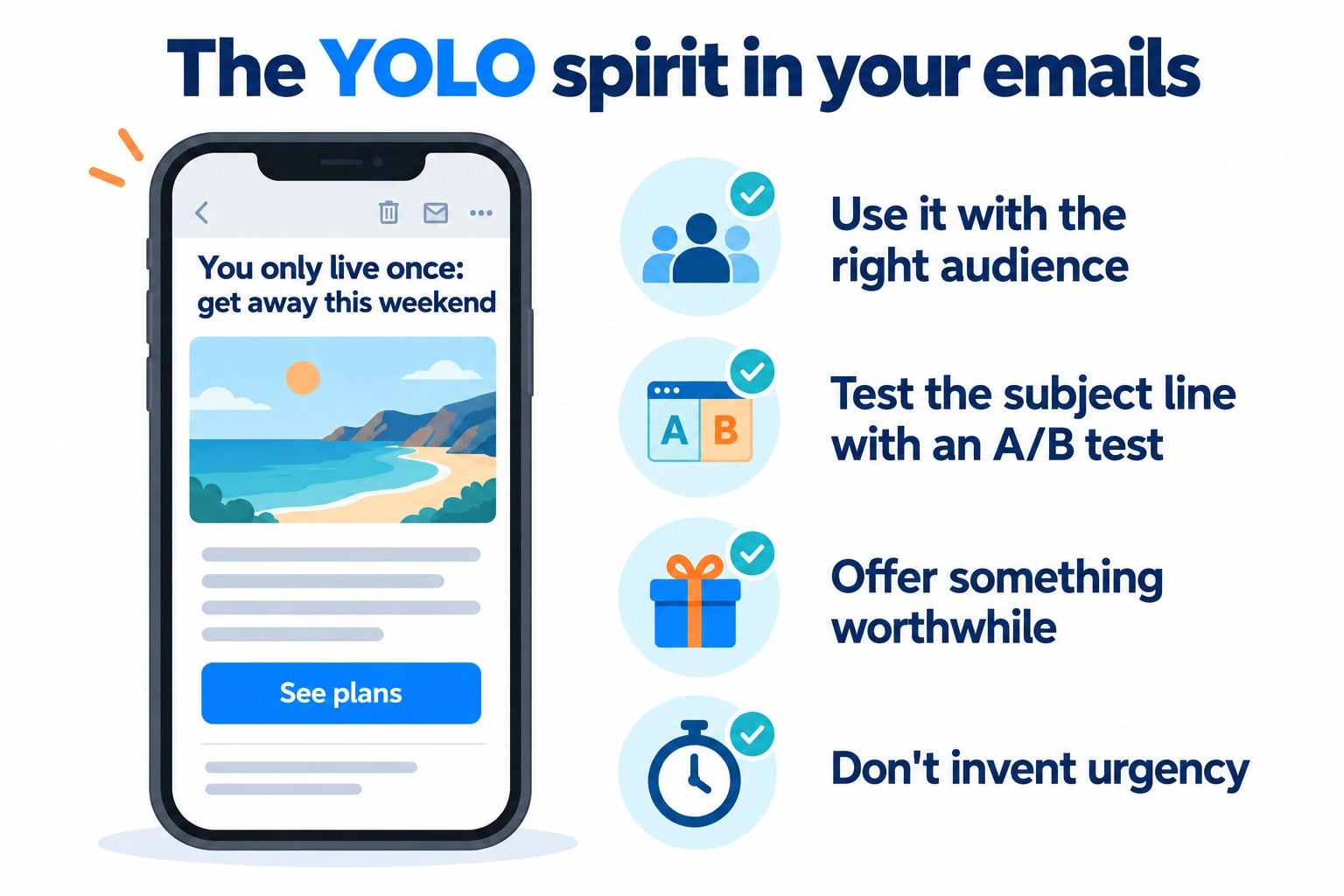
This tone can bring a fresh feel to your emails. Only use it if it fits your brand and your target audience:
- Use it with the right audience. Segment by age or interests: to a young audience it will sound natural; to others, perhaps not.
- Try it in the subject line. A subject line like “You only live once: get away this weekend” grabs attention. Compare it with a more classic one using an A/B test.
- Offer something worthwhile. A real experience, plan or offer, not an empty excuse.
- Don’t invent urgency. If the offer ends on Sunday, say so; if not, don’t pretend it does.
- Measure the results. Compare opens, clicks and unsubscribes to find out whether your audience likes that tone.
How Mailrelay helps
With Mailrelay you can segment your list by age, interests or behavior so that each group gets the tone that suits it best. You can run A/B tests on subject lines and see in the statistics which messages generate the most clicks.
The free account includes up to 80,000 emails a month and 20,000 contacts, with human support on all plans.
Speak to each audience in the tone that suits it
Segment your list by age or interests and test your subject lines with A/B tests. Human support.
Frequently asked questions about YOLO
These are the most common questions.
What does YOLO mean?
It stands for You Only Live Once, which in Spanish is “solo se vive una vez”.
What does YOLO mean in Spanish?
“Solo se vive una vez” or “solo vives una vez”. It is used to justify a spontaneous or bold decision.
Who invented YOLO?
The phrase had existed in English for decades, but the acronym became popular in 2011 with Drake’s song The Motto.
What is the difference between YOLO and FOMO?
YOLO encourages you to go out and live new experiences. FOMO is the fear of missing out on something other people are doing.
How do you write YOLO?
In capitals, because it is an acronym. On social media it also appears as a hashtag or in lowercase.