Operational marketing: what it is, its functions and how to move from strategy to action
A good strategy isn't enough: this is how it turns into actions you can measure every week
Operational marketing is the part of marketing that puts the strategy into practice with specific short-term actions: campaigns, prices, promotions, content and sends. It is also called tactical marketing, and it is the part the customer sees.
What is operational marketing?
Short answer: it is the “how” and the “when” of marketing. The strategy decides who you are targeting and what you want to achieve. Operational marketing decides what you do this month, on what budget and how you will measure whether it worked.
In practice, it means taking the four variables of the marketing mix to market: product, price, distribution and communication.
Operational vs. strategic marketing
You need both. Without a strategy, operational marketing shoots in the dark; without operational marketing, the strategy stays on paper. Strategic marketing takes the long view and analyzes the market.
Operational marketing works in weeks or months and is measured by immediate results. You’ll find the differences and a full example of both in our post on strategic marketing.
Functions of operational marketing
Operational marketing takes care of several tasks:
- Turn objectives into actions. Each objective in the marketing plan becomes campaigns with a date.
- Manage the 4Ps day to day. Launch a product, adjust a price, open a sales channel or prepare a promotion.
- Organize the calendar. What goes out each week and through which channel, without actions stepping on each other.
- Allocate the budget across channels and actions.
- Coordinate people: team, agencies, suppliers and sales.
- Measure and correct. Review the results of each action and change what isn’t working.
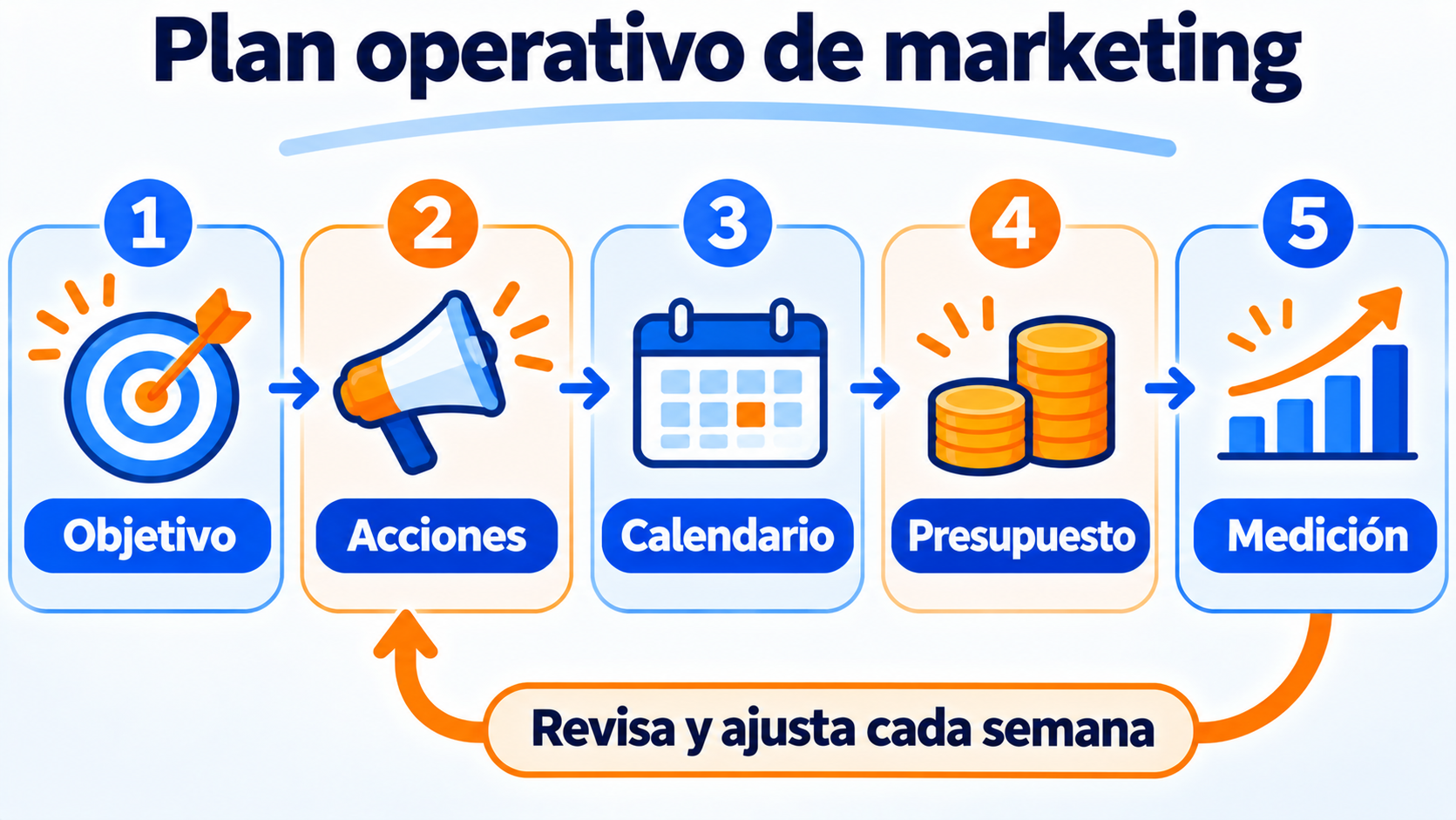
What an operational marketing plan includes
An operational plan covers these elements:
| Element | What it answers | Example |
|---|---|---|
| Objective | What you want to achieve and by when | 300 sales of the new product in April |
| Actions | What you are going to do | Launch newsletter, ads and in-store samples |
| Calendar | When each action goes out | April 1 to 30, week by week |
| Owner | Who is in charge | Marketing, store and customer service |
| Budget | How much it costs | €3,000, half of it on ads |
| Indicators | How you will know if it works | Sales, clicks and cost per sale |
Objectives work better if they are SMART: specific, measurable, achievable, relevant and time-bound. And each indicator has to be a KPI you can review without waiting for the end of the year.
Operational marketing example
A natural cosmetics online store has decided, as part of its strategy, to win customers aged 25 to 40 who are looking for fragrance-free products. Its operational plan for launching a new cream is this:
- Product: a 15 ml trial size for people who don’t know it yet.
- Price: 15% off during the first week for newsletter subscribers.
- Distribution: sales on the website and in two pharmacies in its city.
- Communication: a launch email, three social media posts and ads targeting that audience.
- Calendar: announcement to the list on day 1, reminder on day 5 and an email with customer reviews on day 15.
- Measurement: every Friday they review sales, clicks and cost per sale, and move budget to the channel that performs best.
Why every euro has to pay off
According to Gartner’s annual survey of marketing leaders (2025), the marketing budget averages 7.7% of company revenue.
Half of respondents have 6% or less, and 59% say it isn’t enough to execute their strategy.
With tight budgets, operational marketing focuses on what can be measured and corrected quickly. That is where email has an advantage.
Your campaigns, on the plan’s calendar
Schedule newsletters and promotions from Mailrelay’s free account: up to 80,000 emails a month.
Email in operational marketing
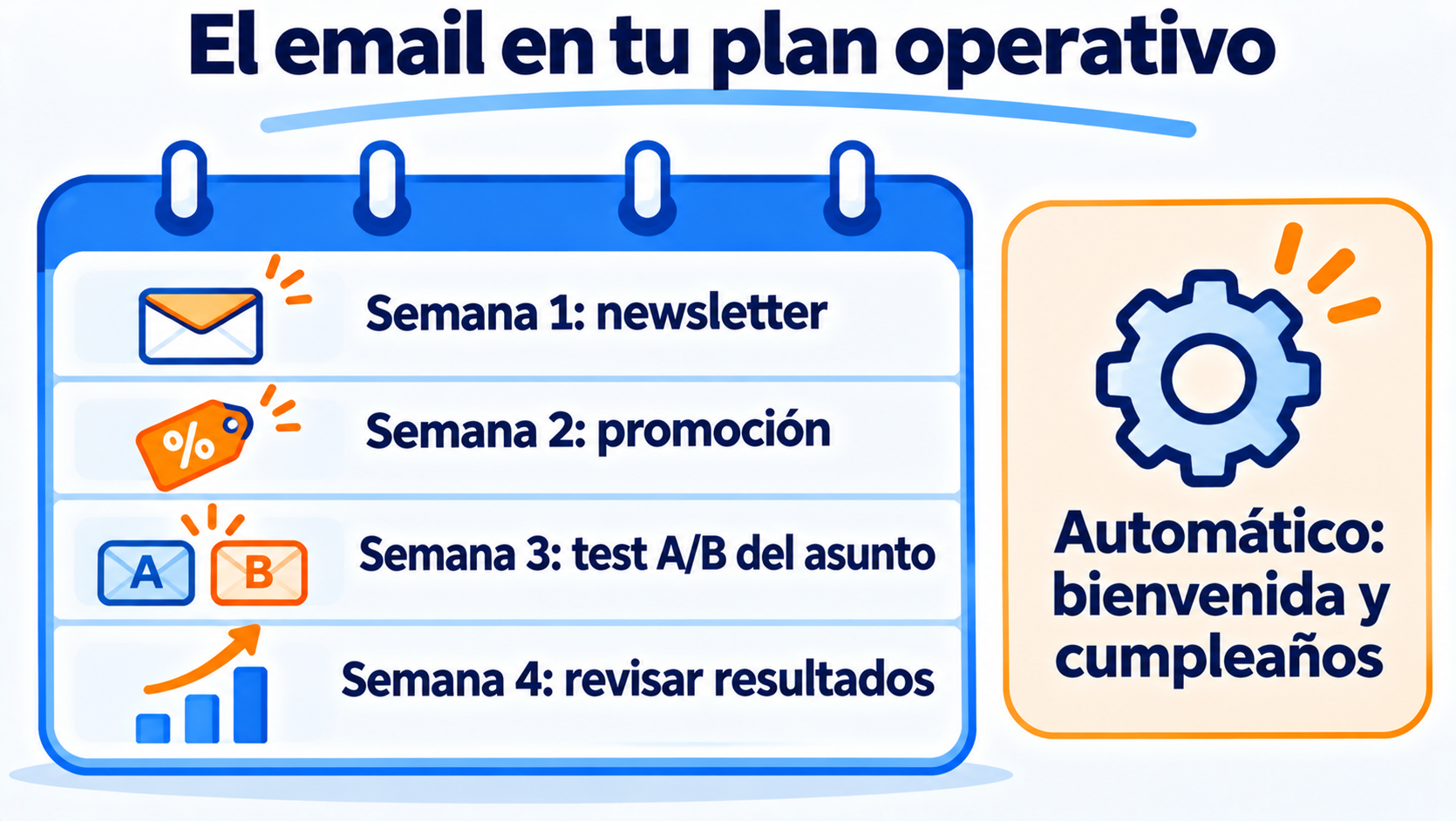
Email is probably the most “operational” channel you have: it goes out on the day you choose, costs little per send and tells you right away what worked.
- Sending calendar. Plan the month’s newsletter, promotions and announcements in the same calendar as the rest of your actions.
- Segments by objective. One message for new customers, another for repeat buyers and another for people who haven’t bought in a while.
- Tests before sending to everyone. An A/B test of the subject line tells you which version works best with part of the list.
- Automations. Welcome and birthday emails send themselves and free up time for the rest of the plan.
- Weekly review. Compare each send with the plan’s objective and adjust the next one.
How Mailrelay helps you
With Mailrelay you schedule your campaigns on the plan’s calendar, create segments for each objective and run subject line A/B tests on every plan, including the free one.
Automations, such as welcome or birthday emails, are also included in the free account.
Open and click statistics are available in the free account and in Enterprise. The free account lets you send 80,000 emails a month to 20,000 contacts, with human support on every plan.
From strategy to send
Segments, A/B tests and automations on every plan, with human support.
Frequently asked questions
Below, we answer the most common questions.
What is tactical marketing?
It is another name for operational marketing: the specific actions that carry out the strategy in the short term.
What are the tools of operational marketing?
The 4Ps of the marketing mix (product, price, distribution and communication), the action calendar, the budget and the indicators to measure each action.
How often should an operational plan be reviewed?
The usual approach is to plan it by quarter or month and review the results every week. If an action isn’t working, it gets changed without waiting for the plan to end.
Related posts
These articles cover related topics and round out what you’ve read: