Autoresponder
What is an autoresponder?
An autoresponder is a system or software that automatically sends predefined responses to incoming emails.
However, it can be used for much more than sending automatic replies.
An autoresponder allows businesses to schedule a series of emails that will be automatically sent to subscribers based on certain triggers or actions.
Such as subscribing to a mailing list, making a purchase, or even opening a previous email.
How does an autoresponder work?
The way an autoresponder works is relatively simple in concept, but highly useful in execution.
Imagine a person subscribes to a mailing list on a company’s website.
Instead of a marketing team member having to manually send a welcome email, the autoresponder handles this task automatically.
Not only that, but it can continue sending emails at specific intervals, providing additional information, special offers, or reminders.
This process is based on email sequences, which are chains of pre-written messages scheduled to be sent in a specific order.
These sequences are customizable and can be as simple or complex as desired, depending on the company’s marketing strategy.
Benefits of using an autoresponder
Using an autoresponder in an email marketing strategy brings a series of very interesting benefits:
Process automation:
The autoresponder allows you to automate customer communication, which saves time and effort.
Companies can focus on other critical areas of their operation while emails continue to be sent efficiently.
Personalization at scale:
Despite being automated, emails sent by an autoresponder can be personalized.
This is achieved by inserting variables, such as the recipient’s name, into the messages.
Personalization is key to maintaining relevance and increasing the open and conversion rates of emails.
Tracking and analysis:
Autoresponders not only send emails, but they also allow companies to track the performance of each campaign.
This can include metrics such as open rate, click-through rate, and conversion rate.
This information is extremely valuable and allows you to adjust and optimize future campaigns.
Improved customer retention:
Constant and well-timed communication can help keep customers interested.
By sending relevant and timely content, businesses can keep customers engaged and increase the likelihood of them making additional purchases.
Scalability:
As a business grows, the ability to manually manage communications with all customers becomes unsustainable.
An autoresponder allows you to scale communication efficiently without sacrificing quality.
Types of autoresponders
Welcome autoresponder after subscription
This is the most classic one, since we usually orient the subscriber acquisition of our email marketing campaign based on offering something to these potential new subscribers.
For example, if we offer a discount, an ebook, some exclusive content, whatever it may be, the way to deliver this content immediately to the new subscriber is through an autoresponder that sends an email containing the subscription reward.
Even if there is no reward, it is a way to greet the new subscriber and thank them.
In my opinion, it is very pleasant to receive this type of greeting when you subscribe.
On a practical level, it serves to confirm the subscription and let the subscriber know that the process was successful.
It feels very weird when you subscribe to an e-commerce site and receive nothing to confirm it.
A good example of a welcome email is the one we saw in the Sarenza newsletter.
“Educational” autoresponder
An educational autoresponder is a campaign we use to show the subscriber all the features of our product or service, so they can receive information that could end up convincing them to become a customer.
It is a series of emails where we show the subscriber the functionalities and advantages of our product or service.
Each email covers a single point, bringing the subscriber closer to our product or service.
It is not necessary to have a very technological or complex product.
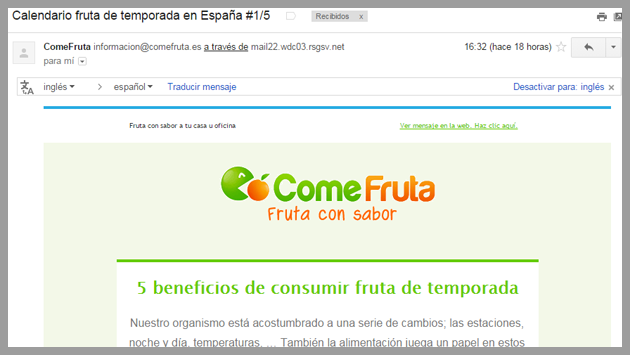
For example, comefruta.es uses an autoresponder to show the subscriber a seasonal fruit calendar, as well as its benefits:
Post-purchase autoresponder
Once we make the sale or secure the contract, we are not done with our email marketing.
In these cases, the best thing we can do is use an autoresponder to contact the new buyer and thus open up new possibilities:
- Cross-selling
- More sales in the future
- Increase their trust
- Offer support and better product or service usage
As you can see, there are many possibilities:
An example?
The Charles Tyrwhitt shirt store:
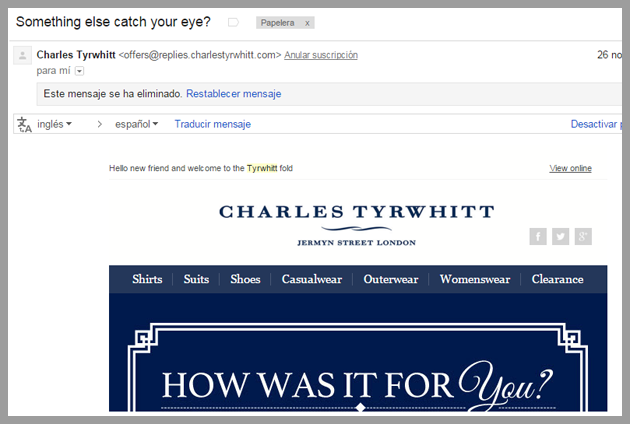
After the first sale, they send another email a few days later to see if you are interested in anything else.
Perhaps including a discount, free shipping, etc.
A highly useful strategy, since a happy buyer will be prone to purchase an accessory for their previous purchase.
Autoresponder a while after the last purchase
Similar to the previous one, but in this case we let more time pass; it is not an immediate message after the purchase.
It could be a week, a month, etc.
We have an example in this Mumumio autoresponder:
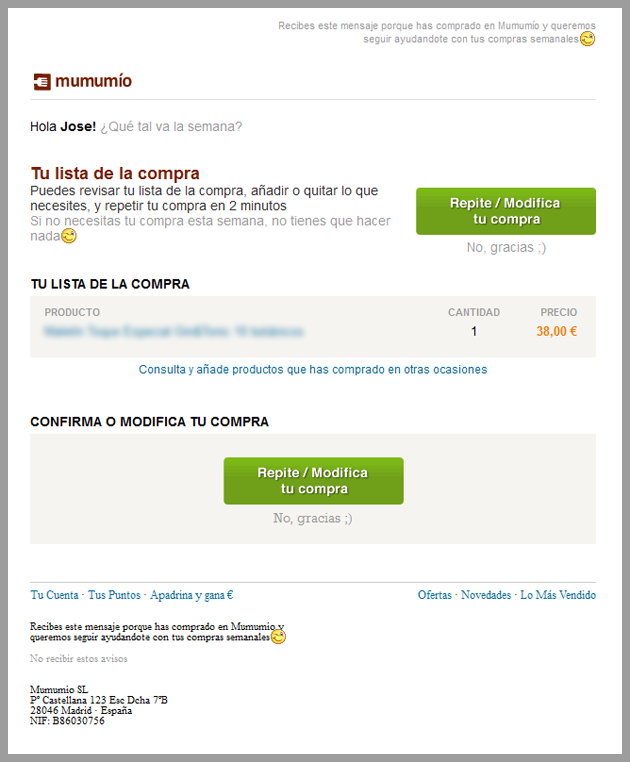
Which arrived a week after the purchase.
Why a week later?
Very simple, because of the type of products. Since I bought regular grocery items, the store calculates that in a week I will have used them and will need to restock.
If your product lasts, say, two months, you would have to schedule this autoresponder for four months after the purchase.
Autoresponder to launch a new product
Autoresponders don’t have to be defined only for new subscribers.
Imagine you develop a new range of products or services; it is a clear example of something you can leverage with an autoresponder email marketing campaign.
For example, I recently received this email from Planeta Huerto:
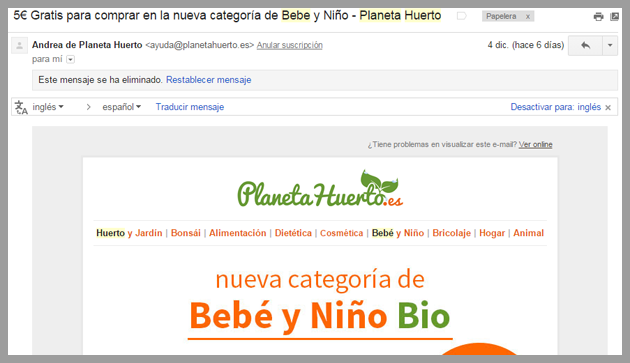
Where they introduced a new product category.
In my opinion, instead of a single email, I think it would work better to send several new products in the category.
Or even from the various subcategories within it.
So that subscribers can properly discover all the available options they have.
Perhaps including an option in the first email to stop receiving more emails from that category, just in case the subscriber is not interested.
Autoresponder on a special date (birthday, etc.)
This is another great classic among autoresponders.
If we have certain subscriber data, like their birthday or that of a loved one, we can use this date to make our mass mailing something more personal.
For example: if we have their birthday, we will use the autoresponder to send that email on the exact day, or a few days before if we want to send a discount or special offer.
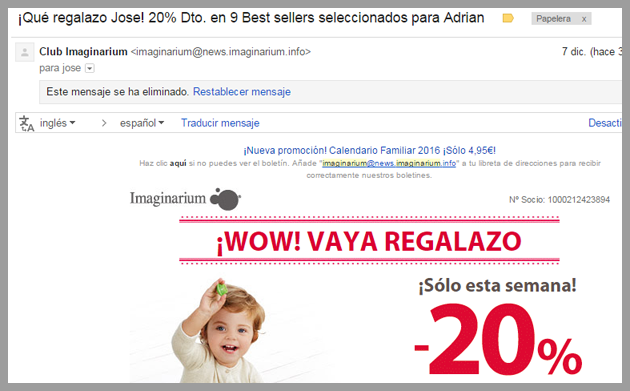
As an example, we have this newsletter from Imaginarium:
Autoresponder with a required action alert
An example related to the previous one would be an autoresponder sent on a specific date because the user needs to carry out a certain action.
Perhaps the user needs to make a payment?
An example of this would be the AVG license renewal email.
It is a very suitable use for an autoresponder, where an email needs to be sent automatically without us having to keep an eye on the issue.
Autoresponder for product availability alert
Another example where an autoresponder can be very useful is if we have a list of users waiting for a product that we don’t yet have available.
For example: if we are going to launch a new product, interested users can sign up on a waiting list to be informed by an autoresponder when the product is finally available.
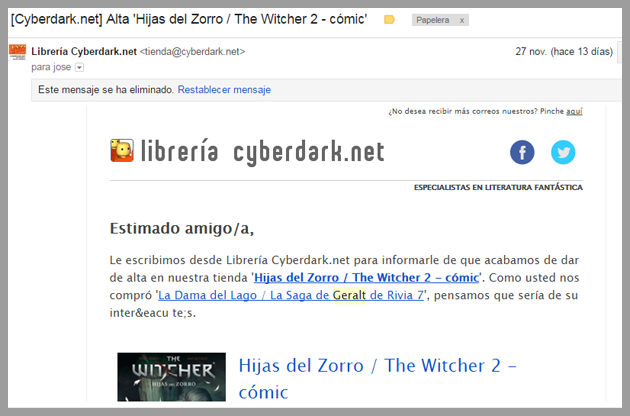
It is also useful for products similar to purchased ones, as in the case of the following example from cyberdark:
Autoresponder to recover inactive users
Finally, an example that I consider highly useful too.
It would be the one where we prepare a series of emails with the intention of making a group of inactive users react.
Not just inactive regarding the newsletter; perhaps they haven’t bought our products in a while and we can send them a series of emails to encourage them to buy again.
Including special offers, discounts, free shipping.
It is worth trying to win them back before they are llost.
Autoresponder in the context of email marketing
An autoresponder is a key element in an effective email marketing strategy.
Email marketing is one of the most powerful ways to reach customers directly in their inbox, allowing for direct and personalized communication.
Within email marketing, the autoresponder is used for various purposes, such as:
Welcome sequences:
When a new subscriber joins a mailing list, it is crucial to take advantage of this moment to establish a connection.
An automated welcome sequence can include a series of emails introducing the brand, offering valuable content, and guiding the new subscriber toward a conversion, whether it be a purchase, a download, or event participation.
Abandoned cart reminders:
One of the biggest problems in e-commerce is the abandoned cart, when a customer adds products to the cart but doesn’t complete the purchase.
An autoresponder can automatically send a reminder to encourage the customer to finish their purchase, perhaps offering a discount or highlighting the product’s benefits.
Surveys and Feedback:
After a purchase or interaction with a service, an autoresponder can automatically send a survey to collect customer feedback.
This information is essential for improving the customer experience and adjusting the company’s offerings.
Best practices for using an autoresponder
While autoresponders are extremely useful tools, it is important to use them effectively to maximize their benefits.
For example:
Mailing list segmentation:
Not all subscribers are the same.
Segmentation allows you to divide your mailing list into smaller groups based on criteria like purchasing behavior, location, or interests.
This allows you to send more relevant and personalized messages, increasing campaign effectiveness.
Quality content:
An autoresponder will only be effective if the email content is valuable to the recipients.
It is essential to provide content that solves problems, offers useful information, or entertains the reader.
Frequency and timing of delivery:
The frequency and timing of when emails are sent are critical factors.
Sending emails too frequently can result in fatigue and high unsubscribe rates.
On the other hand, if you send emails infrequently, the brand could become irrelevant.
It is important to find a balance and run tests to determine the best frequency.
A/B Testing:
Conducting A/B testing on emails is an effective strategy to optimize campaigns.
This involves testing different versions of an email to see which performs better in terms of open rates, clicks, and conversions.
25 Autoresponders you should check
With the intention of bringing you substantial examples and analyzing their automatic responses for you, we have registered on 25 sites that do autoresponders brilliantly.
Most of them are autoresponders in Spanish, although there is also one in English that deserved a spot on this list.
Let’s get started without further ado.
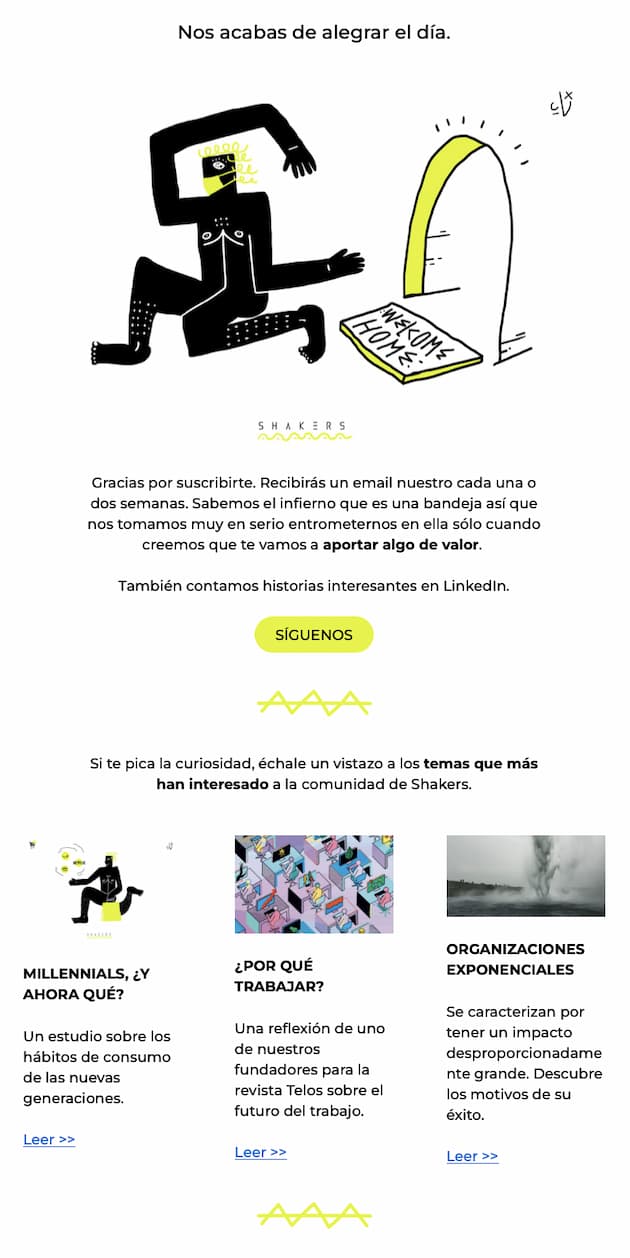
#1 Shakers: how to welcome a community
A classic among classics, the welcome email is the one you can’t fail to implement in your strategy because it would be very weird to subscribe to a website and not receive anything.
So that the new lead doesn’t feel confused or abandoned—and so they know what to expect from you throughout the relationship—it’s best to give them a warm welcome.
We love the Shakers example for its simple yet striking design, and because it meets three premises that any email of this type must have:
- Be thankful
- Tell the recipient what they can expect from us
- Leave the door open to interaction, which in this case means offering them to follow us on social media and read some content
#2 Factorial: everything starts with a simple “hello”
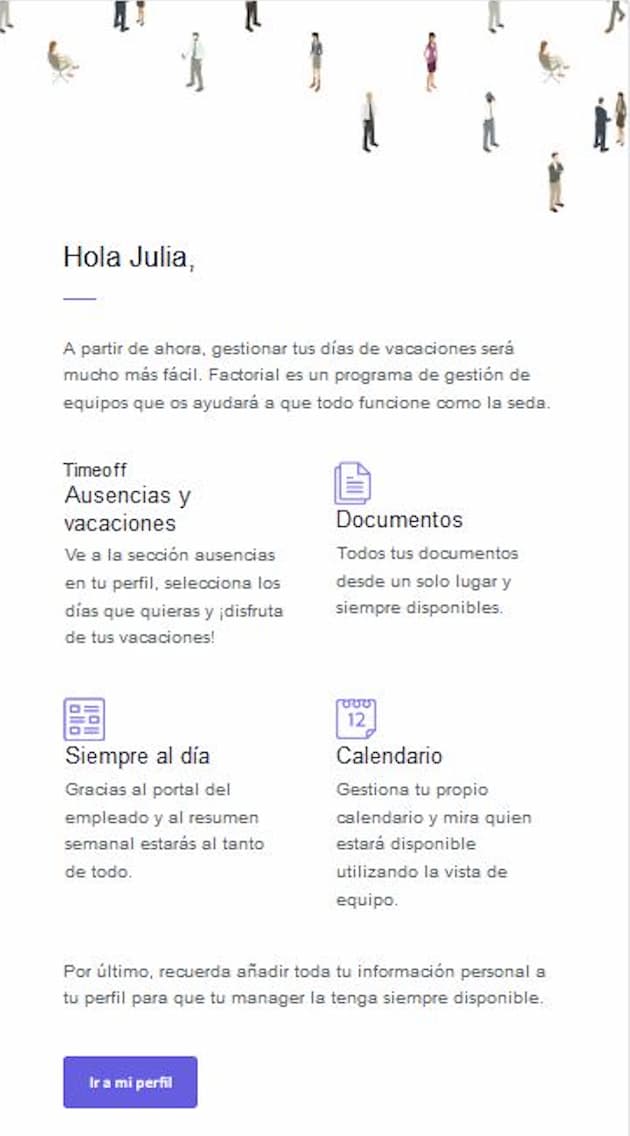
In this case, the welcome comes when signing up for a team management software called Factorial. With a clean and professional design, they welcome you with information on what you’ve signed up for, offering their help, and inviting you to complete your profile: that is, driving you toward interaction.
#3 Declarando: follow up on your lead magnets
Another must-have among autoresponders: the one you send so the user can download the lead magnet you prepared with the intention of capturing their contact email.
It can be a guide, an e-book on a specific topic, a test to see if you have what it takes to be a writer, or a glossary of terms in your sector; whatever you want, but it must add value to whoever downloads it.
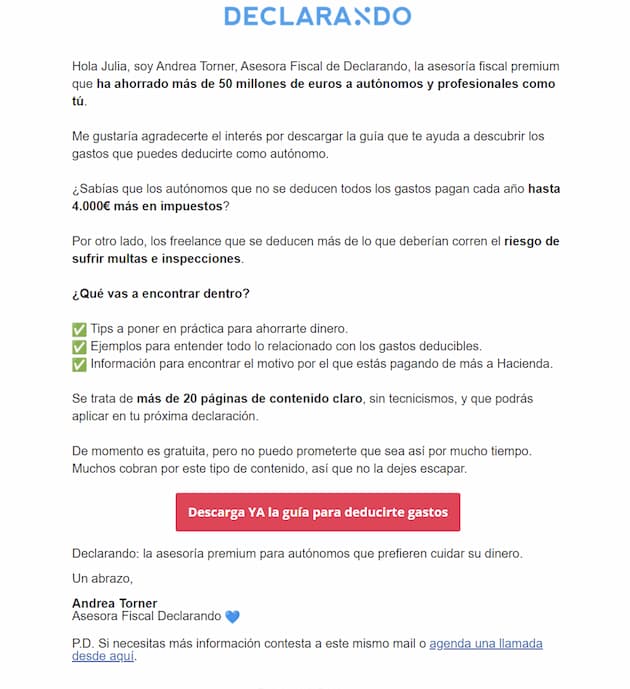
The point is you can get a lot of juice out of that simple delivery email. And if not, check out this example from Declarando, the first of a series of 3 we will see from this tax consultancy, which being digital has its email flows perfectly controlled, autoresponders included.
All the messages are designed to maximize downloads. But how do they do it?
- Tapping into pain points: “freelancers who don’t deduct all their expenses pay up to €4,000 extra in taxes every year”
- Removing potential download objections: “more than 20 pages of clear, jargon-free content that you can apply to your next tax return”
- Closing with urgency and exclusivity: “for now it is free, but I cannot promise you…”, “Declarando, the premium consultancy for freelancers who prefer taking care of their money”.
#4 Declarando: complete your registration step by step
Remember we mentioned at the beginning that one of the benefits of autoresponders is that they help you segment?
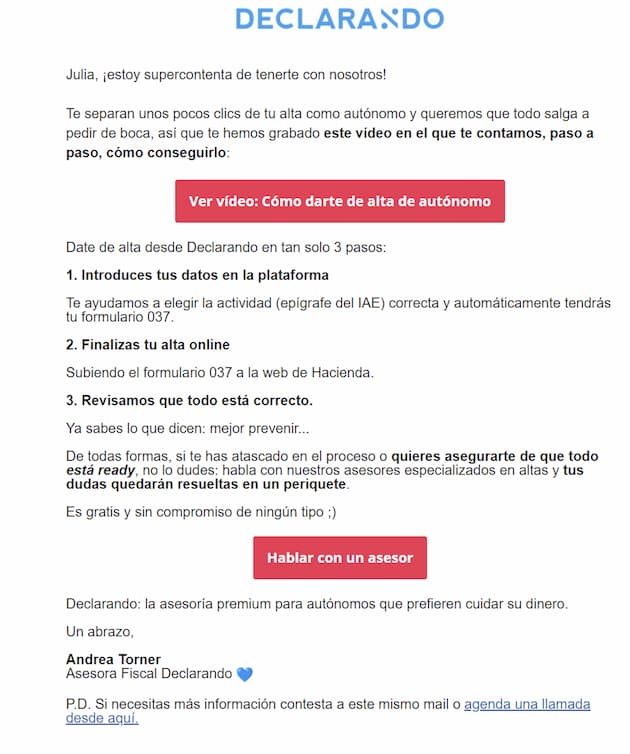
Well, here’s an example; Declarando offers online registration services for freelancers and that’s why they have an autoresponder with highly helpful instructions.
They do this with a video and a link to contact an advisor for free. This way, they know that whoever clicks the link and lands on the destination page is a warm contact.
#5 Declarando: leverage the welcome email to highlight your value
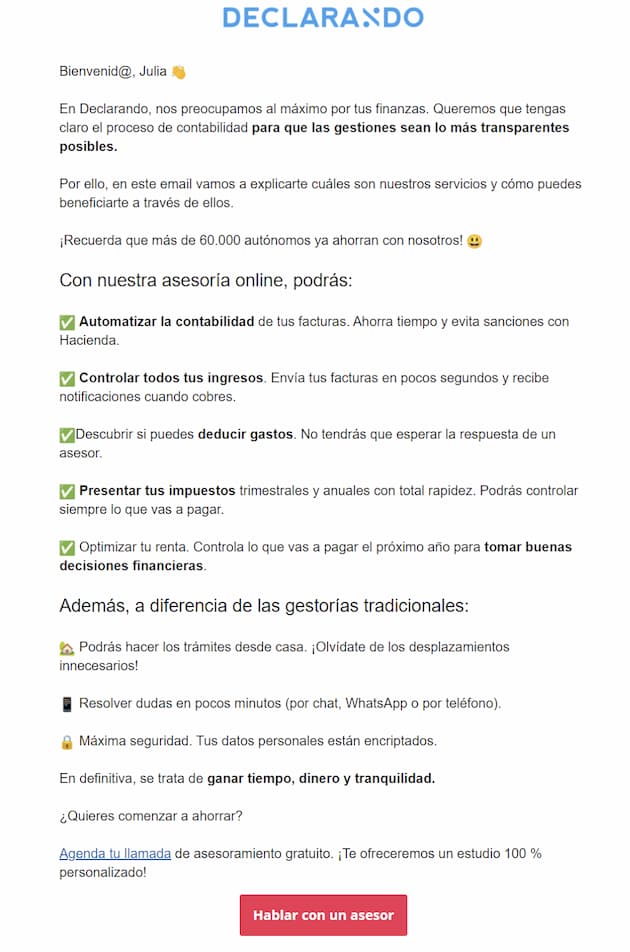
This is another example of a welcome autoresponder from the same company where they explain their online advisory service and their value proposition.
This email could easily be part of an email sequence when someone registers on your website or subscribes to your blog: it doesn’t necessarily have to be a sales-focused message, but rather tells them what they can do with you and why you are different from the rest.
#6 Spotify: so glad you’re back
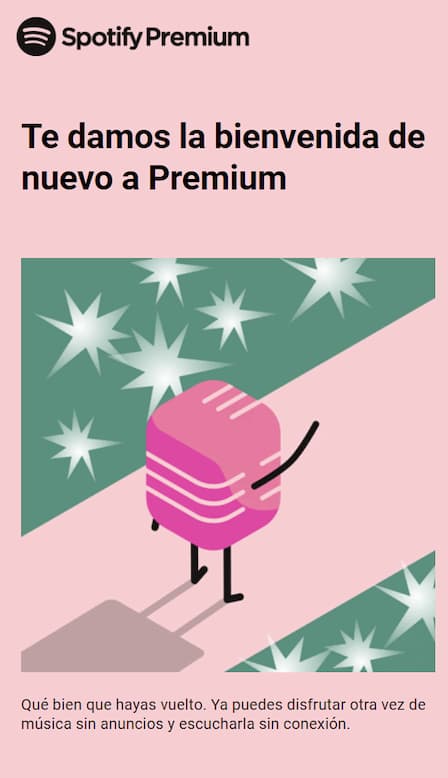
Well exactly that: being thankful is a good trait, and Spotify clearly understands this. That’s why they pamper users who had unsubscribed and have returned to the fold.
This way, they take the opportunity to reconnect with their former customers and restart the relationship with a climate of gratitude and positivity.
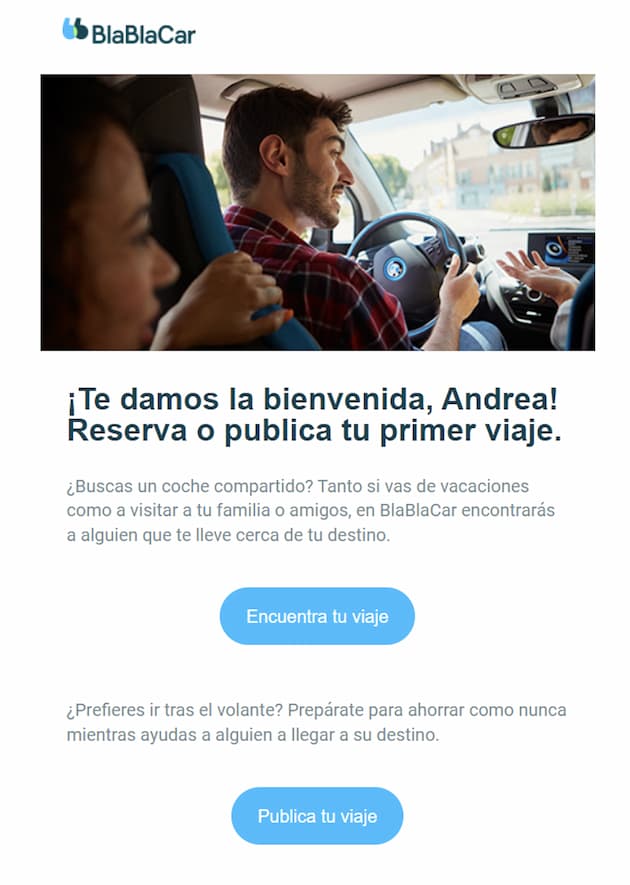
#7 BlaBlaCar: encourage a new registration to take action
Okay, they’ve registered. Now what?
Now you want them to start using the service or at least interact, so serve it to them on a silver platter like BlaBlaCar does: tell your new users-leads-contacts exactly what they need to do.
#8 Too Good To Go: confirm registration in the App
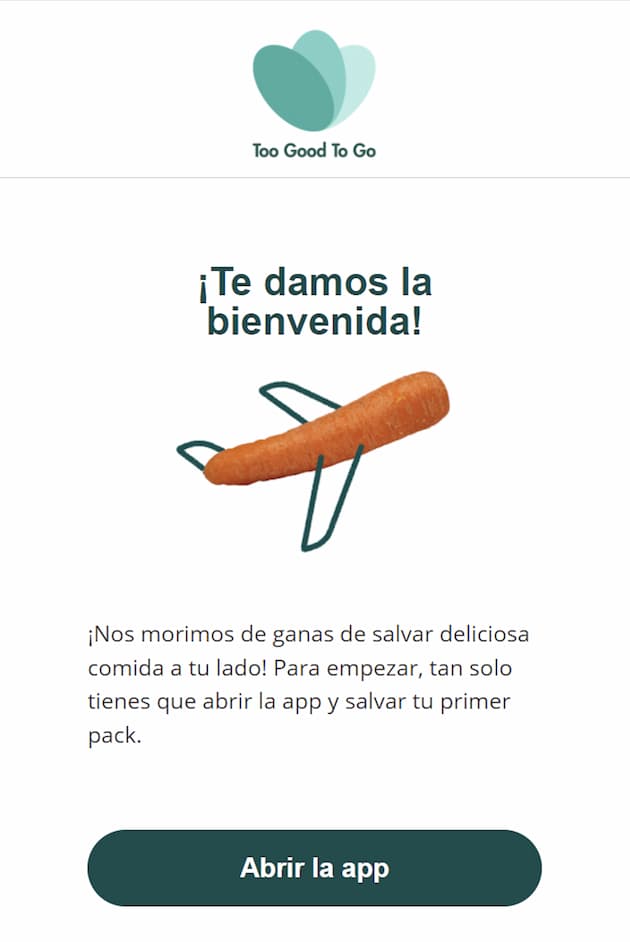
What is the first thing a user must have if your service is via an App?
Exactly: the App correctly downloaded. And start using it, of course.
Do what Too Good To Go does and send an email to whoever just registered through the App and invite them to start. And if you can, do it with a nice design, since humor is a weapon that always works well.
#9 Revolut: welcoming and more
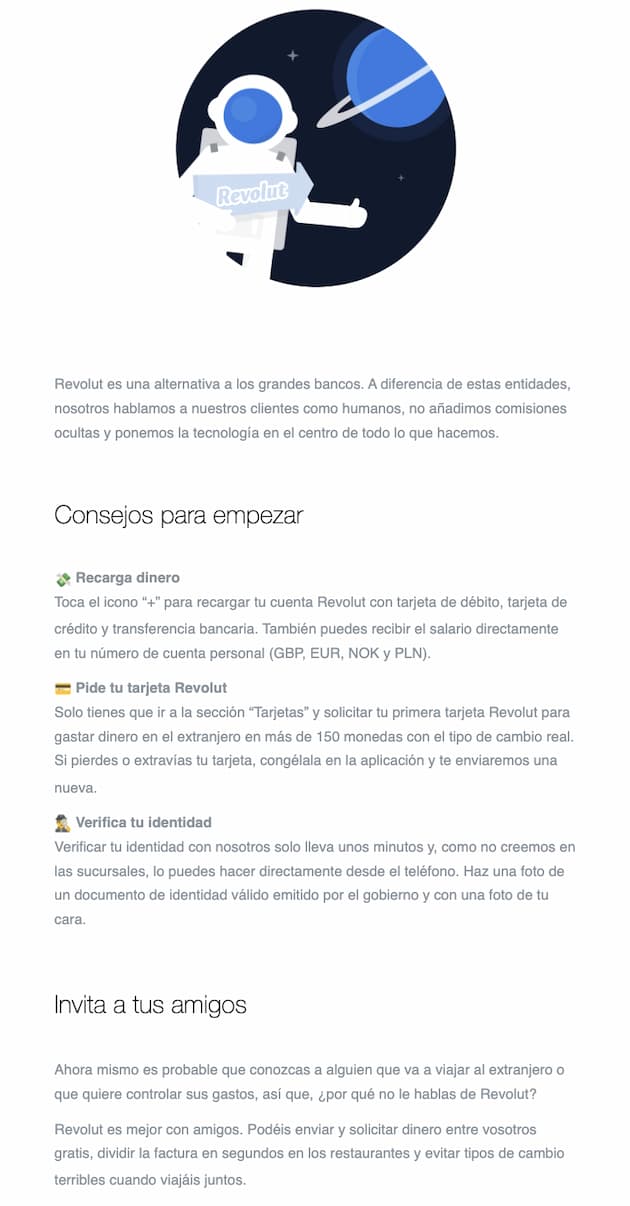
Objective number one: make the customer feel supported and know what their next step should be.
And objective number two: don’t let them leave without asking them to spread the word. It is like traditional word-of-mouth but online.
#10 Nudista Investor: stand out with your personality
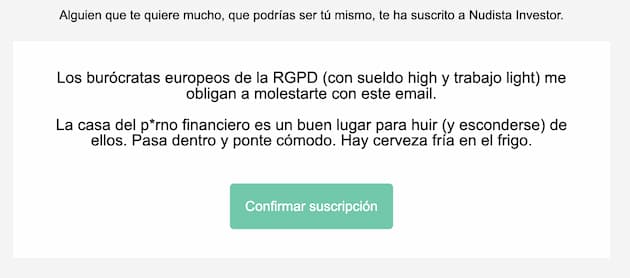
Who said that confirming a subscription has to be boring?
Look at the email leads receive from the autoresponder of financial advisor Nudista Investor. The text is very much him: irreverent, critical, and beer-loving.
And we tip our hats to it, because all that display of personality happens from minute 1, with the most basic autoresponder of all autoresponders out there: the “confirm your subscription” one.
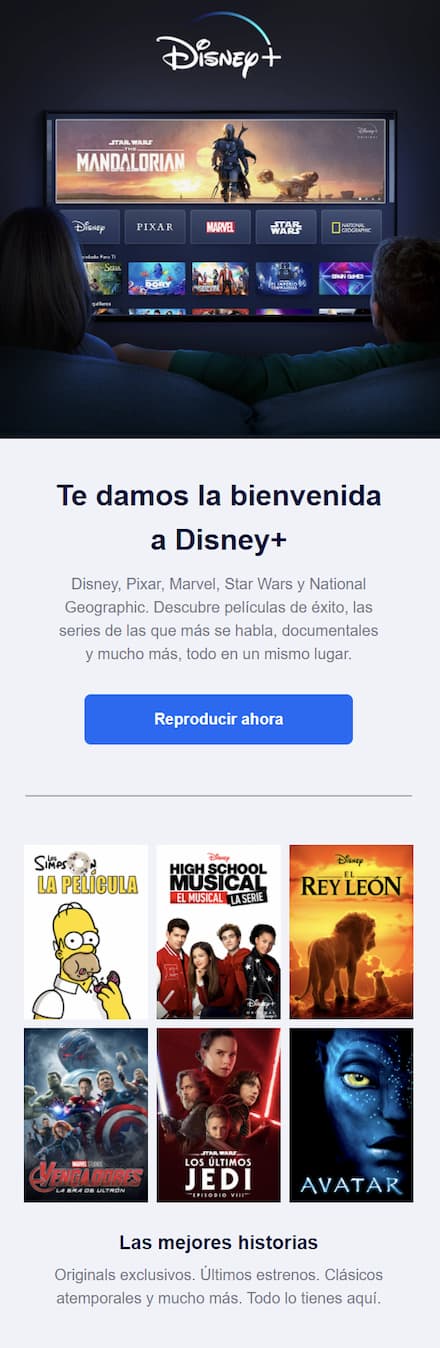
#11 Disney +: foster the activation of your service
Raise your hand if you don’t love using what you buy for the first time. This, which is so easy to do with a new t-shirt, can be a bit more complicated when we move to the digital world. But not impossible.
In this case, Disney + sends you a showcase of the content banquet they offer and… doesn’t that make you want to start?
#12 Glassdoor: throw the door wide open to your clients
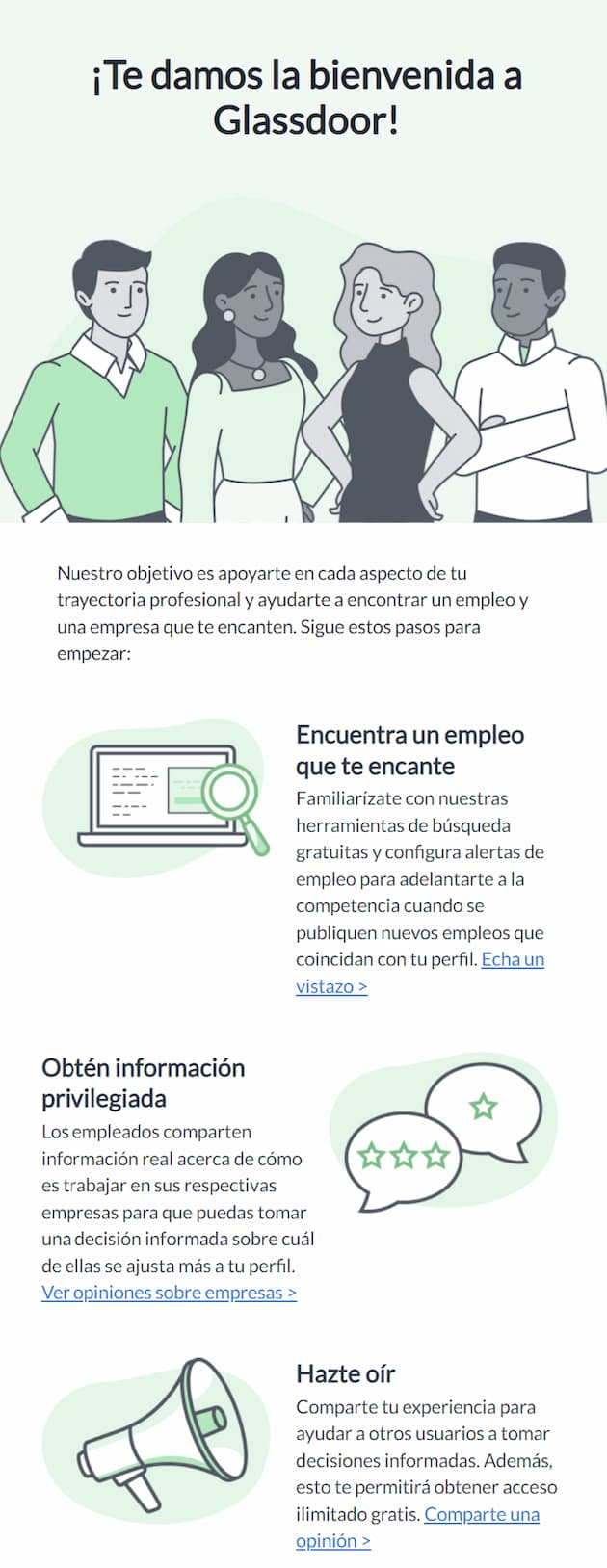
We said earlier that a welcome email must make clear what the user can expect from us from now on and invite interaction. And that is exactly what the job search platform Glassdoor does in its first email after you sign up.
Regarding design and content, it is a direct message, but without getting overly familiar: the client is the center of the message and is addressed directly, but without abusing conversational language, since you come here to work.
#13 Burger King: launch a survey
One of the super utilities an autoresponder can have is sending a customer satisfaction questionnaire, as Burger King does after delivering a home order.
Pay attention to its colorful minimalist design which, along with the conversational tone of the copy, creates an email full of freshness; it seems like a lifelong friend is talking to you asking for your honest opinion on something they did.
And to top it off: an invitation to download the App and visit their social media with more of a colloquial and approachable style.

#14 Lucidchart: confirm registration and present your proposal
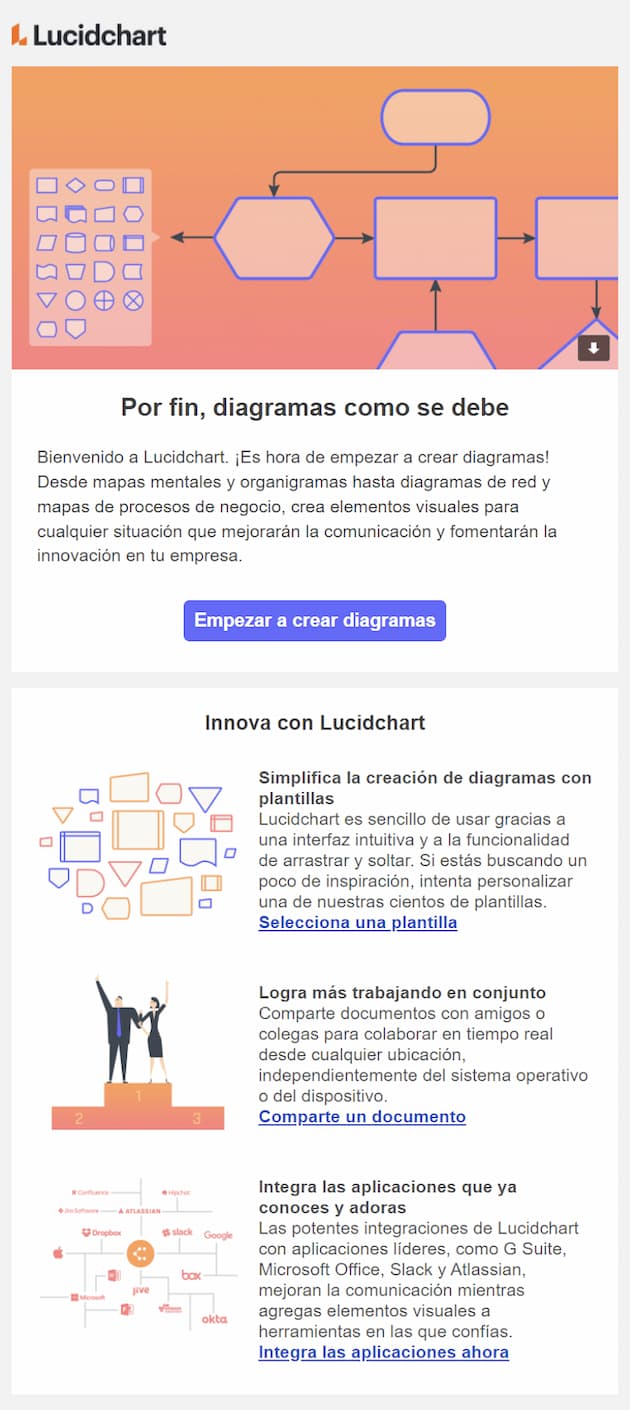
In this example, the diagramming tool Lucidchart welcomes the new registration by explaining its features in a highly graphic way, as you would expect.
If you have the professional profile they are targeting, this email makes you want to start exploring and creating diagrams like there’s no tomorrow, just like what happened with the Disney + example.
#15 Freeletics: confirm registration and take the opportunity to sell
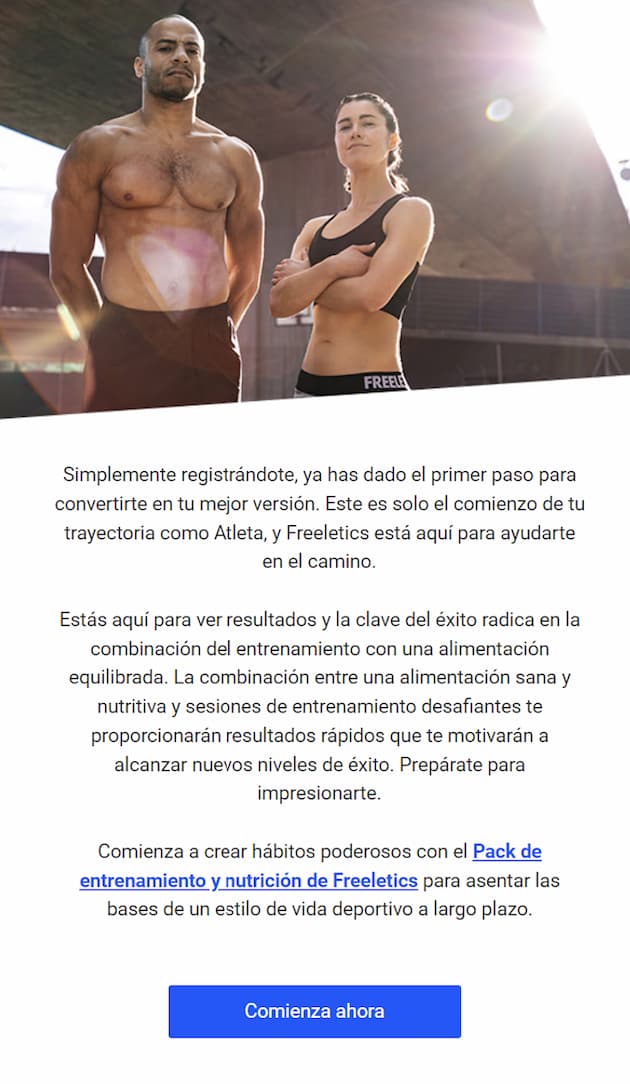
Do as the training website Freeletics does and take the opportunity to sell from the first email of your autoresponder.
Look at the email text and you’ll see two basic copywriting resources used that drive sales:
1.- Focusing on the customer: “you’ve already taken the first step”, “becoming your best version”, “you are here to see results”…
2.- Speaking in terms of benefits: “becoming your best version”, “fast results”, “your journey as an athlete”
3.- Speaking with confidence: “prepare to be impressed”
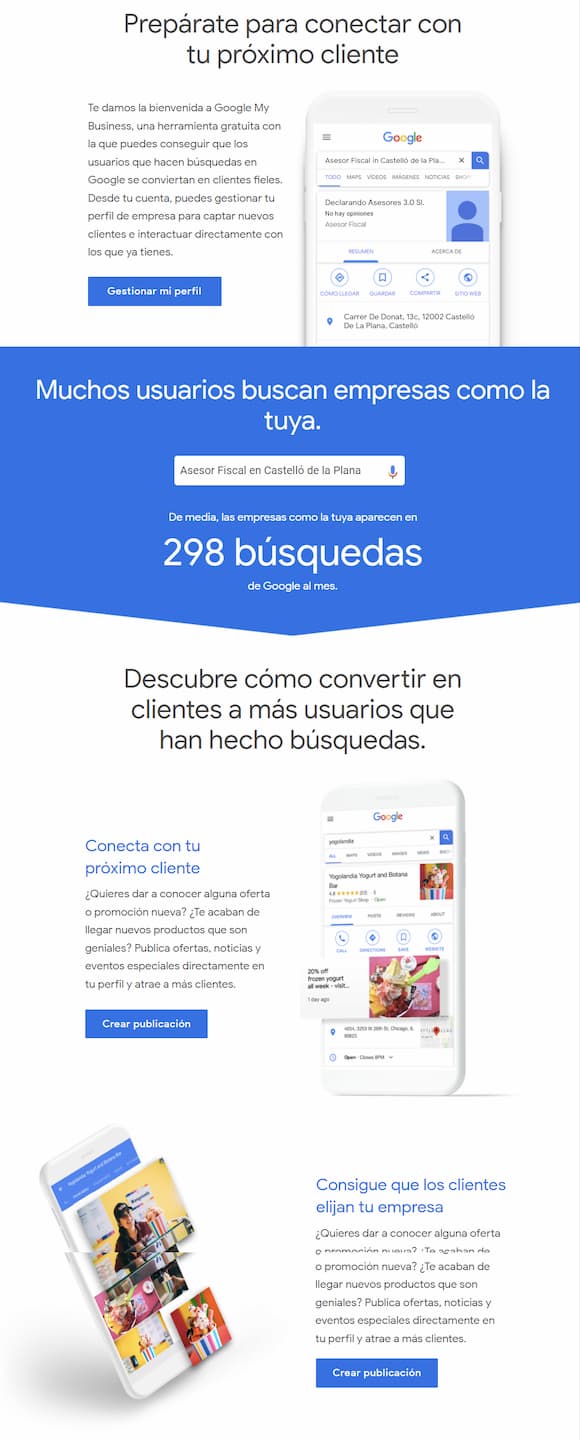
#16 Google My Business: assert your value from the welcome
The welcome to the tool created by Google to manage businesses’ online visibility doesn’t miss a beat. It is packed with action verbs, CTAs, and repeatedly states the main benefit it offers: more clients.
#17 San Jorge Coffee Roasters: give access to a lead magnet
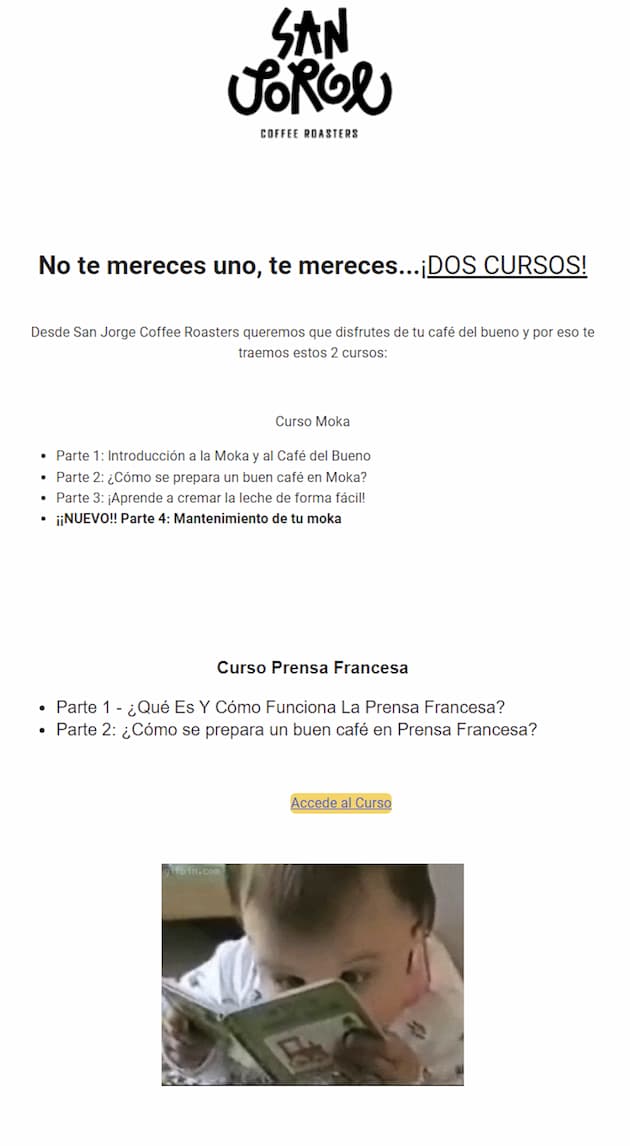
The coffee company San Jorge Coffee Roasters offers you two free courses in exchange for your name and email, which is another type of lead magnet you can offer as well.
The style of the email arriving with the video links is fresh and direct due to the use of informal copy and the baby gif, a resource that helps capture attention and trigger the mental cue of likability.
#18 Monapart: build brand while confirming subscription
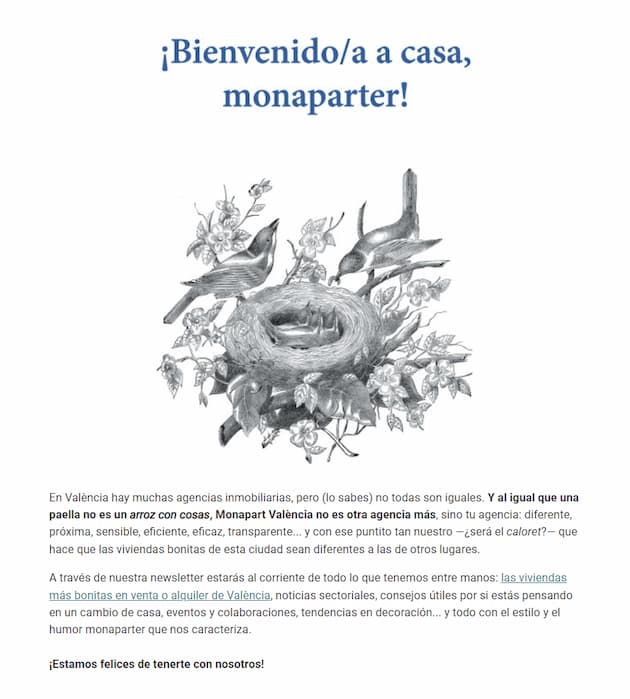
Yes, the real estate market is highly fragmented, but there are agencies with style, like Monapart.
Copy the idea and use the welcome to build community and stand out, but without forgetting that you are selling.
#19 Back Market: ask your clients for reviews
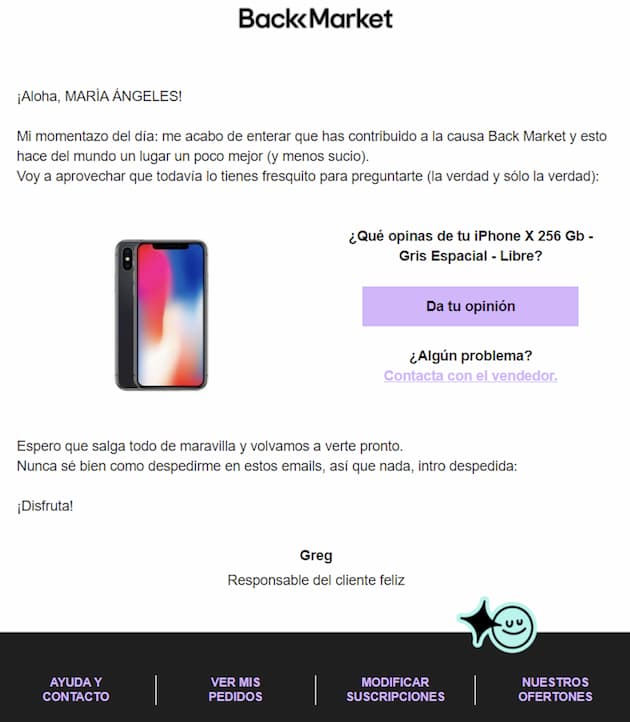
Earlier we mentioned that one of the benefits of autoresponders is that they allow you to ask your clients for reviews on autopilot.
And this is the case with Back Market, which doesn’t miss the opportunity after a sale to ask the buyer. This way they kill two birds with one stone: the client feels heard and they get reviews for their website.
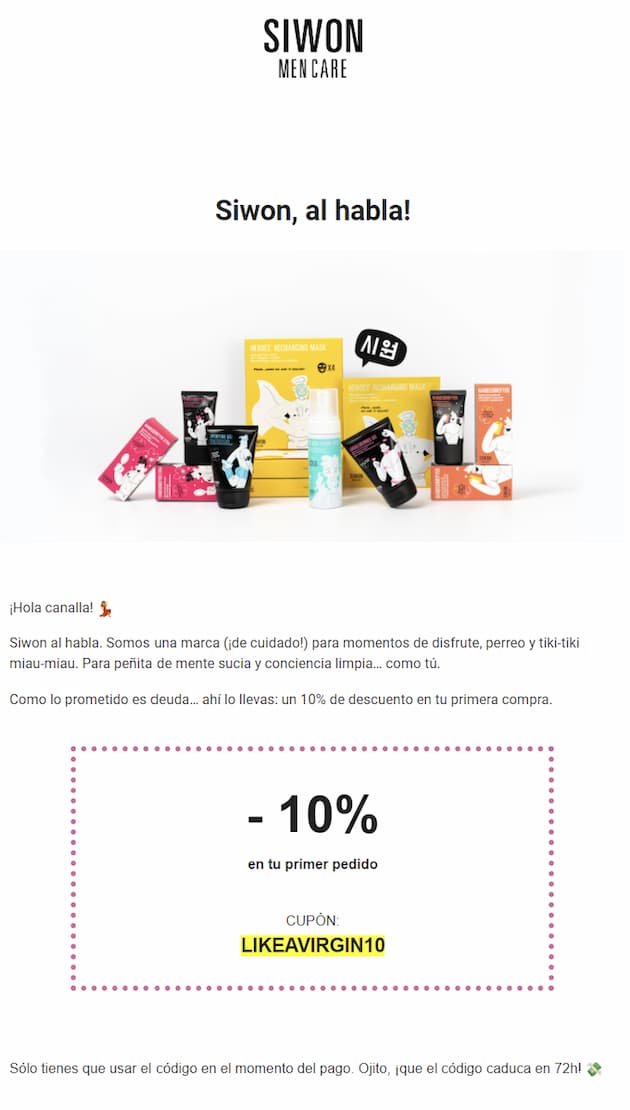
#20 Siwon: give away discounts to new members of your community
Another lead magnet to capture new contacts: offering a discount.
In addition to growing your list of potential clients, you boost sales simply by setting up an autoresponder. What more could you ask for?
In the case of this example, the men’s skincare store Siwon makes it clear from the get-go that its way of addressing the world is different, using quite cheeky copy.
A great example of how a simple autoresponder can be the perfect tool to convey your brand’s personality and spirit, while seizing the opportunity to generate more sales.
#21 Exponenciales: send the link to a live stream or a free class
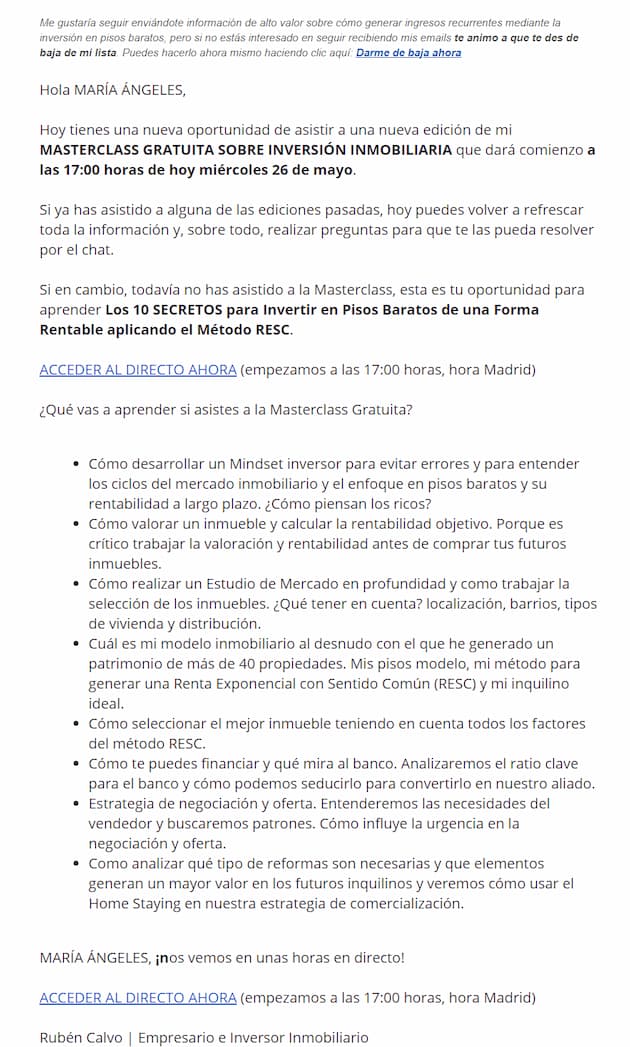
To send the access link to contacts who have signed up for a webinar or event, you can paste the link along with a phrase like:
“Join the webinar here”
Or you can also do what Rubén Calvo from Exponenciales does, and take the opportunity to remind them in detail about what they will find, just in case someone was tempted not to attend.
#22 MentorShow: take the opportunity to sell
Of course, autoresponders can be a highly effective tool for passive selling.
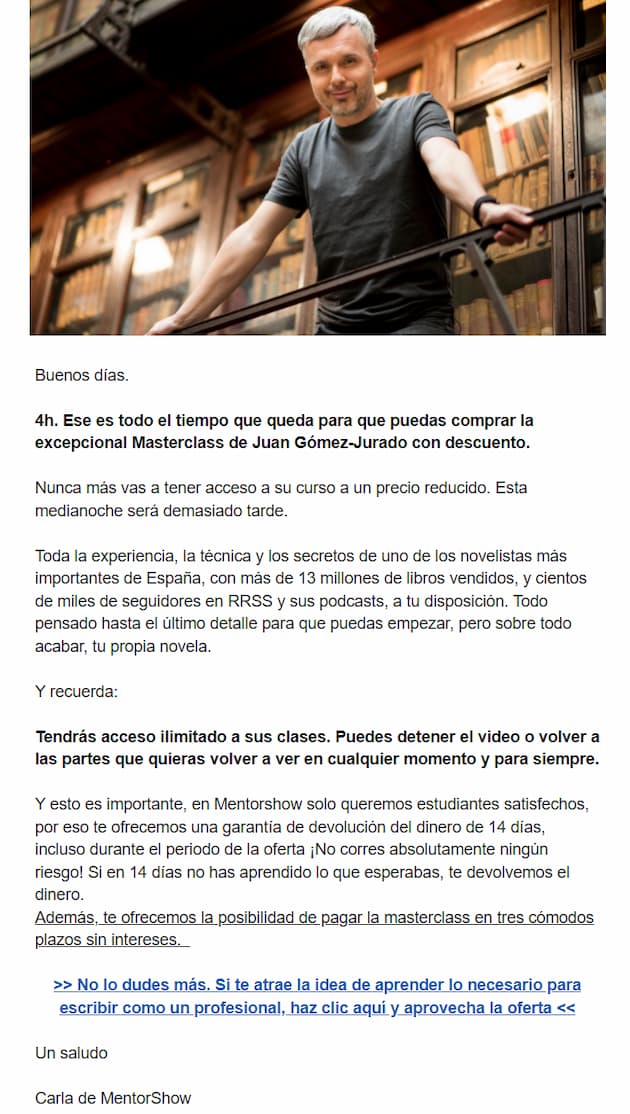
For example, Mentor Show scheduled a free webinar on how to write a novel taught by none other than Juan Gómez-Jurado. After the session, they offered you a training course by the writer with a 50% discount for having attended the webinar.
How? Well, not with one, nor two, nor three, but with a four-email autoresponder.
These were the subject lines for those four emails:
1. What did you think of Juan’s webinar?
2. Juan Gómez-Jurado’s Masterclass is now available
3. Your offer ends tonight at midnight
4. Only 4 hours left. After that, it will be too late
The last one read like this:
#23 Roam: a very hospitable user registration
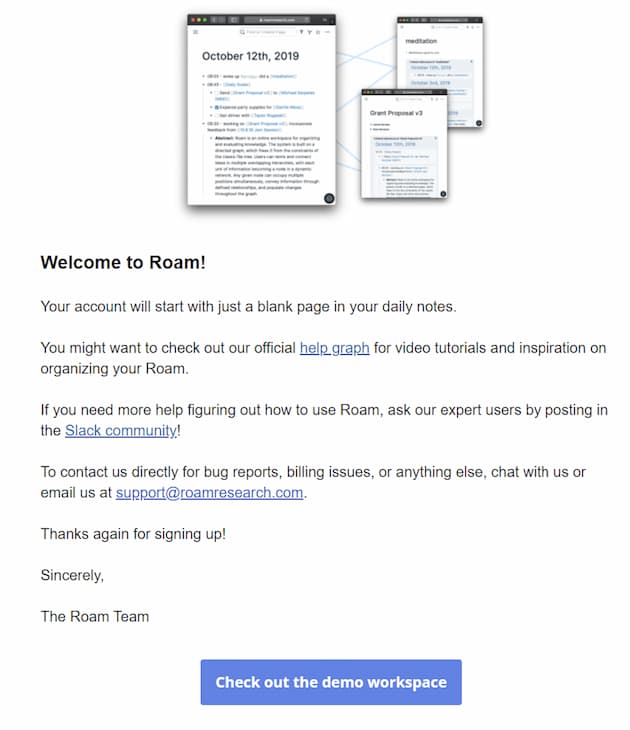
This is one of those English autoresponders we were talking about, but it is very clear and you can see at first glance that they get straight to the point: offering support to the new customer through different channels—video tutorials, Slack community, and email.
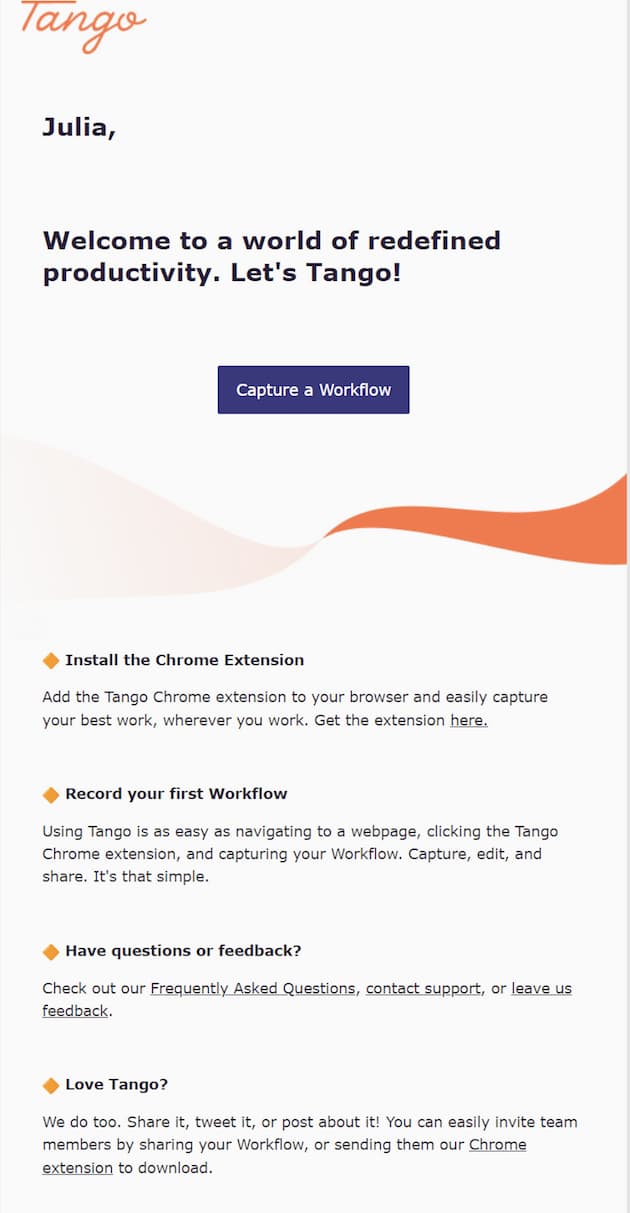
#24 Tango: they invite you to dance
Tango is a platform where you can capture screens, edit them, add them to your presentations, share them, and save them. And this workflow is what they convey in their welcome email, where they invite you to start with a pun: Let’s Tango!
Like any self-respecting registration confirmation email, it tells you what is going to happen in your relationship in the short term—they are going to send you a couple of emails—and they say thank you.
And to top it off, they drop in the postscript that they are hosting a webinar with its timely CTA.
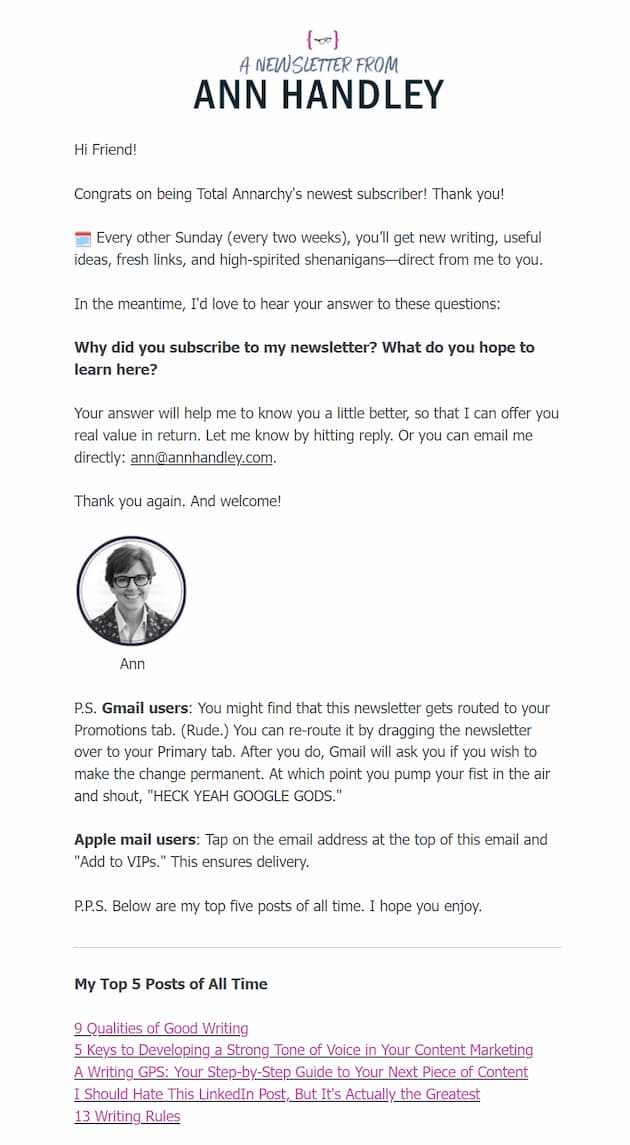
Saying hello and thanking a new subscriber is great. We would even say it is essential.
And why not take the opportunity to ask your new contact why they subscribed?
It is a very suitable time to get feedback that can help you improve your image, rethink your processes, or create new content tailored to your audience, to name a few examples.
Marketer Ann Handley does all this when you subscribe. And not satisfied with just that, she ends the email sharing her best posts, just in case you had any doubts about where to continue.
How to easily set up your autoresponder?
With your head full of autoresponder ideas, all you need to know is how to manage automations in your campaigns that will give you a productivity boost.
We are not going to do a step-by-step tutorial because you already have it detailed here, but we are going to summarize what you have to do to start sending autoresponders if you are a Mailrelay user.
We insist: everything we are going to explain below can be done easily and intuitively within the Mailrelay platform.
With that said, let’s continue.
Before you begin, you must have two essential elements created:
- Who you want to reach: the groups of contacts you are going to target, which are created from the “Subscribers” submenu.
- What you are going to send: a newsletter designed and ready to launch from the “Campaigns” submenu. And if it is an autoresponder where you want to capture leads, you also need a subscription form, which is configured under “Subscribers”. Once you are clear on this, head over to the “Automations” section and follow these steps:
- Choose what kind of automation you want to activate. If you are generating an autoresponder from scratch, yours is “Custom”; click “Use this automation” and your new autoresponder is on its way.
- Give it a name
- Check the box “Send only once” if you want the same subscriber to receive the message only one time
- Decide under “Which subscribers would you like to include?” if it is for everyone, a specific group, or a segment, and define them
- Add the triggers you want executed, which means establishing what you want to happen after a user action. For example, when a person subscribes to your newsletter, send them a welcome email, or an entire sequence
- Click on “Create Automation” and that’s it
Yes, yes, it really is as simple as it reads.
And best of all…
Start using autoresponders for free with Mailrelay
In case you didn’t know, Mailrelay’s free plan allows you to send up to 80,000 emails per month and work with 20,000 contacts at zero cost and with all its features, including automations and online support.
And if you exceed these figures, we have highly competitive rates.
From here on, getting the most out of autoresponders depends entirely on you. When are you starting?