We’ve barely covered this topic on our blog until now, yet it’s a very important type of segmentation for keeping subscribers loyal, perhaps the most important of all. When we talk about segmenting by sending frequency, we mean how often our subscribers want to receive our communications (our bulk mailings).
This segmentation won’t necessarily improve your results, opens or clicks, but it will reduce the number of subscribers who unsubscribe. You don’t need to be a genius to guess that if a subscriber wants to receive our information but only once a week (for example, because they don’t consider it important enough to read a daily newsletter), they’ll soon unsubscribe if we ignore that request.
It’s precisely these Mailrelay users, the ones who send newsletters every day, who all but have to segment by frequency. This isn’t a problem in itself, since we may produce enough content to send one or more newsletters a day, but it is the red line where we start losing subscribers who unsubscribe because they receive too many emails. That’s when it’s better to give them the option to limit that number before they leave us.
But that’s a technical task for many users, so this time I’ll offer a more homespun alternative that’s just as effective and doesn’t require touching any code. Let’s look at how to do it step by step:
| 1 | ASK SUBSCRIBERS WHAT SENDING FREQUENCY THEY WANT |
The first step is always the same: we’ll ask our subscribers how often they want to receive our newsletters.
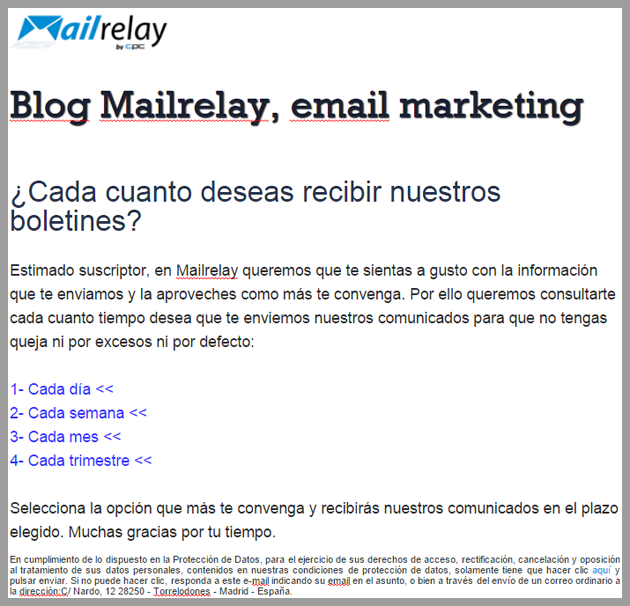
We can do this directly with a newsletter dedicated to this question, offering 4 options, each with its own link that leads to a page thanking them for their feedback:
Keep in mind that, however useful our information is to them, they’ll probably try to protect their privacy by choosing the most conservative options. We can try to avoid this with a marketing technique widely used in department stores: placing unattractive options next to the one we want to sell. In our example, it would look like this:
1- Twice a day
2- Every week
3- Every six months
4- Every year
Tip: offer an incentive for responding
As with any survey or market research, even when it’s aimed at our own customers, a good trick for getting more reliable and, above all, more plentiful data is to offer an incentive for responding. The classic prize draw among everyone who responds, or any other incentive, will always be welcomed by the people surveyed, and it also reflects well on us because it rewards the time they’ve spent.

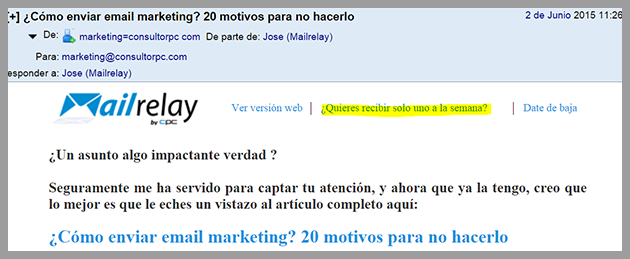
But this carries the risk that we don’t get the unattractive alternatives quite right and they end up being chosen. It’s much better to give them the option in every newsletter to move to the next, less frequent tier, for example in the header:
| 2 | COLLECT THE DATA AND REORGANIZE YOUR SUBSCRIBERS |
Once you’ve asked, there’s no turning back: you have to act on the results. To do this, we’ll need to check who clicks each link in the survey newsletter or the option in the header, and move subscribers into segmentation groups based on that choice.
To do so, we’ll go to the advanced statistics of the mailings where we asked about frequency and check which subscribers clicked each option. In the Clicks tab, we’ll click Export, and by opening the downloaded CSV it’s very easy to sort it by the links clicked and get each subscriber’s email address.
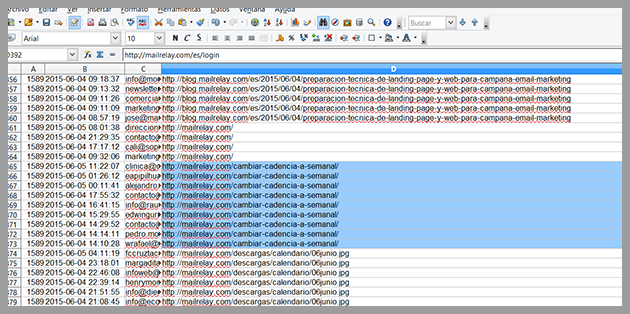
We’ll move these subscribers to a different group, either manually or all at once with the advanced import using the Add option, removing them from their previous group and adding them to a new one whose name identifies the chosen sending frequency. For example:
GENERAL CUSTOMERS – (with the usual sending frequency)
WEEKLY CUSTOMERS – (those who want a single weekly newsletter)
MONTHLY CUSTOMERS – (those who want a single monthly newsletter)
| 3 | CHECK THAT THE CHOSEN OPTION IS RIGHT |
This step may sound strange, but here’s an extreme example that makes it clear right away: if someone asks us how many times a year we want to go to the dentist, the answer will probably always be never, but that doesn’t necessarily reflect reality.
It’s an exaggeration, but as we saw earlier, subscribers may try to protect their privacy and time by choosing a very conservative option when, in fact, our newsletters are genuinely useful to them at the current frequency.
For each subscriber who wants to change frequency, we can check whether they really aren’t making use of the current one by running an advanced search across all lists from the last 6 months and, in the Impressions and Clicks tabs, manually looking up the subscriber’s email address to see how they interact with our emails.
If we find subscribers who, for example, open and click almost every day but switch to receiving emails weekly, we can make them a suggestion pointing this out. But only a suggestion! Never try to impose this, because the subscriber will most likely be annoyed.
| 4 | CREATE CUSTOM NEWSLETTER DESIGNS FOR EACH FREQUENCY |
Once we’ve defined the frequencies for our bulk email sending and placed subscribers in the right group according to their choice, the last step is to create newsletter designs for the alternatives to our most frequent schedule.
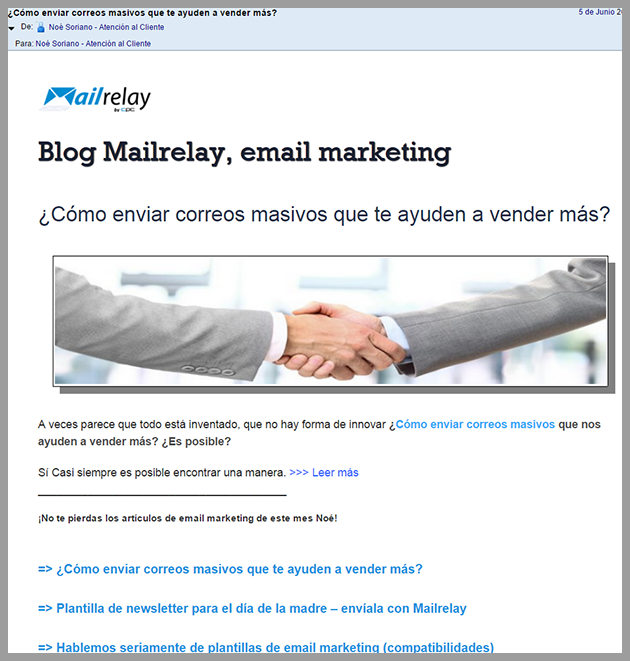
In other words, if we send daily, for example, we should create a special design on Mondays for those who asked to receive only one newsletter a week, or, if we send weekly, one for those who want a monthly frequency. It’s not enough to send them that day’s newsletter, because they’d miss out on a lot of useful information. The best approach is the classic roundup of the newsletters they’ve missed, with a “read more” link for each one so they can click on the ones that interest them.
A good tip is to include an opening paragraph of main content, or cover story, which we’ll also use as the hook for the subject line. That way we avoid the feeling of a rehash or a mere summary, adding value by taking care with the design and content selection of the weekly, monthly or other frequency newsletter. An example:
Related posts:
- Images for Email: 5 Easy Tips
- Mailrelay Features
- 20 Tools to Boost Your Email Marketing
- Connect Mailrelay with Any Online Service Using Make
- Video Mailing: Cutting-Edge Email Marketing
CONCLUSION
These simple steps will help us empathize with our subscribers’ preferences and wishes, and avoid unsubscribes when sending our bulk mailing, by respecting their chosen sending frequency. Keep in mind that it’s much easier and cheaper to keep a subscriber than to get a new one.
Any progress we make in this area will lead to cost savings and better results for our mailings.
This is just one of the many ways to apply segmentation in email marketing to improve your relationship with your subscribers.