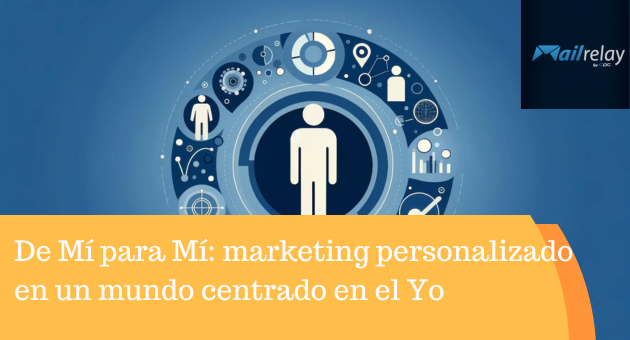
Personalization is key to attracting and retaining consumers, so personalized marketing has become an essential strategy for businesses.
This approach not only improves the customer experience, but also allows brands to stand out in an increasingly competitive market.
Join us to discover why this will become increasingly important in today’s society.
📊 Definition of personalized marketing
Personalized marketing is a strategy that uses data and analytics to create messages and offers tailored to the individual needs and preferences of customers.
Unlike mass marketing campaigns, personalized marketing focuses on recognizing the uniqueness of each consumer, offering products, services and experiences that specifically match their tastes and behaviors.
This is achieved by collecting data from various sources, such as:
- Purchase history
- Online behavior
- Stated preferences
- And much more.
📈 Importance of personalized marketing today
Personalized marketing has gained unprecedented relevance in the modern world due to several factors.
First, today’s consumers expect more relevant and personalized interactions with brands.
Information overload and fierce competition mean that generic messages get lost in the noise.
Second, advanced technologies such as big data and artificial intelligence have made it easier to collect and analyze data at scale.
This has allowed brands to implement personalization strategies more effectively and efficiently.
Finally, personalized marketing not only improves customer satisfaction, but also increases loyalty and conversion rates, benefiting both consumers and businesses.
🌍 Introducing the “From Me to Me” concept in a Me-centric world
We live in an era where individualism and egocentrism are on the rise.
Especially among newer generations like Millennials and Gen Z.
These generations value authenticity, personalization and experiences that reflect their unique identity.
The “From Me to Me” concept perfectly captures this trend, highlighting the demand for products and services that don’t just satisfy needs.
In a Me-centric world, brands must adapt their strategies to stay relevant to an audience looking to be understood and valued as unique individuals.

🧑🎤 The rise of individualism in newer generations
In recent years, we have witnessed a remarkable shift in consumer behavior.
It has been driven mainly by the younger generations: Millennials and Gen Z.
These generations have redefined market expectations and demands, prioritizing individuality and personalization in all their interactions with brands.
🌐 Characteristics of newer generations: Millennials and Gen Z
Millennials, born between 1981 and 1996, and Gen Z, born from 1997 onwards, share several traits that set them apart from previous generations.
Both groups have grown up in a digitally connected world, with constant access to the internet and mobile devices.
They value immediacy and convenience, and expect brands to offer fast and efficient solutions.
Additionally, these generations are well-educated and highly informed, allowing them to make more conscious and critical consumer choices.
They look for authenticity and transparency in brands, preferring those that align with their personal and social values.
🛍️ The role of individualism and egocentrism in their consumer behavior
Individualism and egocentrism play a crucial role in the consumer behavior of Millennials and Gen Z.
These generations have been influenced by a culture that celebrates self-expression and uniqueness.
As a result, they look for products and services that not only meet their functional needs, but also reflect their identity and personal style.
This egocentric approach manifests in a preference for brands offering personalized and exclusive experiences, allowing them to stand out and assert their individuality.
🎯 How this approach influences personalization expectations
The desire for individuality and self-expression has raised personalization expectations among younger consumers.
They expect brands to know them on a deep level, offering recommendations and products specifically tailored to their tastes and preferences.
This means brands need to invest in data analytics technologies and marketing strategies that allow them to collect and use detailed information about their customers.
From targeted marketing messages to personalized products, companies that can meet these personalization expectations are better positioned to win the loyalty of Millennials and Gen Z.

💡 Personalized marketing: the answer to the quest for individuality
As consumers seek to stand out and assert their unique identity, personalized marketing has become an essential tool for brands.
This strategy doesn’t just allow companies to capture their customers’ attention; it also strengthens the brand-consumer relationship, creating a deeper and more meaningful connection.
🌟 How personalized marketing satisfies the need to be unique
Personalized marketing directly responds to the modern consumer’s quest for individuality.
By leveraging detailed data on:
- Preferences
- Behavior
- And individual customer needs
Brands can offer highly customized experiences targeted at a personal level.
This goes beyond simple name tweaks or basic segmentation.
It’s about creating interactions that truly reflect who each customer is and what they value.
For example, a fashion retailer can send product recommendations based on a customer’s purchase history and specific style trends.
Meanwhile, a streaming platform can suggest content aligned with each user’s tastes and viewing habits.
🛠️ Examples of extreme personalization in products and services
Extreme personalization takes this concept to a new level, allowing consumers to create products tailored specifically to their preferences and needs.
A standout example is Nike, which lets customers design their own sneakers through the Nike By You platform.
Users can select everything from colors and materials to final details, creating a unique product that reflects their personal style.
In the beauty sector, Function of Beauty lets customers customize shampoos and conditioners based on a questionnaire about their hair type and specific preferences.
This trend can also be seen in the tech space, where services like Spotify and Netflix use advanced algorithms to offer recommendations for music and movies that match each user’s individual tastes.

🛠️ Key strategies for implementing personalized marketing
For personalized marketing to be effective, it’s crucial for brands to implement well-defined strategies and use the right tools.
Smart use of data and analytics, precise segmentation, content personalization and the adoption of advanced technologies are essential for creating meaningful customer experiences.
📊 Using data and analytics to understand the customer
The first step in implementing personalized marketing is to collect and analyze detailed data about customers.
This includes:
- Demographic information
- Purchasing behaviors
- Social media interactions
- And personal preferences.
By using advanced data analysis techniques, brands can gain a good understanding of who their customers are and what they want.
For example, predictive analytics can help identify purchasing patterns and anticipate future needs, allowing brands to get ahead and offer relevant products and services at the right time.
🎯 Effective segmentation and targeting
Once customer information has been collected and analyzed, the next step is to segment the market into specific groups based on shared characteristics.
Effective segmentation allows brands to direct their marketing efforts toward more precise and relevant audiences.
This not only increases campaign efficiency, but also improves the likelihood of conversion.
For example, a fashion company might segment its customers into groups like “young professionals,” “new mothers,” and “sports lovers,” and then create specific campaigns for each group, addressing their particular needs and desires.
📝 Content and message personalization
Content and message personalization is a foundational strategy in personalized marketing.
This involves tailoring brand communications so they resonate with each segment or even each individual in a unique way.
Personalized emails, product recommendations based on purchase history and targeted social media ads are examples of how brands can personalize their content.
Personalized emails have a 29% higher open rate and a 41% higher click-through rate than non-personalized emails, which shows how effective this strategy is.
🛠️ Tools and technologies for personalized marketing
Successfully implementing personalized marketing requires using advanced tools and technologies.
Customer relationship management (CRM) platforms, marketing automation systems and data analytics tools are essential for collecting, processing and using data effectively.
Furthermore, emerging technologies like artificial intelligence (AI) and machine learning enable brands to create even more personalized and predictive user experiences.
For example, AI can analyze large volumes of data in real time to deliver highly relevant product recommendations.
Meanwhile, automation platforms can execute personalized marketing campaigns at scale with unprecedented efficiency.

💰 Benefits of personalized marketing in a Me-centric world
Personalized marketing offers numerous benefits that are especially valuable in a world where consumers look to be the center of attention.
By tailoring marketing strategies to individual needs and preferences, brands not only improve the customer experience, but also increase loyalty, retention rates and conversions.
🌟 Enhancing the customer experience through personalization
Personalization has a significant impact on the customer experience.
When consumers receive content and offers tailored to their specific interests and needs, they feel valued and understood.
This not only improves their perception of the brand, but also increases their satisfaction and loyalty.
For example, an online store that recommends products based on a customer’s previous purchases or stated preferences can offer a more relevant and engaging shopping experience, leading to greater customer satisfaction.
🔄 Increased customer loyalty and retention
Personalized marketing plays a crucial role in building customer loyalty.
By establishing a more personal and meaningful connection, brands can foster a lasting relationship with their customers.
Consumers who feel that a brand truly understands and meets their needs are more likely to keep choosing that brand in the future.
In addition, personalized loyalty programs, which offer rewards and benefits based on customer behavior and preferences, can significantly increase retention rates.
One example of this is the Starbucks rewards program, which uses purchase data to offer personalized promotions and rewards to its members.
📈 Boost in conversions and sales
Personalization doesn’t just improve the customer experience and loyalty; it can also lead to a significant boost in conversions and sales.
By offering products and services closely aligned with customers’ interests and needs, brands can increase the likelihood of them making a purchase.
For example, personalized product recommendations in an online store can lead to higher conversion rates and average order values.
According to an Epsilon study, 80% of consumers are more likely to make a purchase when brands offer personalized experiences.

🔮 The future of personalized marketing in an egocentric society
As we move into an increasingly digital and individual-centric era, personalized marketing continues to evolve to meet growing consumer demands.
In this context, new trends and technologies are emerging that promise to transform the way brands interact with their customers.
🚀 Emerging trends in personalized marketing
Emerging trends in personalized marketing are redefining the way brands connect with their audiences.
One notable trend is hyper-personalization, which uses real-time data and advanced technologies to deliver extremely personalized experiences.
Another trend is omnichannel marketing, where brands integrate multiple communication channels to provide a consistent, personalized customer experience across all touchpoints.
In addition, augmented reality (AR) and virtual reality (VR) are gaining popularity, allowing consumers to interact with products and services in a more immersive and personalized way.
🤖 The role of artificial intelligence and machine learning
Artificial intelligence (AI) and machine learning (ML) are revolutionizing personalized marketing.
These technologies allow brands to analyze huge volumes of data efficiently and accurately, identifying patterns and trends that inform personalization strategies.
AI and ML can predict customer behavior, optimize product recommendations, and automate content personalization in real time.
For example, AI-powered chatbots can offer customers personalized assistance, while Netflix and Amazon’s recommendation algorithms use ML to suggest content and products that match users’ individual interests.
🔮 Predictions on consumer behavior
As personalized marketing becomes more sophisticated, consumer expectations and behaviors are changing as well.
In the future, consumers will expect even higher levels of personalization and relevance in their brand interactions.
Privacy and transparency will become critical factors, as consumers will demand more control over their data and how it is used.
Furthermore, Gen Z, having grown up in a highly personalized digital environment, will likely place even greater value on customized experiences and expect brands to quickly adapt to their changing preferences.
Conclusion
In an individual-centric world, personalized marketing is essential for building deep connections with customers.
By using advanced data and analytics, brands can deliver unique experiences that improve customer satisfaction and loyalty, driving conversions and sales.
Examples of extreme personalization across various sectors prove its effectiveness and relevance in today’s market.
Looking ahead, advanced technologies like artificial intelligence and machine learning will continue to drive personalized marketing.
Consumers, especially Gen Z, will demand higher levels of personalization, which will force brands to be more innovative and efficient.
Those that invest in understanding and meeting individual needs will be best positioned to thrive in a competitive and constantly evolving environment.

Jose Argudo
CMO at Mailrelay. Writes about email marketing, copywriting and conversion for small businesses and entrepreneurs.