Naming: what it is, types and how a brand name is created
A name is the first thing a customer learns about you and the last thing you change. Here’s how naming works, from the brief to the final decision

A name is the first thing a customer learns about you and the last thing you change. Here’s how naming works, from the brief to the final decision
Naming is the process of creating the name of a brand, a company or a product. It’s also known as brand naming or name creation, and it’s one of the first decisions in branding.
Here’s what it involves, the types of names there are, the process agencies follow and when it’s worth hiring someone to do it.
Naming, or brand naming, is the discipline of finding the right name for a brand. It’s not just about sounding good: the name has to fit what the brand wants to convey, stand out from the competition and be possible to register.
It’s a weighty decision because it’s the first thing a customer learns about you and the thing that sticks around the longest. A logo can be redesigned every few years, but changing your name means starting over with brand awareness, the domain and trademark registrations.
Branding is all the work of building a brand: its positioning, visual identity, tone and the experience it offers. Naming is one part of that work, the part that defines what it’s called.
That’s why the name is chosen before the logo, the slogan or the colors, which are designed around it. If you want to see the rest of the process, you’ll find more context in brand building and brand image.
Brand names are usually classified by where they come from. Knowing the types helps you explore different paths during the creative phase.
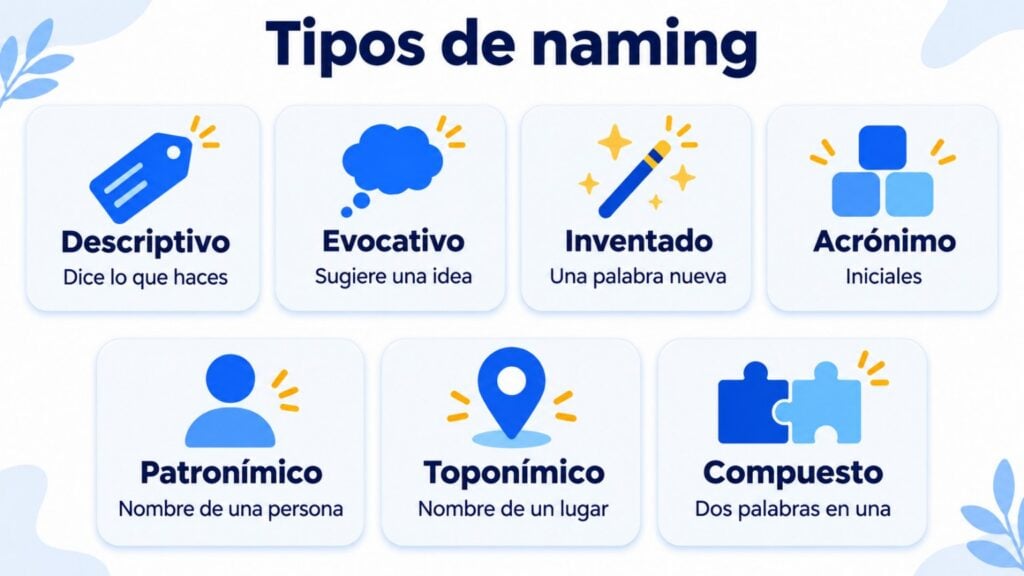
Descriptive names say what the company does, like Booking. They’re understood instantly, but they tend to be hard to register because they use common words.
Evocative names suggest an idea or a feeling without describing the business. Amazon, for example, evokes the size of the world’s largest river by volume.
Invented names are new words, like Kodak. They’re easy to protect, although at first you have to explain what’s behind them.
Acronyms are made from initials, like IKEA, which combines those of its founder and the places where he grew up. Patronymic names use a person’s name, like Ford, and toponymic names use a place’s, like Nokia, which takes its name from a Finnish town. Finally, compound names join two words to create a new one.
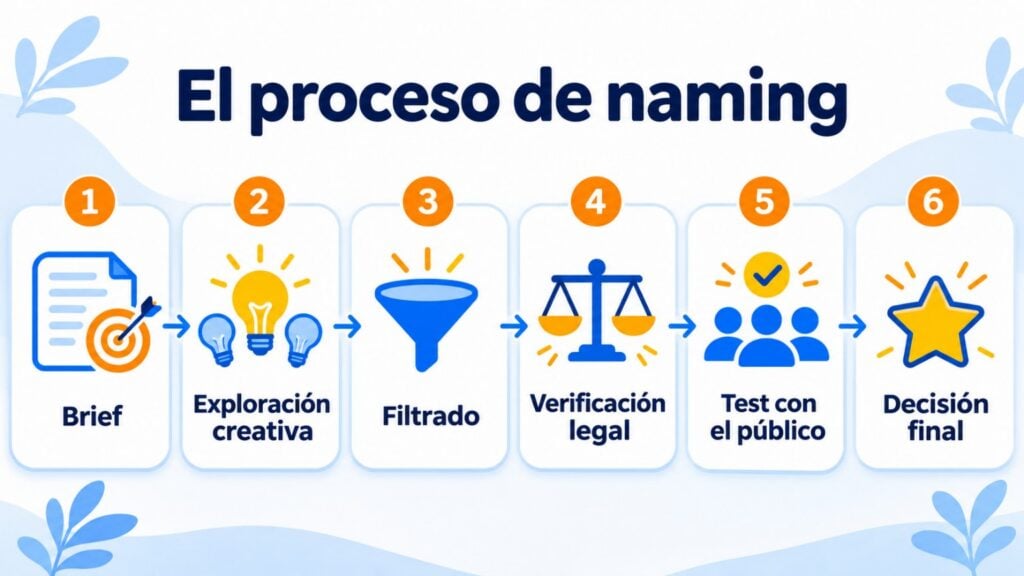
Naming agencies all follow a fairly similar process. It has six phases, from strategy to the final decision.
It all starts with the brief: what the brand is, who it’s aimed at, what values it wants to convey and what names the competition uses. Next comes creative exploration, where hundreds of options of every type are generated.
The long list then goes through a first round of screening for sound, meaning and fit with the strategy. The finalists undergo a legal check, searching for registered trademarks and available domains in the markets where the brand will sell.
Those that pass this filter move on to a test with the audience, to check that they’re understood, remembered and don’t have negative connotations in other languages. With all that, the final decision is made.
If you’re going to do it yourself for a small business, you’ll find the process adapted in the guide to creating your business name.
Put your shortlisted names to the test
Send a survey to your list or test two subject lines with an A/B test to see which one works better.
For an SMB or a local business, a good in-house process is usually enough. It’s worth hiring an agency when the brand will operate in several countries, when a lot of investment is at stake or when the industry is so crowded that it’s hard to find a name you can register.
A professional service brings method, legal search tools and the experience of knowing which names work. In return, it’s an investment worth comparing with what it would cost to change your name later on.
Once chosen, the name appears everywhere, including in email. It’s what your subscribers see in the sender field before deciding whether to open a message.
Always use the same brand name as the sender, the same domain and a recognizable template. That way every email reinforces the name instead of confusing people. The brand manager is usually the one who watches over that consistency.
Make your brand recognizable in every email
Use your brand name as the sender and a template with your look and feel. Free with Mailrelay.
With Mailrelay you can test your shortlisted names with your own list, by sending a survey or comparing two subject lines with an A/B test.
Once you have the name, set up your sender and create a template with the new look to introduce it to your customers. The free account lets you send up to 80,000 emails a month to 20,000 contacts, with human support.
Start sending today
Free account: up to 80,000 emails a month to 20,000 contacts, with human support.
Here are some common questions.
Brand name creation. It’s the process of creating the name of a brand, a company or a product.
It’s the same as naming, with the nuance that it refers to the name of a brand. It’s used mostly by branding agencies.
A test with people from the target audience to check whether a name is understood, remembered and conveys what you’re aiming for, before you choose it.
Naming is the discipline, with its method and its types. Creating a business name is applying it to a specific case, something many small businesses do on their own.
Brand marketing
How to build a brand that’s remembered beyond its name.
How to change negative perceptions about your brand
What to do when your brand image isn’t what you want it to be.
How to advertise your business for free
Free ways to get your new brand known.

Jose Argudo
CMO at Mailrelay. Writes about email marketing, copywriting and conversion for small businesses and entrepreneurs.