Viral marketing examples: 20 campaigns that spread on their own and what to learn from them
From the death of the Duolingo owl to Dubai chocolate: real cases and what you can apply to your brand even on a small budget
From the death of the Duolingo owl to Dubai chocolate: real cases and what you can apply to your brand even on a small budget
You’ve probably experienced it. One day everyone is talking about the same video, the same meme or the same product. You see it on your social feeds, people send it to you on WhatsApp and it ends up in the news.
Behind many of these phenomena there’s a brand. Sometimes it planned every detail, and other times it simply knew how to react in time.
In this article you’ll find 20 viral marketing examples, from the most recent to the classics that are still studied, including several Spanish cases. You’ll see what types there are, what made each one go viral and what advantages and risks it has. You’ll also see how to make the most of that pull so the attention doesn’t stop at a spike in visits.
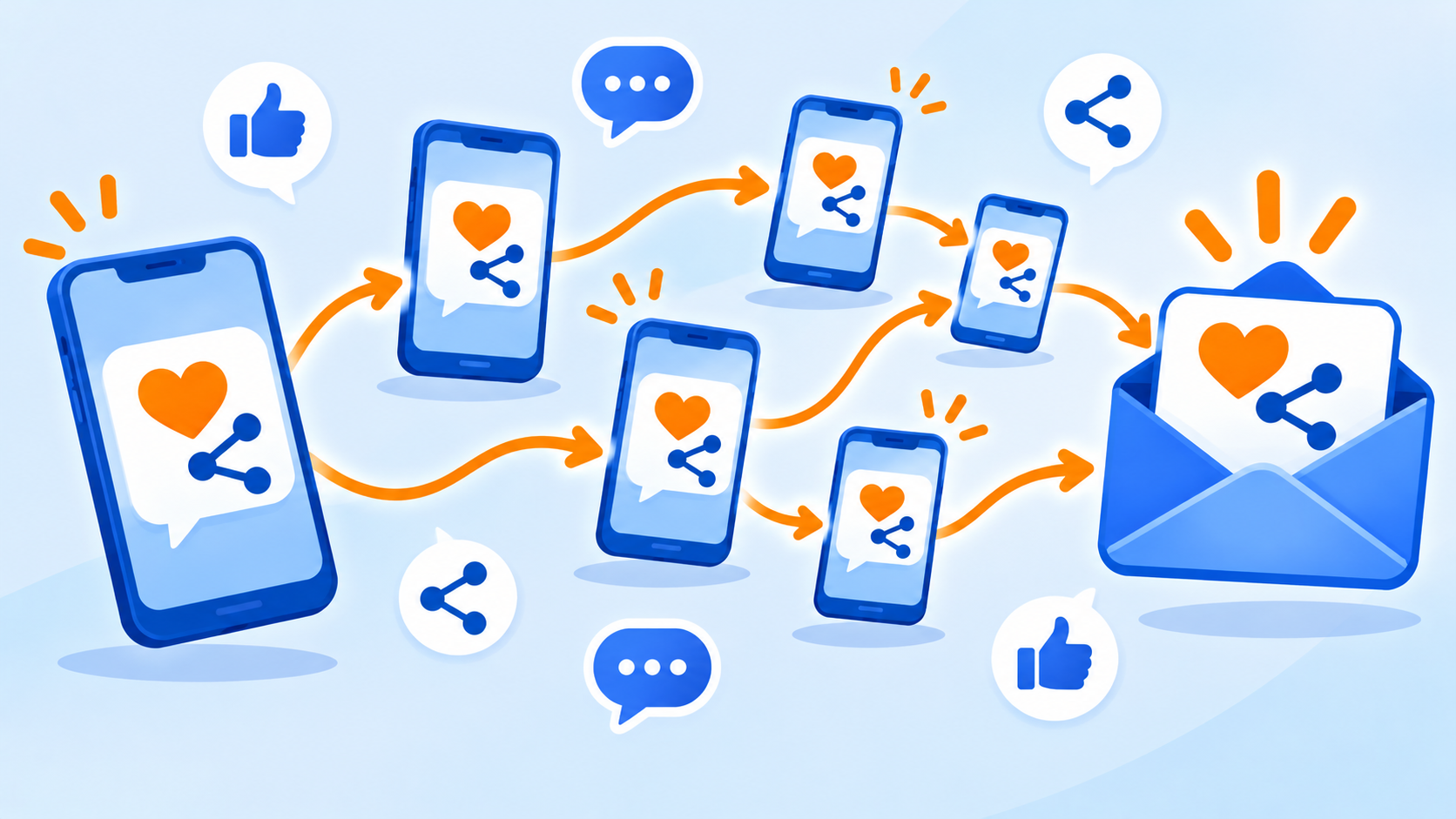
Viral marketing is a strategy that aims to get the audience itself to share a brand message and spread it from person to person, like a virus. The brand creates the piece, but it’s people who make it travel far.
It’s the digital version of word-of-mouth marketing. Its big advantage is the reach it achieves with little investment, because the exposure is earned rather than paid for: this is what’s known as earned media.
There are campaigns designed to be shared, like Duolingo’s, and phenomena the brand didn’t seek out, like Jet2’s, where its merit was knowing how to react. That’s the first way to classify them, but there are more.
Not all viral campaigns spread in the same way. Depending on the mechanism that makes people share, these types are usually distinguished:
| Type | How it spreads | Example |
|---|---|---|
| Spontaneous | The audience turns it into a trend without the brand planning it | The Jet2 meme or the “flirting hour” at Mercadona |
| Planned | The brand designs a piece to be shared | Duolingo’s “death” |
| Challenge or participation | People imitate it and spread it with their own content | Ice Bucket Challenge |
| Incentivized | Sharing is rewarded: a discount, a gift or a prize draw | “Refer a friend” programs |
| Covert | At first nobody knows there’s a brand behind it | MTV’s “Amo a Laura” |
| Real-time | A quick response to something that’s happening | Oreo’s blackout tweet or Stanley’s response |
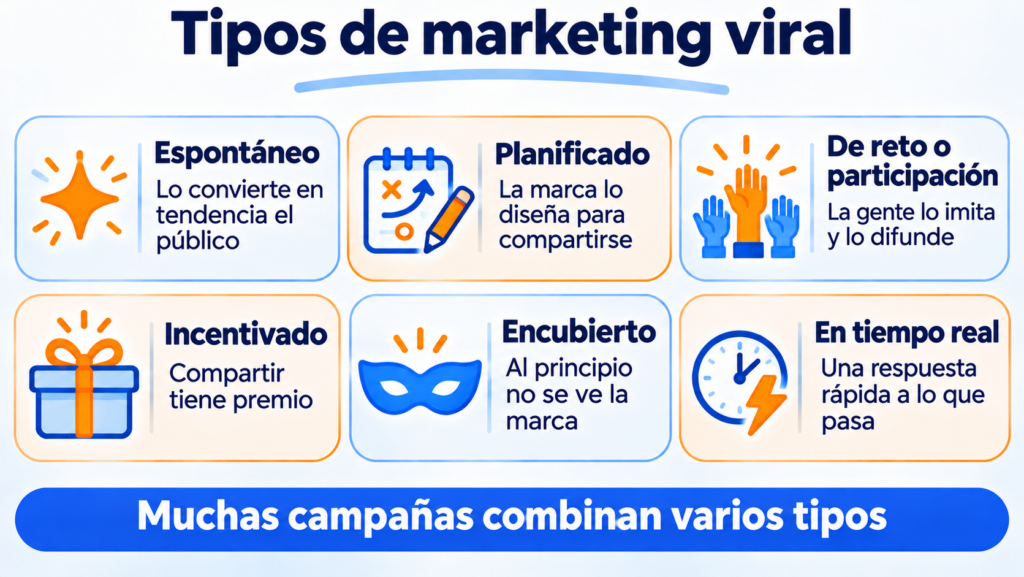
Many campaigns combine several types. Duolingo’s, for example, was planned, but it also asked people to take part: you had to do lessons to “bring the owl back to life”.
Before going into each case, here’s a summary of what each brand did and what you can take away from it.
| Campaign | Year | What made it go viral | What you can learn |
|---|---|---|---|
| Duolingo, Duo’s “death” | 2025 | An absurd story told in episodes | A character with personality gives you a lot to work with |
| Jet2, “Nothing beats a Jet2 holiday” | 2025 | Its ad became a meme | Don’t ruin a meme that isn’t yours |
| Labubu, by Pop Mart | 2024-2025 | Celebrities, scarcity and blind boxes | Scarcity sparks the urge to share |
| Dubai chocolate | 2024 | A video of someone tasting it in silence | What looks good on video gets shared on its own |
| Stanley and the burned car | 2023 | A quick response to a customer’s video | Reacting within hours is worth more than months of planning |
| Maybelline, the train with eyelashes | 2023 | A computer-generated video that looked real | Visual surprise hooks people |
| Barbie, the movie | 2023 | The whole world in pink | A visual code of your own is instantly recognizable |
| Ryanair on TikTok | Several years | Self-deprecating humor | Laughing at yourself brings you closer to your audience |
| Burger King, “Whopper Whopper” | 2022 | A song that’s impossible to forget | Repetition creates memes |
| Netflix, Squid Game | 2021 | Games and costumes that are easy to imitate | What can be copied gets copied |
| Spotify Wrapped | Every year | Personal data ready to share | Make your customer the star |
| Mercadona, the “flirting hour” | 2024 | A humorous TikTok video | Everyday things can go viral too |
| Cruzcampo, “Con mucho acento” | 2021 | Lola Flores recreated with artificial intelligence | Emotion and pride in where you come from |
| Ruavieja, “Tenemos que vernos más” | 2018 | A calculation of the time we have left together | A moving fact gets shared |
| Vicio and its most persistent customer | Recent | Turning a fan into the star | Listen to your community |
| Ice Bucket Challenge | 2014 | A challenge with nominations | A chain challenge multiplies the reach |
| Oreo, Daily Twist and the blackout | 2012-2013 | Responding to current events | Staying alert to the moment pays off |
| Share a Coke | 2011-2013 | First names on the cans | Personalization invites people to take photos |
| MTV, “Amo a Laura” | 2006 | A parody many people believed was real | Humor travels faster |
| Rodolfo Chikilicuatre | 2008 | A made-up character at Eurovision | A good character can go a long way |
These are the most talked-about viral marketing examples of recent years. Some were planned down to the last detail and others were almost an accident.
On February 11, 2025, Duolingo announced on its social media that Duo, its green owl, had died. It asked its followers to do a lesson instead of sending flowers.
For two weeks it dropped clues about the cause: he had been run over by a Cybertruck. Then it launched a challenge to “bring him back to life” by doing lessons, and on February 24 Duo returned.
According to Fast Company, the campaign racked up 1.7 billion impressions across its social channels in just two weeks. It worked because it fit the character: a pushy owl that chases you to make you study.
What to learn: if your brand has a character with personality, a story told in episodes makes people come back to see what happens next.
Jet2, a British airline and tour operator, launched a fairly ordinary ad in late 2022, with a very enthusiastic voice saying “Nothing beats a Jet2 holiday”.
In the summer of 2025, thousands of TikTok users started using that audio ironically over videos of disastrous vacations. The brand hadn’t sought it out.
As its CEO explained to Marketing Week, the decision was to stay out of it so as not to ruin the joke. Only later did it join in, with humor and without trying to control it.
What to learn: when the audience turns your brand into a meme, the worst reaction is to take it too seriously.
Labubu is a small toothy monster from the Chinese toy company Pop Mart. It’s sold in blind boxes, so you don’t know which model you’ll get until you open it.
The boom came when celebrities such as Blackpink’s Lisa and Rihanna started wearing it hanging from their bags. The blind boxes turned into unboxing videos and scarcity did the rest: there were queues, resales and even counterfeits.
Pop Mart brought in about 670 million dollars from this line of toys in the first half of 2025, 668% more than a year earlier.
What to learn: scarcity and surprise make people want to talk about it. You can apply this on a small scale with limited editions or early access for your subscribers.
Dubai chocolate was born in a small chocolate shop in that city, FIX Dessert Chocolatier. It’s a bar filled with pistachio cream and crunchy kataifi pastry.
In late 2023, a food influencer posted a TikTok video of herself tasting it in silence. The video passed 100 million views and by 2024 the bar was everywhere.
In Spain, Lidl and Mercadona launched their own versions, which sold out within hours. According to Xataka, an original bar could cost more than 30 euros.
What to learn: a product that looks good on video, like the green filling or the crunch when you break it, gets shared without you having to ask.
Has your campaign gone viral? Don’t let anyone slip away
Turn that attention into subscribers and keep talking to them by email. Free for up to 80,000 emails a month.
In November 2023, a TikTok user posted a video of her car burned out after a fire. The only thing that had survived was her Stanley cup, which still had ice inside.
The video racked up tens of millions of views. In less than a day, Stanley’s president replied with a video of his own: he was glad she was OK and offered to give her a new car.
What to learn: the brand didn’t invent anything, it just reacted quickly and generously. Paying attention to what your customers say can give you your best campaign.
In July 2023, Maybelline posted a video in which a London Underground train wore giant false eyelashes. As it pulled into the station, a huge mascara brush combed them.
Many people believed it was a real street stunt, but it was computer-generated. This type of video, which simulates outdoor advertising, is called fake out of home, and many brands copied it afterward.
What to learn: visual surprise makes people stop scrolling. And you don’t always need a big budget to pull it off.
The release of the Barbie movie was a phenomenon before it even reached theaters. Warner Bros. and Mattel turned more than a hundred brand collaborations pink, from a Barbie house on Airbnb to clothing, game consoles and food.
They also launched a poster generator so anyone could make their own, and social media filled up with them. The campaign is estimated to have cost about 150 million dollars, more than the movie itself.
What to learn: you don’t have that budget, but you can have a visual code of your own that’s recognized anywhere.
Ryanair has been using TikTok to laugh at itself for years. Its videos, starring the plane itself, joke about the narrow seats, cabin bags and its own fares.
It replies to comments with memes and doesn’t dodge criticism. That down-to-earth tone has turned an airline’s account into one of the most followed in the industry.
What to learn: self-deprecating humor, if it’s sincere, defuses criticism and brings you closer to your audience.
In 2021, Burger King released an ad with a catchy jingle that repeated “Whopper, Whopper”. In 2022, thanks to airing during American football games, the song became a meme.
People made their own versions, sang it in stadiums and posted parodies on social media. The brand didn’t have to do anything but keep airing it.
What to learn: repetition, which gets tiresome in other contexts, is what turns a sound into a meme.
When Squid Game premiered in 2021, its children’s games, green tracksuits and masks could be imitated with very little. Netflix took advantage of it with live experiences, merchandise and social media content.
Thousands of people shared videos of themselves in costume or recreating the games. The series promoted itself.
What to learn: if your idea is easy to imitate, the audience will make the copies for you.
At the end of each year, Spotify sends every user a summary of what they’ve listened to: their favorite songs, artists and genres. It comes in a format designed to be shared on social media.
Millions of people post it every year and, along the way, give it free advertising. We cover it in detail in our article on Spotify Wrapped, with ideas for creating your own by email.
What to learn: when the customer is the star, sharing comes naturally.
Bring your next viral idea to the inbox
Create newsletters your subscribers will want to forward.
Spain also has campaigns that everyone shared. Here are four very different ones.
In August 2024, a humorous TikTok video claimed that Mercadona was the place to flirt between 7:00 and 8:00 p.m. The signal was to put an upside-down pineapple in your cart.
The idea spread across TikTok, Instagram and X, with memes, parodies and people going to check it out. According to the newspaper Ara, the company wasn’t behind it: it was a spontaneous phenomenon.
What to learn: your brand can go viral without trying. It’s worth having a plan for how to react, even if sometimes the best response is not to step in.
January 21, 2021, would have been Lola Flores’s 98th birthday. That day, Cruzcampo released an ad in which the artist spoke again thanks to artificial intelligence, with her daughters’ permission.
The message, “your accent is your treasure”, championed pride in where you come from. According to Ogilvy, the agency that created it, it was viewed 614 million times and won the 2021 Grand Prix for Effectiveness.
What to learn: the technology grabbed attention, but what people shared was the emotion. It also sparked a debate about using the image of people who have died, which is worth keeping in mind.
At Christmas 2018, Ruavieja worked out with real people how much time they had left to spend with their friends and family. The result, in days, left the participants speechless.
The campaign included a calculator so everyone could work out their own number and, according to its creators, the video spread mainly through WhatsApp. It was the most-watched ad on YouTube Spain that December, according to Reason Why.
What to learn: a fact that touches something personal, and that everyone can calculate for themselves, makes people really want to forward it.
A customer from A Coruña spent years sending Instagram messages to the Vicio chain asking it to open in her city. There were hundreds of messages.
When the brand finally opened there, it made her the star of its opening campaign with a video in which she was “kidnapped” and taken to the launch.
What to learn: your community gives you the best ideas. Listening to what your customers write to you costs nothing.
These viral marketing examples predate TikTok, but every marketing course still cites them.
The challenge was to pour a bucket of ice water over yourself, film it and nominate three people. It was meant to raise awareness of ALS and encourage donations.
Everyone from celebrities to top business leaders took part, and the US ALS Association raised more than 100 million dollars in a few weeks.
For its 100th anniversary in 2012, Oreo posted an image of its cookie adapted to the day’s news for 100 days. It broke the idea that viral content only lasts a moment.
In 2013, during the Super Bowl blackout, it posted a tweet within minutes showing a cookie in the dark: “You can still dunk in the dark”. It’s the most cited example of real-time marketing.
Coca-Cola replaced its logo with first names on its cans and bottles. It started in Australia in 2011 and reached Spain in 2013.
People looked for their own name or their friends’ names, took photos and posted them. Personalization turned every can into an excuse to share.
MTV Spain released a music video by a made-up band, Los Happiness, with a song parodying the teen pop groups of the 1960s.
Many people believed it was real and the song made its way into the news. It was a campaign by MTV itself, and it showed how fast humor travels.
The show Buenafuente invented a singer with a toy guitar and an absurd song, “Baila el Chiki-chiki”. He won the public vote to represent Spain at Eurovision.
There were dolls, trading cards, T-shirts and ringtones. It’s one of the best examples of how a character with storytelling can go a long way.
No brand can guarantee that something will go viral. But if you look back over these viral marketing examples, you’ll see the same ingredients again and again. Almost all of them combine several of these:
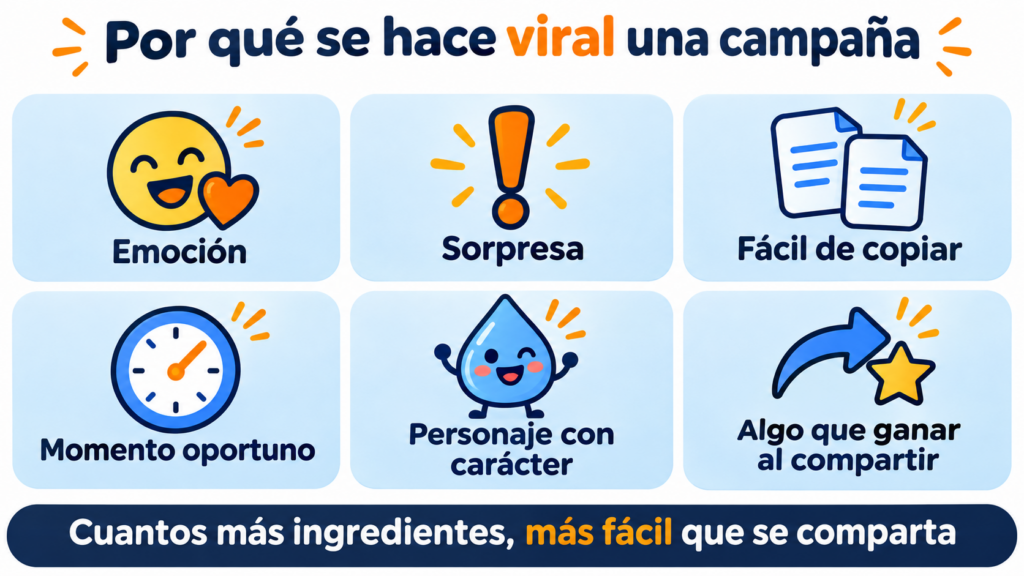
Social norms also play a part: when you see everyone taking part, you feel like joining in. And you don’t have to be a big brand. Many of these ideas, like a challenge or a character, can be adapted to a small business.
Viral marketing has a lot going for it, but it’s not a safe bet. These are its main advantages and risks:
| Advantages | Risks |
|---|---|
| Lots of reach with little investment | There’s no guarantee it will work |
| The recommendation comes from people you trust | You lose control of the message |
| It strengthens brand recall | It can go viral because of criticism |
| It generates content from the users themselves | The effect is short-lived if you don’t make the most of it |
The most cited example of what can go wrong is Pepsi’s 2017 ad with Kendall Jenner. The brand was accused of trivializing social protests to sell soft drinks, and it pulled the ad the next day with a public apology.
To reduce the risk, review the piece with people who aren’t on the project and think about how people who don’t know your brand might read it.
People talking about something a lot isn’t enough. To find out whether a campaign has worked, look at these metrics:
Your campaign’s KPIs should always include that last point: it’s what turns buzz into results.
If all these viral marketing examples teach anything, it’s that the phenomenon lasts days or weeks. Afterward, attention moves on to something else and almost everyone who arrived forgets about you.
That’s why the best time to get subscribers is right when you have the most visits. These are the steps:
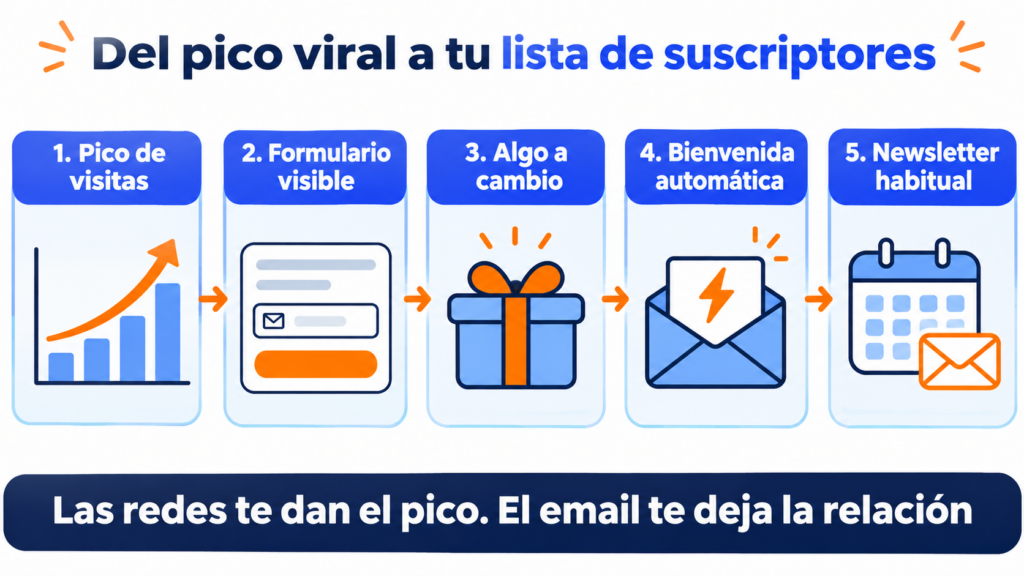
Social media gives you the spike in attention, but it doesn’t belong to you: the algorithm decides who sees you. Your subscriber list, on the other hand, is yours, and you can write to those people whenever you want.
Email can go viral too. Every time a subscriber forwards your newsletter to a friend, they’re recommending your brand in the most direct way. These ideas help make it happen:
A legal note: don’t ask your subscribers for their friends’ email addresses so you can write to them yourself. Under the GDPR, those people haven’t given you their consent. The right approach is for your subscriber to share the link and for each person to decide whether to sign up.
With Mailrelay you can create subscription forms and landing pages on the free account, without knowing how to code. Double opt-in is always applied, so your list grows with real addresses that have confirmed they want to hear from you.
Automations send the welcome email as soon as someone subscribes. The newsletter archive publishes your campaigns on a web page so anyone can read and share them. And with open and click statistics, available on the free account and on Enterprise, you can see which messages work best.
The free account lets you send up to 80,000 emails a month to 20,000 contacts, with human support on every plan.
From viral click to loyal customer
Collect emails with forms, send an automatic welcome and measure what works.
These are the questions that come up most often when analyzing viral marketing examples.
Not entirely. You can prepare a piece with the ingredients that get shared the most, but the result depends on the audience and the timing. That’s why many brands test several small ideas instead of betting everything on one.
It can cost very little. Maybelline’s video was much cheaper than an outdoor advertising campaign, and Stanley’s response was a video shot on a phone. What you can’t buy is people sharing it.
Guerrilla marketing uses unconventional actions, often on the street, to surprise people on a small budget. Many of those actions aim to go viral, but viral marketing is measured by how much it gets shared, not by its format.
It’s a brand action, such as a video, a challenge or a post, that people share on their own. That way it reaches far more people than it would with paid advertising.
It’s the average number of new people brought in by each person who sees or uses your campaign. If each participant invites two friends and one of them joins, the coefficient is 1: the campaign holds steady. Above 1, it grows on its own.