
Sleep is natural and important for the human body. But what happens when you can’t sleep well at night because of stress, anxiety or everyday worries about everything you still have to do?
Lack of sleep can make you cranky and unproductive, which will be bad for your work ethic and mental health. Nobody likes a colleague in a bad mood, to tell you the truth.
As you can see in the infographic below, adults who get between 7.5 and 9 hours of sleep are 20% more productive than others.
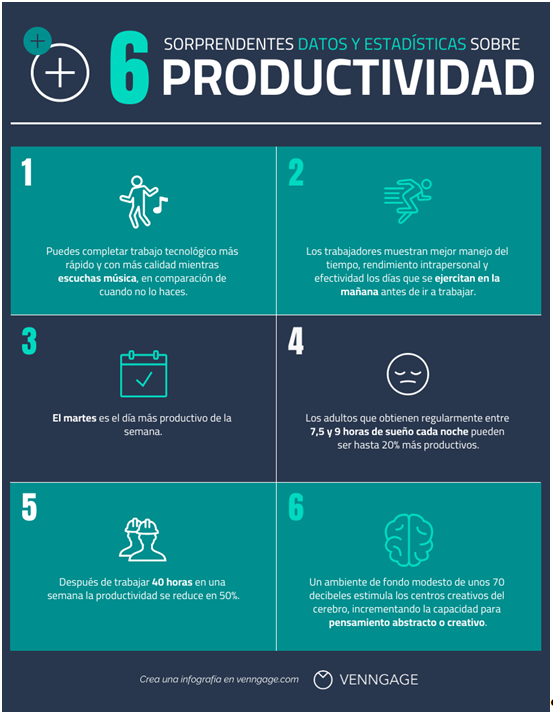
In addition to that, sleep problems can negatively affect your physical health, leading to consistent feelings of sleepiness, hormonal changes, and dietary effects.
We often think that part of having an entrepreneurial mindset is working incredibly hard without a break. That’s not the case: if we don’t get enough rest, there won’t be a business left to run.
We’re going to take a look at what’s keeping you from getting a good night’s sleep and what you can do to remedy it, but before we do that, let’s look at how you can stay productive when you’re tired from lack of sleep.
Tips to be more productive if you haven’t slept well
1. Eat breakfast
Don’t eat anything sweet for breakfast. It’s not time for cereal or muffins when you’re sleep deprived. Yes, they will give you some energy but it will not last and when that boost has passed you will feel worse. Instead, choose a breakfast with whole grains and protein. For example, a turkey sandwich with sausage and eggs, or some toast. Eat within an hour after waking up to get the most of each nutrient.
2. Get some sun
Natural light, especially when you’ve recently woken up, can boost feelings of alertness and reset your circadian rhythm. Open the curtains as soon as your alarm goes off and spend a few minutes in the sun. If you can, eat breakfast outside or consider walking to your workplace to soak up sunlight.
3. Do the most important tasks of the day first
Even when you have slept well, you will always have more energy during the first hours after waking up. Your energy will likely fluctuate throughout the day, so start with the most critical tasks and leave the easier ones for later in the day.
4. Prioritize
Another way to get done what you need to do and feel productive is to choose the three most important tasks you have to complete. This way you won’t feel like you wasted the day and you can focus on completing them. Anything extra you manage to do is just a bonus.
5. Reduce distractions
An average person checks their phone about 150 times a day, even when they don’t receive any notifications. When you’re sleep deprived, you can lose a bit of impulse control, which means you may check your phone (and email, YouTube, etc.) more frequently.
So in order to stay more focused, reduce or eliminate all possible distractions. Silence notifications and keep your phone away from you.
6. Drink cold water
You might be tempted to drink several cups of coffee when you’re sleepy, but the energy they give you will be short-lived, and all that caffeine could actually affect your ability to sleep that night. Instead, replace the coffee with ice-cold water. If you are hydrated, you will feel more energetic and more energy means more productivity.
7. Take a walk
Even when you have a busy day, you can find 15-20 minutes for a walk outside. Going outside for a few minutes will allow you to get some sun, plus walking has been proven to help improve creativity and focus. You can even invite someone to join you.
8. Take a nap
A 10-20 minute nap can do wonders, just remember to set the alarm, dim the lights, and actually get up when it goes off. It will help you be more alert and ready to take on the rest of the day.
Although all these recommendations will help you to be more productive after a sleepless night, the ideal is that you can sleep well. Therefore, now we will share some tips that will allow you to start sleeping better if you have had some difficulties.

Don’t drink before bed
There are some drinks that you should avoid before going to bed. Among them, those based on caffeine and alcohol. They could stimulate your mind and negatively affect your ability to sleep.
If you need some caffeine to work on your tasks, try to limit coffee to the morning, not the afternoon, and definitely not the evening.
Nicotine is another stimulant to avoid as bedtime approaches.
Also, you should avoid drinking too much of any type of liquid during the night so that you don’t have the need to go to the bathroom in the early morning, which would disrupt your sleep.
Don’t go to bed with a full stomach
Do not go to sleep with a full stomach, it can make you feel bloated, uncomfortable and you may even have indigestion.
Instead, try to have your last meal 3-4 hours before bed so your body has enough time to settle and it won’t impact your sleep.
If you need a snack in the middle of the night, you can make a small sandwich or eat a yogurt that will not be too heavy for your system.
Reduce your exposure to light
Many people don’t know that melatonin is a hormone that has a profound effect on how we sleep.
This hormone is affected by exposure to light. It increases when the environment is darker and decreases when the body is exposed to light. It is also impacted by the body’s circadian rhythm.
With this in mind, to ensure you get a good night’s sleep your bedroom should be dark and feel comfortable. This way you will be activating melatonin and improving your sleep.
Too many light-emitting items around you will make your brain think it’s still daytime, making sleeping more difficult.
During the day try to keep the areas around you lit so your mind stays sharp, and go outside as much as possible to get sunlight. You can do it on your lunch breaks, for example.
Another element of light that affects your body is the blue light produced by computer, tablet, and mobile phone screens.
Limit your exposure to these light sources especially before you go to sleep as they can also impact your circadian rhythm by making your brain believe that it is still daytime.
Get your body used to a sleep schedule
If you find yourself falling asleep during the day while you’re working, you might be tempted to take a short nap. It’s okay, your internal clock just needs a short break.
But keep this nap short, no more than 30 minutes. Any more than that and your body might get confused into thinking it’s nighttime.
This will mess with your circadian rhythm and make sleeping at night very difficult.
In general, you should sleep as long as your body tells you to, but more important than that is having a pattern of sleeping and waking habits that will make the process easier to achieve.
Practice going to bed at the same time every day and waking up at the same time every morning. With enough practice your body will get used to the system and you will sleep better.
What’s on your mind before you sleep?
Work during the day can be stressful, but if you start thinking about how to get more Instagram followers, how to make an infographic on that topic you want to share on social media, or which PowerPoint templates you’ll use for your next webinar or the copy for your mailing, falling asleep and staying asleep will be hard.
Try doing mental exercises to clear your mind of the day’s events. For example, meditation or breathing can calm your mind and eliminate anxious thoughts.
You will not be able to sleep when your mind is thinking about a million things about the day before or about the future. By keeping your mind calm and de-stressed you will be able to sleep better.
Instead of taking your worries to bed, empty all your ideas and plans into a mind map and don’t think about them again until the next day.
The bed is for sleeping
One trick that could make your brain want to sleep when you’re in bed is to avoid using it for other activities during the day.
For example, if you want to watch Netflix, use the laptop or eat, you should do that somewhere else.
This will also help you limit your exposure to blue light. Your body will also be able to mentally associate bed with bedtime.
Sleep well and wake up alert
Make your workday more productive and improve your overall mental and physical health by following these tips for sleeping better at night.
A good night’s sleep will do wonders, and these tips should help you cultivate good habits.
As you’ve seen, there can be a variety of reasons why you’re not sleeping well, and if the methods described don’t work for you, you may need to see a doctor.
You may have a sleep disorder that needs professional help to manage.
For everyone else, these methods are all you’ll need to ensure a good night’s sleep.
If you want to keep improving your performance beyond those occasional nights, you’ll find more resources in How to be more productive and manage your time better, and the keys to planning and effective time management will help you organize your day-to-day better.
These tips also go well with our guide to the best project management tools for organizing your day-to-day.
Getting back on track is also easier if you organize your daily tasks on a Kanban board.

Jose Argudo
CMO at Mailrelay. Writes about email marketing, copywriting and conversion for small businesses and entrepreneurs.