Single-minded proposition (SMP): what it is, how to write it and examples
What it is, how it differs from the USP and how to write it in one sentence
The single-minded proposition (SMP) is the main idea a campaign wants to leave in the audience’s mind, summed up in a single sentence. It’s the message that must come through even if the person forgets everything else.
It’s part of the creative brief. And it’s usually the hardest sentence to write in the whole document, because it forces you to choose.
What is the single-minded proposition for?
It makes sure the whole team works on the same idea. The copywriter, the designer and the client know what the campaign must communicate before they start.
It’s also used to evaluate the pieces. If an ad, a landing page or an email doesn’t convey the SMP, it needs fixing, however good it looks.
And it helps you resist the temptation to say everything. A campaign that lists ten advantages leaves none of them in people’s memory.
What’s the difference between the SMP and the USP?
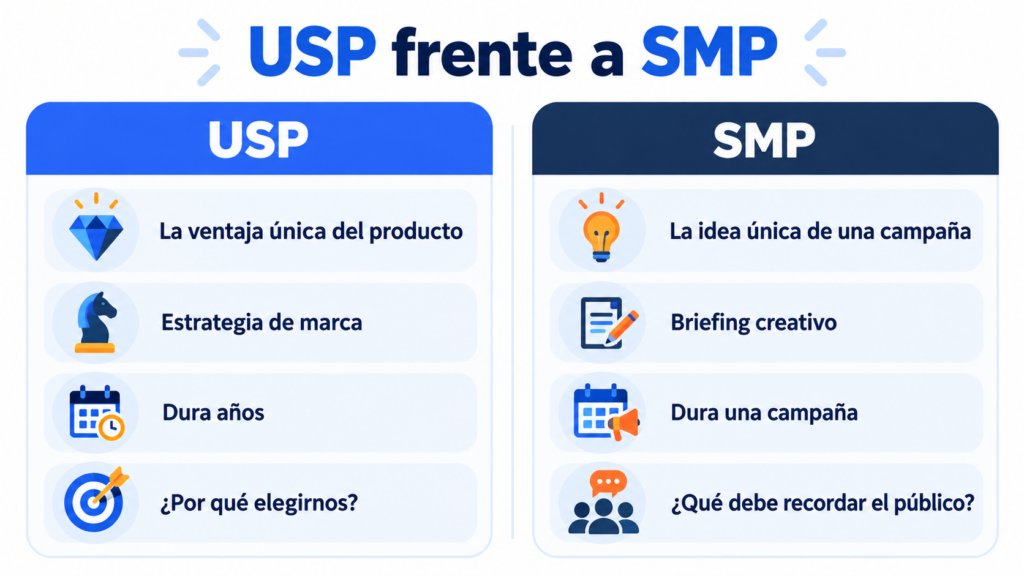
They’re often confused, but they’re not the same thing. The USP (Unique Selling Proposition) is what makes your product unique compared to the competition. The SMP is what you want the audience to think or feel after seeing a specific campaign.
| USP | SMP | |
|---|---|---|
| What it is | The product’s competitive advantage | The single idea of a campaign |
| Where it’s used | Brand strategy and positioning | Creative brief |
| Duration | Years | As long as the campaign lasts |
| Question it answers | Why choose us? | What should the audience remember? |
The same USP can give rise to several SMPs. A coffee brand with the USP “roasted the same day” could run one campaign with the SMP “the coffee that really wakes you up” and another with “neighborhood coffee, in your home”.
Put your main message to the test
Compare two subject lines with an A/B test and keep the one that performs best.
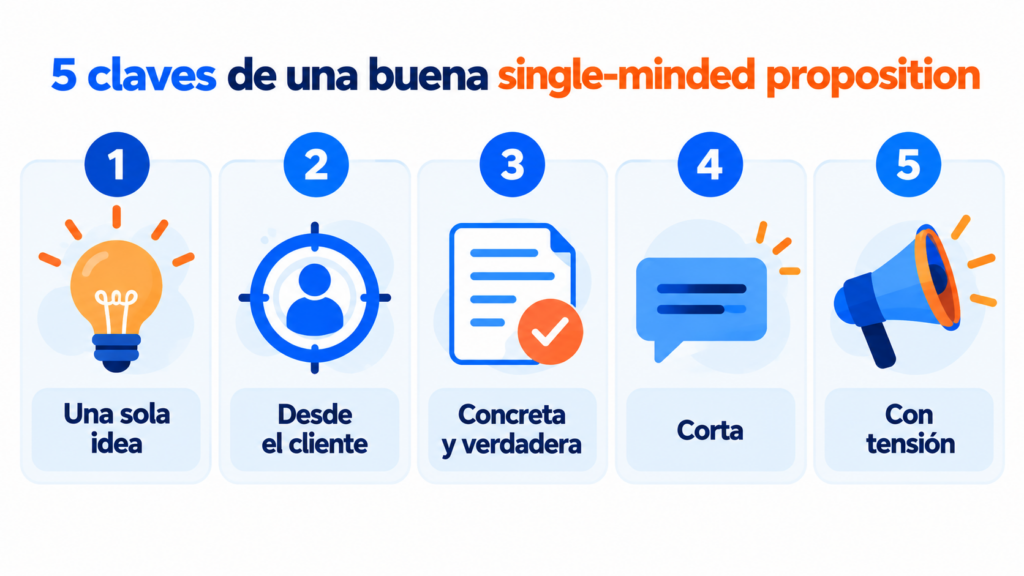
How to write a good single-minded proposition
One single idea. If you need the word “and”, you probably have two ideas. Pick one.
From the customer’s point of view, not the product’s. “Our software has 50 features” talks about you. “Finish work before six” talks about your reader.
Specific and true. It has to be provable. If the promise isn’t kept, the campaign backfires on the brand.
Short. One sentence of fewer than fifteen words. It’s not the final slogan, but it should be understood the first time.
With tension. The best SMPs solve a problem or a desire the audience recognizes right away.
Single-minded proposition examples
These examples are made up, so you can see the format:
| Product | SMP |
|---|---|
| Neighborhood gym | Training close to home is training for real |
| Invoicing software | Invoice in a minute and forget about it until next month |
| Children’s clothing store | Clothes that survive everything your kids do |
| Language school | Speak English in meetings without fear of making mistakes |
| Email marketing tool | Your customers come back when you write to them at the right moment |
Notice that none of them lists features. They all pick one benefit and tell it from the buyer’s point of view.
A trick to check it: write the SMP on a sticky note and stick it on your screen while you work on the campaign. Before signing off on each piece, ask yourself whether someone who only looks at it for three seconds would take away that idea. If the answer is no, something needs to go.
How is the SMP used in email marketing?
In email, each campaign’s SMP should show up in three places: the subject line, the first paragraph and the call-to-action button.
For example, if the SMP is “your Christmas order arrives on time”, the subject line could be “Order today and get it before the 24th”, the copy could explain the delivery times and the button could say “Place my order”.
If the subject line promises one thing and the email talks about another, the SMP isn’t clear. This often happens when a newsletter tries to share too much news at once. In that case, it’s best to split it into several sends or segment your list so each group gets what interests it most.
How Mailrelay helps you
With Mailrelay you can check whether your SMP works. Run an A/B test with two subject lines that express the idea in two different ways and send the best-performing version to the rest of your list.
You can also create segments so each audience gets the campaign with its own SMP, and measure opens and clicks (on the free account and on Enterprise).
The free account lets you send up to 80,000 emails a month to 20,000 contacts, with human support on every plan.
Bring your SMP to every email
Segment, personalize and measure your campaigns for free with Mailrelay.
Frequently asked questions about the single-minded proposition
We answer the most common questions about the single-minded proposition.
What does single-minded proposition mean?
It means a proposition with a single focus. It’s the central idea a campaign must convey, in a single sentence.
Is the SMP the same as the slogan?
No. The SMP is an internal instruction in the brief for the creative team. The slogan is the public phrase that may come from it, with a more creative tone.
Where does the SMP go in a brief?
Usually after the target audience and before the proof points or reasons to believe. That way the team knows who they’re talking to and what they need to tell them.
Can a campaign have two SMPs?
It shouldn’t. If you have two equally important messages, it’s better to run two campaigns or send two separate emails.
How do I know if my SMP is good?
Read it to someone who doesn’t know your product. If they can repeat it in their own words and understand why it matters to them, it works.