USP (Unique Selling Proposition): what it is, examples and how to create one
How to find what makes you different and say it in a single sentence
The USP, or Unique Selling Proposition, is that factor or set of factors that make a product, service, or brand stand out from its competitors in the market.
In other words, it is what makes consumers choose a particular product or service over other similar ones available in the market.
To understand it better, picture the huge number of similar products out there: countless brands of shampoo, cereal, mobile phones and more.
Why do you choose a particular brand?
Probably because it has something special, whether in its composition, design, price, or the value it offers.
That “something special” is the USP.
The concept was created by Rosser Reeves, an advertising executive at the Ted Bates agency, who explained it in his book Reality in Advertising (1961). For Reeves, every ad had to make the customer a specific proposition, one the competition couldn’t offer and strong enough to attract new customers.
Why the USP matters in marketing
Now, you might ask yourself, why is this USP so relevant?
The answer is simple: in a saturated market, where consumers face an avalanche of similar options, the USP can be the deciding factor.
The factor that tips the scale in favor of a brand or product.
In addition, a clear and well-defined USP can be the driving force behind effective marketing campaigns.
It helps companies effectively communicate the unique value they offer.
Allowing consumers to quickly understand why they should choose one option over the others.
Building an Effective USP
Building a USP is not an easy task.
It is not just about choosing a random feature and promoting it.
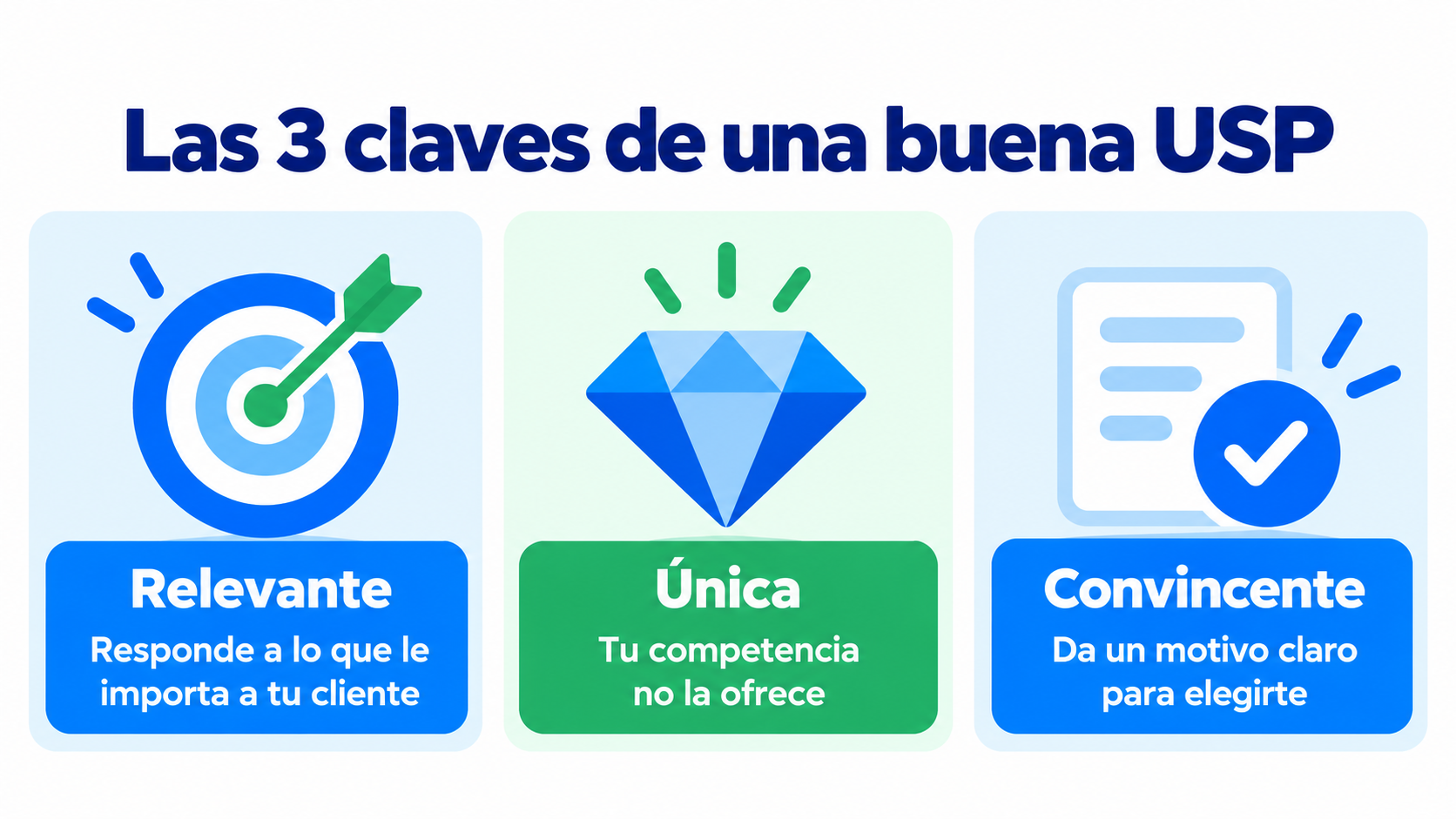
The USP must be:
- Relevant: It must address a real need, desire or concern of the consumer.
- Unique: As its name suggests, it must be different from what other competitors offer.
- Convincing: Being unique isn’t enough. It also has to be something that persuades the consumer to act.
Developing an effective USP generally involves in-depth market analysis, consumer research, and a clear understanding of the brand’s own capabilities and strengths.
Tell your customers what makes you different
Bring your unique selling proposition to every email and SMS. Get started for free with Mailrelay.
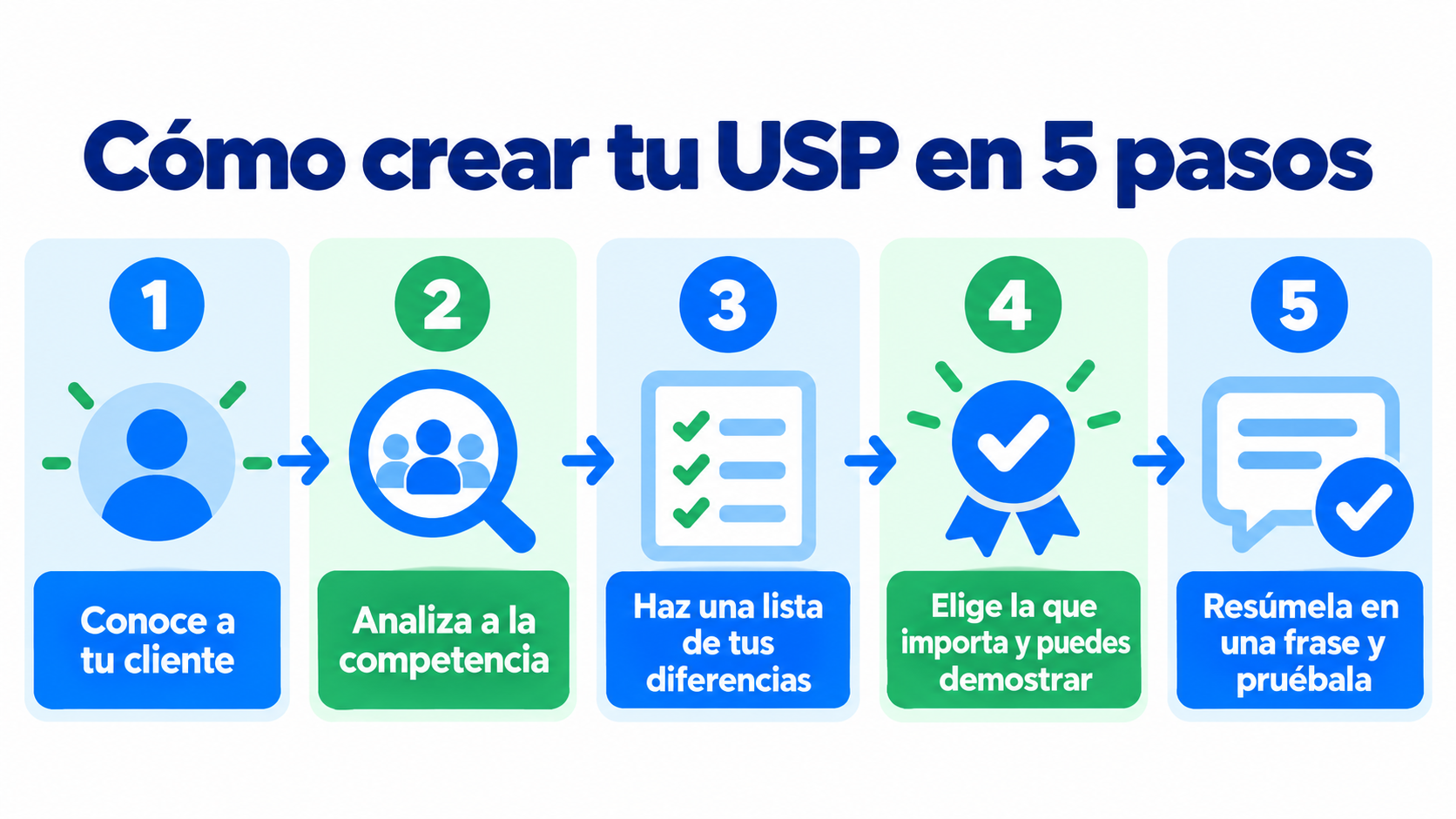
How to create your USP in 5 steps
- Know your customer. Define your buyer persona: what problem they have, what worries them and what they value when buying.
- Analyze your competitors. Note what each competitor promises and what they all have in common. A SWOT analysis helps you see it.
- List what makes you different. Think about the product, price, speed, guarantee, service or the way you work.
- Pick the one that matters most and that you can prove. Keep a difference your customer cares about and that you can always deliver.
- Sum it up in one sentence and test it. Write it clearly and check whether it works, for example with an A/B test of your email subject lines.
USP examples
| Brand | USP | What makes it unique |
|---|---|---|
| M&M’s | “Melts in your mouth, not in your hand” | A specific product advantage. It’s one of the USPs created by Rosser Reeves himself |
| FedEx | “When it absolutely, positively has to be there overnight” | A promise of speed and reliability |
| Domino’s Pizza | “Pizza in 30 minutes or it’s free” (1980s) | A guarantee that is easy to understand and to check |
| Avis | “We’re number two, so we try harder” | It turns a weakness into a reason to choose it |
The FedEx and Avis slogans are quoted in their original English.
USP, value proposition and SMP
| Concept | What it is | What it’s used for |
|---|---|---|
| USP | The difference only you offer | Standing out from the competition |
| Value proposition | The full benefit the customer receives | Explaining why your product is right for them |
| Single-minded proposition | The single message of a campaign | Giving focus to an ad or a briefing |
| Slogan | The phrase people remember the brand by | Being recognized and remembered |
The USP in email marketing and SMS
Now, you may be wondering how the USP relates to other marketing strategies.
Such as email marketing and SMS marketing.
Well, the connection is quite direct.
Email marketing and SMS marketing are direct communication channels with the consumer.
Through these channels, brands can communicate their USP effectively and persuasively.
After all, if you have managed to get a consumer to give you their email address or phone number, you have a direct opportunity to communicate your value.
For example, if your product’s USP is that it is eco-friendly, you could launch an email marketing campaign highlighting your product’s environmental benefits, backed by your USP.
In the same way, an SMS can be the perfect tool to convey special offers or discounts that are part of your unique selling proposition.
Your USP should show up in every email, not just on your website:
- In the subject line, when the difference is the reason to open. For example, “Delivery in 24 hours, holidays included”.
- In the preheader, to back up the subject line with proof.
- In the email header, as the opening line.
- In the call-to-action button, reminding the customer what they gain.
How Mailrelay helps you
With Mailrelay you can bring your USP to every message and see which version works best:
- A/B tests to compare two subject lines or two ways of presenting your proposition.
- Segments to highlight the difference that matters most to each group of customers.
- Automations, such as a welcome email that explains why you’re different from day one.
- Email and SMS from the same account, to repeat the message on both channels.
The free account includes 80,000 emails a month and up to 20,000 contacts.
Find out which message convinces your customers most
Compare subject lines with A/B tests and send up to 80,000 emails a month for free with Mailrelay.
Frequently asked questions
What is a USP?
It’s the unique selling proposition: the difference that makes a customer choose your product over the competition’s. The acronym stands for unique selling proposition.
What does USP mean in marketing?
It stands for unique selling proposition. It’s the specific advantage only your brand offers and that you communicate in your campaigns.
Who invented the USP?
Advertising executive Rosser Reeves, of the Ted Bates agency. He explained it in his book Reality in Advertising (1961).
What’s the difference between a USP and a value proposition?
The value proposition sums up the full benefit the customer receives. The USP is only the part that sets you apart from the competition.
How do you write a good USP?
In a single sentence, with a specific benefit that matters to the customer, that the competition doesn’t offer and that you can always deliver.