Employer branding: what it is and how to build an employer brand that attracts talent
How to make people want to work at your company, and stay
Employer branding is a company’s image as a place to work, and the strategy to improve it. It includes what its employees, the candidates who might join and anyone who knows the company think of it.
It is also known as the employer brand. Just as a brand cares about what its customers think, employer branding cares about what the people who work there, or want to, think.
What does employer branding mean?
Employer is the company that hires people, and branding means building a brand. It applies branding techniques to the relationship between the company and its people.
Your company already has an employer brand, even if you have never worked on it. It is shaped by your employees’ opinions, reviews on job sites, how you treat candidates and what people say on social media. The strategy makes sure that image is real and positive.
| Consumer branding | Employer branding | |
|---|---|---|
| Audience | Customers and prospects | Employees and candidates |
| Promise | What the product offers | What working here offers |
| Led by | Marketing | HR and marketing together |
| Measured by | Sales, reputation, loyalty | Applications, turnover, employee satisfaction |
What is the employee value proposition (EVP)?
The EVP (Employee Value Proposition) is the foundation of employer branding. It sums up why someone would want to work at your company and stay.
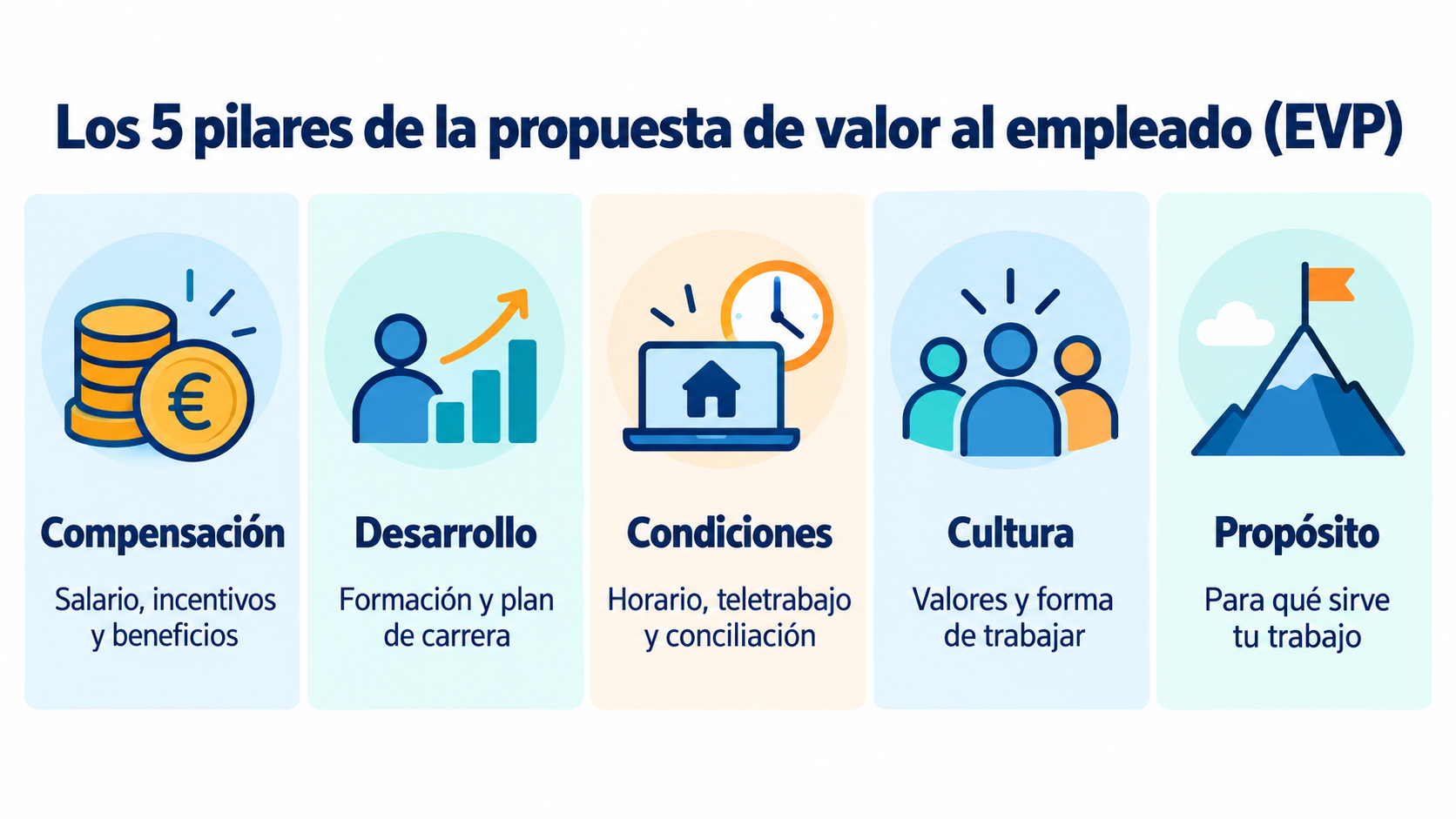
It usually rests on five pillars:
| Pillar | What it includes |
|---|---|
| Compensation | Salary, incentives and benefits |
| Development | Training, growth and career path |
| Conditions | Working hours, remote work, work-life balance |
| Culture | Values, atmosphere, way of working |
| Purpose | What the work is for and its impact |
A good EVP is specific and true. “We’re one big family” says nothing. “Friday afternoons off all year round” does.
Benefits of employer branding
You attract better candidates. People who fit your culture come looking for you.
You cut hiring costs. You get more applications through your own channels and rely less on job ads.
You retain talent. Employees who are proud of their company stay longer.
A better image with customers. A company that is a good place to work inspires trust.
More internal engagement. A motivated team works better and speaks well of the brand.
Welcome every new employee
Use Mailrelay to create an automated onboarding sequence and an internal newsletter for your team.
How to build an employer branding strategy in 6 steps
1. Listen to your team. Surveys and interviews: what they value, what they would change and why they stay.
2. Define your EVP. Based on what they tell you, write down what you truly offer. Don’t promise what you don’t have.
3. Get to know your ideal candidate. Just like a buyer persona, but for your next hires: what they are looking for and where they are.
4. Take care of the candidate experience. Clear job postings, fast processes and a reply to everyone, including those who don’t get through.
5. Give your employees a voice. Their stories are more credible than any ad. This is known as employee advocacy.
6. Measure. Applications, time to fill a position, turnover and employee satisfaction.
Examples of employer branding actions
Your own careers page. With real photos of the team, testimonials and what the company offers.
Content on professional networks. Posts by the employees themselves about their work, projects and what they have learned.
Referral programs. Rewarding whoever recommends a candidate who ends up being hired.
Replying to reviews. Respectfully answering opinions on job sites, including negative ones.
Social initiatives. Corporate social responsibility projects the team takes part in.
Employee onboarding
Employee onboarding is the process of welcoming and integrating people who join the company. It runs from the welcome and initial training until they know their role, their team and the company culture.
It is the employee’s first real experience with the brand. If it doesn’t live up to what was promised during hiring, the image falls apart. If it exceeds it, that employee becomes your best ambassador.
Employer branding and email marketing
Email is useful at three moments:
With candidates. Alerts about new openings for those who subscribed to your talent pool, and clear replies throughout the process.
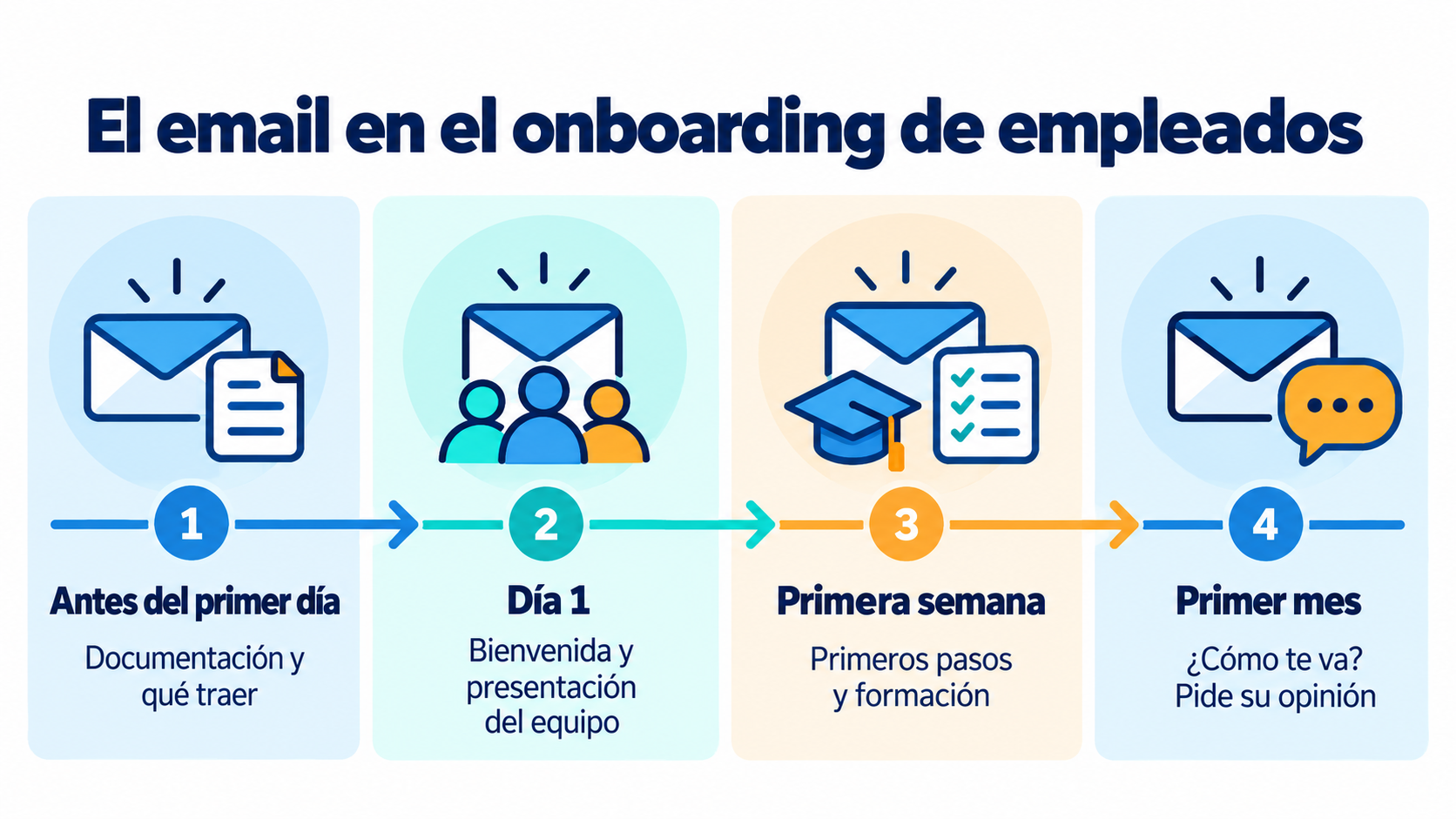
During onboarding. A welcome sequence for new employees: paperwork before the first day, an introduction to the team and a reminder of the first steps. It works just like a welcome email for customers.
With the team. An internal newsletter sharing news, achievements and projects keeps everyone informed and strengthens the culture.
How Mailrelay helps you
With Mailrelay you can create the welcome sequence for new employees, send an internal newsletter and notify your candidate pool of every new opening. Groups let you keep candidates, new employees and your team separate.
The free account includes up to 80,000 emails a month and 20,000 contacts, with human support by chat, ticket and phone.
Send your newsletters with Mailrelay
Up to 80,000 emails a month and 20,000 contacts for free, with human support on every plan.
Frequently Asked Questions
These are the most common questions about employer branding.
What is employer branding in a nutshell?
A company’s image as a place to work, and the strategy to make it attractive to employees and candidates.
Who is in charge of employer branding?
Usually HR, together with marketing and communications. But the people with the most influence are the employees themselves.
What is the difference between employer branding and employee advocacy?
Employer branding is the full strategy. Employee advocacy is one part of it: employees talking about the company on their social networks.
How do you measure employer branding?
With the number and quality of applications, time to fill positions, turnover, employee satisfaction and reviews on job sites.
Is employer branding useful for small businesses?
Yes. A small business can’t compete with a large company on salaries, but it can on closeness, flexibility or interesting projects. Telling that story well makes the difference.