It has been proven time and again that email marketing isn’t going to die any time soon, because the return on investment is very high: you can get an average return of $44 for every dollar invested in email marketing campaigns.
That’s why many companies are investing their time and money in email marketing. 93% of B2B marketers use email to distribute content.
This means people receive lots of messages in their inbox every day: 35% of marketers send their customers 3 to 5 emails per week. What’s more, in 2019 alone, 293.6 billion emails were sent and received every day, which shows that email inboxes are fuller than ever.
Although customers receive staggering amounts of email, they are demanding and don’t open every newsletter. This shows that the competition is fierce and that you’ll need to stand out somehow if you want your email marketing efforts to pay off.
One of the main trends marketers have seen in the world of email is interactive email. In fact, interactivity ranked number 1 on the list of email marketing trends for 2017.
This isn’t a completely new concept: it’s already widely used on websites, apps and other platforms, so this is simply an extension of the same idea.
Interactivity is the ability to engage your customers by asking them to take certain actions on the platform they are currently browsing.
When you work with interactive content, it’s easier to generate activity and engagement with a piece of content, which usually involves clicking, swiping or even tapping.
This strategy has proven effective: interactive content outperformed every other type of content in a survey carried out by Zembula.
So sending interactive emails means that, instead of the old, predictable, static messages subscribers usually receive, your emails are engaging and exciting, with calls to action that don’t require them to leave their email.
Adding a range of interesting elements and features to your email will take your email marketing strategy to the next level and improve the subscriber experience.
How to get started with interactive email marketing
Here are some of the main interactive elements you can add to your emails to generate more business opportunities:
1- GIFs and memes
This is one of the most popular and simplest interactive elements companies include in their emails.
You can use memes to complement your email content, entertaining your readers and creating engagement, or use GIFs to show off the different features of your products.
GIFs give a vivid visual expression of what you’re trying to get across to your readers, grabbing their attention to illustrate a concept or CTA.
GIFs are a great format for playing with images and graphics. You can combine images and movement to illustrate ideas or concepts for your subscribers.
Here’s an example Tinder sent to its subscribers:
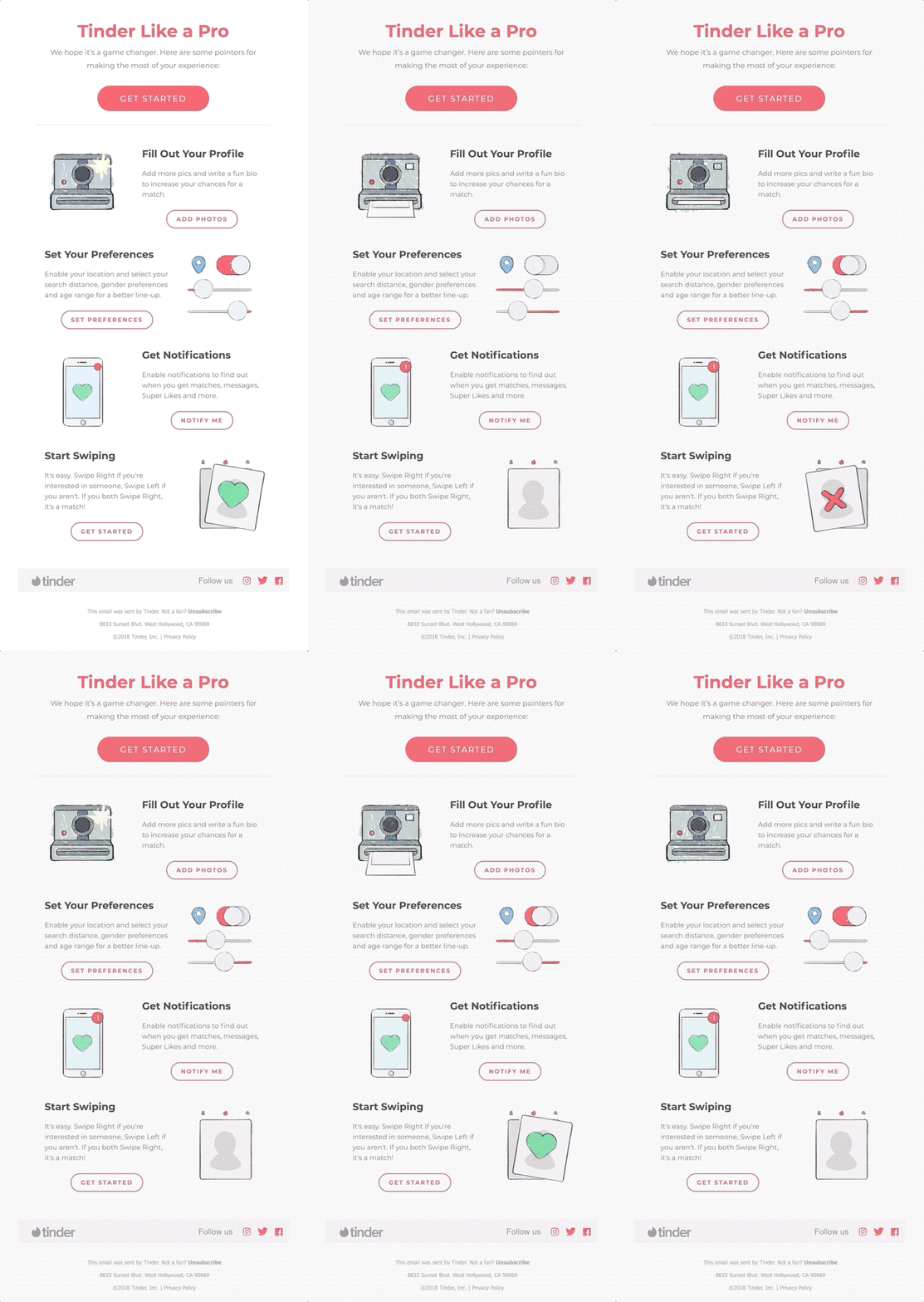
Memes, on the other hand, make your emails fun.
2- Hover effects
This is another well-known form of interactivity in emails. You can use hover effects in many scenarios.
For example, a subscriber can hover the cursor over the buttons in a CTA, making it more visible, adding a sense of gamification and highlighting the options to create emphasis.
You can create these effects on images: for example, product images can be displayed in the body of the email, and when a subscriber hovers over them, they’ll see a hover effect revealing product details such as the price and the product description. You can combine interactivity and gamification.
You should go for a single-column layout, as many websites do. Layouts play an important role when it comes to hover effects. Choosing the wrong layout can ruin all your email marketing efforts.
You can also use the same effects to entice your subscribers to tap or hover over products or services to reveal a bundle or an offer hidden in the email. This will spark curiosity and drive engagement.
3- Social media plugs
You can invite your followers to share your emails through the social media buttons included in the newsletter. This will increase your brand’s reach and help you get more subscribers.
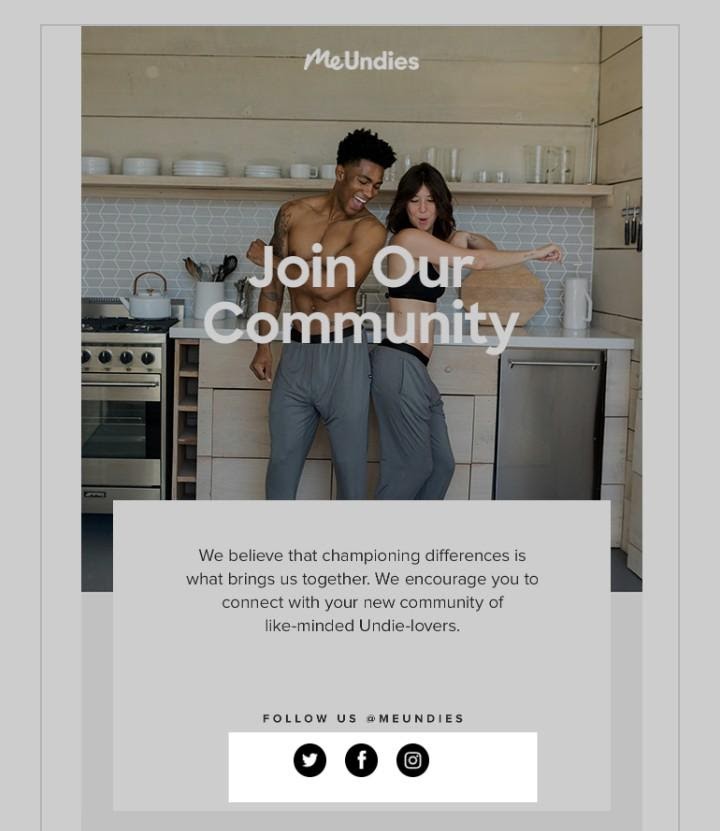
Your subscribers will be able to click the links to share your campaign with their family or friends. This process will be more efficient and faster.
4- Videos
Adding videos to your emails is also a great way to engage readers. People love videos; in fact, it’s probably their favorite way to consume content.
When you include a video in a newsletter, your subscribers probably won’t be able to resist watching it.
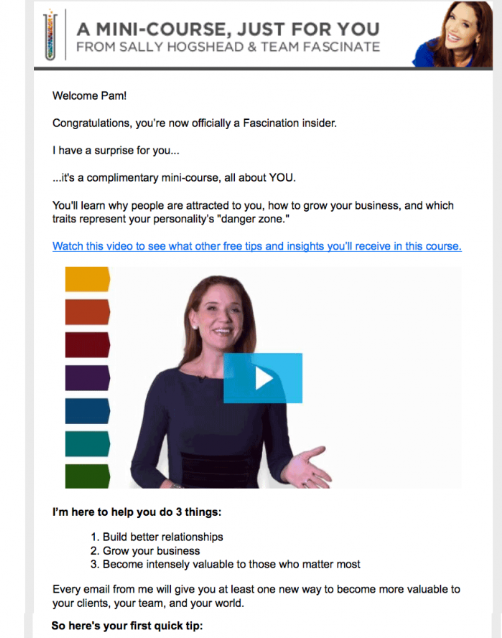
If you send a newsletter with a video, you can increase your click-through rate by up to 96%.
However, it’s better to send a short video, not a 30-minute one.
It’s important to remember that attention is expensive: keep your message short, relevant and enjoyable, or your videos will have the opposite effect. Statistics show that videos up to 2 minutes long generate the most engagement.
Many companies have seen up to a 300% increase in click-through rate after sending a newsletter with a video.
These videos can be informative, instructional or a summary of what was said in the email, since viewers retain 95% of a message when they watch it in a video, compared with 10% when they read the same information as text.
If video marketing isn’t on your radar yet, we definitely recommend considering it, as it’s becoming more and more of a trend among marketers as time goes by. 87% of online marketers use video content.
5- Surveys and questionnaires
This is an amazing way to find out what your subscribers expect, want and love in your newsletters.
Their thoughts and feedback can help you create a more personalized experience for them. Plus, if they see that you want to hear what they have to say, they’ll feel more confident about your brand.
You can create a set of questions, a survey, and embed it in the email instead of inviting your subscribers to visit a website to take part in the survey.
Surveys are a great way to show your customers that you care about them and that you want to hear their opinions and suggestions and learn about their preferences.
Here’s an example from Code Camp:
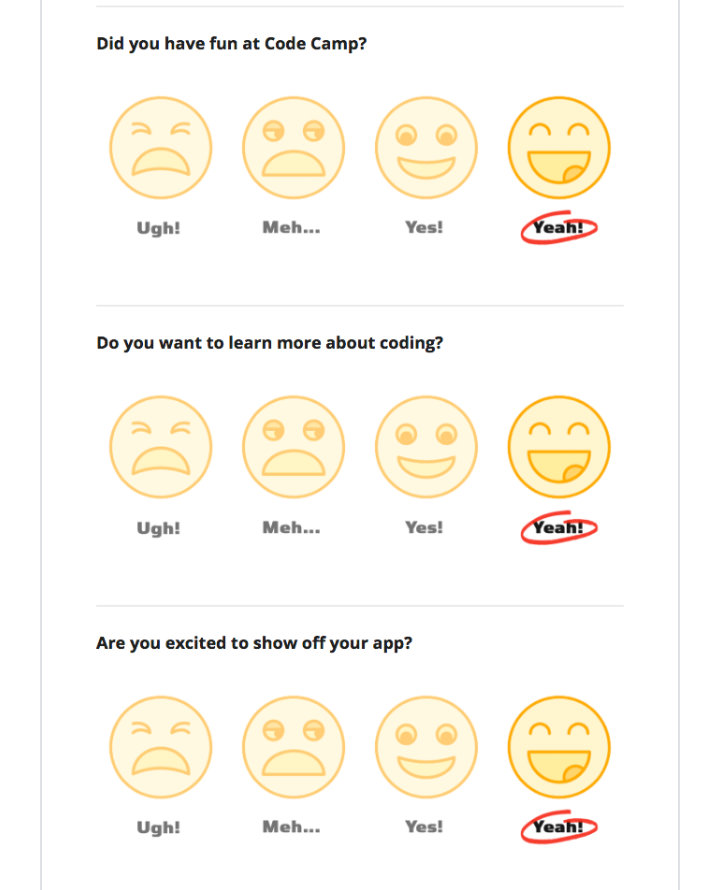
Giving your subscribers the option to answer these surveys in the email, without having to visit another website or page, makes it easy for them and gives them a reason to take part.
Surveys can be single-answer or multiple-choice.
Don’t forget that you’ll always need to optimize your survey for mobile devices.
6- Gamification
This interactive element is really fun for subscribers, but it isn’t fun to create, as it requires complex coding and design.
Even so, you can still find alternatives, but you’ll have to be creative.
For example, you can extend the use of hover effects, specifically the image-swap effect: you can present different images, and one of them will be the correct image the subscriber has to click. For example, you could make the wrong images red, and the subscriber will have to find the blue or green image to get a discount coupon. Isn’t that exciting?
Unfortunately, not all email clients support this, but the effort is well worth it. This concept is all about letting your subscribers play with the elements of the email.
Here’s an example:
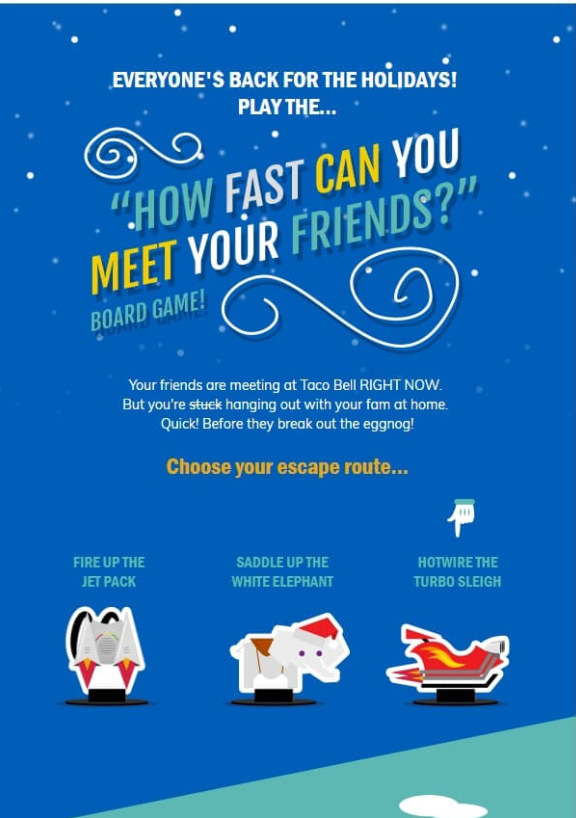
Image carousels in emails
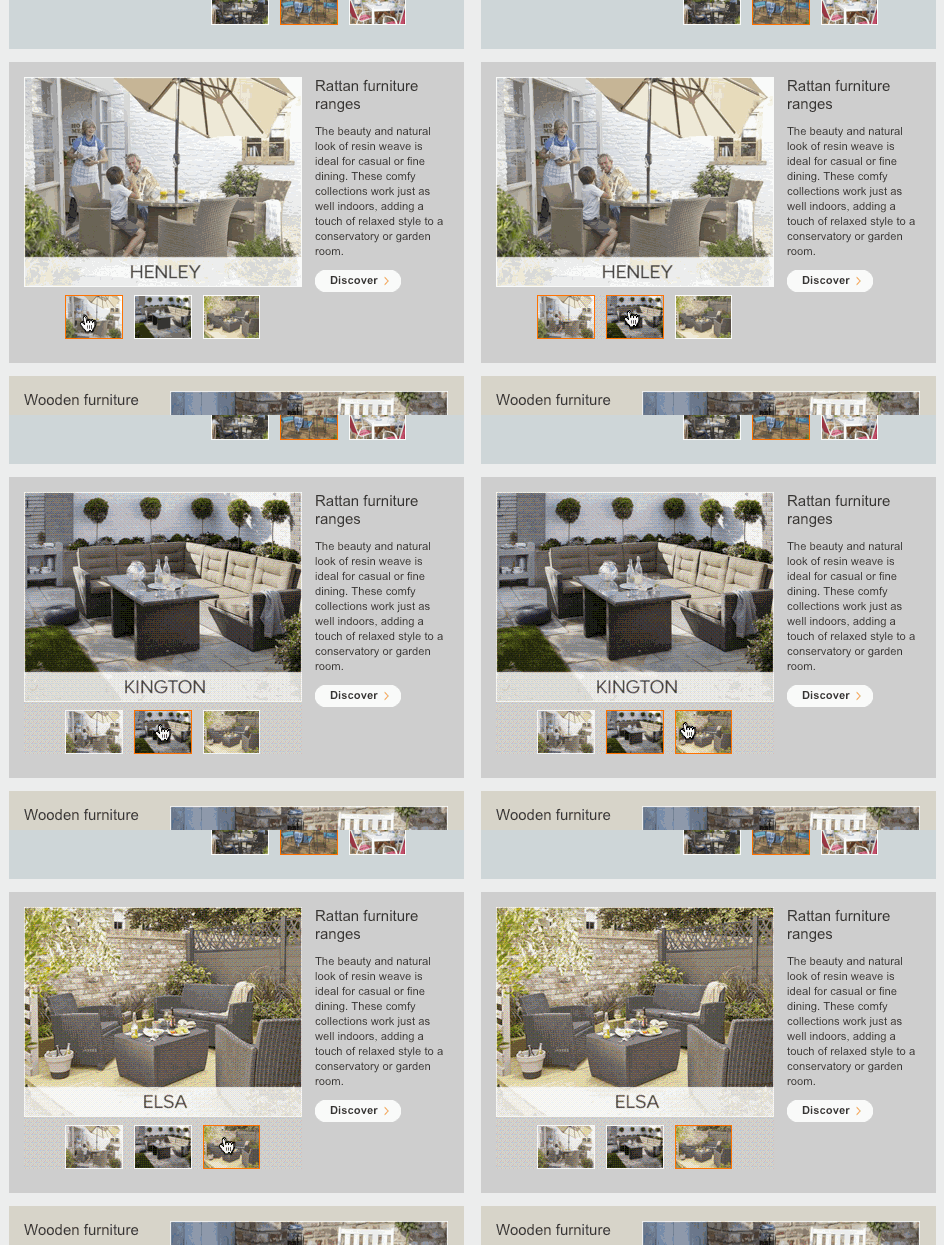
You can show a few product images with prices and descriptions, and your subscribers can find more information right in the newsletter.
This gives you the chance to turn subscribers into customers faster and offer them an immersive experience directly in their inboxes.
Subscribers can also choose what they want to see.
Here’s an example:
Menu bars are one of the most clicked options on many websites, for an obvious reason.
People want to be able to navigate the page easily and go straight to what matters most to them.
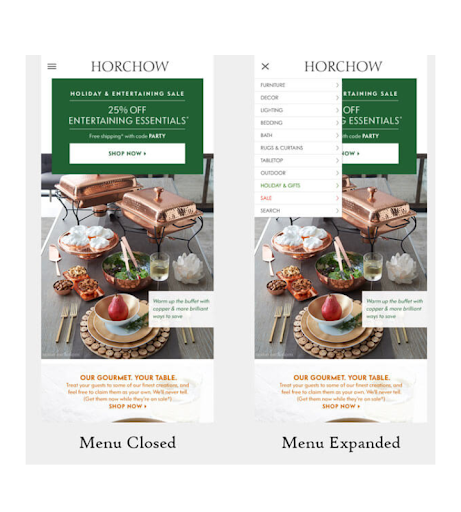
This isn’t limited to websites: you can also use this option in your emails. You can include what are popularly known as “hamburger menus” in your newsletter design.
This interactive element will get your subscribers clicking and navigating your email easily, improving the user experience.
It’s an opportunity to include more content in your newsletters without cluttering the message with unnecessary information, while cleverly keeping the size of your newsletters down.
Here’s an example:
8- Accordions
Accordions, a technique used by many marketers, make your email design efficient, minimalist and streamlined, just like menus.
Reading a long email full of disorganized information is no fun and will make your subscribers close the message, whereas accordions let you split the newsletter content into sections, so users can easily click and see a drop-down list with more details for each section.
Here’s an example:
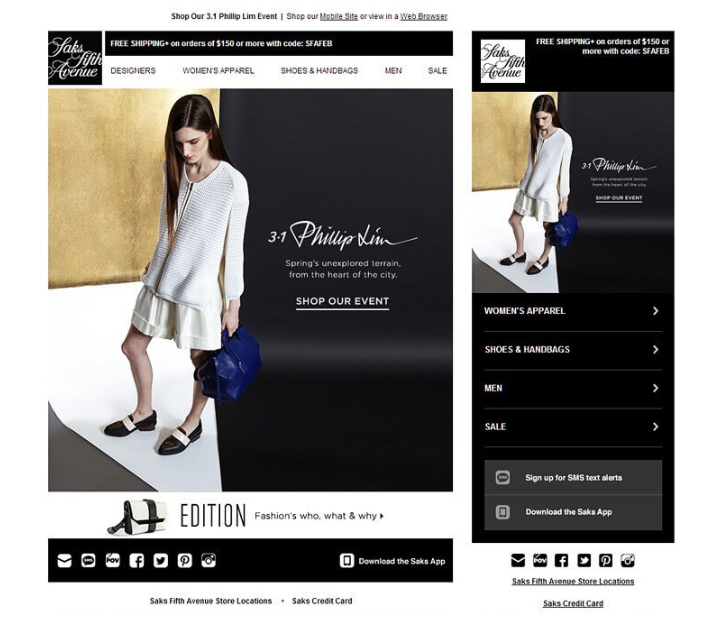
If you want to send long, detailed emails without boring your subscribers, this technique can help you condense the content and make navigation easy for users.
You can also measure the number of clicks on each link in the newsletter using an email marketing tool like Mailrelay.
9- Add to calendar option
Are you promoting an event for your company? Or hosting a webinar? Or do you want to launch a new product? Or are you about to start a live stream on social media?
Then this is the perfect interactive element to include in your emails.
With the add to calendar option, you’re inviting subscribers to take action instead of just reading a static email.
They’ll also be reminded of these events and look forward to them.
This is more effective when they can do it directly from their emails, rather than simply being told about it in plain text.
10- Live shopping carts
As you can see, interactive emails are all about bringing what used to be exclusive to websites into subscribers’ inboxes.
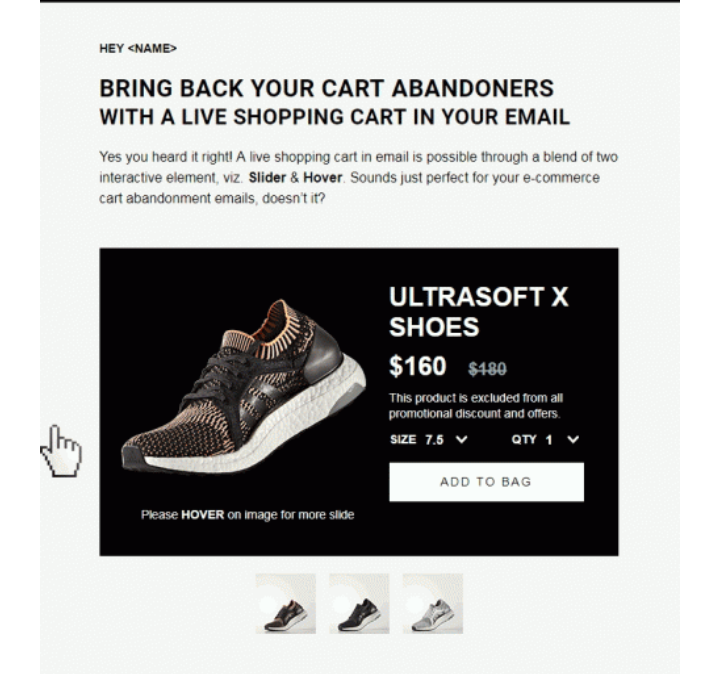
With live shopping carts in your emails, you can speed up conversions, instead of driving traffic and then having to wait for the conversion.
This option is great for creating engagement, reminding shoppers who have abandoned their carts and trying to convince them to add more products before they go to the checkout page.
Sending emails to customers who have abandoned their carts is definitely something most companies are doing to make the most of email marketing and increase their sales.
Here’s an example:
11- Interactive quizzes
This is a fun way to create engagement with your subscribers and show off the informal, fun side of your business.
Plus, you don’t have to use this technique to promote products or drive conversions: you can use it to entertain and connect with your contacts.
Quizzes can also be used to find out how much your subscribers know about your brand.
Polls, monthly quizzes and questions of the week or of the day are examples of interactive quizzes you can use to create engagement with your subscribers.

You should also try inviting your subscribers to take part and offering a prize to the winner. If you’re worried about the cost of this kind of action, think again: your customers will invest more in your company when they feel it’s a generous brand.
12- Countdown timer
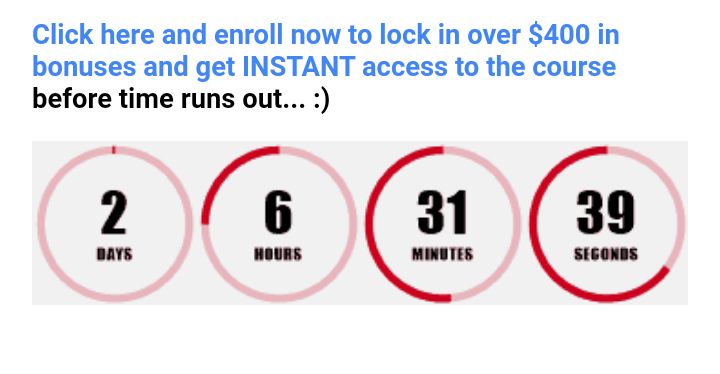
When you’re promoting a new service, about to launch a product, organizing an event or selling products or services for a limited time (a marketing strategy many companies use because it creates a sense of urgency), you can add a countdown timer to show how much time your subscribers still have to act.
You can use this strategy in your email marketing campaigns to convince subscribers that they need to take the next step now, before it’s too late.
This technique can significantly increase your conversion rates.
Your customers will have a limited time to decide what to do, or they’ll miss out on this opportunity.
It will also keep them coming back to the message to see how much time they have left. All the information will be in the newsletter, and the subscriber will only go to the landing page to buy the product.
Here’s an example:
13- Full-screen sliders
This interactive element offers the chance to view products on different slides, and subscribers will have to click and swipe to see the next slide.
They’ll be able to read a vivid description of your products or services and have a range of options to choose from. You can also add a different CTA to each slide.
This is a clever way to increase the number of CTAs you can include in an email.
Not just products, but also resources, recommendations, best sellers, top picks and so on. You can show a variety of related information.
Here’s an example:

Rotating banners also help you show multiple product images through automated transitions. This process grabs subscribers’ attention and lets them see different products effortlessly.
It also keeps the newsletter size down and helps maximize conversion rates.
This makes your email design appealing and unconventional.
15- Flip effects
Flip effects let you show information on two different sides with a flip.
You can use two images that swap: when the user clicks the first image, the second one is shown next. This can help you add more content to your email.
Not just images: you can also put paragraphs of content in the flips.
For example, the first side can show the product image and the second the price and description.
Or the first can state a theory or a fact, and the second can be a statistic proving that what the user has just read is correct.
Here’s an example of a flip effect:

Conclusion
Creating interactive emails is a way to stand out from the competition and create more engagement with subscribers.
There are many benefits to including interactivity in your email marketing strategy, but there are also challenges that will take extra effort to handle.
The best thing to do is experiment with different kinds of interactive elements to see which one works best for your brand. You’ll also need to measure the level of engagement with your customers.
It will be very important to work at sparking subscribers’ curiosity, by building in personalization, optimizing for mobile and running tests to improve your interactive email marketing strategy.
Try sending interactive emails to new subscribers: it will set the tone for your brand and make an amazing first impression.
IMPORTANT: not all email clients support these elements. So it’s best to be careful and test before sending an email marketing campaign.
Finally, you shouldn’t fill your email with multiple interactive elements: it will end up confusing subscribers and pushing the content aside. It’s best to focus on a single interactive element or a combination of two.
With these ideas and information on creating interactive emails, all you have to do is plan your strategy and work towards amazing results. To do this, you can use a free email marketing tool like Mailrelay.
About the Author
Elements like GIFs work especially well when they are built into a modular email design built for interaction.