You open a call for applications, publish the rules and send an email. The first registrations come in quickly. Then the pace slows down. And with one day left before the deadline, you get hundreds of messages from people who “didn’t know about the deadline”.
Sound familiar?
This problem shows up in exam prep academies, universities, public bodies, associations that run awards and conferences looking for speakers. And it almost always has the same cause: there is no email schedule for the call for applications planned from day one. In this guide, we explain how to build it phase by phase and how many reminders to send. You’ll also see who to exclude from each send and how to automate the process with an email marketing tool without spending hours in front of the dashboard.
Quick answer: a good email schedule for a call for applications includes a heads-up before the application period opens, an opening email, one or two reminders with useful content during the registration period, a final-stretch sequence (7 days, 48 hours and the last day) and post-deadline emails. Every send should exclude anyone who has already registered.
Plan your call for applications with Mailrelay
Schedule the heads-up, the opening email and every reminder with a date and time, and measure how many registrations each send generates. Your free account includes 80,000 emails a month and 20,000 contacts.
What is an email schedule for a call for applications?
An email schedule is the plan, with dates and times, of all the emails you’re going to send around a call for applications. It covers what is sent, to which segment, for what purpose and what condition takes someone out of the sequence.
It looks like a regular commercial email marketing calendar. But there is a fundamental difference. In a commercial campaign, you decide when the offer ends and you can extend it if it suits you. In a call for applications, the deadline is usually set by the official rules, an official gazette or a committee, and it doesn’t move. That rigidity changes everything. The schedule is built backwards from the deadline. And every planning mistake has real consequences for those who miss out.
On top of that, the audience of a call for applications is very diverse. People who have been waiting months for the date sit alongside others who didn’t even know it existed. So your schedule has to serve both groups at the same time.

Before you start: the information you need to gather
We recommend not writing a single email until you are clear on the dates and the recipient groups. For this phase, a simple spreadsheet is all you need. This is the minimum information:
- Exact opening and closing dates and times, with the time zone if your call for applications is international.
- Interim milestones: publication of provisional lists, correction period, fee payments, information sessions or webinars.
- Audiences: past applicants, leads who requested information, current students or members, cold audiences and partners who help spread the word.
- Data you already have on each contact: interest, region, specialty or language, which you’ll later use for segmentation.
- Complementary channels: SMS, social media or website, so you don’t repeat the same message on all of them at once.
- Person responsible for each send and the person who approves the copy, especially in public bodies with approval workflows.
With this in front of you, you can start mapping out the phases. Do you work at an academy or training center? Our article on email marketing for training centers and academies gives you more context on how this schedule fits into your annual strategy.
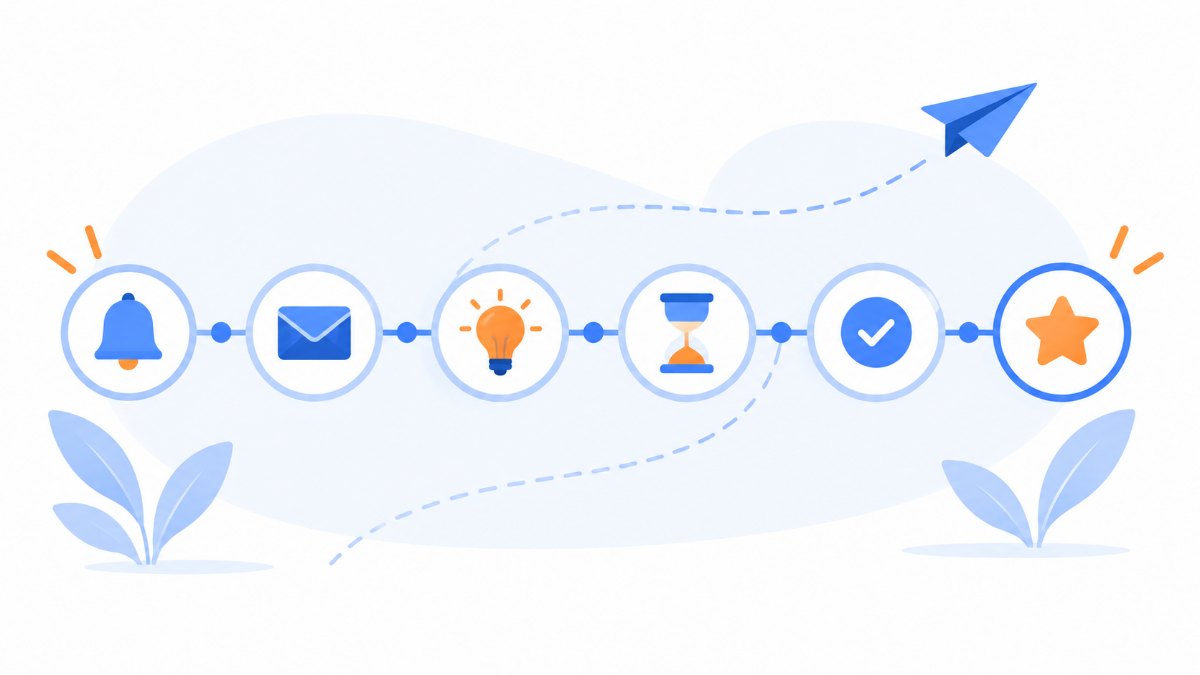
The six phases of an email schedule for a call for applications
The structure we propose works for 15-day calls for applications as well as three-month ones. Only the spacing between sends changes. Let’s go phase by phase.
Phase 1: the heads-up or “save the date”
The heads-up is sent between one and four weeks before the application period opens. Its goal is to get your contacts to mark the date on their calendar and, if needed, start preparing their documents. If you’re looking for ideas to write it, here are 12 save the date examples.
It’s a short email. It says what the call is for, when the application period opens and what is worth having ready. If there are requirements that take time —a certificate, a certified copy of a degree, a letter of recommendation— this is the moment to let people know. In fact, a well-made heads-up greatly reduces last-minute issues.
If your list includes contacts who haven’t received emails from you since the previous call, the heads-up also helps you “warm up” your list. That way, you can check bounces before the important send.
Phase 2: the application period opens
The opening email is the most read in the whole sequence. It should go out on the same day and, if possible, at the same time the form opens. Nothing is more frustrating than clicking “Register now” and finding the link closed.
Clarity comes first here. Put the deadline in the subject line or the first line, a single call-to-action button and a summary of the requirements. That’s why you should leave the full rules in a link. Many managers paste the full official text into the email. The result is a block that’s unreadable on mobile.
Phase 3: value-driven reminders
Between the opening and the final stretch, there’s a period that many organizations leave silent. That’s a mistake. That period is actually ideal for answering questions and overcoming objections.
Instead of repeating “remember the application period is still open”, send useful content. It could be a guide to filling in the application, the most frequently asked questions from the previous year, a video with testimonials from past participants or an invitation to an information session. In general, one or two sends are enough for month-long calls for applications. That way you keep interest alive without your message sounding pushy.
Phase 4: the final stretch
This phase, above all, is where most registrations come in. In many calls for applications, a large share of the applications arrives in the last few days. That’s why this phase deserves careful planning.
The classic sequence has three sends: seven days before the deadline, 48 hours before and on the morning of the last day. The tone becomes increasingly urgent, but always with specific information. “48 hours left” works better than “Last chance!”, because the reader knows exactly how much time they have.
Since it’s real urgency that persuades people, avoid making up deadlines. If the deadline is at 2:00 p.m., say so. If it’s at 11:59 p.m. mainland Spain time, say that too.
Phase 5: the registration confirmation
The confirmation is a transactional email: it’s triggered when someone completes the form. Although it goes out automatically, it’s part of the schedule for two reasons. First, because it must arrive within seconds to avoid duplicate registrations. Second, because it’s the signal you’ll use to remove that person from all pending reminders.
It also includes a summary of what they submitted, the next steps and the dates that affect them from now on. If you’re worried these messages might end up in spam, check out our guide to improving the deliverability of confirmation emails.
Phase 6: after the deadline
The schedule doesn’t end when the form closes. There are still the provisional lists, the correction period, the results, the exam or event dates and, finally, the thank-you.
And there’s a group that hardly anyone works on: the people who opened the emails but didn’t register. A short message after the deadline (“Missed out? We’ll let you know about the next call”) turns those contacts into the base for your next heads-up.
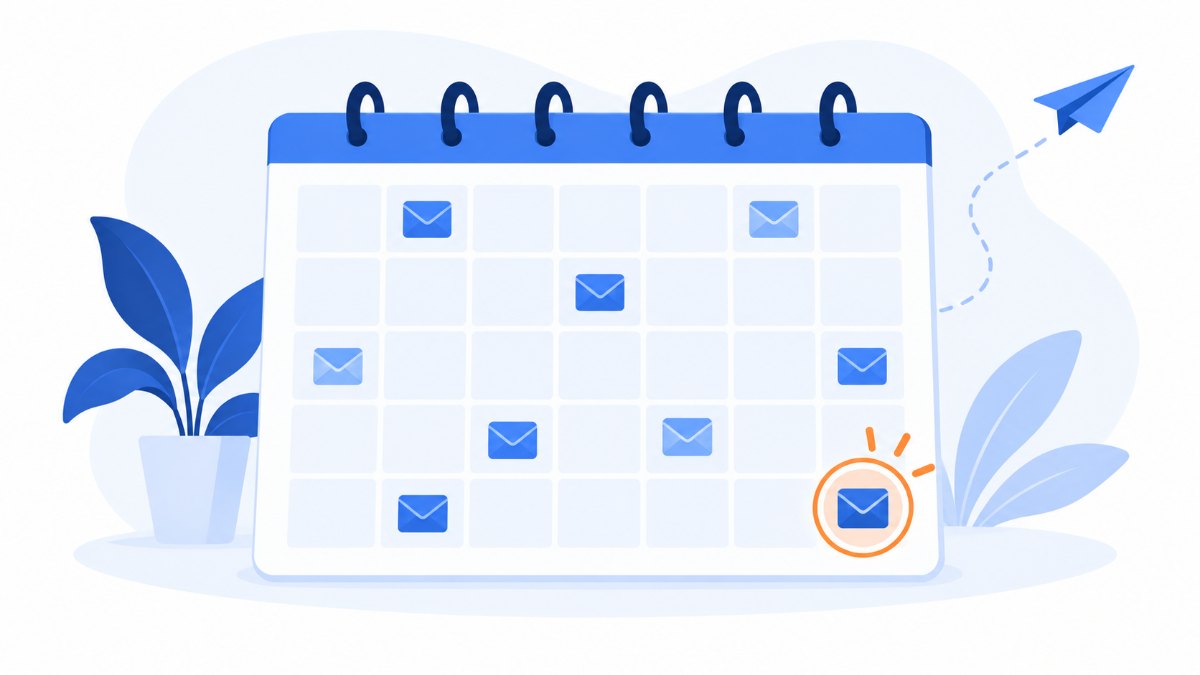
Practical example: schedule for a 30-day call for applications
To show you with dates, here is a sample schedule for a call for applications with a 30-day registration period. Adjust the spacing if your period is shorter or longer.
| When | Segment | Goal | |
|---|---|---|---|
| Day -14 | Heads-up | Entire interested list | Mark the date and prepare documents |
| Day 0 | Application period opens | Entire interested list | First registrations |
| Day 0 (automatic) | Confirmation | Each new registrant | Confirm and share next steps |
| Day 8 | Guide to filling in the application | Non-registrants | Answer questions |
| Day 15 | Testimonials or information session | Non-registrants who opened an email | Overcome objections |
| Day 23 | 7 days left | Non-registrants | Activate latecomers |
| Day 28 | 48 hours left | Non-registrants | Specific urgency |
| Day 30, 9:00 a.m. | Last day | Non-registrants | Closing |
| Day 32 | Next steps | Registrants | Share lists and dates |
| Day 35 | Next call | Non-registrants who showed interest | Keep the contact |
As you can see, only three sends go to the entire list. The rest target increasingly smaller segments. That’s the key to sending eight or nine emails without burning out your list.
Exclude registrants automatically
With Mailrelay’s custom fields and segments, each reminder only reaches those who haven’t registered yet. No manual lists or duplicate sends.

Segmentation: the step that prevents half the complaints
The most annoying email in any call for applications is the reminder received by someone who has already registered. It creates distrust (“didn’t they get my application?”), calls to the admin office and unsubscribes.
Fortunately, the solution is simple. Each registration should update a contact field —for example, “registered_2026 = yes”— and every reminder should exclude anyone with that value. You can connect your form to your sending tool through the API or a plugin. If you use an external management platform, importing the list of registrants every day also works.
From there, segmentation lets you fine-tune much more. For example, a former student doesn’t need the same explanation as someone coming for the first time. A contact in the Canary Islands needs the deadline in their own time zone. And someone who started the application but didn’t finish it deserves a specific reminder with a direct link to their draft.
In Mailrelay, you can create custom fields and segments with several combined conditions. That way, you set up the registrant exclusion once and it works for every send of the call for applications.
How many reminders are too many?
There’s no universal number, but there is a useful rule: frequency depends on the segment, not on the call for applications. Don’t send any to those who have already registered. On the other hand, those who have opened several emails and haven’t completed the application should receive the full sequence. And for those who haven’t opened anything in months, the opening email and the final reminder may be enough.
Also, keep an eye on two metrics after each send. The first is the unsubscribe rate: if it spikes on a specific send, that message was unnecessary or reached the wrong segment. The second is spam complaints, which damage your sender reputation much more than an unsubscribe.
It’s also best not to send two emails to the same contact on the same day, except for the transactional confirmation. If a reminder and a newsletter coincide, delay the newsletter.
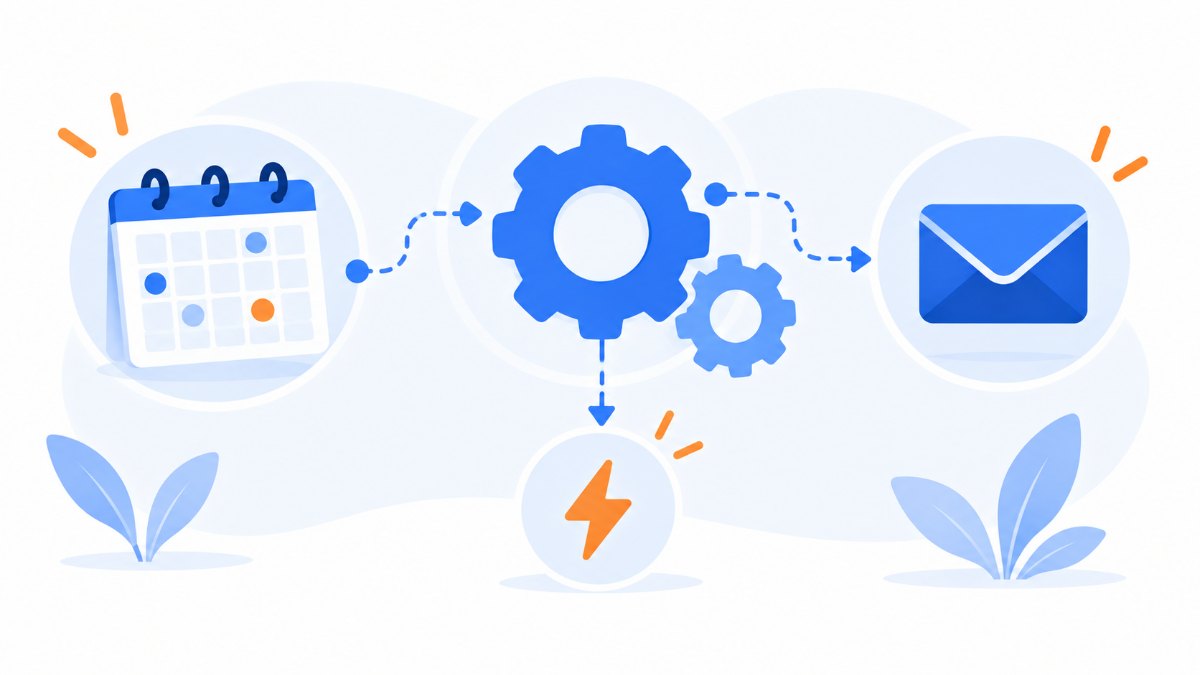
How to automate the schedule with Mailrelay
Scheduling ten sends by hand works the first time. But not by the third call of the year. That’s why we recommend setting up the schedule once and reusing it.
Start by creating a template for each phase with the variable elements marked (dates, name of the call, link). Then schedule each campaign with its send date and time and its exclusion segment. For sends that depend on what each person does —the confirmation, the incomplete application reminder or the welcome for those who signed up for notifications—use automations and autoresponders.
At Mailrelay, we offer all of this in the free account too, which allows up to 80,000 emails a month and 20,000 contacts. You get A/B tests to compare subject lines and real-time reports with a click map. And our editor with AI-assisted writing helps you prepare the variants of each reminder. Is your registration form on WordPress or on your own platform? Connect it with our plugin or the REST API. That way, every registration updates the contact instantly.
Stuck setting up the registrant exclusion or the send times? Our support team helps you by phone, chat or ticket. In several languages and no matter which plan you have.

Deliverability: watch out for sending spikes
In general, a call for applications concentrates a lot of volume into a few days. Imagine a list of tens of thousands of contacts that you normally email very little. Going from zero to a mass send on opening day can cause delays or filtering in Gmail and Outlook.
The heads-up helps here too: it spreads out the first hit of volume and lets you clean up bounces before the send that really matters. Maintain good list hygiene and remove addresses that hard bounce. Also check that your domain has SPF, DKIM and DMARC set up correctly.
If you manage large lists and every send is critical, we recommend taking a look at our guide on deliverability in critical campaigns with lists of over 50,000 contacts.

Subject lines and messages for each phase
The email subject line decides whether your reminder gets opened or gets lost. For calls for applications, subject lines with the date or the time remaining work best. The reader understands at a glance whether it applies to them. Here are some ideas to adapt:
- Heads-up: “Applications for the 2026 scholarships open on February 3: here’s what you need”
- Opening: “You can now register: deadline March 3”
- Value reminder: “How to fill in the application in 10 minutes (without mistakes)”
- Seven days: “7 days left to register for [name of the call]”
- 48 hours: “The deadline is Thursday at 2:00 p.m.”
- Last day: “Registration closes today”
- After the deadline: “Missed out? We’ll let you know about the next one”
Test at least two variants of the opening email with an A/B test. That way, what you learn will help you with the rest of the sequence and with future calls for applications.
In the body of the message, repeat the deadline near the button. Many people skim the email and only stop at the call to action.

Which metrics to track to improve your next call for applications
The metric that matters most is the registration rate: how many people in the segment completed the application after each send. The open rate and clicks help you understand why, but they’re not the goal.
We recommend noting down, at the end of each call, how many registrations came in during each stage of the schedule. Over time, after two or three editions, you’ll see clear patterns. Maybe the seven-day reminder barely moves the needle and the 48-hour one does all the work. Or maybe the information session converts better than any other email. That data is worth more than any general rule, including the one we give you in this article.
Also, look at how much time passes between the send and the registration. If most people register within two hours of the email, the send time matters a lot. In that case, test different time slots.
Common mistakes when planning a call for applications by email
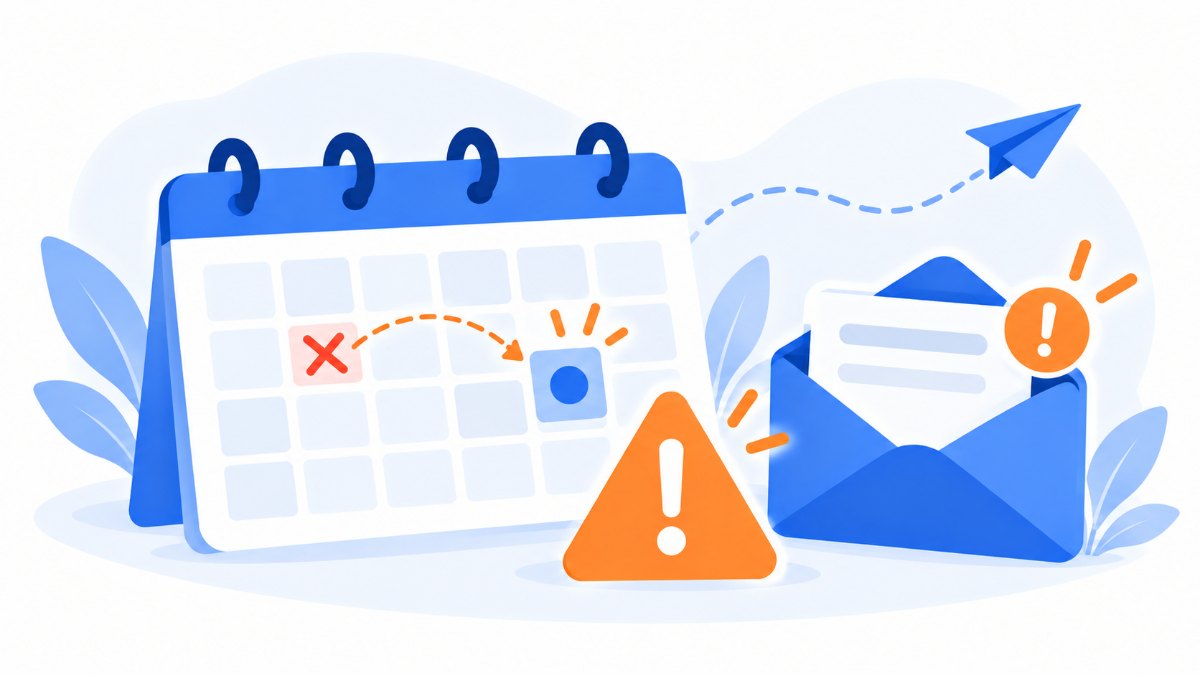
The first is not excluding registrants, which we’ve already covered. The second is changing the deadline without updating the scheduled sends. This happens a lot when the deadline is extended at the last minute. If you extend it, review all pending campaigns before doing anything else.
Another common mistake is sending the last-day reminder in the afternoon. If the deadline is at noon, that email arrives too late. And if it’s at midnight, it arrives when the fewest people are checking their email. Early morning is almost always the better option.
Finally, many organizations forget about the mobile channel. For calls for applications with a young audience, an SMS on the last day complements email very well, as long as you have consent to use it.

If you want to see all the emails for an event, from the invitation to the thank-you, check out our post on email marketing for events.
Frequently asked questions about the email schedule for a call for applications
These are the questions we’re asked most often by teams that manage calls for applications by email.
How many emails should I send for a call for applications?
For a one-month period, between six and nine sends in total is a reasonable number. That includes the heads-up, the opening email, reminders, the final stretch and post-deadline emails. But not every contact should receive all of them. What matters is that every send excludes those who have already registered.
How long before the application period opens should I send the heads-up?
Between one and four weeks before. If the call requires documents that take time to get, give more notice. If it’s simple, one week is enough.
What time should I send the last-day reminder?
In the morning, at least four or five hours before the deadline. That gives people time to gather whatever they’re missing and complete the application.
What do I do if the deadline is extended?
Send a short email announcing the new date only to non-registrants and reschedule the final-stretch reminders. That way, you prevent any message with the old date from going out.
Can I use Mailrelay’s free account for a call for applications?
Yes. The free account includes up to 80,000 emails a month and 20,000 contacts, with automations, segmentation and A/B tests. For many academies, associations and small organizations, it’s enough to manage complete calls for applications.

Your next call for applications, with no last-minute surprises
Planning the email schedule for a call for applications takes an afternoon. Improvising it, on the other hand, costs much more: lost applications, complaints, unsubscribes and an overwhelmed admin team in the last week.
Start with the dates, define the segments, prepare the templates for each phase and schedule everything you can in advance. Afterwards, measure what worked and reuse the schedule for the next edition.
Your next call for applications, ready in an afternoon
Create your templates, segment non-registrants and schedule every reminder from a single tool. Free up to 80,000 emails a month.
If you want to set it up today, create your free Mailrelay account and prepare your first call for applications with automations, segmentation and expert support from day one.

Jose Argudo
CMO at Mailrelay. Writes about email marketing, copywriting, and conversion for small businesses and entrepreneurs.