Brick and mortar: what it is, meaning and examples of physical stores
What having a physical store means today, what it costs and how to turn your customers into subscribers
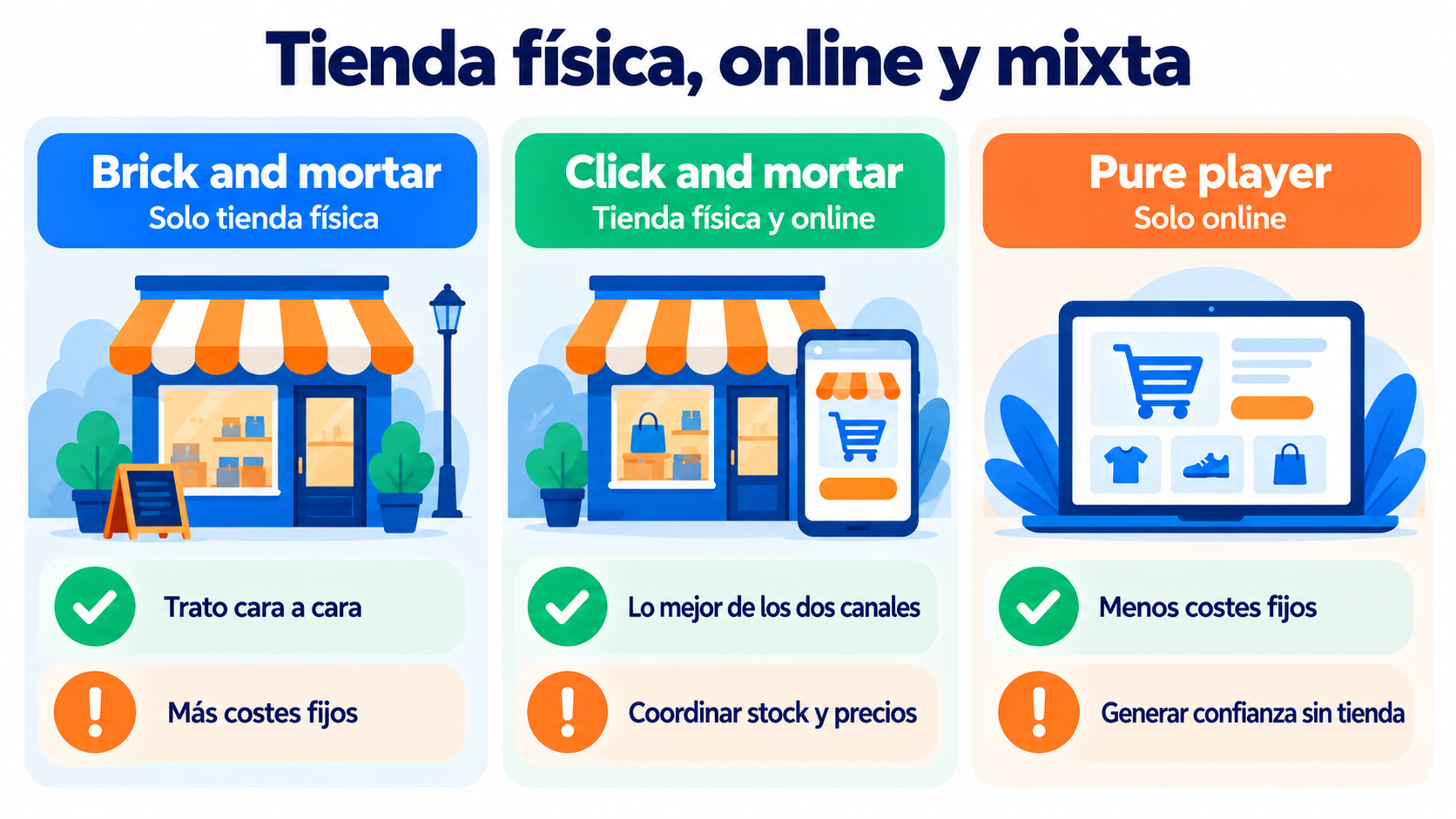
The term brick and mortar, named after the materials used to build shops and warehouses, refers to companies or institutions that operate from physical buildings, whether a shop, a factory, etc. It is the opposite of an online shop or company (one that only operates over the Internet) with no store or physical location where orders can be picked up, known as pure players.
Halfway between brick and mortar companies and 100% online companies or pure players are the companies that operate under the brick and click model, also called click and mortar, which is the more widely used term. In this case, it is a model that mixes traditional physical sales (brick) with the online sales model (click). It is the foundation of omnichannel retail.
In contrast, traditional brick and mortar retail businesses make the physical store the sole focus of their commercial offering. That is what its name refers to: bricks and mortar are the materials a building is made of.
Brick and mortar, click and mortar and pure player
This is how the three models differ:
| Brick and mortar | Click and mortar | Pure player | |
|---|---|---|---|
| Where it sells | Physical store only | Physical store and online | Online only |
| Example | Local hardware store, bakery | Fashion chain with a website and stores | Store that only sells through its website |
| Advantage | Face-to-face service and immediate purchase | The best of both channels | Lower fixed costs |
| Challenge | Fixed costs and limited reach | Coordinating stock and prices | Building trust without a store |
Although ecommerce keeps growing, the physical store is still the main channel. According to Savills, 72.2% of retail purchases in Spain in 2024 were made in high-street stores, 17.4% in shopping centres and retail parks and only 10.4% online. That is why, in sales, physical stores are sometimes simply called “bricks”.
Stay in touch with the people who walk into your store
Create a form with Mailrelay, put it behind a QR code on your counter and send news to your customers. Start for free.
The costs of a brick and mortar business
As a general rule, running and managing a pure player business is cheaper than running one with a physical location where customers are served face to face, because there are fewer overheads to cover.
The cost of maintaining a physical store depends on the size of the store itself, the type of business, the location, etc. To calculate the costs of all this, you need to take into account the basic costs, which are as follows:
- Rent or property: If you don’t own a physical location to sell from, you will have rent or lease costs.
- License fees and permits: Whether online or physical, stores have to pay fees and obtain permits, with the costs that this involves.
- Initial stock: You need a large enough inventory from opening day to serve customers without delays.
- Signage and decoration: The store needs outdoor and indoor signage, and it is worth investing in decoration that makes it attractive to customers.
- Professional services: These are the costs of employees and of any external professionals whose services are needed: legal advisors, accountants, IT, cleaning staff, etc.
- Advertising: To make yourself known to the public, you will need to run online and offline marketing campaigns.
- Website and technology: Even a store without ecommerce needs an online presence, both with its own website and on social media. Likewise, you will need computer equipment of varying scale, such as point-of-sale systems.
- Insurance: It is a good idea to have insurance that protects both you and the store itself, along with the products it holds, against mishaps.
How to collect emails in your physical store
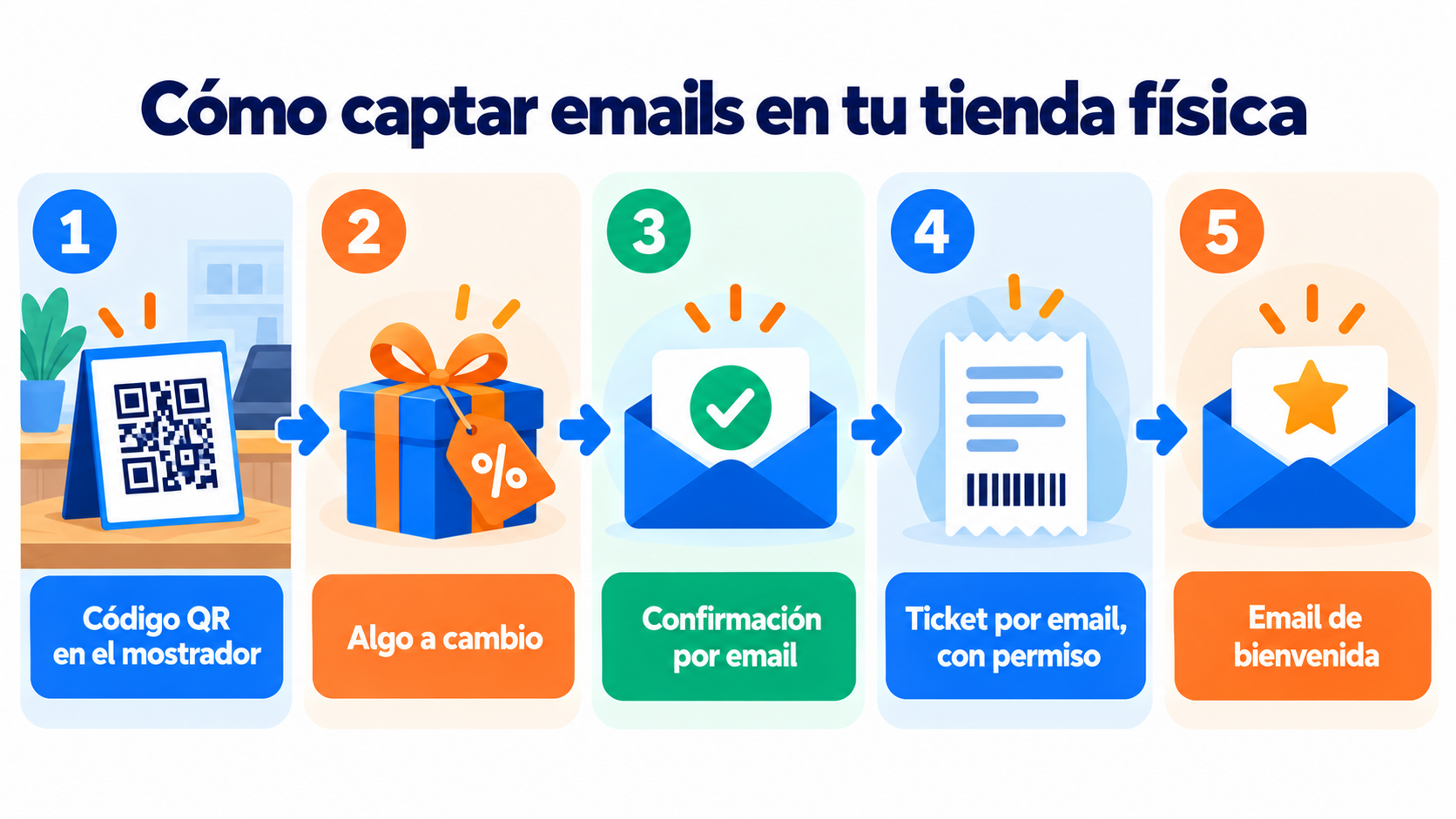
The great advantage of a physical store is that you meet your customers in person. Email lets you stay in touch with them once they walk out the door:
- Put a QR code on the counter or on the receipt that leads to your subscription form.
- Offer something in return: a discount on the next purchase, access to new arrivals or a birthday gift.
- Confirm with double opt-in. That way you have the clear consent the GDPR requires.
- Offer the receipt by email only if the customer also agrees to receive communications. If not, just send them the receipt.
- Welcome them with an automated email containing the promised offer.
For quick notices, such as the start of the sales or an order being ready in store, you can also use SMS marketing, always with permission.
How Mailrelay helps you
With Mailrelay, you turn your store’s customers into subscribers and stay in touch with them:
- Subscription forms with double opt-in that you can link from a QR code.
- Welcome and birthday automations, also included in the free account.
- SMS for quick notices from the same tool.
- Free account with 80,000 emails a month and 20,000 contacts.
Bring your customers back to your store
Send news, offers and greetings to the people who know you in person. Up to 80,000 emails a month for free with Mailrelay.
Frequently asked questions
What does brick and mortar mean?
It literally means “bricks and mortar”, the materials a building is made of. It is used to talk about businesses with a physical store or premises, as opposed to those that only sell online.
What is the difference between brick and mortar and click and mortar?
A brick and mortar business only sells in its physical store. A click and mortar business combines the physical store with online sales.
What is a pure player?
It is a company that only sells online, with no physical stores.
Are physical stores still important?
Yes. According to Savills, in 2024 almost 9 out of 10 retail purchases in Spain were made in physical stores.
How can a physical store do email marketing?
By collecting emails with permission in the store, through a form or a QR code, and sending news, offers and greetings with an email marketing tool.