Social selling: what it is, how to do it and what the Social Selling Index measures
How to sell on LinkedIn and other networks by building relationships before offering anything
Social selling is the use of social media to find potential customers, build relationships with them and guide them all the way to the sale. Instead of cold calling or cold emailing, the salesperson shares useful content and talks with their contacts until an opportunity comes up.
It is sometimes also called social sales. It is very common in B2B, especially on LinkedIn.
Social refers to social media and selling means “to sell”. It is not about posting ads or sending sales messages to strangers. It is about earning trust before proposing anything.
Here is how it differs from traditional selling:
| Traditional selling | Social selling | |
|---|---|---|
| First contact | Cold call or cold email | Interaction on social media |
| Customer information | Little, before talking | Profile, posts and interests |
| Message | Present the product | Add value and answer questions |
| Relationship | Starts with the sale | Starts before the sale |
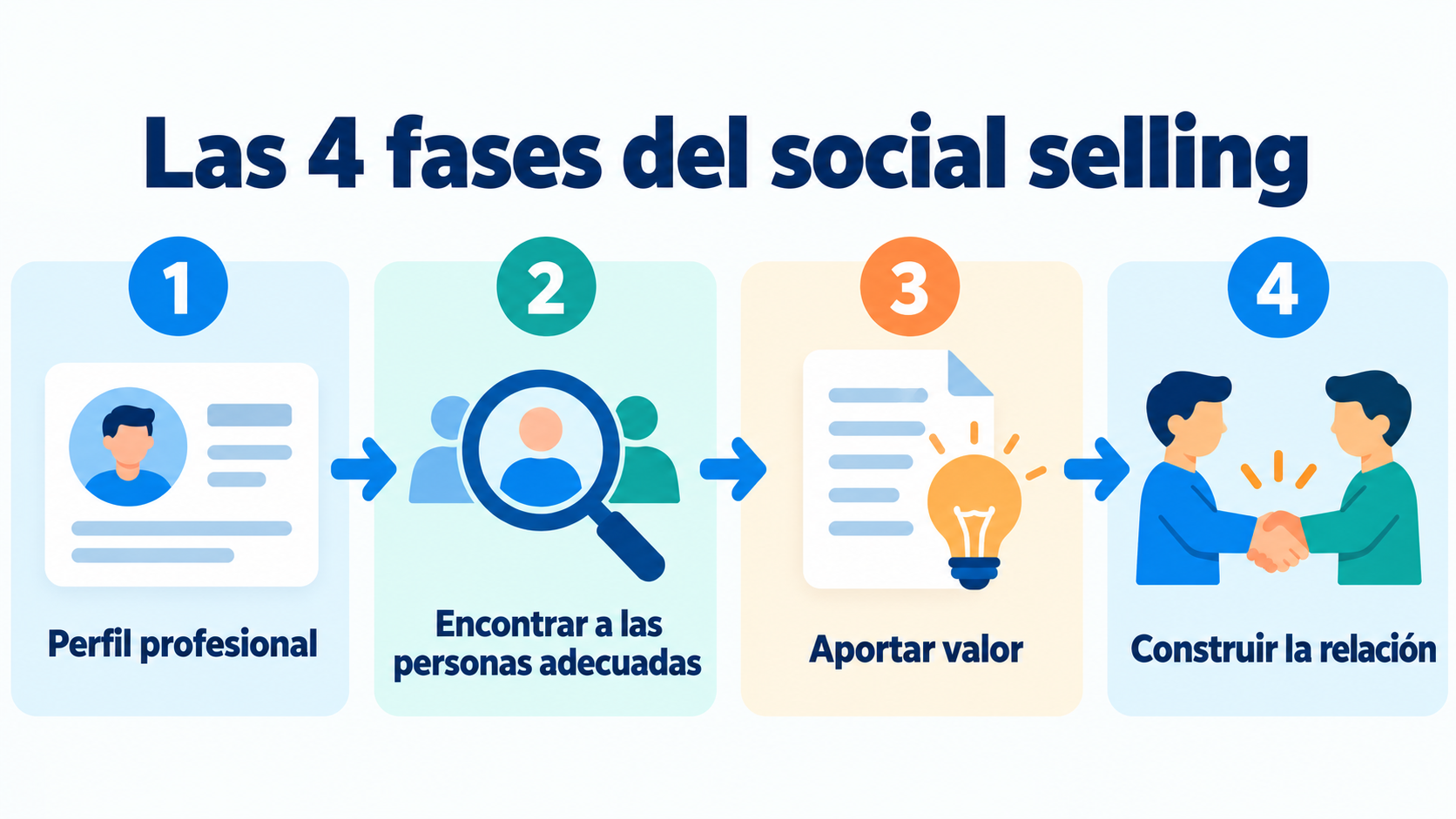
The process usually has four stages:
1. Create a professional profile. A photo, headline and summary that explain who you help and how.
2. Find the right people. Look for those who match your buyer persona by job title, industry or company.
3. Add value. Post and comment on useful content: tips, industry data or customer stories.
4. Build the relationship. Talk, answer questions and suggest a call only when there is real interest.
What is LinkedIn’s Social Selling Index (SSI)?
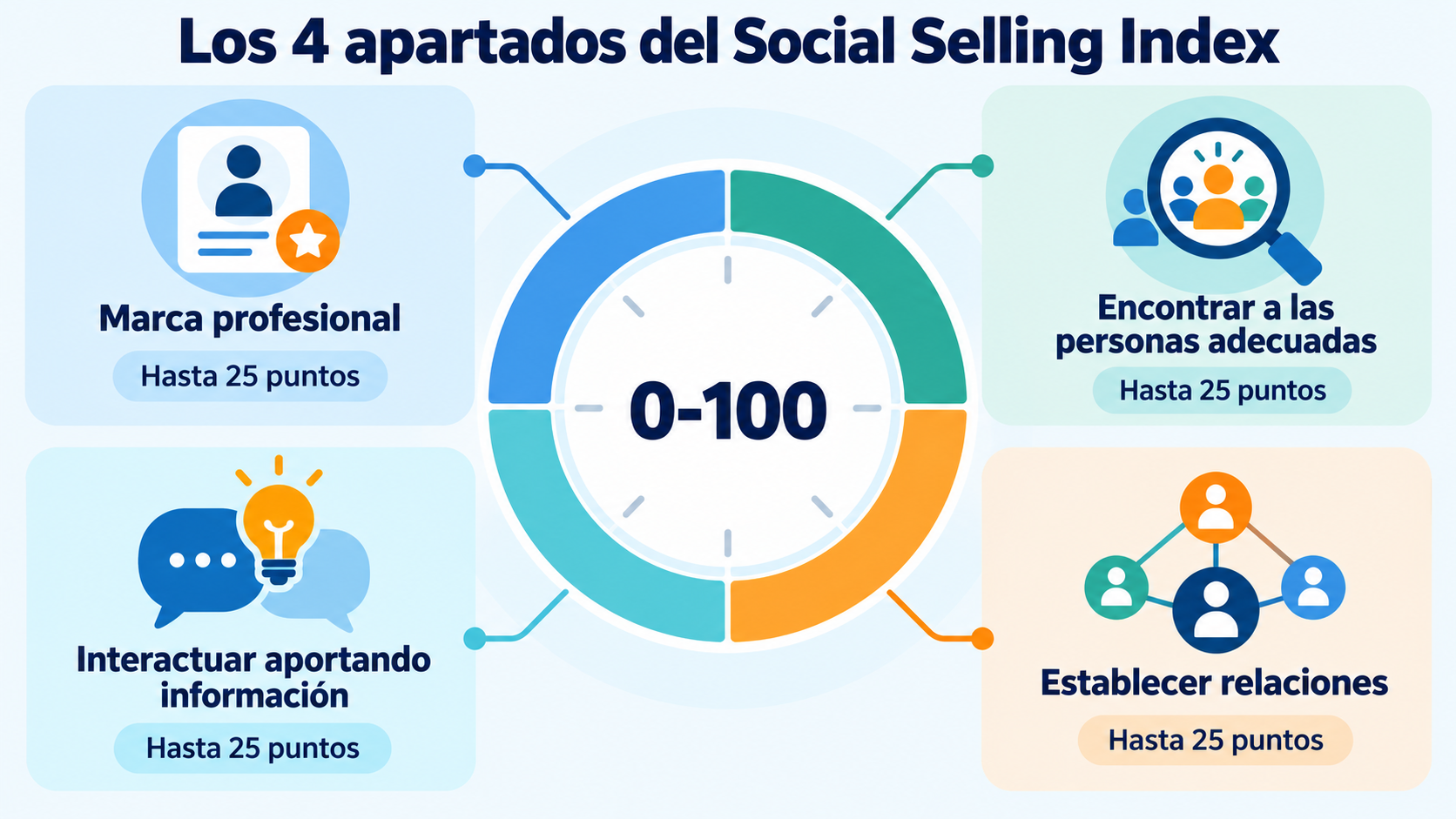
The Social Selling Index is a score from 0 to 100 that LinkedIn calculates for each profile. It measures whether you are using the network well to sell. It is updated daily.
It is divided into four components, each worth up to 25 points:
| Component | What it measures |
|---|---|
| Establish your professional brand | A complete profile and valuable posts |
| Find the right people | Whether you search for and connect with the right contacts |
| Engage with insights | Whether you share and comment on useful content |
| Build relationships | Whether you hold conversations with decision-makers |
You can check your score at linkedin.com/sales/ssi while logged in to LinkedIn. More than the number itself, it helps you see which component is your weakest.
Each network suits a different type of selling:
LinkedIn. The main one for B2B: it is where purchasing managers and companies are.
X (formerly Twitter). Useful in industries where current events are discussed, such as technology or finance.
Instagram and Facebook. For businesses that sell to consumers, with visual content and direct messages.
YouTube. To explain products with demos and tutorials.
More details in our guide to social media for businesses.
Don’t lose your LinkedIn contacts
Create a form with Mailrelay, link to it from your profile and turn conversations into subscribers.
1. Define who you want to reach. Your ideal customer’s industry, job title and problems.
2. Optimize your profile. A headline that says what you solve, not just your job title.
3. Post consistently. Two or three useful posts a week are worth more than a one-off campaign.
4. Comment before you message. Engage with your contacts’ posts before sending them a message.
5. Personalize every message. Mention something specific from their profile or from something they posted.
6. Move the relationship to a channel you own. Invite them to your newsletter or to a call when there is interest.
Example of a LinkedIn message
This is what a first message could look like after commenting on several of a contact’s posts:
Hi Laura,
I read your post about how your team is reducing unsubscribes from your newsletter and found it really practical. Our team tried something similar with interest-based segmentation.
If it helps, I have a short guide with the results. Shall I send it to you?
It doesn’t ask for a meeting or present the product. It offers something useful and lets the other person decide.
Common mistakes
Selling in the first message. Asking for a meeting right after connecting usually gets no reply.
Copying and pasting. Generic messages are easy to spot and hurt your credibility.
Posting only about your product. Your content should help, not advertise.
Not measuring. Check which posts start conversations and which contacts move forward.
Social selling and email marketing
Social selling opens the conversation, but your reach on social media depends on the algorithm. That is why it is a good idea to bring interested contacts to your email list.
You can link a subscription form from your profile or offer a lead magnet, such as a guide or a template. Then, a lead nurturing sequence keeps in touch with them until they are ready to buy.
How Mailrelay helps you
With Mailrelay you can create the form you link to from your social profiles, store where each contact came from in a custom field and send them a welcome sequence automatically. That way you don’t lose the people you met on LinkedIn.
The free account includes up to 80,000 emails a month and 20,000 contacts, with human support by chat, ticket and phone.
Send your newsletters with Mailrelay
Up to 80,000 emails a month and 20,000 contacts for free, with human support on every plan.
Frequently Asked Questions
These are the most common questions about selling on social media.
It is selling through social media by building relationships and adding value, instead of advertising or reaching out cold.
What is a good Social Selling Index?
There is no official figure. Many professionals consider a score above 70 to be good, but what really helps is improving your lowest components.
No. LinkedIn is the main network for B2B, but it also works on Instagram, Facebook or X, depending on your customer.
Social selling is based on personal relationships and organic content. Social ads are paid advertisements.
How long does it take to get results?
It usually takes several months of consistent effort, because trust is built little by little.