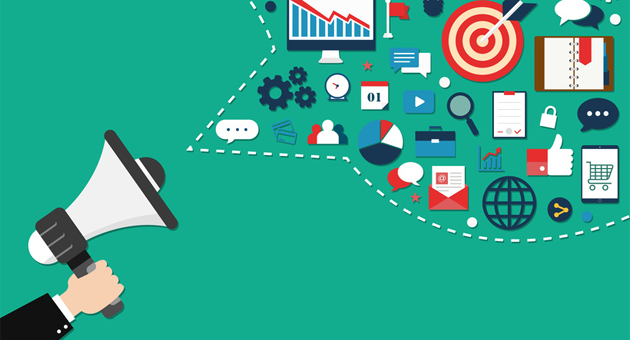
Digital marketing brings together those commercial strategies that take place in the online environment and are carried out using digital media.
Although it initially emerged by translating the ways offline advertising worked, it has gradually undergone profound changes in techniques and tools, diversifying the promotional initiatives for products and services.
As a result, new sales methods emerge practically overnight to reach a customer located in the infinite world of the internet.
A varied range of digital marketing strategies at highly competitive prices, offering effective solutions to achieve practically anything we set out to do.
· The father of modern marketing, Philip Kotler, talked about marketing 3.0 back in 2010
And he pointed to new ways of reaching consumers through new technologies. His latest contribution to the field was published in ‘Marketing 4.0’ (written by authors such as Hermawan Kartajaya, Iwan Setiawan and Philip Kotler) in 2016.
In this book, a new concept known as Marketing 4.0 is coined. in which brands become more human in order to offer tailored solutions in an increasingly interconnected world.
With this new approach, the main goal of companies is to gain customer trust through a 360 strategy that combines the online interaction stemming from digital marketing with the use of more traditional offline media.
As a result, by making the most of both worlds, an omnichannel strategy emerges that seeks a transparent and consistent customer experience.
Commercial initiative 4.0 sets the WOW effect as its main goal, understood as the emotional impact that exceeds consumer expectations.
To achieve this surprise effect, it’s essential to know the customer in minute detail, defining clear metrics for each phase of the commercial strategy. Let’s take a closer look at all of this in the following lines.
· Why use digital marketing? The customer, at the center of everything
Digital marketing places the consumer at the center of company-customer relationships.
Its potential is such that it allows for getting to know the customer in depth and establishing direct, satisfying communication that ultimately translates into something more than the mere purchase of a product or service.
In the online world, relationships are two-way: both parties’ actions are encouraged, and a much more experiential contact is established, also linked to the values the brand conveys.
For all these reasons, knowing how to listen to the target audience becomes a fundamental requirement, ensuring that their purchase becomes the ideal choice.
This way, the brand image can be perfectly adapted to how the customer sees and understands the world.
In recent years, customer analysis has been deepened through fictional representations such as the buyer persona
This figure, part of the research carried out before implementing a marketing plan, makes it possible to identify the characteristics, expectations and needs of a highly segmented consumer profile.
In addition, marketing departments use artificial intelligence and big data to make data-driven strategic decisions that predict and anticipate consumer behavior.
The business plan is increasingly linked to the marketing plan, and a large part of business decisions are made within these two key company departments.
Besides offering an attractive product or service, organizations work to fully satisfy the needs of an audience that is fleeting, has little loyalty and is saturated with information.
To do this, they have developed flexible structures with maximum reaction capacity when introducing strategic changes that help improve the brand image, its positioning and its evolution over time.
In this sense, digital technology makes information-based decision-making easier and gives marketing departments valuable metrics to make the most of their customer relationships.
· First steps in online marketing: defining a strategy
If you’re thinking about developing a digital marketing strategy for your brand, or even improving one you’ve already implemented, it will help to define or remember the importance of all these elements:
· The target audience. Remember to segment your audience and define a suitable product/service for each buyer persona.
· Analyze the environment you operate in, what the market is like, what your competitors are doing, what’s already out there and how you’re going to stand out.
· Set measurable, achievable goals (customer acquisition, branding, increasing purchase frequency, gaining brand advocates, raising the average order value, etc.). Prioritize and define a strategy that builds gradually; once you’ve achieved the first goals, set new ones that are always aligned with the business.
· Develop strategic metrics for each goal and link each one to a specific action plan; define distinct lines of action that form a whole consistent with your business plan.
· Set clear budgets, track expenses and income, and set aside a reserve for any unexpected contingencies that may arise during implementation.
· Measure results using KPIs to optimize your campaign data and fine-tune your ROI as much as possible.
· Create a campaign history where you define the pros and cons and summarize how each one performed; it’s very useful for learning from mistakes and improving.
· How digital marketing works: the most widely used channels
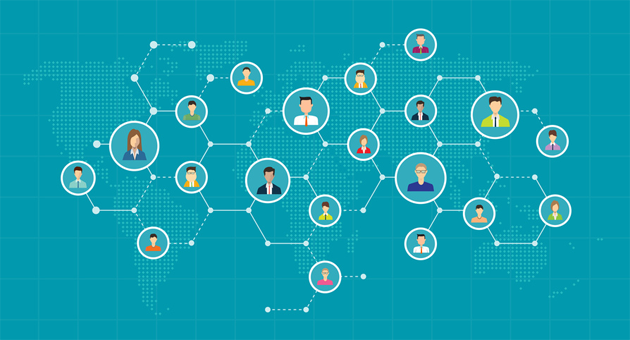
Earlier we mentioned that there are many options when it comes to developing a digital marketing strategy. Here we detail some of the most widely used:
· A blog, a landing page or a website are the main online communication strategies for publishing valuable content and attracting users. You can add parallel initiatives related to digital advertising, affiliate marketing and content marketing, or support the initiative with a social media strategy, for example.
· Display advertising, inherited from more traditional marketing. Ads known as banners in different positions, formats and designs to catch the customer’s attention. The most commonly used come in the form of text, video, image or graphics.
· Ranking in search engines like Google or Bing, among others. Ranking at the top of these is key to getting visits to the website and building brand awareness. This is where digital marketing concepts like SEO, referring to free organic ranking, and SEM, for sponsored ads, come into play.
· Emailing has skyrocketed alongside digital advertising. There’s no point having a blog if you don’t communicate what you do to your contact list and offer valuable information related to your brand (such as featured content, discounts or promotions) through regular newsletters (we recommend this comparison of email marketing tools).
· Social media marketing. Social media has become brands’ promotional megaphone because these are highly effective, dynamic communication channels. They are also highly specialized platforms, so it’s essential to choose the channel that best suits the content being promoted and to narrow down the target audience as much as possible.

· Advantages of online marketing
A concept as broad as digital marketing offers a huge number of added advantages for all organizations, regardless of their size:
· It’s more cost-effective than traditional marketing and doesn’t require as many intermediaries
· It’s easier to measure and analyze through KPIs and goals
· It offers control and precision practically in real time; you can improvise and make changes “on the fly” if something doesn’t turn out the way you originally planned
· The target audience can be segmented to the fullest extent, sending the sales message to the right person at the perfect moment
· Availability 24/7. The internet never closes, and campaigns can be scheduled for whichever days and times suit us best, especially when our customers are most receptive to listening
· Globalization, an advantage. Campaigns can be designed in one part of the world and aimed at the other, even in different countries simultaneously and with designs tailored to niche markets
· Communication is two-way and includes direct feedback from consumers; brands interact with their users and customer service improves
· Turnaround times are shortened and tests can be carried out quickly and effectively
· The ecosystem is more democratic and accessible. Since it’s within everyone’s reach, digital marketing can be used by someone who isn’t a specialist and only has a basic understanding of how it works
· Digital marketing business volume
Some digital marketing statistics confirm the importance of this sales and promotion strategy.
Novicell points to some interesting data on online sales worldwide. Every day, 3.5 billion Google searches take place. There are 5.1 billion unique mobile users, an increase of 100 million (2% over the last year).
The products and services most commonly offered online are electrical appliances (11.5%), followed by transport tickets (9.6%), clothing and accessories (9.6%), accommodation (9.5%) and leisure (9.5%).
The main devices used to access the internet are mobile phones (43.4%) and laptops (26.2%). 38.8% of users leave a website if it’s not optimized for smartphones.
There are 300,000 chatbots on Facebook, and 40% of millennials chat with them daily. The sectors that represent the highest investment in paid ads in Spain are software (26.7%) and leisure (26.7%).
Cyberclick gathers statistics on sales probability and ad effectiveness, such as the fact that visitors coming from PPC ads are 50% more likely to buy something than organic visitors (Unbounce).
Forbes predicts that global mobile data traffic will multiply sevenfold by 2021, and that 34% of consumers are more likely to make an unplanned purchase if the brand personalizes the content.
Finally, EMarketer forecasts that global digital advertising spend will exceed 375 billion dollars in 2021.
► In Spain, the Spanish Advertisers Association (AEA) and ISDI
have just published the seventh edition of the 2019 Digital Advertising Barometer, which analyzes the main online marketing metrics.
Digital strategy, media investment, tools, sales, digital actions, optimization and ranking, social media presence and digital advertising figures share space with data related to mobile and ecommerce initiatives.
The survey shows that 87% of the companies analyzed are immersed in digital transformation, and 66% of them have been working on the new digital culture for at least three years.
Although digital training makes up 29.1% of companies’ training plans, the report points to a lack of talent and professionals’ limited digital knowledge as the biggest obstacle to carrying out the technological transformation process.
It also draws a distinction between offline channels, more focused on branding strategies, and online channels (with a 24% increase in video compared to 2018) for sales-related goals.
► Although online sales have dropped slightly (from 13.7% in 2017 to 12.5% in 2018)
the preferred model for buying digital advertising is CPM (Cost Per Mille), used by 57.6% of respondents in their online strategies aimed at branding and traffic generation. Regarding analytics, 72% of respondents use CRM platforms, 49% use Business Intelligence & Analytics, and 33% use marketing tools.
The study also highlights the role influencers play in companies’ satisfaction with their digital strategies, reflected in a growing budget for influencer marketing: 75% of companies have used influencers at some point and allocate 9% of their digital budget to it, with plans to increase it in 2019.
As for social media, brands have a massive presence on platforms such as Facebook, YouTube, Twitter and Instagram.
· Latest trends in digital marketing
Digital technology has developed increasingly sophisticated innovations in online marketing practices, thanks to constant advances in fields such as Cloud, Artificial Intelligence and Machine Learning.
Some of the latest trends in online advertising are:
The rise of mobile.
Mobile devices are used more and more, and these new channels require communication campaigns to be designed in compact formats with all the added features.
Mobile apps, online shopping and browsing content are some of the actions smartphones enable, and from there the options have kept growing.
Vertical video marketing and geolocation-based features are on the rise. Adapting content to an increasingly mobile consumer isn’t an option, it’s a reality.
The marketing 4.0 that the marketing guru talks about
It’s directly related to the consumer and understanding them through data.
The concept welcomes new forms of communication that put a face and a heart on a customer who forms very close bonds with brands.
A path has emerged in which the consumer and the brand walk hand in hand, evolving together in a context where CSR (Corporate Social Responsibility) and SDGs (Sustainable Development Goals) are gaining more and more weight.
Content marketing
With made-to-order information and content based on customer segmentation, it’s a sure bet.
Images, podcasts, videos, infographics and animated GIFs are gaining traction in a fleeting ecosystem that puts at its center a consumer who needs to be hooked and won over.
Native advertising
It remains the natural advertising alternative while browsing.
The trend is to adapt it to each audience’s specifications, with maximum-effectiveness impressions through programmatic advertising.
Short-lived, fast content
Consumption such as video marketing in Snack Ads or Bumper Ads formats confirms the immediacy and effectiveness of short ads on Google Ads specially designed for YouTube.
Social Ads welcomes new platforms such as WhatsApp
Social media advertising is climbing the ranks and enables new capabilities with added analysis and testing features.
Artificial Intelligence applied to emailing
It’s the perfect combination for making a positive impact on the customer thanks to its high level of personalization.
Knowledge and data analytics make it easier to optimize and automate these campaigns, increasing their profitability.
Prediction and analytics for the sake of segmentation and loyalty
Understanding the data, analyzing it, structuring it and knowing how to use it are the main challenges of a shopping experience that requires maximizing customer knowledge in order to reach them in a close way and accompany them through every stage of the sales process.
Voice search is going to be used more and more across all devices
Its real advantage is immediacy. This channel opens the door to a wide range of emotions related to consumer behavior.
Whether macro, micro or mega, influencers
have become an ideal option for companies’ advertising initiatives.
Regardless of size and notoriety, it’s advisable to analyze this influential figure’s profile and verify their actual influence beforehand.
New advertising platforms have emerged
from global companies such as Amazon Advertising.
The ecommerce giant opens a new line of business that segments the audience, offering different options such as sponsored, featured, video and display ads, stores, DSP and custom options.
· Conclusions
The internet opens the door to a world of possibilities for brands and companies in their digital marketing strategies, which can be fully leveraged thanks to a marketing manager. Regardless of the organization’s size and advertising budget, good campaigns can be run with low numbers and excellent results.
To do this, it’s important to carry out preliminary work in which roles are defined, the market is analyzed, the players involved are observed, and a differentiated proposal is generated.
Online advertising is more affordable and, unlike traditional methods, offers fairly precise measurement capabilities for numerical calculations and ROI-related metrics.
It also has a more global reach and brings companies closer to customers located all over the world.
In digital marketing, the customer is at the center, and it’s on them that the focus must be placed for any commercial strategy.
Consumers have become empowered and have established new relationships with brands based on experience and emotional value. Reaching this unique user with the right message at just the right time and through the ideal channel is increasingly becoming a reality in online advertising.