Branding: what it is, types, elements and how to build a memorable brand
Everything that makes your customers recognize you and choose you: from your logo to the sender of your emails
Branding, or brand management, is the set of decisions and actions that shape a brand: what it is called, how it looks, how it speaks and what it promises. Its goal is for people to recognize it, remember it and prefer it over others when they have to choose.
It isn’t just design. The logo is the part you can see. But the brand is also in how you handle a complaint, in the tone of your emails and in whether you keep your promises.
What is branding?
The American Marketing Association defines a brand as a name, term, design, symbol or any other feature that identifies one seller’s products and distinguishes them from those of other sellers.
Branding is the work of building and looking after that brand over time.
Brand is the English word for “marca” in Spanish. The term comes from the practice of branding cattle with a hot iron to show who owned them. Today the brand is no longer put on an animal, but in customers’ minds.
It shouldn’t be confused with related concepts:
| Concept | What it is | Who controls it |
|---|---|---|
| Brand | The name and symbols that identify a company or product | The company |
| Branding | The work of building and managing that brand | The company |
| Brand identity | What the brand wants to convey: logo, colors, tone, values | The company |
| Brand image | What the public really thinks of the brand | The public |
| Marketing | The actions to sell: price, channels, promotions | The company |
Branding and marketing go hand in hand, but they aren’t the same thing.
Marketing goes after today’s sale. Branding aims to make people think of you before anyone else when they need what you sell. We explain it in more detail in the post on brand marketing.
Types of branding
We tend to think of brands as something for companies, but to a greater or lesser extent we all work on a brand. These are the most common types:
| Type | What it works on | Example |
|---|---|---|
| Corporate branding | The brand of a company as a whole | An accounting firm that wants to convey approachability and rigor in everything it does |
| Product branding | The brand of a specific product within a company | A vegan cosmetics line with its own name and design |
| Personal branding | The brand of a person | A consultant who becomes known through her articles and her newsletter |
| Employer branding | The brand as a place to work | A company that shows how its team works to attract talent |
When the type isn’t specified, it almost always refers to corporate branding.
The elements of branding
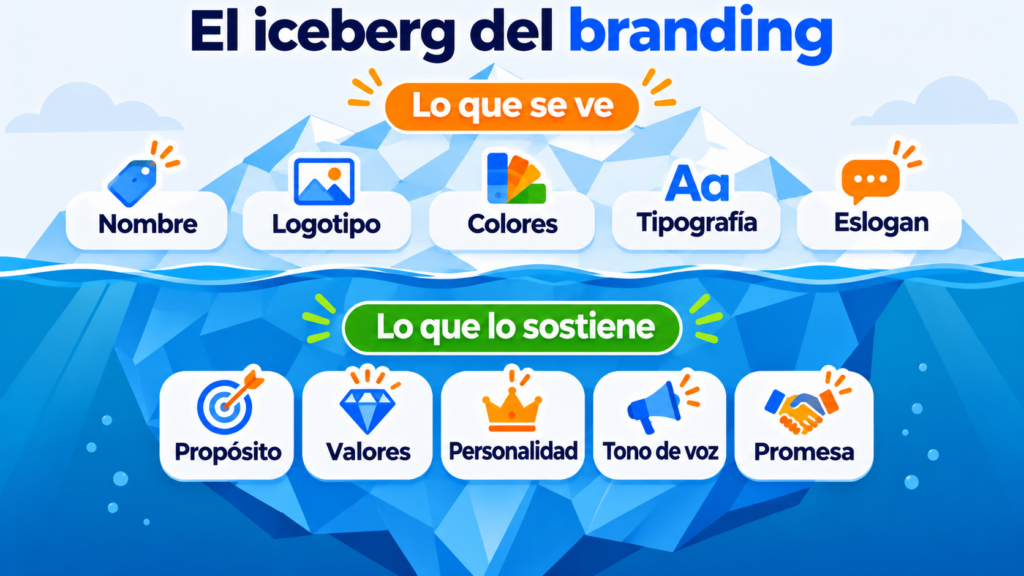
A solid brand rests on two parts. The part you can see:
- Name. It has to be easy to remember and to spell. The work of choosing it is called naming.
- Logo. The symbol that identifies the brand at a glance.
- Colors and typography. They convey personality and make you recognizable even when the name isn’t visible.
- Slogan. A short phrase that sums up what you offer or how you do it.
- Digital presence. Your website, your social media and your emails, where the brand is seen every day.
And the part you can’t see, but which holds up everything else: the brand’s purpose, its values, its personality, its tone of voice and the promise it makes to its customers.
Branding goes beyond the logo. It’s what you want people to think when they remember your brand. Those mental associations (such as quality, security or effectiveness) don’t come from the logo alone. They also come from all your brand’s communications, from how you treat customers and from your marketing actions. Everything has to be consistent and follow the same path, or each action fades away without adding anything to your brand. Branding, as I say, goes beyond a nice logo. That doesn’t mean you should neglect the visual side. Consumers notice the effort, or the lack of it.
Jose Argudo, CMO at Mailrelay
Make your emails recognizable at first glance
Create templates with your logo, your colors and your typography and use them in every send, even on the free account.
How to do branding step by step
You don’t need a big agency to get started. These steps also work for a small business:
- Define your purpose and values. Why your business exists, beyond making money, and what you will never do.
- Get to know your audience. Describe your buyer persona: what they need, what worries them and how they talk.
- Study the competition. Look at what everyone says and what nobody says. That’s your gap.
- Define your value proposition and your tone. What you offer that others don’t, and how you tell it: friendly or formal, serious or with humor.
- Create the visual identity. Logo, colors and typography, gathered in a small guide so everyone uses them the same way.
- Apply it everywhere. Website, social media, invoices, emails and customer service. Consistency is what makes a brand memorable.
- Measure and adjust. Check how the public sees you and whether they recognize you. In the post on brand image you’ll find five ways to measure it.
If you’re starting from scratch, you’ll find more tips in brand building. And if your brand already exists but has become outdated, what you need is a rebranding.
Branding examples
Big brands are the most cited example, but branding works the same way on a small scale. Three cases:
- A neighborhood bakery that signs everything with the same drawing, wraps its bread in paper in its color and calls its customers by name. It has spent almost nothing and the whole neighborhood recognizes it.
- An online mountain gear store that always talks like a hiking companion. Its newsletter tells about real outings, not just offers, and its customers recommend it as “the mountain folks’ store”.
- A tax advisory firm that wants to take the fear out of taxes. Its website, its emails and its calls use simple language, without jargon. That tone is its brand.
In all three cases, what people remember is the experience, repeated over and over.
Branding in your emails
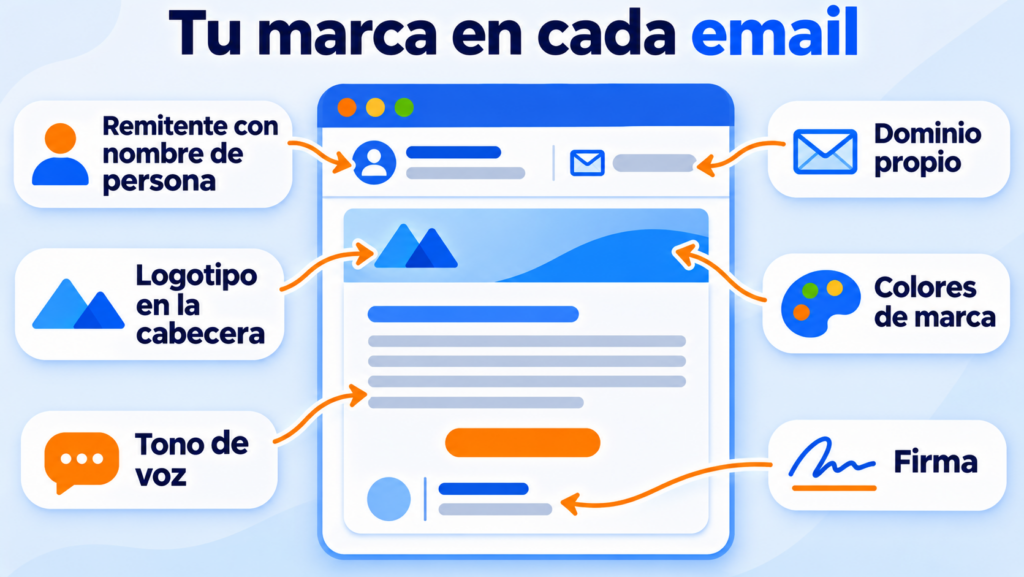
Your brand is rarely as close to your customer as in their inbox. Every email is an opportunity to strengthen it or weaken it:
| Email element | What it conveys |
|---|---|
| Sender | With a person’s name and your brand’s, it builds trust email after email |
| Address with your domain | A corporate email looks professional. A free one, not so much |
| Header and colors | Being recognized before a single line is read |
| Tone of voice | The same as on your website and social media |
| Signature and slogan | Always repeating the same thing helps people remember it |
There is even a standard, BIMI, that lets you show your logo next to your emails in some email providers, such as Gmail or Yahoo, if your domain is properly authenticated and meets their requirements.
How Mailrelay helps you
In Mailrelay you can create your templates with the editor, with your logo, your colors and your typography, and save them to use in every campaign. That way all your newsletters look alike, even if someone else prepares them.
You can send with your own domain and set it up with SPF, DKIM and DMARC, so the sender is your brand’s. And with landing pages and subscription forms, your brand also appears in the first contact with each subscriber.
On the free account, the footer of your emails carries the Mailrelay logo. If you want only your brand to show, you can remove it for €4.95 a month. The free account includes up to 80,000 emails a month and 20,000 contacts.
Your brand, in every inbox
Send up to 80,000 emails a month with your domain, your sender and your style without paying anything.
Frequently asked questions
These are the most common questions about branding.
What does branding mean in Spanish?
It means “gestión de marca” (brand management) or “creación de marca” (brand creation). It comes from the English brand, “marca”. In Spanish, the English word is almost always used.
What’s the difference between branding and marketing?
Branding builds the brand: who you are and why people should choose you. Marketing uses that brand to sell: price, promotions and channels. Without branding, marketing competes on price alone.
What does a brand manager do?
They’re the person who manages the brand: they define its strategy, coordinate campaigns and make sure everything that’s published is consistent. We tell you about it in the post on the brand manager.