FYI: what it means, how to use it in email and how it differs from ASAP
How to share information in an email without it sounding like you're asking for something
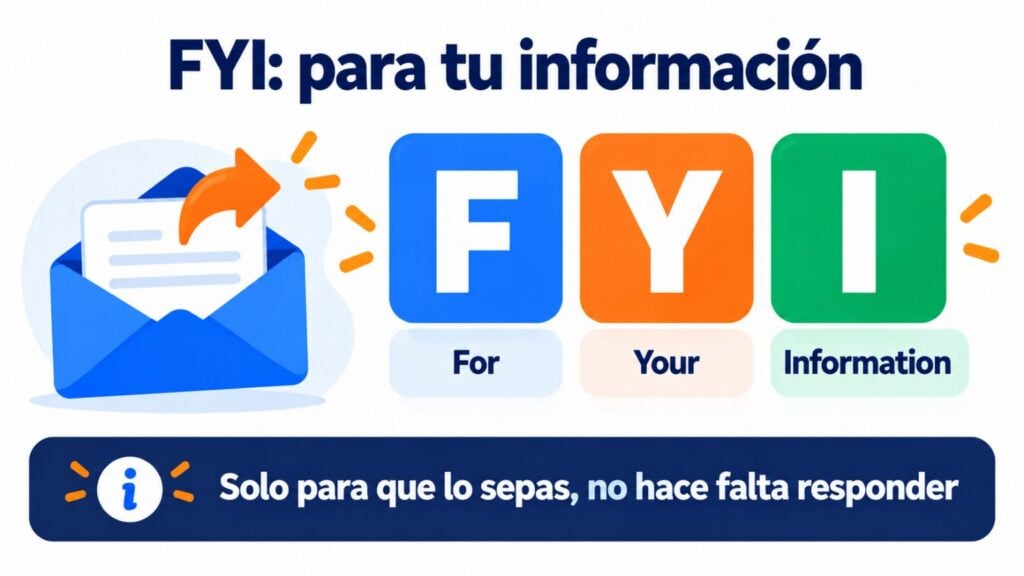
FYI is short for for your information, which means “here’s something you should know” or “just so you know”. It’s used in emails and messages to share something worth knowing that doesn’t call for a reply.
It’s one of the most common abbreviations in work email. It shows up at the start of a message, in the subject line or right before forwarding an email to a colleague.
What does FYI mean?
FYI comes from for your information. It’s used with the same meaning as phrases like these:
- “For your information.”
- “Just so you know.”
- “Passing this on so you have it.”
- “For information purposes.”
The key thing about FYI is that it asks for nothing. The recipient only has to read it. They don’t need to reply or do anything, unless the message says otherwise.
It’s an old abbreviation. It was already in use in the early 20th century in telegrams and at news agencies, where every word cost money and saving letters paid off.
How to use FYI in email
These are the most common uses:
| Situation | Example |
|---|---|
| Forwarding an email | “FYI, I’m forwarding what the supplier sent us” |
| Subject line of an informational email | “FYI: new office hours in December” |
| Sharing a fact or a link | “FYI, the sales report is now in the shared folder” |
| Letting someone in CC know | “Copying Marta, FYI” |
When you forward an email, adding “FYI” and a line of context helps a lot. That way the recipient knows why you’re sending it to them and that they don’t need to do anything.
Keep your customers informed without overwhelming them
Send each update only to the people it matters to with Mailrelay segments.
FYI, ASAP and others: which one to use when
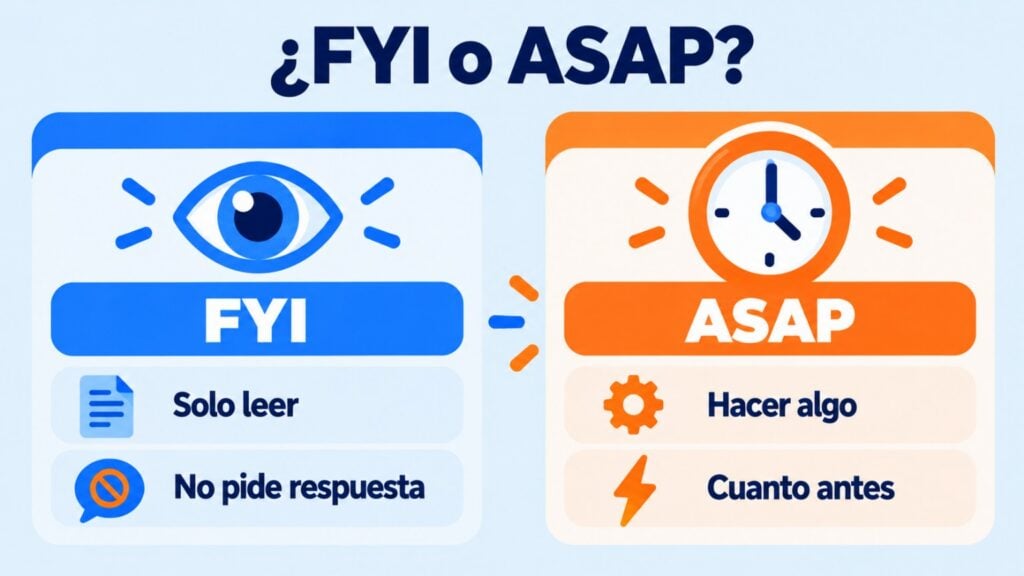
FYI and ASAP sometimes get mixed up, but they’re almost opposites. FYI says “you don’t need to do anything” and ASAP says “do it as soon as possible”.
| Abbreviation | What it asks for | Example |
|---|---|---|
| FYI | Nothing, just reading | “FYI, we’re closing at 3 p.m. tomorrow” |
| ASAP | Doing something as soon as possible | “Send me the quote ASAP” |
| FWD | Reading a forwarded email | “FWD: order confirmation” |
| CC and BCC | Staying in the loop | Visible or hidden copy of the email |
| P.S. | Reading a final note | “P.S.: the discount ends on Friday” |
Mixing them up in the same email is confusing. An “FYI” with an urgent request inside will make your request go unnoticed.
When it’s better not to use FYI
FYI is handy, but it’s not always the best option:
When you need a reply. If you expect someone to do something, don’t mark it as FYI. Say so clearly and give a date.
In a formal email. In a formal email, “for your information” or “please note that…” reads better.
With someone who doesn’t know the abbreviation. Outside the office, many people don’t know what it means. Writing it out in full is just as clear and leaves no room for doubt.
To forward without context. A long email forwarded with just “FYI” forces the reader to go through all of it to work out what matters. Add a line with the key point.
FYI and email marketing
A newsletter is, at heart, one big “FYI”: news, tips and updates your subscribers receive to stay up to date. The difference is that in marketing you do want them to do something, even if it’s just reading or clicking.
That’s why each email should make clear what’s just information and what’s a call to action. An informative subject line and a clearly visible button make your newsletter easy to understand at a glance.
How Mailrelay helps you
With Mailrelay you can keep your customers informed without any hassle:
Newsletters with a visual editor. Build your newsletters by dragging blocks, with your own text, images and buttons.
Segments. Send each update only to the people it matters to, so your emails don’t turn into noise.
Automations. Schedule the informational emails that repeat, like the welcome email or account notices, on the free account too.
And with the free account you can send up to 80,000 emails a month to 20,000 contacts, with human support on every plan.
Your newsletter, clear at a glance
Create newsletters with a visual editor and send them for free to your first 20,000 contacts.
Frequently asked questions about FYI
What does FYI mean?
It stands for for your information, in other words “just so you know”.
How should you reply to an FYI?
In principle, you don’t need to. FYI signals that the message is for information only. If you like, you can reply with a “thanks” or “got it”.
Is FYI formal or informal?
It’s informal and typical of the workplace. In a formal email, it’s better to write out “for your information” in full.
What’s the difference between FYI and ASAP?
FYI shares information without asking for anything. ASAP asks for something to be done as soon as possible. They’re almost opposites.
Can you put FYI in an email subject line?
Yes, it’s very common: “FYI: change of schedule”. That way the recipient knows from their inbox that they don’t need to do anything.