Cross selling: what it is, examples and how to apply it
Examples, techniques and emails to sell more to the customers you already have
Cross selling is the technique of offering customers products or services that complement what they have already bought or are about to buy. For example, a case and a screen protector for the phone they have just added to their cart.
The goal is twofold: customers get everything they need, and the business increases the value of each sale. It works in physical stores, ecommerce, services and B2B companies.
What does cross selling mean?
Cross selling combines cross and selling. In Spanish it is known as venta cruzada. It is also written as cross-selling or shortened to cross sell.
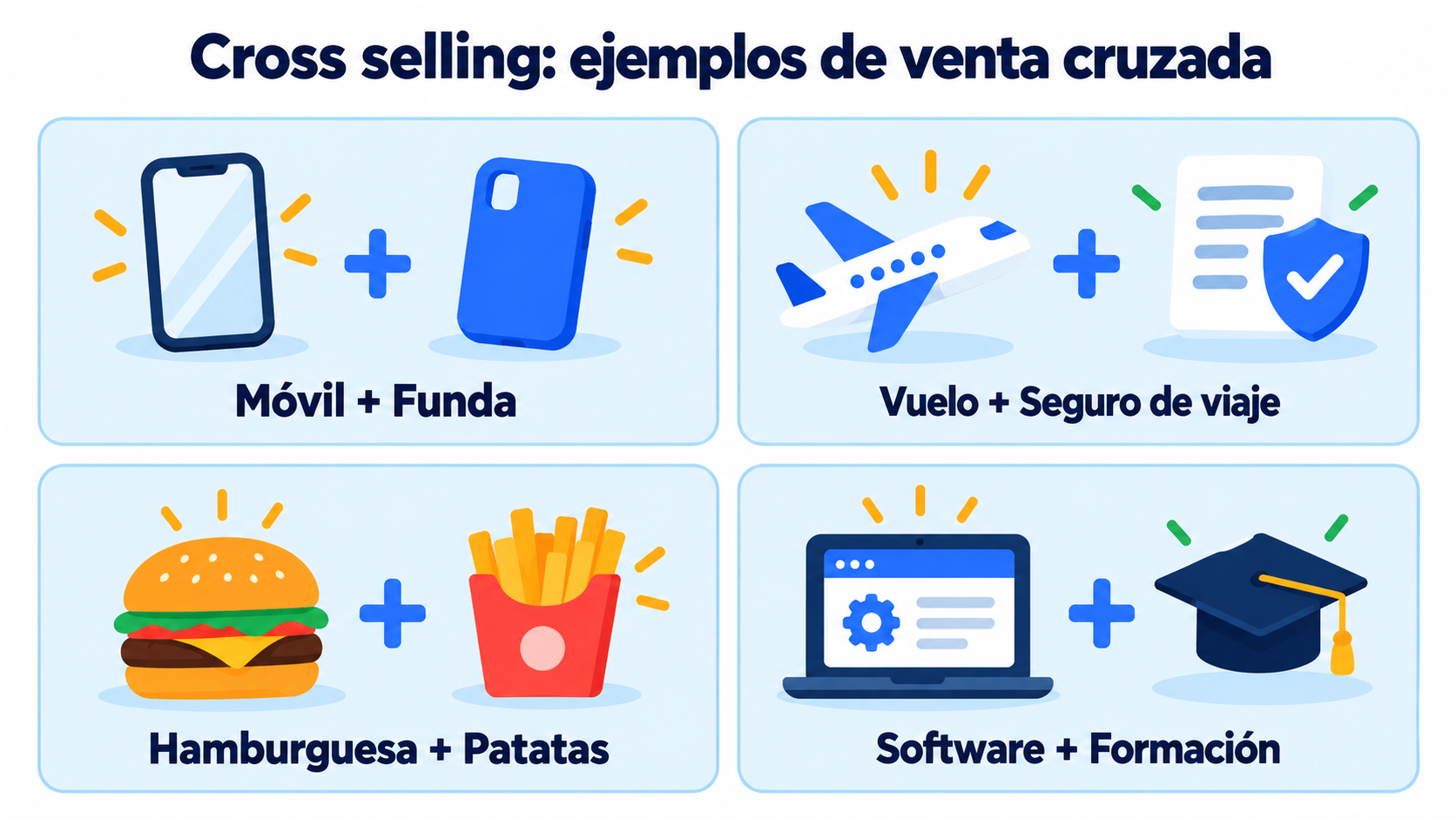
The idea is to “cross” products from different categories that are used together: the printer and the ink, the flight and the travel insurance, the software and the training.
Cross selling examples
You have probably seen it many times, even if you didn’t call it that:
| Industry | Main purchase | Cross selling |
|---|---|---|
| Fast food | A burger | Fries and a drink (“Would you like to make it a meal?”) |
| Online store | A phone | Case, charger and screen protector |
| Travel | A flight | Hotel, rental car and travel insurance |
| Banking | A checking account | Credit card or home insurance |
| Software | A license | Training, premium support or integrations |
| Fashion | A pair of trousers | A belt or a matching T-shirt |
Online stores very often show a “Frequently bought together” or “You may also like” block on the product page and in the cart.
What is the difference between cross selling and upselling?
They are two techniques that are used together, but they are not the same:
| Cross selling | Upselling | |
|---|---|---|
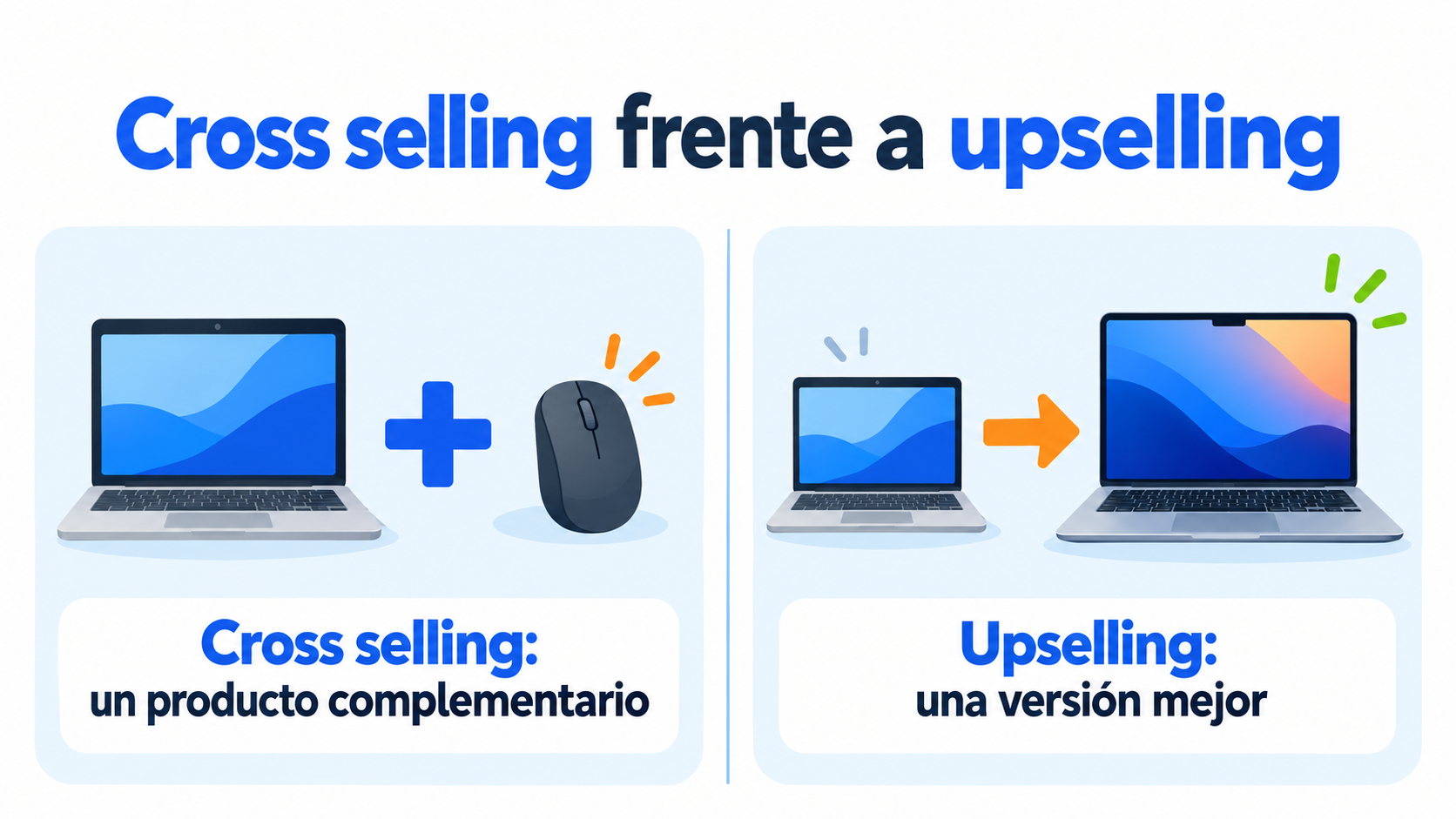
| What it offers | A different product that complements the purchase | A higher-end version of the same product |
| Example | Buying a laptop and adding a mouse | Moving up from the 8 GB laptop to the 16 GB one |
| Goal | Getting the customer to buy more products | Getting the customer to buy a better product |
| When it works best | During and after the purchase | Before the customer decides |
A good strategy combines both: first offer the right version, then the add-ons.
Benefits of cross selling
It increases the average order value. Each customer spends more on the same purchase, without you needing more visits.
It costs less than acquiring customers. Selling to someone who already trusts you is cheaper than convincing someone new.
It improves the experience. If the recommendation is useful, customers appreciate not having to look for the add-ons on their own.
It strengthens loyalty. A customer who uses several products from the same brand has more reasons to stay. That is why it helps with customer loyalty and lowers the churn rate.
Sell more to your customers by email
With Mailrelay, segment by what each customer bought and send them the recommendation that fits.
Cross selling techniques
Bundles. Group products that are used together at a slightly lower price than buying them separately.
Recommendations on the product page and in the cart. Show a few add-ons that are closely related to what the customer is looking at.
Post-purchase offers. On the confirmation page or in the follow-up email, suggest what people who buy that product usually need.
Free shipping above a minimum amount. If the customer is a few euros short of free shipping, suggest an add-on at that price.
Personal recommendations. In a physical store or over the phone, a salesperson who knows the customer suggests what really suits them.
How to apply cross selling step by step
1. Analyze what is bought together. Review your orders and look for products that often appear in the same purchase.
2. Get to know your customer. Be clear about your buyer persona and keep their purchase history in your CRM.
3. Choose the right moment. In the cart, right after the purchase or when the product is running out.
4. Keep it short and relevant. Two or three useful recommendations are more convincing than a long list.
5. Measure and adjust. Compare the average order value and the conversion rate of your offers and keep the ones that work.
Cross selling with email marketing
Email is one of the best channels for this technique. It reaches customers once they have already bought from you:
| When to send it | What to offer | |
|---|---|---|
| Order confirmation | Right after the purchase | An add-on with a limited-time discount |
| Post-purchase email | A few days after delivery | Accessories or usage tips with related products |
| Replenishment | When the product usually runs out | The same product and others that go with it |
| Segmented newsletter | In your regular send | New products based on what each customer bought |
To make it work, use segmentation based on purchase history and store the data in custom fields. And don’t turn every transactional email into advertising: the order information comes first.
You’ll find more ideas for online stores in email marketing for ecommerce and in our post on how to do up-selling and cross-selling with email marketing.
Common mistakes
Offering unrelated items. If the recommendation doesn’t fit, the customer sees it as advertising.
Being too pushy. One pop-up after another during checkout leads to abandoned carts.
Recommending something more expensive than the main purchase. The add-on should cost much less than the product.
Forgetting who has already bought it. Offering a product the customer already has makes a bad impression.
How Mailrelay helps you
With Mailrelay you can segment your customers by what they bought and send each group the right recommendation. You can also automate the post-purchase email and measure who opens and clicks on each product.
The free account includes up to 80,000 emails a month and 20,000 contacts, with human support by chat, ticket and phone.
Send your newsletters with Mailrelay
Up to 80,000 emails a month and 20,000 contacts for free, with human support on every plan.
Frequently Asked Questions
These are the most common questions about this technique.
What is cross selling in a nutshell?
It means offering customers products that complement what they are buying, such as batteries with a remote control.
What is cross selling called in Spanish?
Venta cruzada. In the plural, ventas cruzadas.
What is the difference between cross selling and upselling?
Cross selling offers a different product that complements the purchase. Upselling offers a better version of the same product.
What is an example of cross selling?
When you buy a camera and the store offers you a memory card and a case.
Does cross selling work in B2B?
Yes. A software company can offer training or integrations to those who already have the license, and a consulting firm can offer complementary services to an existing client.