Advantages of email marketing: 6 benefits for your business and how to make the most of them
Six reasons to use email in your business and how to make the most of them in every campaign
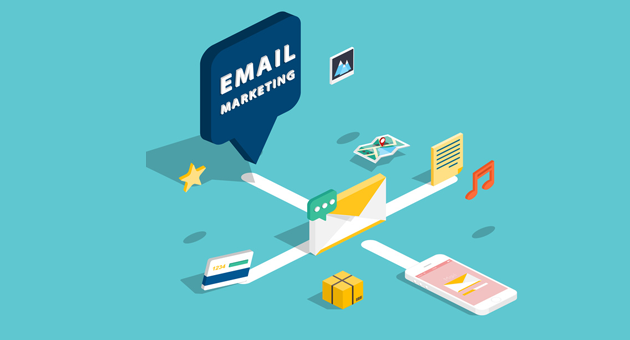
Six reasons to use email in your business and how to make the most of them in every campaign
Email marketing has six advantages: it costs little and delivers a high return, lets you personalize every message, can be measured in real time, builds relationships with your customers, grows with your business and integrates with the rest of your marketing.
If you’d like the definition and how it works first, start with what email marketing is. Here is each advantage with examples, its limits and how to make the most of it.
At its core, email marketing is the use of email to promote products or services.
But it goes beyond simply sending messages.
It’s a tool that lets you build relationships with prospects, current customers and even former customers.
What does it take?
Sending the right message, at the right time, to the right recipient.
And you achieve this by making the most of the personalization and segmentation that email marketing makes possible.
This may well be one of its most important benefits.
In a business environment where every customer touchpoint counts, email marketing offers a unique advantage:
This not only improves the visibility of the brand and its products, but also encourages an ongoing dialogue with the customer base.
From startups to multinational corporations, companies can use email marketing to achieve a wide range of goals:
With its ability to segment audiences, personalize messages and provide data on customer behavior, email marketing remains one of the most useful tools for any business.
| Advantage | What it means | How to make the most of it |
|---|---|---|
| Low cost and high return | You reach thousands of contacts without paying for each impression | Segment and measure the revenue from each campaign |
| Personalization and segmentation | Each contact receives a message based on their data and interests | Use custom fields and subscriber groups |
| Real-time measurement | You see deliveries, clicks, unsubscribes and conversions as they happen | Decide based on clicks and conversions, not just opens |
| Lasting relationships | You stay in touch before and after the sale | Set up a welcome email and a post-purchase series |
| Flexibility and scalability | Works just as well for a small shop as for a large company | Start with a newsletter and add automations as you grow |
| Integration with other channels | Combines with social media, SEO and content | Send your content by email and attract subscribers on social media |
Put these advantages to work today
With Mailrelay’s free account you can send up to 80,000 emails a month to 20,000 contacts.

One of the most significant advantages of email marketing is its remarkable cost-effectiveness.
And, of course, its ability to generate a high return on investment (ROI).
This makes it a very valuable tool, even for companies with limited budgets.
When you compare email marketing with other traditional channels such as:
It becomes clear that email marketing stands out for its cost efficiency.
Platforms such as social media advertising and search engines can require large investments.
Especially if you want to reach a broad audience.
Email marketing, on the other hand, lets you reach a large number of people at a much lower cost.
To maximize the ROI of your email marketing, you can follow these basic tips:
Use customer data to segment your mailing lists and send content aimed at specific interests.
For example, sending offers for products related to previous purchases or personalized content based on user behavior.
Emails should be visually appealing and contain valuable information for the recipient.
This can include useful tips, exclusive discounts or information about new products.
Run A/B tests with:
To find out what works best with your audience.
Use open, click and conversion statistics to fine-tune your subsequent mass mailings.
Use automation to send emails at the best possible time and personalize messages based on customer behavior.
Combine email marketing with other initiatives, such as social media promotions or events, to create a cohesive brand experience and increase the overall impact.
By putting these strategies into practice, you can make the most of email marketing’s low cost and high return potential.
Making it one of the most effective tools in your digital marketing arsenal.
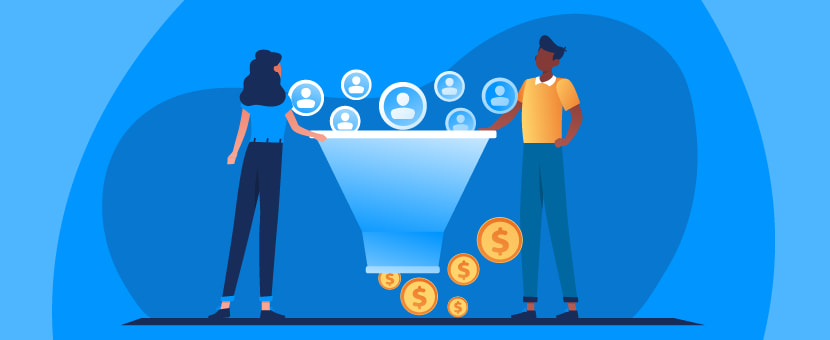
Email marketing offers a great ability to personalize and segment communications in a way that few other channels can match.
And this is another of the great benefits of email marketing.
Because this personalization not only increases the relevance of the content for each recipient.
It also significantly improves the effectiveness of marketing campaigns.
Personalization in email marketing goes beyond simply including the recipient’s name in the email.
It’s about tailoring content to the interests, behaviors and individual needs of customers.
This can include:
Making content more relevant to the recipient doesn’t just increase open and click rates.
It also builds a deeper, more meaningful relationship with your customers.
Several success stories highlight the positive impact of personalization in email marketing:
Many online stores use personalization to recommend products based on the customer’s browsing and purchase history.
Amazon, for example, has been a pioneer in the use of personalized emails.
These emails show products related to previous purchases, increasing sales through highly relevant recommendations.
Platforms such as Netflix and Spotify send personalized emails with recommendations based on the user’s viewing or listening history.
These emails not only keep users engaged with the service, but also encourage them to discover new content.
Fashion and lifestyle companies often send personalized newsletters.
They usually use them to highlight products and offers based on the customer’s style preferences and previous purchases.
The result is greater relevance and, therefore, more effective marketing campaigns.

Another benefit of email marketing is its ability to provide detailed statistics and analysis practically in real time.
This allows companies to better understand their customers’ behavior and preferences, optimizing their marketing strategies for more effective results.
Email marketing tracking tools offer a wide range of metrics.
These range from the most basic, such as open and click rates, to more advanced analysis, such as interaction with specific elements within the message.
Popular tools such as Mailrelay provide intuitive dashboards that present this data in a clear, accessible way.
Advanced segmentation and automation are key techniques in this area.
They allow companies to send emails based on user behavior, such as automatic follow-up emails after a purchase or personalized messages on dates that matter to the customer.
These techniques not only make emails more relevant, but also provide valuable data on customer preferences and behavior.
If you interpret these metrics well, each campaign turns out better than the last. For example:
These basic metrics can show how appealing your email subject lines and content are overall.
A low open rate may suggest that your subject lines need improving.
While a low click rate could indicate that the content isn’t right for the audience.
This metric shows how many recipients took the desired action (such as signing up for an event).
A low conversion rate may indicate that you need a better call to action or a more attractive offer.
Track how many users unsubscribe from your mailing list, as this can point to content fatigue or too many messages.
Adjusting the frequency of your emails or segmenting your audience better can help reduce these rates.
Analyzing what users do after clicking on an email can provide valuable insight into their interest.
And help optimize the user experience on your website or online store.
By using these metrics and adjusting campaigns accordingly, companies can significantly improve the effectiveness of their email marketing efforts.
The ability to measure the impact of every email in detail and in real time is an unmatched advantage that allows for constant optimization and informed decision-making.
One of the most valuable benefits of email marketing is its ability to help companies build and maintain lasting relationships with their customers.
Through personalized, consistent communication, brands can foster loyalty and trust, the key elements of long-term engagement.
Loyalty and trust are the foundation of any customer-business relationship.
Email marketing allows brands to stay in regular contact with their customers, providing not only promotions and offers, but also valuable content that enriches the customer experience.
For example, sending useful tips, industry insights or behind-the-scenes stories about the company helps build an authentic, trustworthy brand image.
In addition, by personalizing emails according to customers’ preferences and interests, brands show that they value and understand their audience.
This not only improves response rates, but also reinforces the perception that the brand genuinely cares about its customers, strengthening long-term loyalty.
To achieve this, companies need to focus on strategies that keep customers interested and engaged.
This includes:
Avoid focusing solely on sales and promotions. Include educational, informative and entertaining content that adds value to the customer’s day-to-day life.
Use email to ask customers for comments and suggestions.
This not only provides valuable information for improving products and services, but also makes customers feel heard and valued.
Set up loyalty programs that reward customers for their continued loyalty.
Emails can be an excellent way to tell customers about their rewards and benefits.
Send emails on special dates, such as birthdays or subscription anniversaries, with personalized offers or messages to celebrate the relationship.
Keep customers informed about company developments, new products or special events so they feel part of the brand’s community.
By putting these strategies into practice, companies can use email marketing not just as a promotional tool.
But as a powerful way to build and maintain meaningful, lasting relationships with their customers, which is what sustains a business in the long run.
Email marketing stands out for its impressive flexibility and scalability, which makes it suitable for businesses of all sizes and types.
This allows companies to tailor their email campaigns to their specific needs, whether they want to reach a few key customers or millions of subscribers.
The power of email marketing lies in its ability to adapt to the needs and resources of any business.
Small businesses can use it to build close, personal relationships with their local customers.
Large corporations, meanwhile, can use it to communicate effectively with a global customer base.
For small and medium-sized businesses (SMBs), email marketing offers a cost-effective way to promote products and services.
Without needing large advertising budgets.
For larger companies, on the other hand, it provides a platform to segment and personalize messages at scale.
While staying relevant and effective across different markets and audience segments.
This means that a small, growing business will find in email marketing a scalable tool that can keep up with its progress.
A company of any size can start with a simple newsletter.
As it grows, this newsletter can evolve to include audience segmentation, personalized content and advanced analytics.
From a small local business introducing a new product to a large corporation launching a complete line.
Email marketing can scale to cover any reach, offering more targeted and detailed campaigns depending on the business’s capacity.
Promotional campaigns can be as simple as a limited-time discount for a small shop.
Or as complex as a series of emails targeting specific customer segments at a large company.
While a small business can run a simple loyalty program by email, a larger company can implement sophisticated programs.
With different tiers and rewards, tailoring communication to customer behavior and preferences.
Companies of any size can use email marketing to collect customer feedback.
As the company grows, these campaigns can become more sophisticated, using analytics tools to interpret the data collected.
In short, the flexibility and scalability of email marketing make it an exceptionally powerful tool.
One that can adapt and grow with the business, ensuring that customer communications stay relevant.
Effective and efficient at every stage of the company’s development.
Email marketing is not an island in the vast ocean of digital marketing.
Its true power comes into play when it is effectively integrated with other marketing strategies.
The ability to work in synergy with channels such as social media, SEO and content marketing amplifies its effectiveness and reach.
Email marketing can complement and reinforce social media campaigns.
For example, you can include share buttons in your emails, encouraging subscribers to share offers or content on their social networks.
In turn, social media can be used to encourage newsletter sign-ups, creating a virtuous cycle of interaction.
Although email marketing doesn’t directly influence SEO, it can support your SEO efforts by driving traffic to specific content on your website.
Emails can include links to recent blog posts or landing pages, which not only increases visits but can also improve your website’s engagement metrics.
Valuable content created for blogs, reports and other media can be promoted through email marketing.
This strategy not only extends the reach of the content, but also gives email subscribers useful, relevant information, fostering a positive perception of the brand.
Make sure the message and tone are consistent in your emails and on other marketing platforms.
This helps create a strong, recognizable brand image.
Launch campaigns that span email, social media and your website.
For example, a promotion announced on social media can be explained in detail in an email that sends users to a specific landing page on your website.
Use analytics tools to understand how your different marketing strategies reinforce each other.
For example, analyze whether email subscribers behave differently on your website or on social media.
Use customer behavior data from one channel (such as social media interaction) to personalize content in another (such as emails).
Collect feedback from your integrated campaigns and make adjustments based on performance.
This might include changing the focus of your email campaigns based on the response on social media, or vice versa.
Integrating email marketing with other marketing strategies doesn’t just improve the effectiveness of each individual channel.
It also provides a richer, more cohesive customer experience, improving the overall effectiveness of your marketing efforts.
Email marketing also has its limits. None of them is a reason not to use it, but it’s worth knowing them before you start:
| Limit | How to solve it |
|---|---|
| You need permission and a list of your own | Grow your subscriber base with forms and double opt-in. Never buy contact lists |
| Deliverability requires technical setup | Authenticate your domain with SPF, DKIM and DMARC |
| The inbox is crowded | Segment, craft your subject line carefully and only send what adds value |
| Results come with consistency | Keep a realistic schedule and measure trends, not a single campaign |
Success in email marketing doesn’t just depend on knowing its benefits.
It also depends on applying best practices and avoiding common mistakes.
Below are practical tips and recommendations to get the most out of your email marketing campaigns.
Group your subscribers based on their behavior, preferences and interaction history.
This lets you send more relevant, personalized messages that are more likely to be well received and get a response.
The subject line is the first thing your subscribers see. It should be attractive, clear and, if possible, personalized.
Avoid using words that might trigger spam filters.
Make sure your emails look good on any device, especially on mobile.
A responsive design improves the user experience and increases open and click rates.
Offer content that is useful and relevant to your audience.
This can include tips, industry insights, product updates or exclusive access to offers.
Experiment with different versions of your emails to see what works best.
You can test different subject lines, email designs, calls to action and more.
Find the right balance in how often you send emails.
Too many can feel intrusive, while too few can make people forget your brand. Also, pay attention to the times of day when your emails perform best.
Use automation to send emails triggered by specific user actions, such as welcome emails, thank-you emails for purchases, abandoned cart reminders and so on.
Sending the same mass email to your entire list can lead to low engagement and high unsubscribe rates.
Personalization is key to building a connection with your audience.
Always give subscribers the option to choose what kind of emails they want to receive and how often.
Not analyzing the performance of your campaigns is a common mistake.
Data gives you valuable information about what works and what doesn’t.
Avoid sending emails that don’t add value.
Boring or irrelevant content can lead users to ignore your emails or unsubscribe.
With most users reading their email on mobile devices, failing to optimize for them can significantly hurt your campaigns’ performance.
Measure what each campaign brings you
Segmentation, automations and real-time statistics so you know what works and why.
In conclusion, email marketing remains one of the most cost-effective and easiest-to-measure channels in digital marketing.
Through its ability to deliver personalized, direct messages cost-effectively, it allows businesses of all sizes to connect with their audience in a meaningful and measurable way.
The key to getting the most out of email marketing lies in the combination of personalization, meticulous analysis, relevant content and smart integration with other marketing strategies.
These benefits multiply when you apply real segmentation to your list and add a touch of hyper-personalization to every message.
There are six main ones: low cost with a high return, personalization, real-time measurement, customer relationships, scalability and integration with other channels.
It requires your contacts’ permission, a correct technical setup (SPF, DKIM and DMARC) and consistency. It also competes with many other emails in the inbox.
Yes, because the cost doesn’t grow with each impression the way it does with advertising. With Mailrelay you can start for free with up to 80,000 emails a month and 20,000 contacts.
On social media, your reach depends on the platform’s algorithm. Your mailing list is yours: you decide who you write to, when and with what message. They work best together: social media helps you attract subscribers and email converts them.

Jose Argudo
CMO at Mailrelay. Writes about email marketing, copywriting, and conversion for small businesses and entrepreneurs.